


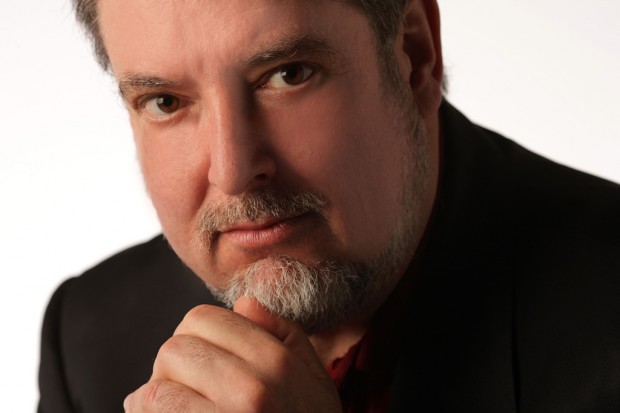
American pianist Garrick Ohlsson returns to Tucson Sunday to do what he does best: Chopin.
But on this trip - his first to a Tucson stage since he played a Brahms concerto with the Tucson Symphony Orchestra in 2004 - he will be accompanied by an orchestra that knows Chopin intimately.
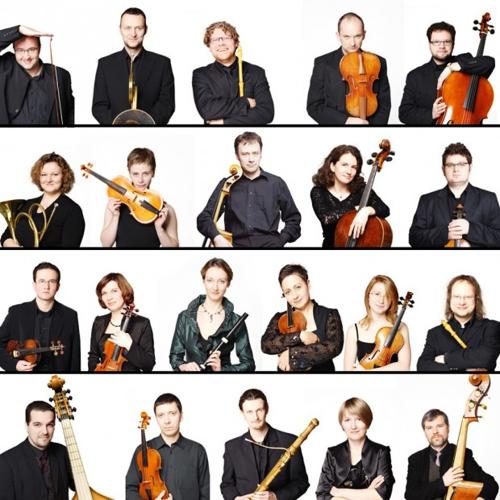
The players in the Wroclaw Philharmonic Orchestra from Poland have been playing Chopin since they first picked up an instrument. They were taught his works in grade school, had it pounded into them in college and play it in heavy rotation in their professional lives.
Even when they aren't playing it, they hear Chopin at every turn, on the radio and television and in the elevator.
"Chopin is their elevator music," joked Ohlsson, 63, who also was reared on Chopin, studying the Polish composer since he was a teen and "majoring in Chopin in terms of piano playing, athletic skill, musicality, style, sound."
When Ohlsson, who has performed Chopin in Poland "lots and lots and lots" of times in his nearly five-decade career, had a chance to play Chopin with a Polish orchestra in the United States, he jumped at it.
"You have to know this stuff really well and all Polish orchestras do," he said from home in San Francisco a few days after the Wroclaw's three-week U.S. tour got started early this month. The tour ends with Sunday's concert at Centennial Hall. "They know the glories of it but they also know professionally the tricky spots and they play it well. There is some home-court advantage, that's for sure."
Ohlsson will perform Chopin's Piano Concerto No. 2, a piece the virtuoso pianist and composer wrote when he was 19.
"His piece was so original and beautiful and inspired. It was incredible that a 19-year-old could write such a thing," Ohlsson said.
But Chopin was uninterested in orchestras, so he wrote the orchestra parts almost as "a beautiful background for the musings of the soloist," Ohlsson said.
"It's not interactive like a Beethoven concerto or a Mozart concerto where there's lots of symphonic dialogue. It's rhapsodic," he added, and herein can lie the difference when it comes to performing a Chopin concerto with an American versus Polish orchestra.
"If there is something musically significant, even if it's just a change of one note in a chord in the accompaniment underneath, they will actually bring a kind of knowledge and expression to it that perhaps another orchestra might not because these orchestras have lived with it their whole lives," Ohlsson explained. "It won't be a night and day difference, that's for sure, but there will be a sense of idiomatic quality."
Ohlsson brings that same intuitive insight into Chopin. His relationship to the composer goes back to his youth when he was first learning piano.
"All of my teachers emphasized Chopin a great deal," he said.
When he was 20 years old and had already established a reputation at Juilliard, Ohlsson studied with Rosina Lhévinne. She was 90 at the time and regarded as the most famous piano teacher in the world after having taught Van Cliburn.
"The first time I went in for my lesson ... she asked me to play something that I thought I played pretty well. So I played Chopin's Barcarolle," he recalled. "She said 'Splendid. You're a born Chopin player, and that's not common. Many people play him quite well, but you were born to this.' I was very proud, of course. But I had already had good teachers who had drummed it into me, the style and the sound of Chopin."
In 1970, a year after he studied with Lhévinne, Ohlsson traveled to Warsaw, Poland, to compete in the International Frédéric Chopin Piano Competition. He came in first place and was the first - and only - American to win the contest.
Ohlsson went on to a celebrated career as a concert pianist in solo recitals and with orchestras around the world.
"It's been kind of a lifetime saturation. The happy part is that now when I sit down to play Chopin ... I have no doubt about what I'm doing."
The Wroclaw Philharmonic has been around since 1954. Jacek Kaspszyk, former artistic and general director of the Polish National Opera, has been the conductor and artistic director since 2006.
Ohlsson said the first time he ever played with the orchestra was two days before they opened the three-week tour in Florida on Feb. 8.
Sunday's final concert will be bittersweet, he added.
"I really like the orchestra. It's very devoted," he said. "It's largely a young orchestra and their musical aspirations are very high and they are very intense. This tour is very important to them and very exciting."
Ohlsson said he will get a short break after Sunday's concert before he sets out for a series of recitals and orchestra dates in the United States and Far East. He then heads into the studio to record the major works of little-known American 19th/20th century impressionist composer Charles Tomlinson Griffith.
"He's really, really good, and his sonata in particular is a small masterpiece," said Ohlsson, who said he tries to champion little-known composers when he can. "At this point in my life I'm trying to use whatever reputation I have sometimes to bring attention to new music."
If you go
• What: Wroclaw Philharmonic Orchestra in concert with conductor Jacek Kaspszyk and pianist Garrick Ohlsson.
• When: 6:30 p.m. Sunday.
• Where: Centennial Hall, 1020 E. University Blvd., on the University of Arizona campus.
• Tickets: $39 to $69 through www.uapresents.org or by calling 621-3341.
Program
Szymanowski's "Konzert-Overture."
Chopin's Piano Concerto No. 2 in F minor.
Dvorák's Symphony No. 7 in D minor
'It's not interactive like a Beethoven concerto … It's rhapsodic.'
Pianist Garrick Ohlsson

