


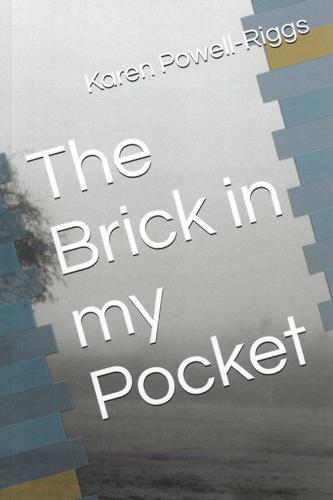
“The Brick in My Pocket” By Karen Powell-Riggs (self-published). 50 pp. $7.50.
The voice of Tucson poet Karen Powell-Riggs in this collection is subdued, mature, tinged a bit with sadness. And each poem suggests some kind of story — the loss of a friend or lover, the effects of aging, nostalgia for unpackaged produce in Bronx markets; a chickadee singing while the poet struggles to find words. Accompanied by black and white photos depicting nature or aging buildings, it is an accessible, affecting collection. And it’s definitely not—as expressed in the barbed poem “Advice to a Poetry Critic” — deserving to be carried “off … to the round file.”
— Christine Wald-Hopkins
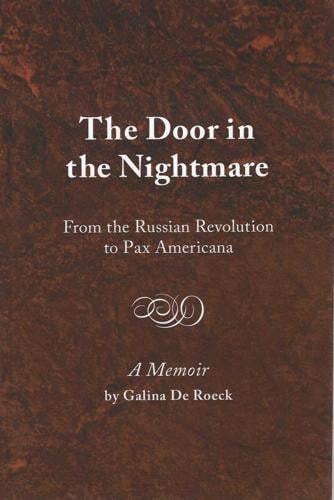
“The Door in the Nightmare: From the Russian Revolution to Pax Americana” By Galina De Roeck (PRAV Publishing). 354 pp. $23.99.
This memoir is a many-faceted gem. It’s a personal narrative in lyrical prose in sometimes-harrowing situations, a travelogue embedded in history and politics, a lively conversation sparkling with literary allusion, and a no-holds-barred political op-ed.
Born in 1938 to Russian émigrés, former UA Russian Assistant Professor Galina De Roeck has lived in Yugoslavia, Germany, Morocco, Australia and the U.S.
Her early life was marked by fear and flight — the family’s Belgrade apartment bombed, fleeing armies in WWII, surviving a displaced person’s camp in Germany. “White” Russians, they couldn’t return home to a Stalinist USSR after the war, so they emigrated to Morocco. Seeing the revolutionary writing on the wall, then, in Morocco, they left behind their privileged existence there for a life of privation in Australia. Marriage brought her to the U.S. As De Roeck tells it, her mother’s drive, father and grandmother’s affection and the kindness of others helped her overcome cultural, linguistic and socioeconomic obstacles.
De Roeck relates an arc that begins with the terrors of war and eventually involves activism for world peace. It’s a fascinating personal and family account reflecting the upheavals of the twentieth century.
“I am foreign-born, a hybrid American, politically engineered,” she writes, “and the shape-shifter and busy-body hyphen is the secret hero of my story.”
— Christine Wald-Hopkins
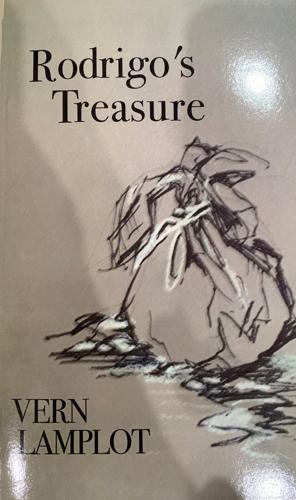
“Rodrigo’s Treasure” By Vern Lamplot (self-published). 308 pp. $12.99 paperback; $4.99 Kindle.
In his second Sonoran Borderlands Mystery, Vern Lamplot resurrects the centuries-old trope of the pleasures and perils of stumbling upon treasure.The happy, hapless, eponymous stumbler in “Rodrigo’s Treasure” is working as a Mexican cartel lookout in Southern Arizona when he discovers a large cache of raw silver and gold in an abandoned mine. A Puerto Peñasco street kid on foot, Rodrigo needs to (a) figure out how to transport and secure “his” treasure and (b) hide it from his murderous boss.
When Rodrigo reveals his find to his longtime friend Chuy — drug dealer and police informant — he sets the action in motion. That, in turn, engages other characters from Lamplot’s previous mystery, “A Line in the Sand.” When Rodrigo starts spending raw silver, Police Chief Antonia Ramirez and expat retired Phoenix detective “Sandman” Sanderson have their hands full trying to protect him from the cartel.
“Recovering journalist” and previous director of the San Xavier Mission restoration project, Lamplot again makes good use of his familiarity with the Arizona-Sonora borderlands. The U.S. Marines waila band members make a welcome appearance, and a Big Jim Griffith-like historian provides useful information — plus a warning — about the thousands of abandoned mines in Arizona.
Lamplot’s next Sonoran Borderlands mystery is in the hopper. This reader’s ready.
— Christine Wald-Hopkins
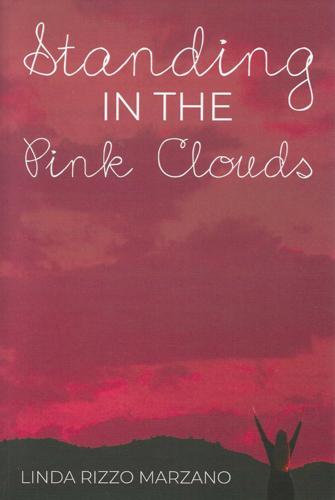
“Standing in the Pink Clouds” By Linda Rizzo Marzano (New Harbor Press). 102 pp. 11.95; Kindle $3.75.
This memoir’s dedication to “all who suffer because of the diseases of alcoholism, drug abuse, and mental illness” sets the tone for the narrative of a tough life. From being the daughter of a disturbed mother (“ I had two mommies, a good mommy and a mean mommy”) and the sister of a polio-afflicted paranoid schizophrenic, to being the mother of two beloved, although addicted, adult children, Marzano has been both witness to and victim of those diseases.
Although presented as a testament to the restorative powers of the Christian faith, “Standing in the Pink Clouds” reads more like a testament to personal resilience. In unadorned, non-histrionic prose, Marzano relates one life event after another that could easily cripple others among us. You’ve got to admire her endurance.
— Christine Wald-Hopkins
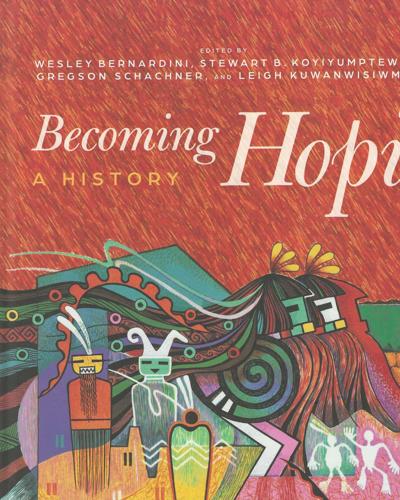
“Becoming Hopi: A History” By Wesley Bernardini, Stewart B. Koyiyumptewa, Gregson Schachner, and Leigh J. Kuwanwisiwma, editors. University of Arizona Press. 664 pp. $75; Kindle $60
The eloquent title says it all: Being Hopi is not an end state so much as a process reflecting an aspirational lifestyle philosophy of humility and hard work. One is always becoming Hopi, say the editors, and the ability to look back on a complex, vibrant history is foundational to moving mindfully into the future.
This remarkable volume will facilitate that mindfulness. The Hopi people, note the editors, have long been an intensively studied indigenous group, but because their story has been recorded mostly without benefit of Hopi voices or perspective, the history of the Hopi Mesas is poorly understood. With this collaboration of Hopi people and external researchers, overseen by the Hopi Cultural Preservation Office, the editors hope to set the record straight. Fifteen years in the making and astonishing in its scope, “Becoming Hopi” employs archaeology, oral tradition, historical records and ethnography to present a comprehensive overview of the people who have lived on the Hopi Mesas for more than 2,000 years. It includes chapters on anthropological research, agriculture, landscape, migration and petroglyphs, as well as site maps and descriptions of Ancestral Hopi villages.
“Becoming Hopi” will be an invaluable resource to the academic community, but more importantly, because it was written with Hopi readers in mind, it will be an aid to reflection on the shape of things to come.
— Helene Woodhams
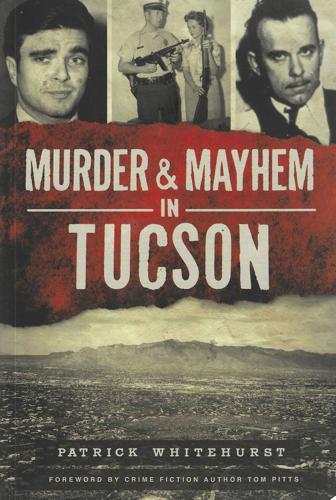
“Murder & Mayhem in Tucson” By Patrick Whitehurst. The History Press. 147 pp. $32.99 hdcvr, $21.99 pbk, $11.49 Kindle
Gun play, foul play, playing with fire — sunny Tucson has a dark side pockmarked with murder and mayhem, and author Patrick Whitehurst hits the lowlights with this compendium of true crime and catastrophe. There’s something for everyone, from military misadventures such as the midair collision of WWII fighter bombers over Pantano Wash, to notable conflagrations that consumed civic landmarks such as the Tucson Opera House and the Pioneer Hotel, to 1983’s deadly Tropical Storm Octave, which submerged homes, destroyed infrastructure and injured nearly 1,000 people.
Many familiar, larger-than-life personalities put in an appearance, including Geronimo, Dillinger, Mafia boss Joe Bonanno and Louise Marshall of Marshall Foundation fame, who had the distinction of being both crime victim and perpetrator when she discovered her unfaithful husband had been trying to poison her with arsenic and shot him for his trouble.
In all, it is a wild ride, easily consumed in small bites; each well-illustrated chapter is just a few pages long, true to the style of the History Press which publishes books of local interest. Patrick Whitehurst, who writes both fiction and nonfiction, is the author of the Barker Mysteries novellas. He lives in Tucson.
— Helene Woodhams
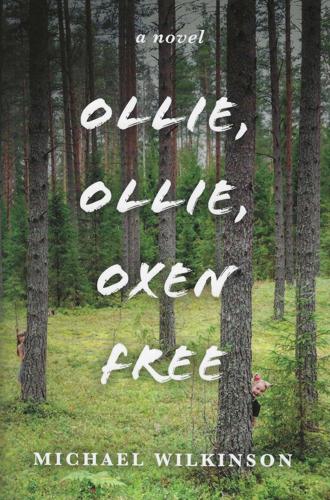
“Ollie, Ollie, Oxen Free” By Michael Wilkinson. BookBaby. 338 pp. $16.18 pbk, $4.99 Kindle.
The Odyssean struggle to arrive safe at home is at the thematic heart of this debut novel by teacher, director and author Michael Wilkinson. In it, a young priest’s growing ambivalence toward the symbols and trappings of religion has eroded his belief in his own vocation.
Childhood abuse at his father’s hands has left Matt burdened with self-doubt, and he wears his inadequacies like a hair shirt. Carol, the woman with whom he finds love for the first time, is at once a comfort and a conundrum: Is she a temptress, luring him from the false security of his psychic hiding place and away from his already shaky path? Or is she the essential course correction that will guide him to self-realization and the fulfilling life that eludes him? Can he even commit to her, given his failure to honor the vow he made to the church?
The personal conflicts and inner demons of a cast of supporting characters are cleverly woven into Matt’s story, emphasizing the redemptive power of love, freely given and received, in this deeply introspective, thought-provoking novel. Wilkinson, a Pacific Northwest native, lives in Tucson.
— Helene Woodhams
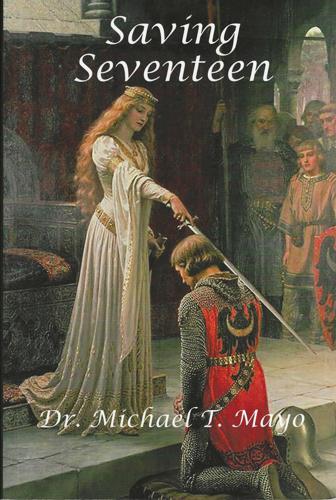
“Saving Seventeen” By Michael T. Mayo. Queens Army LLC. 308 pp. $19.95
Dr. Michael T. Mayo, prolific author of several works of fantasy, focuses on saving the living and the dead in this latest outing. In it, the unnamed narrator, under the direction of a higher power referred to as the Source, is told that he must “save seventeen,” and over the course of the next 300 pages, this appears to be pretty much what he does.
In a lengthy series of seemingly unrelated vignettes, the narrator enters and exits various otherworldly portals, ministering to the dead and not-quite dead in the company of the oracles, dwarves, demons, leprechauns and assorted fantastical types.
“The only way to save oneself is by saving others,” concludes the book, a laudable sentiment for a volume otherwise notable for its pure eccentricity.
Dr. Mayo maintains a private dental practice in Tucson.
— Helene Woodhams

