


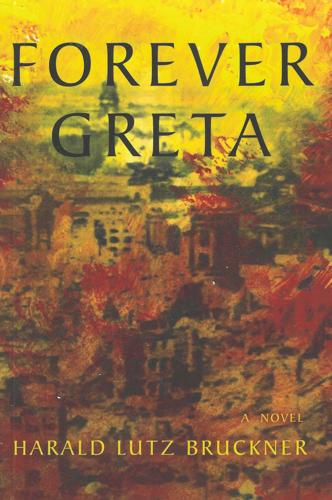



“Forever Greta” by Harald Lutz Bruckner. Hideaway Park Press, 35 pages. $18.95; $9.99 Kindle.
Nazi Germany is three months away from surrender in February 1945, a time of hardship and deprivation. Greta, the novel’s eponymous heroine, is a young wife and mother, trying to keep her husband’s Dresden bakery operating in spite of rationing and shortages — customers line up at dawn to buy her bread, even though it contains more sawdust than flour and makes a better doorstop than it does food.
Raised in affluence, Greta misses material comforts; more than that, she misses her soldier husband whose letters from the Russian front have stopped arriving. But seeing how neighbors have lost loved ones she realizes that things could be worse, a point that’s driven home when Dresden is firebombed while she and her son are away visiting her in-laws. It was unpredictable, a coincidence that saves both their lives.
With this novel, part historical fiction and part family saga, the author offers a unique take on the post-war era, viewing it from the perspective of Germans struggling out of the abyss created by the insanity of the Third Reich to rebuild their lives in the midst of chaos. This is the maelstrom into which plucky Greta dives, rolling the dice and taking risks to protect her family. In the ensuing half century, things don’t always go according to her plan. If the lesson of the war was life’s unpredictability, the post-war world, Greta finds, isn’t really that much different.
Born in Germany, Harald Lutz Bruckner has lived in the United States for most of his adult life. A retired academic and the author of several books, he makes his home in Green Valley.
— Helene Woodhams

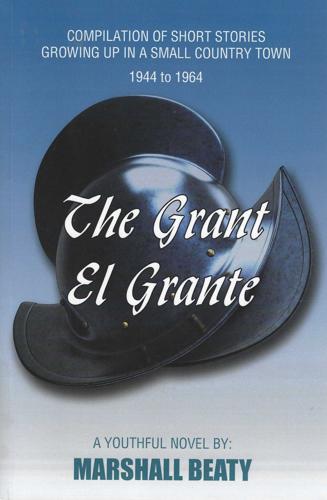
“The Grant/El Grante: Compilation of Short Stories Growing up in a Small Country Town 1944 to 1964” by Marshall Beaty. Xlibris US, 269 pages. $19.99; $3.99 Kindle.
Marshall Beaty shares memories of growing up in Patagonia in a collection of vignettes that speak of a country boyhood at midcentury in a home bordering the San Jose de Sonoita Spanish Land Grant.
It’s a rich mixture of beloved family members, friends and neighbors who touched his life, and events that ranged from the pleasurable — celebrating Cinco de Mayo in nearby Nogales was a highlight in his teenage years — to the perilous, including a hunting mishap as a boy that nearly cost him his life when a gun misfired. From school days, baseball and barnyard chores through to his enlistment in the Army National Guard in 1964, Beaty’s recollections illuminate a way of life that has all but vanished in small-town Arizona.
Beaty, who lives in Tucson, went on to spend more than 50 years as an engineer with the Arizona Department of Transportation. It was, he observes, a career opportunity that came his way with the assistance of a kindly Patagonia neighbor who served on the Highway Commission. This is Beaty’s first book.
— Helene Woodhams

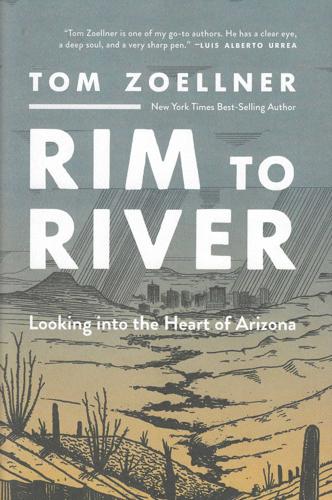
“Rim to River: Looking into the Heart of Arizona” by Tom Zoellner. University of Arizona Press, 376 pages. $24.95; $9.99 Kindle.
Wanting to “come to terms” with his native state, fifth-generation Arizonan Tom Zoellner was determined to hike the length of the Arizona Trail from the Utah state line to a destination south of the border with Sonora, Mexico. This ambitious undertaking — a trek of some 790 miles — would deliver him to the Arizona Ranch, the namesake of the 48th state. The fact that Arizona’s nominal birthplace isn’t even in Arizona is an irony that wasn’t lost on the award-winning author — there’s a good story about that, and it’s clear that Zoellner relishes a good story. He has a rare talent for sharing them, too, and it’s evident in this compulsively readable volume.
A former reporter for the Arizona Republic, Zoellner has a deep understanding of the history, culture and curiously crazy politics of the state, knowledge central to his mission of getting to the heart of this idiosyncratic and often misunderstood place. The narrative is seamlessly choreographed, gracefully interweaving the account of his hike — simultaneously breathtaking and arduous — with a series of smart, sometimes eyebrow-raising and consistently intriguing essays. Using the locations he passes through as prompts, Zoellner metaphorically steps off the trail to share stories about uniquely Arizonan landmarks, events and people that are as beguiling as they are instructive.
Zoellner’s Arizona is a land of contradictions which he addresses with keen insight and an uncanny knack for pitch-perfect anecdotes. When contemplating the state’s fraught relationship with copper mining, he notes that, in 1877, a “down-and-outer” named George Warren staked his claim on the Copper Queen — one of the world’s richest mines — and then managed to lose it on a stupid bet. But Warren’s ‘lone prospector’ image (captured by a Tombstone photographer) is nonetheless enshrined on the state seal. Only in Arizona? It’s something to think about. In fact, this tour de force does more than offer food for thought: it serves up a veritable banquet.
— Helene Woodhams

“Ivory Moon” by John R. Gentile. Wild Spirit Books. 481 pages. $24.95; also available in Kindle.
This is a book with a big heart.
A sequel to John R. Gentile’s “Baja Redemption”— in which a conservationist team breaks up a criminal dolphin and whale hunt in Mexico — “Ivory Moon” finds the same team on a game preserve in Tanzania. Here, poachers are slaughtering elephants for ivory to support terrorists. Tasked with finding and capturing a notorious arms dealer and destroying the organization behind the poaching, the Gaia Team — former soldiers Jake Spinner, “Snake” Robideaux, and Oliver Sweet, along with journalist Emily Rosen — set out to recruit locals to serve as park rangers. COVID-19, however, has decimated the male work force. The team decides to turn to recruiting village women, and Tanzania’s first all-woman anti-poaching unit is formed. Intelligent, well-armed and well trained, the women become be excellent rangers. They feel up to the fight, but the arms dealer, teamed with a ruthless Somali warlord, will prove cruel foes.
The book is expansive. Gentile has drawn a grand setting in Tanzania’s Tarangire National Park. He’s cast memorable main characters — sometimes raw; always risk-taking, quick-tongued, militarily deft; devoted brothers (and sisters)-in-arms in bloody battles. He’s brought attention to African conservationist, cultural, political and economic realities. And — here animal-lovers will willingly suspend disbelief — Gentile the naturalist has characters Spinner and Rosen display a preternatural empathy for wild African game. It’s a story that both compels reading and touches your heart.
— Christine Wald-Hopkins

“Seeking Trouble” by Bonnie Edwards. Deadly Press. 303 pages. $10 paperback; $2.99 e-book.
Private investigator Barbara “Babs” Black is back in this second of Tucsonan Bonnie Edwards’s series featuring the smart-mouthed, redheaded Tucson PI. Also showing up in this volume is Tucson Police detective Tec Hoffman, from Edwards’s “Deadly” series, who ends up getting more than he bargains for in the Babs department.
The “trouble” in the title involves multiple challenges: a complication in Black’s romantic life, her getting crosswise with a bad guy, and her agreeing to serve as bait to capture said bad guy. Her current beau, Ian, a Brit who deals in antiques, has discovered that his import-export business associate Jose Fimbres is importing more Mexican product than pottery and garden statuary. Dangers from that discovery send Ian fleeing to the UK, and when Black meets with Fimbres, she gets positioned directly in the line of fire of Fimbres’ gang of goons. Another PI job sends Black to London and Paris, where she realizes that beaux can be boors and goons can have long reaches.
It’s interesting to picture Black tooling around London and Paris, along with her familiar Tucson spots.
It seems that Edwards is making a little narrative confluence in her next book: “Deadly Trouble,” due in November, will introduce collaboration between Black and Tec Hoffman. This reviewer will welcome it if it’s more carefully copy- and foreign-language edited than “Seeking Trouble.”
— Christine Wald Hopkins

“She’s a Lot Like You” by Jim Christ. Joseph and Associates. 265 pages. $15 paperback; $4.99 Kindle.
In his latest Southwestern thriller, Jim Christ has central character Enrique Tavish flash back to a trek Tucson-raised baby boomers would recognize: his 16-year-old self heading to Nogales’s Canal Street to relinquish his innocence. In real (fictional) time, Tavish will return to Nogales’s red light district under less sanguine circumstances: to try to rescue a 15-year-old Tucson girl whose innocence has been ripped from her.
Sex trafficking and sexual attraction lie at the center of this novel, as do betrayal, guilt and nests of lies.
Shortly after the shattering kidnap and rape of Polk High School Principal Tavish’s 10-year-old daughter Francesca, Rosa Martinez, who alerted Tavish of Francesca’s whereabouts, disappeared. Older brother, drug dealer Memo Martinez had sex trafficked her to pay a Mexican cartel debt. Six months have passed, and Tavish can’t stop worrying about Rosa. He imagines his conscience in a priest’s collar whispering in his ear to take action to save her. When he succumbs to the whispers, Tavish makes his first practical and ethical mistake: He decides to try rescuing Rosa alone, and he starts lying to cover it. Cross border car chases, gun battles, further threats to the family — and life consequences, plus an unexpected, unfortunate conclusion — ensue.
Christ, a retired high school administrator and school board member, convincingly portrays the responsibilities, challenges and pitfalls of Travis administering a diverse high school. His depiction of Tavish’s sympathies, but also his weaknesses — particularly the impulses that send him to sex addicts anonymous — complicate and nuance the novel’s thoughtful but realistic examination of sexual exploitation.
— Christine Wald Hopkins

