


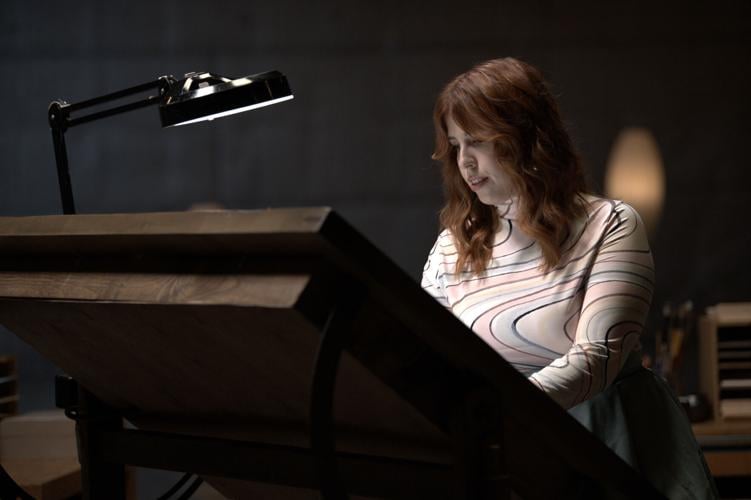
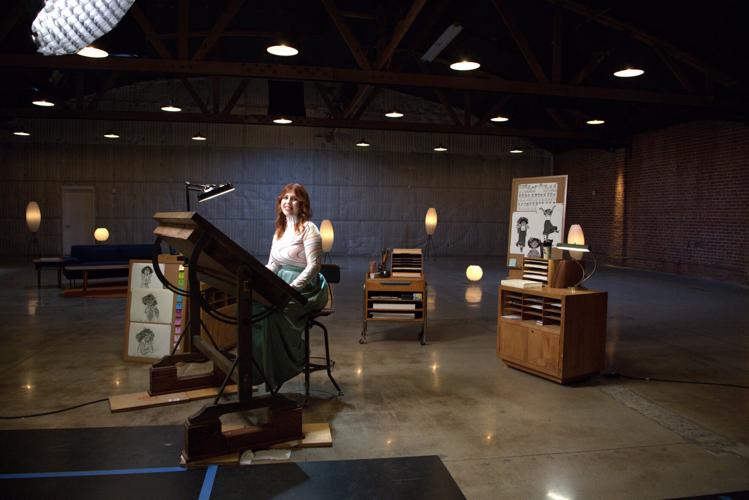
The Journal's Bruce Miller sits down with Disney animator Samantha Vilfort to talk about the process of character creation for the movie Encanto.
Getting to create an animated character is a bit like being a kid in an arcade, says Samatha Vilfort, one of the artists behind “Encanto’s” Mirabel.
“You don’t want too much…but you want it to feel like a real character,” she says.
In those early development stages, animators toss out ideas and put them into sketches. Those sketches suggest the possibilities – hair style, clothing, facial structure.
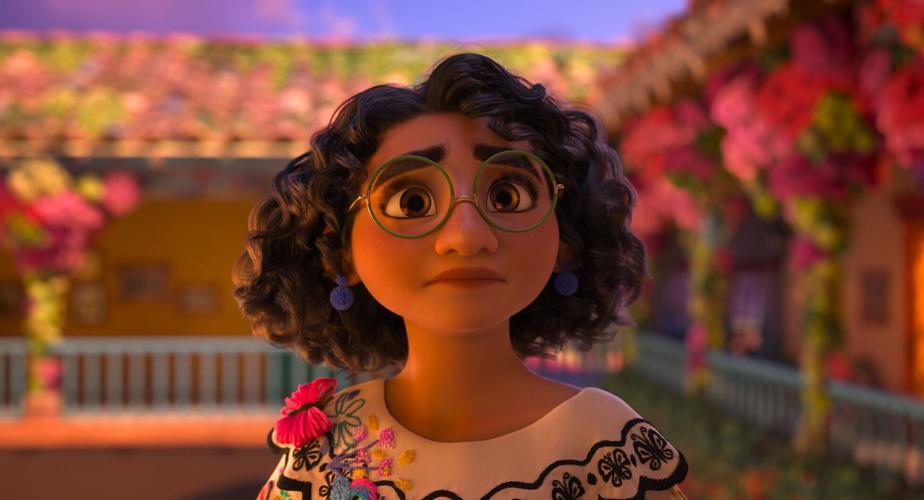
With Mirabel, the girl who believes she doesn’t have a talent like the rest of her family, there was plenty to consider.
“Everybody was excited that she had glasses because she’s supposed to see her family better than anybody else. And then, all of a sudden, it was ‘she does embroidery’ and that could make its way into the design of her dress.”
Those details, Vilfort says, allowed animators to show a character doing more mundane things – like cleaning her glasses. “That makes (her) feel like a real person.”
Directors considered all the ideas and settled on the final look. “It suddenly gels and then it feels right,” Vilfort says.
In the Disney+ series, “Sketchbook,” Vilfort talks about Mirabel and about her own inspirations.
Character reference
Mirabel, she says, is a combination of many different people. “Mirabel feels a little unsure of herself. I’ve definitely felt like that many times. Mirabel is always nice … and everybody’s miserable at some point in their lives…like everybody else has it figured out. Everybody’s a little bit more talented, a little bit more special.”
At Disney studios, it’s very easy to believe “everybody has magical powers,” Vilfort says. “All of our animators are super-sensitive and cued into the human condition. Everybody is good at going into Mirabel’s headspace.”
Some animators are great at certain aspects – like gestures.
“I think everybody has their own signature, but I don’t think there are any big gender differences.” Female artists, for example, aren't more adept at drawing female characters.
As a child, Vilfort used to draw on computer paper. “You can get lost in it and then you look up and it’s five hours later.”
Until she got to the Disney studio, art was a very solitary venture.
Animation, however, “is a very collaborative medium. You go to work here and you talk to people for, like eight hours, about Mirabel’s feelings. I love that part of the process because it energizes me to work with other people.”
Vilfort, an admitted “people person,” is more outgoing than many of her peers. “It takes all kinds,” she says.
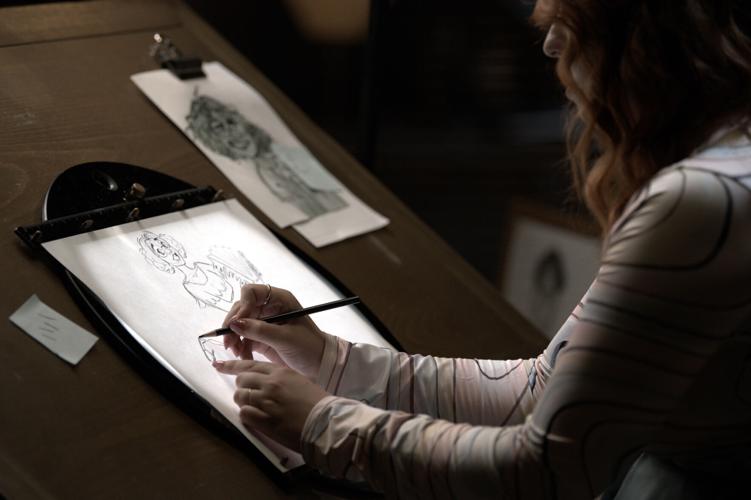
In the documentary, Vilfort sports long nails while drawing. “They’re normally stress-bitten down,” she says with a laugh. “Luckily, they’re not too long to hold the pen.”
Making it work
In the episode, Vilfort explains what makes Mirabel Mirabel. Then, she sketches in the details. “I was a little nervous because you’re not normally in a room where everybody’s just looking at you and listening to what you say. This is a solo show and, normally, I’m in an environment where I’m collaborating and I’m one of many people talking.”
To make sure she executed the moves just right, Vilfort practiced on her version of Mirabel. “I draw digitally a lot, so when I’m drawing on paper, I’ll (accidentally) tap the paper, like it’s my iPad or something. There’s no delete with paper but it’s also fun because it’s just you and this piece of paper.”
In high school, the Bay Area native was always asked to do logos and posters for shows – “stuff you kind of get pulled into.” The goal, though, was always a career in animation.
When she got the big “Encanto” assignment, Vilfort spent the better part of two years concentrating on Mirabel.
Immersed in the character, she barely let a day go by without having Mirabel conversations.
And Bruno? Could she talk about Bruno? Vilfort laughs. “It’s my job to talk about Bruno. Yes, we had many, many conversations about him.”

