

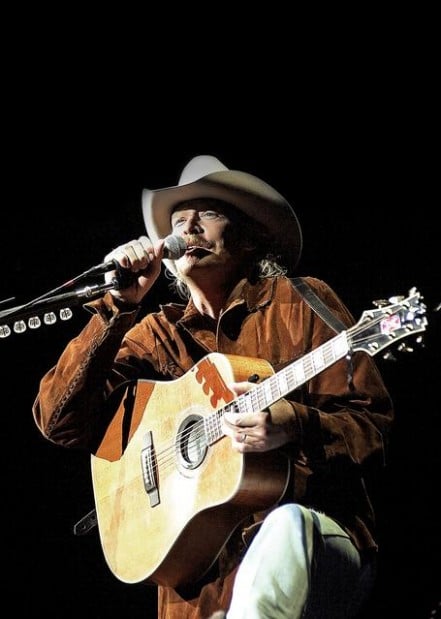
The anguish of Sept. 11, 2001, weighed heavily on Alan Jackson's heart when he strode on Casino del Sol's AVA stage on Oct. 14, 2001.
He was the first artist to stand on that stage, and 4,400 fans screamed and cheered him on.
Yet there was something missing. His usual wink-wink, laid-back demeanor came with a heavy dose of sadness, as if someone had just punched him in the gut and he hadn't quite caught his breath.
His nearly sold-out show — capacity at the venue then was about 4,500; today it's about 5,000 — was nearly flawless; no sound quirks, security disruptions or interruptions from Mother Nature to spoil the moment.
But you could tell that Jackson's heart was somewhere 3,000 miles away, in the rubble emergency workers were still sifting through to find the remains of those killed when terrorists slammed hijacked planes into New York City's World Trade Center.
In an interview a week before the Tucson concert, Jackson confessed that he was still in shock; everyone was.
"I just felt that my job was stupid, and I felt guilty about going out there and having a good time onstage," he said.
But Jackson, who'll turn 50 next month, did not wallow in that depression long. On the Country Music Association Awards show a few weeks later, Jackson pulled out his acoustic guitar, sat on a stool and began a song that many would say later did much to unite the country in its grief.
"Where were you when the world stopped turning that September day / Out in the yard with your wife and children / Working on some stage in L.A."
No bitterness. No anger. No lecture. Just a sweet, inspired ode that ended with a promise:
"Faith, hope and love are some good things he gave us / And the greatest is love."
The song turned out to be a career rocket for a man who was already a solid hit maker, had sold nearly 50 million records and regularly packed arenas.
The song was added to his 2002 "Drive" album, which went on to sell more than 4 million copies, but it was curiously absent from his 2007 album, "16 Biggest Hits."
Some of his newer fans — those who started following him post-"Where Were You?" — might be baffled by this omission. But longtime fans understand. Jackson is about much more than that moment.
The nearly 20-year veteran of country music finds his heartbeat in his neo-traditional gems such as "Gone Country," "Don't Rock the Jukebox" and "Midnight in Montgomery," and in the gut-wrenching, twangy ballads "Here in the Real World" and "I'll Go on Loving You."
His albums in the years since have included a gospel package and the ambitious Alison Krauss collaboration, "Like Red on a Rose," a collection of adult contemporary love songs.
He returns to the AVA tonight as part of a tour promoting his months-old album "Good Time," the first record of his career that he wrote from beginning to end. It brings him full circle in many ways, back to those deeply personal stories that shed light on the man.
There's the "Small Town Southern Man" living a simple life surrounded by family; and a "Country Boy" with a four-wheel drive and all the time to take you for a ride. The metallic twang of banjo and Southern-accented fiddle tickle out the melody of a man being a "Long, Long Way" over a girl, and there's an old-fashioned hue to the midtempo ballad "Listen to Your Senses."
Jackson will likely sprinkle the new in between the classics. He will surely play "Where Were You?" as well. And it will have newfound meaning to those listening, especially given today's date: Sept. 11.
If you go
Alan Jackson in concert.
• When: 7:30 p.m. today.
• Where: Casino del Sol's AVA, 5655 W. Valencia Road.
• Tickets: $49.50-$150 through casinodelsol.com.

