




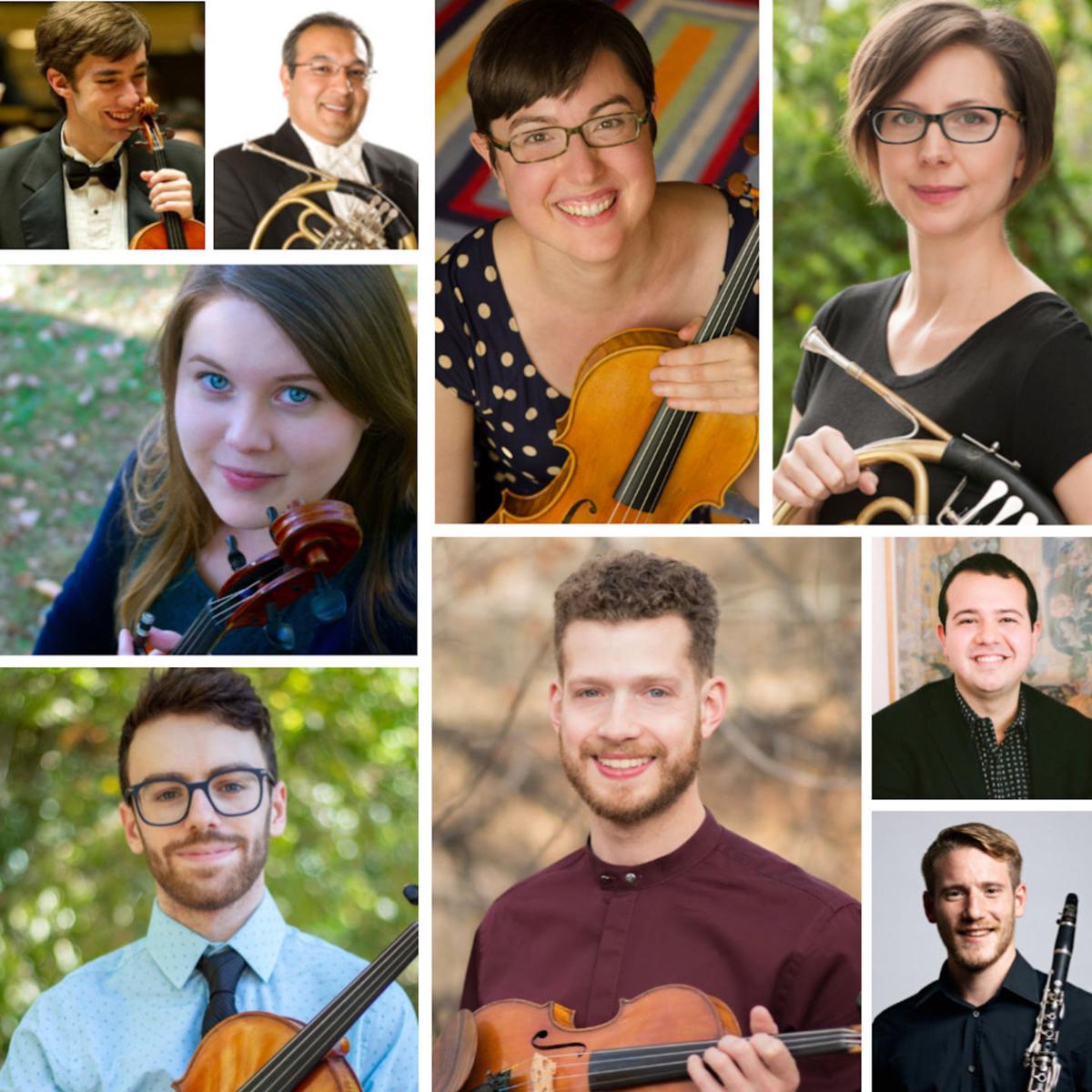
This time last year, a group of musicians from the University of Arizona and Tucson Symphony Orchestra gathered at Grace St. Paul’s Episcopal Church to perform a benefit concert for Interfaith Community Services. It sold out.
When it came time to do this year’s fifth annual “If Music Be the Food” concert, all of the musicians were in lockdown, courtesy the coronavirus pandemic.
So they did what many musicians have been doing in this era of COVID-19: They turned to technology.
The musicians participating from the TSO, University of Arizona Fred Fox School of Music, and the Santa Cruz Foundation for the Performing Arts met in Zoom sessions in April to discuss the program and their roles, then recorded their parts individually.
Then it fell on the concert’s coordinator, TSO violist and “If Music Be the Food” Tucson artistic director Candice Amato, to put it all together.
“I learned more about mixing and equalizing in the past month than I ever knew,” Amato said last week, days after she posted the concert on her group’s Facebook page and the Interfaith Community Services website.
This was arguably the group’s most challenging endeavor, said Amato, who launched the Tucson chapter of “If Music Be the Food” soon after she arrived in Tucson in 2015, fresh from grad school at the Eastman School in Rochester, New York.
“As an artist, our way of communicating with people is with music, with our art,” Amato said. “That’s what we do. It’s a different job when you’re not playing for an audience.”
The all-volunteer movement, founded by Eastman viola professor Carol Rodland in 2009, has more than a dozen chapters nationwide, but Amato said many of them bowed out of doing a concert this year because of the pandemic.
And while the notion of skipping the event this year might have crossed her mind, she and her colleagues were game for the challenge.
“This has been a really nice way to collaborate in a new way that we have never tried before,” Amato said.
And the need this year seems to be greater than the four previous years, she said.
“I think now you see a lot of people who are out of work and a lot of people who hadn’t had to rely on food banks before are finding themselves in a new state of need,” she said. “And food banks are also strained because people aren’t donating as much. I think the problem is at both ends.”
In its first four years, the Tucson event has raised about $5,000 cash and 1,200 pounds of food.
For the fifth annual concert, the musicians divided into four ensembles to perform works by Mozart, Béla Bartók and Irish violist and composer Garth Knox. The concert runs 20 minutes.
Photos: Sunshine Mile (Broadway) in Tucson
Sunshine Mile in Tucson
Updated
Hirsh’s Shoes was built in 1954 and is one of 29 buildings in the district designed by architect Bernard Friedman’s firm.
Sunshine Mile in Tucson
Updated
Hirsh's Shoes, 1954, on the Sunshine Mile (Broadway Road) in Tucson.
Sunshine Mile in Tucson
Updated
Hirsh’s Shoes at 2934 E. Broadway, in Tucson, circa late 1950s (courtesy Hirsh’s Shoes) and in 2016 (Mike Christy / Arizona Daily Star).
Sunshine Mile in Tucson
Updated
The distinctive Chase Bank at Broadway and Country Club was once a Valley National Bank. It was designed by Don Smith of Friedman and Jobusch Architects in 1971.
Sunshine Mile in Tucson
Updated
Construction workers build the Valley National Bank on the northwest corner of East Broadway Boulevard and North Country Club, on March 18, 1971.
Sunshine Mile in Tucson
Updated
Valley National Bank, 1973, on the Sunshine Mile (Broadway Road) in Tucson.
Sunshine Mile in Tucson
Updated
The Welcome Diner, built in 1964 as Sambo’s Pancake House, is on the western end of Tucson’s historic Sunshine Mile.
Sunshine Mile in Tucson
Updated
Solot Plaza on the Sunshine Mile (Broadway Road) in Tucson.
Sunshine Mile in Tucson
Updated
Kelly Building, built in 1964-65, on the Sunshine Mile (Broadway Road) in Tucson. Architect: Nicholas Sakellar
Sunshine Mile in Tucson
Updated
View from Country Club Road on the Sunshine Mile (Broadway Road) in Tucson.
Sunshine Mile in Tucson
Updated
Store in the Solot Plaza, built in 1958, on the Sunshine Mile (Broadway Road) in Tucson. Architect: Nicholas Sakellar
Sunshine Mile in Tucson
Updated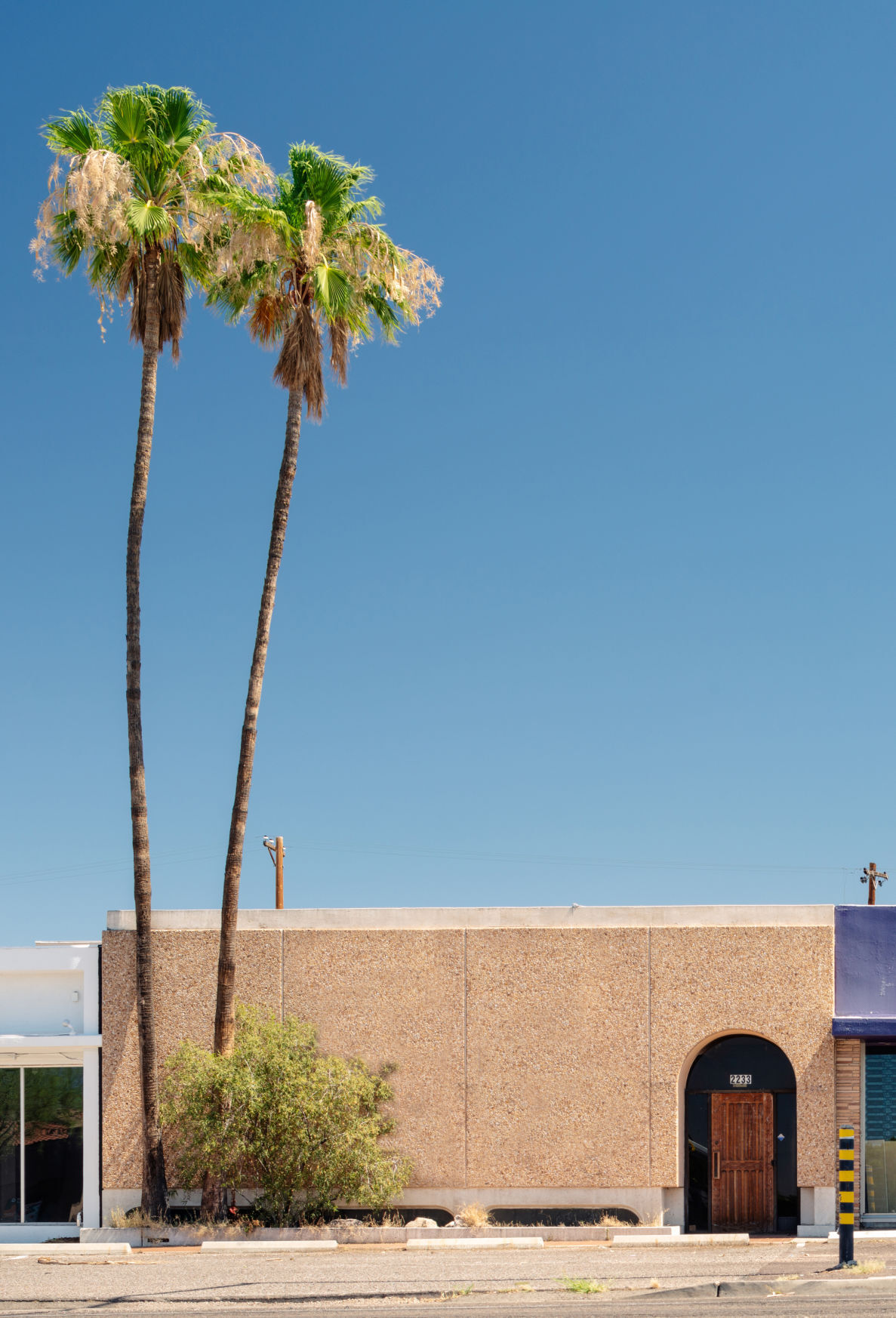
Friedman and Jobusch Office, built in 1950, on the Sunshine Mile (Broadway Road) in Tucson. Architects: Friedman and Jobusch
Sunshine Mile in Tucson
Updated
Old Pueblo Medical Group, built in 1965, on the Sunshine Mile (Broadway Road) in Tucson. Architect: Cain, Nelson and Ware
Sunshine Mile in Tucson
Updated
American Evangelical Lutheran Church, built in 1954, on the Sunshine Mile (Broadway Road) in Tucson. Architects: Jaastad and Knipe
Sunshine Mile in Tucson
Updated
Arizona Auto Refrigeration, built in 1951, on the Sunshine Mile (Broadway Road) in Tucson.
Sunshine Mile in Tucson
Updated
Old Tucson Jewish Community Center, built in 1953, on the Sunshine Mile (Broadway Road) in Tucson. Architect: Bernard Friedman
Sunshine Mile in Tucson
Updated
Anne Rysdale was Arizona’s only female registered architect when she developed and built the Haas Building in 1957.
Sunshine Mile in Tucson
Updated
A public workshop will be held May 18 from 9 a.m. to noon at First Assembly of God church, 1749 E. Broadway, to gather public reaction to a report on transforming the Broadway corridor into a public space as the city widens a portion of the street to six lanes.
Sunshine Mile in Tucson
Updated
The Chase Bank at 3033 E. Broadway Blvd. is one of several architectural distinctive buildings along the Sunshine Mile.

