


They woke to a cacophony of gravel spraying the underside of their Mustang as the car careened into the desert.
Then it flipped with an impossibly loud thud - once, twice - tossing its occupants around like rag dolls before finally resting in the scorching sand.
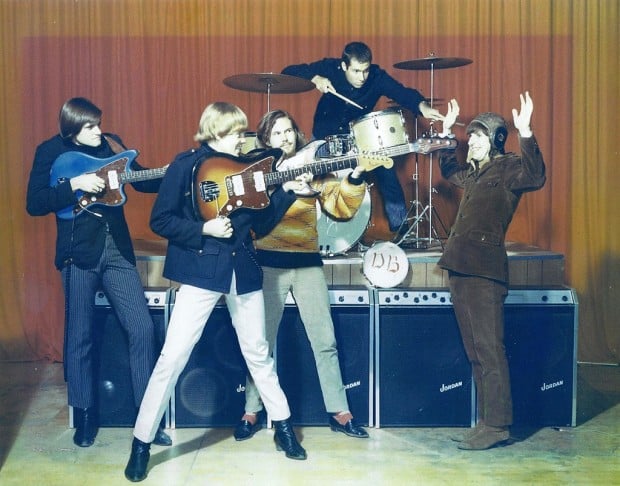
The meteoric rise of The Dearly Beloved - Tucson's most promising 1960s garage band - had come to a crashing, bloody halt.
Four of the five band members survived the wreck, which took place just after 8 a.m. on July 3, 1967 along a desolate stretch of highway 52 miles east of Yuma.
But none in the 45 years since has spoken publicly about the accident. Until now.
The beginning
Tucson's music scene had several standout bands in the late 1960s, but none with more promise than The Dearly Beloved.
"We were one of the few bands that could do both Beatles and Rolling Stones," says Walter "Shep" Cooke, the band's bass player and self-appointed vocal coach. "There were lots of guys who did Rolling Stones stuff because you don't need a bunch of singers to do Rolling Stones. You just need to look really nasty and play real loud. With Beatles stuff you need more finesse and to play harmonies, and we could do both."
The band had started as the Intruders in 1964 by guitarists Tom Walker and Terry Lee, who had grown up together not far from the Arizona Inn. They recruited a buddy, Pete Schuyler, to play drums and Schuyler brought along another neighborhood kid, Larry Cox, to be the singer. Cox was the only one yet to graduate from Catalina High School.
Rick Mellinger later became the group's drummer after stints with two other popular Tucson bands, The Grodes and The Natives.
"Our first gigs were in front of the snack bar at drive-in theaters," Lee says. "People loved it. When (Larry) went on stage and the lights came on, he worked the audience. He was our spark plug."
Cox was not matinee idol cute, Lee says, but he had tremendous charisma and personality that came through on stage. At 5 feet 8 inches, he was short next to Lee, who topped 6 feet, but Cox tended to walk taller than the others, with a steely confidence and radiant charm.
"He knew how to do all the James Brown moves and he could sing loud," says Cooke, who taught himself bass three weeks before joining the band as it was gaining steam. "All we had to do was back him up."
While they played mostly cover songs from British-Invasion bands, they also mixed in a bit of surf rock.
"All of a sudden, we were playing everywhere," Lee says. "Little by little between the summer of '64 and the summer of '65, we became sort of a phenomenon."
The man who managed the Prince Drive-In started managing the band and it went to Los Angeles to record demos of original songs. None of the songs went very far until the summer of 1965, when it won a local battle of the bands contest. The prize was a recording session and a chance to be played on local radio.
Their music caught the attention of Frank Kalil, the legendary Tucson DJ who built KTKT into the city's top radio station. Kalil says the station had a soft spot for local acts and would add the band into the fairly tight playlist.
The Dearly Beloved's songs were hits. "Before we knew it we were legends in our own minds in Tucson," Lee recalls. "We were going to Safford and Bisbee and Tombstone and all the things that guys in bands did in those days."
Five guys, one silly song
The band crisscrossed Tucson, playing teen sock hops in school gyms and at fraternity and sorority parties. They had an agent in another local well-connected radio personality, Dan Gates, who introduced the band to club owners throughout the region.
Gates also brought the band a novelty song that he said would change their fortunes. "Peep Peep Pop Pop" was as silly as its name implied: "When I say let's kiss / She answers me like this / With a peep peep pop pop um po po."
"We said to Dan, 'You gotta be kidding. I'm not recording this'," Lee recalls. "This is the worst thing I've ever heard."
"We wrestled with it and wrestled with it and we decided, OK, let's do it like a Beatles song," adds Cooke.
The band added enough rock grit with grinding guitars to elevate the poppy lyrics, then recorded it in Phoenix. With Gates' help, the song landed on Tucson radio in 1966.
Bobby Boyd, a Tucson record producer, struck a deal to manage the band. He rereleased "Peep Peep Pop Pop" on his namesake label and distributed it regionally in Utah, Nevada, Colorado and Southern California. Meanwhile in Tucson, the song was a hit on Kalil's KTKT.
"We could say we bumped the Beatles in Tucson, but in those days Tucson had only 200,000 people and it wasn't a major market. But it was enough to get the guys at Columbia (Records) interested and we did some sessions," says Cooke.
Going national
Columbia rereleased "Peep Peep Pop Pop" nationally. It grazed the bottom rung of Billboard's Hot 100 chart and made it onto American Bandstand's rate-a-record segment.
The label brought the band to Los Angeles and offered it a deal. The band spent eight hours in the recording studio and cut five or six singles during the session, including "Wait Until Morning," the local hit that followed "Peep Peep Pop Pop."
"The very fact that (Columbia) fronted us studio time … they were serious," Cooke says. "They wanted to do a whole album."
Columbia also sent The Dearly Beloved on the road to open shows for national acts such as Buffalo Springfield and the Mamas and the Papas, among others.
The band held its own, Lee says, and on occasion was better than the headliner. At one Buffalo Springfield show, they were told they played too long; Lee says Buffalo Springfield was mad because The Dearly Beloved had given them a tough act to follow.
But the band began to feel there was something off-kilter with the Columbia deal. Members suspected the label had signed them to keep them from signing with a competing label, and they wanted out.
Which brought them to Los Angeles that fateful weekend.
"We were bulletproof"
The band was in Texas the last week of June 1967 for a show at the Dallas Coliseum. They headed home on June 28, three days after Lee celebrated his 22nd birthday.
On the way home, he persuaded the guys to detour to Carlsbad Caverns in New Mexico as a belated birthday present. They stayed the night in New Mexico, which put them late getting back to Tucson.
Luana Turner, Cox's younger sister, watched her big brother dart out of the family's house the morning after they returned. Unlike his other tours, when she would say goodbye and wish him well, this time she barely had time to wave.
Cox was 20 years old that summer and set to marry his teenage girlfriend Peggy Selby in Tucson on July 4. She was about four months pregnant.
Lee threw a change of clothes in a bag and checked the mailbox in front of his house. Inside there was a yellow envelope - his draft notice. The war in Vietnam was escalating.
"I told everybody, 'Well I've been drafted. This is going to change everything'," he recalls.
The five guys headed out in a borrowed 1967 two-door burgundy and white Mustang. They were set to play shows July 1 and 2 at the Middle Earth nightclub in Los Angeles. Reps with White Whale Records, whose big act was the Turtles, were in the audience the second night.
After the last show, Lee says they talked to the label reps until 1:30 in the morning. They had all but inked a deal before piling into the car for the drive back to Tucson for Cox's wedding.
Lee remembers driving the first leg to San Bernardino. It was after 3 a.m. when they pulled into a Bob's Big Boy for fries and Cokes.
Too exhausted to continue driving, Lee turned the wheel over to Mellinger, the drummer.
"From the time I stopped driving I was fundamentally asleep," says Lee. "We were coming back from Texas, from L.A."
"Everybody was asleep. We were dead tired," says Mellinger, who drove through to Yuma.
"The last thing I remember when we stopped in Yuma to get gas, we couldn't wake Larry up. He was fast asleep. I was dead tired so I turned it over to Shep," Mellinger says.
Cooke says he bought a 7-Up and popped their only eight-track tape into the player.
He hoped the guys would stay awake to keep him awake. "Ten minutes down the road, they're all asleep," he recalls.
"The sun was just coming up and I was driving right into the sun and it's just getting harder and harder to stay awake," Cooke says. "By the time we're 50 miles down the road, I was asleep."
What happened next almost sounds inevitable in hindsight.
"We were completely exhausted. We shouldn't have done it," Cooke says. "One of us should have had enough sense when we were in Yuma to say let's get a hotel. But we were all in our early 20s and we were bulletproof. 'Hey, we're a rock 'n' roll band! We're going home and Larry's getting married and we're going to have a big party!' No, we're not."
The crash
Cooke remembers being jerked awake when the gravel started hitting the wheel wells. The car's right front wheel hit a bridge over an arroyo.
"Then there was this tremendous bang when we hit the culvert, then more skidding and gravel," says Lee. "And then I heard a car horn go by, and I thought, 'Well, this is a big one.'"
Cooke says he grabbed the steering wheel as the car veered across the two-lane highway and into the sand.
Lee crouched in the back seat behind Cooke and tucked his body into his knees as the car skidded into the desert. "More skidding and more gravel then kind of a plunk, silence when the car came airborne," he says. "Then the hardest, biggest impact I've experienced in my life, and I played football and been blindsided. This was 10 times that."
He was thrown about the car as it tumbled.
"I remember one of my arms hitting a bush in the desert because it blew all the windows out," Lee says. "And I was reaching over with my right arm trying to get my left arm hauled back into the car about the time that it stopped and it laid up on its left side. So I'm looking out the window at the Yuma desert."
Mellinger, who had been sitting on the backseat hump, slammed against Walker and the roof as the car rolled.
Cooke recalls trying to open his door, then realizing he was in the sand.
"Everybody was kind of all scattered around (in) the car," Cooke says. "The car was on its side and my immediate reaction was to pull on the door handle but I'm staring at dirt."
Lee says the next thing he remembers was hearing a fan blade hit metal and gas gurgling out of the tank. The guys scrambled to get out of the car, crawling through the blown-out back window. Walker had to help Mellinger, who was bleeding from a gash on his head.
They ducked behind a berm, anticipating that the car would explode. Cooke suddenly realized Cox wasn't with them.
Just then, a passing car pulled over. The driver had a CB radio, which he used to call for help. His passenger was a nurse.
Cooke and Lee staggered back to the car. Forty feet away, in the path that the car had flipped, they found their lead singer.
"He was just laying on his back like he was sound asleep," Lee recalls. "I was trying to rouse Larry and I tried to open his mouth because it was full of sand and his jaw was clenched. I found out later that rigor in the jaw muscles is common when you break your neck."
The nurse did CPR on Cox and Lee tried to apply chest compressions but within minutes it became clear there was no hope.
It took the ambulance and police nearly an hour to arrive. They took Mellinger, Walker and Lee to Yuma Regional Medical Center.
Lee spent the 50-mile drive yelling at Mellinger to stay awake. "I didn't want him to slip off into the abyss," he says.
Cooke stayed at the crash scene with Cox, talking to police and waiting for the hearse. Numb, he didn't know how he was supposed to feel or even how he did feel.
Picking up, moving on
Mellinger suffered a compression fracture of his spine and was the only one to be hospitalized.
Cooke says he had a few scratches and bruises but was otherwise physically unscathed. He caught a ride back to Yuma in a patrol car.
Walker and Lee were black and blue. "I had a bruise that started at my left elbow and went all the way to my left ankle with no break," Lee says.
The pair spent that day at the Yuma Cabana Hotel. Lee remembers they showered and fell asleep. When they woke up, there was sand on their pillows.
That night, a friend in Tucson chartered a plane and flew Walker and Lee back to Tucson in a thunderstorm.
In the hours and days after the wreck, Cooke couldn't sleep.
"I would be nodding off and I would jerk awake because the last time I fell asleep we had the crash and then I was trying to get Larry to breathe, which he wouldn't do," he recalls. "For several days I had a hard time going to sleep."
Cox's funeral at Catalina Church of Christ later that week was a disaster, Cooke says. Cox's mother never cried during the service, but later broke into sobs, recalls Lee's wife, Lil Terry, who had been dating Lee for a couple years by then.
"There were hundreds and hundreds of people. I had never seen so many people gathered at a church," recalls Selby, Cox's fiancée. "They were on the grass. They were on the sidewalk. They were on the parking lot. The church was full. It was crowded in like sardines."
At one point, Cooke says, Selby cursed him: "Damn you Shep!" he says she told him.
"I don't blame her," he says. "It's a sad story and I'm the villain of the piece."
Selby says she doesn't recall saying anything to Cooke, but she admits she blamed him for the accident for many years. She now regrets that and has tried to reach out to him in recent months to apologize. He has yet to return her calls.
"It could have happened to any of us," Lee says. "In retrospect, we were all out of our minds trying to drive back after playing several gigs. Being that age and everything, you kind of have that bulletproof mindset going on."
A few weeks after they buried Cox at Evergreen Cemetery, three of the four surviving band members - Mellinger was sidelined six weeks because of his spine injury - tried to pick up where they left off. They got a new lead singer and a fill-in drummer, picked up a few gigs and recorded a couple songs.
Cooke left after a few months to tour with former Catalina High School classmate Linda Ronstadt and her Stone Poneys. He returned to The Dearly Beloved later, but says his heart was no longer in it and he finally left for good.
"The wreck changed everything for everybody," Cooke says. "The heart went out of the band; it just was never the same. It was never going to be the same."
Lee agrees. "There was nobody who was going to fit in that position. You were not going to bring in somebody and say, 'Here, you replace Larry.' The heart had been ripped out of the band."
LEARN MORE
Here are a couple of anthologies that include The Dearly Beloved:
• Volume 6 of the ambitious garage band anthology series "Rough Diamonds" from Voxx. The 16-cut compilation included previously unreleased 1966 Columbia Records demos. The vinyl album, released in 1985 and no longer in print, is available from several websites, but expect to pay at least $25 at sites like audiophileusa.com
• "Let's Talk About Girls: Music From Tucson 1964-1968," released on Bacchus Archives in 1997, featuring tracks from The Grodes/ Tongues of Truth and the Dearly Beloved. The record is out of print.
IF YOU GO
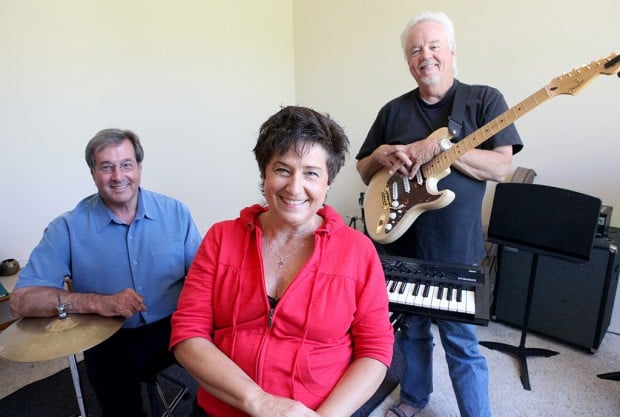
Terry and Lil Lee and Rick Mellinger perform in a praise band at Catalina Foothills Church, 2150 E. Orange Grove Road, during Sunday services a couple times a month. You can catch them next on July 8 during the 9 and 11 a.m. services.

