



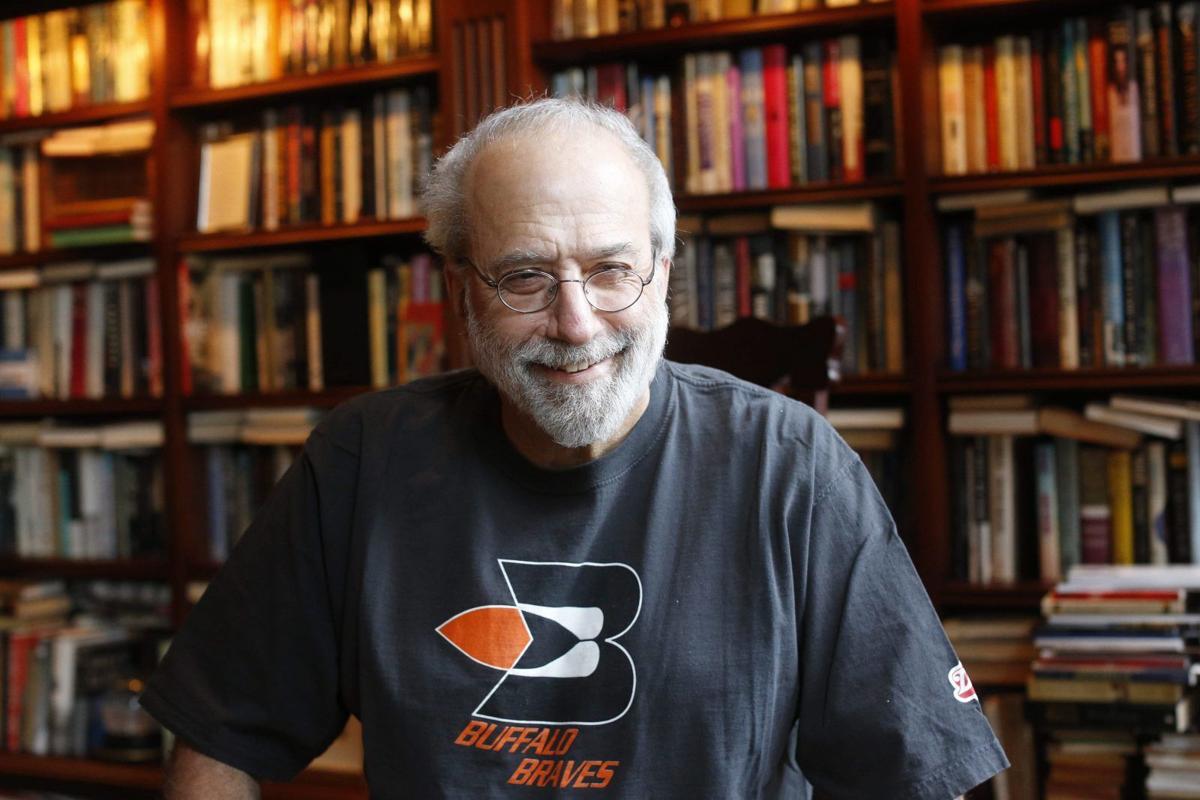
Buffalo writer-producer and Emmy winner Tom Fontana has a residual check for his six seasons of work on the HBO series “Oz” starting in 1997 framed on the wall where he writes.
“It was for less than the stamp that was on the envelope it was mailed in,” said Fontana. “It was like 27 cents.”
In a recent column about the popularity of the USA Network series “Suits” that now airs on Netflix and has been No. 1 among streaming programs, I wrote that I hope the actors and writers are getting fair compensation in residuals associated with the series that ended in 2019.
Fontana explained that wasn’t the case.
“You have to understand the way it’s structured,” Fontana said of residual checks after shows first air.
“When shows first start repeating, the residuals are bigger. Over time they get smaller and smaller and smaller and smaller. That’s the way it’s always been. What’s different now is that for example, the guy who did ‘Suits,’ which was on USA Network for nine years, it was the No. 1 show on Netflix. And the guy got something like $249.”
Residuals are only one of the issues about the current writers’ and actors’ strikes that I discussed with Fontana in a wide-ranging telephone interview.
A former vice president of the Writer’s Guild of America East and former president of the Writers Guild East Foundation, Fontana is the ideal Buffalonian to give the writers’ point of views on the strikes that have shut down Hollywood production.
Fontana, whose success stories include writing and producing “St. Elsewhere” from 1982 to 1988 and “Homicide: Life on the Street” from 1993 to 1999, tries to walk the picket line in New York City at least twice a week and said the enthusiasm and passion remain strong because the issues are too important to give in.
This is the fifth strike that Fontana has experienced, starting with one in 1981 when he wrote his first script for “St. Elsewhere” and respected the strike before he was a member of the union. The other strikes were in 1988, 1997 and 2007-08. That one lasted 100 days. The current one has gone on longer than that.
There is reason for optimism.
Last Thursday, the day before the interview, the studios in the standoff with the writers asked to go back into negotiations with the writers instead of the actors as they might normally do.
“Suddenly, the writers seem to be the reasonable people,” said Fontana.
They have several reasons for striking, led by one.
“The nature of the business has changed so radically since 2007,” he explained.
Cable or streaming shows used to produce 12 episodes a season, about half of the 22 episodes successful broadcast series usually produce.
“Now it’s six, maybe eight episodes,” Fontana explained. “It’s hard for a middle-income writer to support their families with six episodes. I know people think all these Hollywood people make so much money.
“Think about the fact that you’re making a nice chunk of money, but only for six weeks’ work and you have to live on that money and hope to get another job for six weeks. All the younger writers that I work with and try to mentor who have families and have to pay New York rent, they’re struggling.”
He added that for the past few years, the studios were ordering tons of shows for broadcast TV, cable and streaming.
“Suddenly the industry got flooded with writers and now the studios are like, ‘Oh, well, we realized we made a huge mistake putting all this money in streaming because we’re not getting the revenue back because now there’s too many streamers.’ They’re expecting us to pay for that by not giving us enough money to live. When I say us, obviously, I don’t mean me. I’m saying the average writer.”
The above explanation also illustrates why some streamers are substantially raising their prices to consumers.
Another key issue is the use of artificial intelligence in writing future scripts.
“Getting more money for fewer shows is an economic issue,” Fontana said. “AI is truly an existential issue. The minute they can say, ‘we’ll just have AI write the next Marvel movie,’ that’s a very short way to, ‘why not have AI write the spinoff of ‘Yellowstone’ once a pattern is set on a television series or a movie?’ ”
“AI doesn’t actually create, it steals a script of mine. It steals a piece of David Simon’s script. It steals a piece of Scott Frank’s script and comes up with what is supposedly an original script. But it’s not original because it’s got mine by the technology. That’s scary in terms of the long-term life of not just writers, but actors, directors.”
Fontana explained that initial talks broke down several weeks ago after the writers went in with demands the way they have every time a contract is up.
“They basically went through it and said, ‘We are not even talking about this or this or this or this or this. We refuse to talk about those things.’ Well, that’s not a negotiation; that’s dictation. That’s saying we refuse to talk about these things, which is disrespectful.
“The only thing they were willing to talk to us about and not all that constructively was the residuals. They wouldn’t even talk about AI and we basically said we have all these writers (for different aspects of TV and movies) to represent. We can’t just choose that. We’re only going to improve the lives of one section of our guild.
“So the negotiation ended. And then the studios (Alliance of Motion Picture and Television Producers) called the guild and said, ‘We’d like to have a sidebar,’ which means basically an off-the-record conversation. Basically, they said we’re willing to talk about AI but that we’re not talking about any of the other stuff. So that ended.
“And then they called last Thursday and said, ‘We’d like to meet with you today.’ So God knows what’s going to go on in there. But this is the official beginning of a new negotiation.”
Fontana said the issues are further complicated because the AMPTP members – which include broadcast networks, Apple TV+, Amazon, Disney, Warner/Discovery, Netflix, Sony Pictures, Universal Pictures and Paramount – have different agendas now that streaming has become so important.
He said the needs of Amazon and Apple are different than other studios because their entertainment divisions that produce streaming shows account for a small fraction of their entire business.
The unanswerable question posed to Fontana is how long he thought the impasse could go on.
“Early on, there was a feeling that things would start to move forward by Labor Day. If the meeting (last week) and subsequent meetings (go well), maybe it’ll be over by Labor Day. If not, if this breaks down again … I would say Christmas, which will make a very miserable Christmas for a lot of people.”

