





Tucson native Abe Jacob is the “Godfather of Sound,” the man responsible for developing modern-day sound design employed in theaters worldwide, from Broadway to London’s West End.
You would think that would warrant him Broadway’s highest honor: A coveted Tony Award.
So far, it hasn’t.
In a career that included designing the sound for the original Broadway productions of “Jesus Christ Superstar,” “A Chorus Line” and “Pippin,” and sound engineering for Jimi Hendrix, the Mamas and the Papas and the Beatles, Jacob never received that brass and bronze medallion.

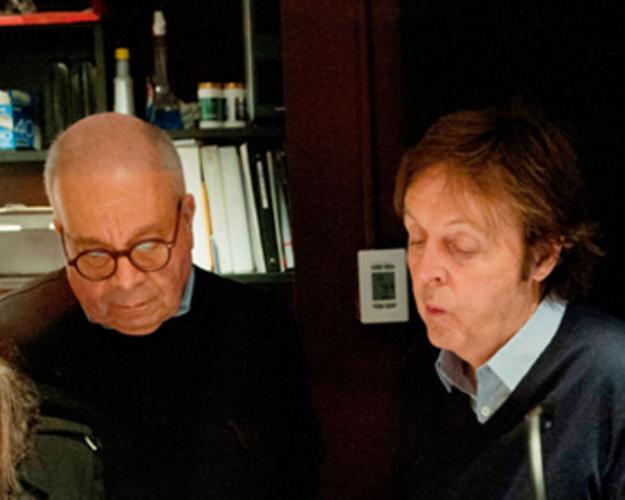
Tucson native Abe Jacob was part of the sound crew on The Beatles last concert. Here he is with Beatle Paul McCartney, who shares a Tucson tie.
That changes on Sunday, June 16, when he is set to receive a Special Tony Award for “modern theatrical sound design.”
“If you stick around long enough, they eventually come around to you,” Jacob, who retired to Tucson in 2017, joked early last week.
Jacob won’t be at the ceremony in New York City on Sunday, but he did send a short video with his acceptance speech that included thanking the generations of sound designers who he mentored over his career that started with the original Broadway production of “Hair” and continued through 2017.
His last professional gig was designing the sound for Arizona Theatre Company’s 2018 production of “The Music Man.”
Jacob’s journey to Broadway history started in the legendary Tucson Children’s Theatre, learning acting under founder Mary MacMurtrie and landing a walk-on role at age 6 in the 1951 Ronald Reagan western “The Last Outpost,” filmed in Southern Arizona. The next year, he was cast as Tad Lincoln in the University of Arizona’s production of “Abe Lincoln in Illinois” before “retiring” from acting, he joked.
When he was 10, his namesake dad, cofounder with his uncle George Jacob of the Tucson Mexican restaurant Club 21, moved the family to northern California. Club 21 closed in 2019 after 73 years.
In high school, Jacob flirted with a few other career directions including musician — he took piano lessons but hated to practice — and writing, which he had briefly considered as a college major. But his true path was set when he stepped foot into the audio-visual department and found himself on the sound crew, working with the high school’s musical theater program.
Jacob was tasked with renting the mics and speakers from McCune Sound, a small regional company, and setting up the sound system for several musicals including “High Button Shoes” and “The Mikado.” He placed the mics on the floor, amplifying them from loud speakers that projected the sound onto the audience. It was pretty straight-forward by today’s thinking, but back then, it was revolutionary.
After graduating high school, Jacob landed a summer job with McCune, which introduced him to sound design for live concerts and other events. He continued working with the company and after earning his bachelor’s degree, was part of McCune’s sound crew for the Beatles final concert at Candlestick Park on Aug. 29, 1966.
Jacob and Harry McCune Jr., son of the company’s founder, were at the forefront of artists touring with their own sound system, which landed them on the road with the day’s big-name artists. Jacob toured with the Mamas and the Papas for their “California Dreamin’” tour and designed the sound system for the Monterey Pop Festival, founded by the band’s John Phillips in 1967.

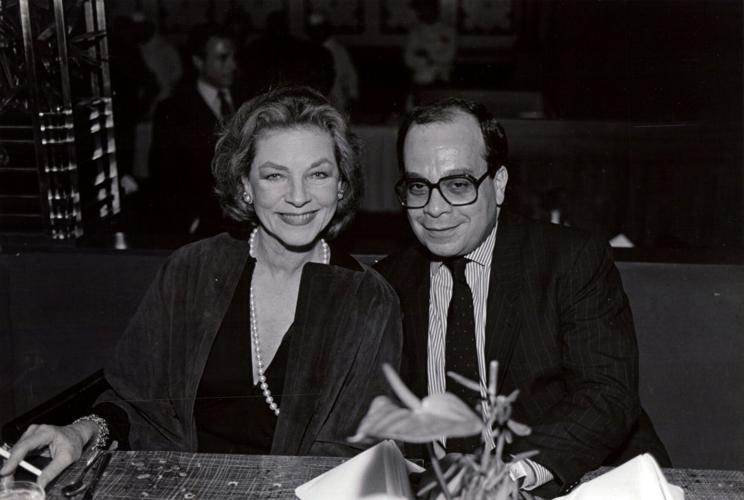
Lauren Bacall is among the actors Tucson native Abe Jacobs worked with in his nearly 60-year career as a trailblazing sound designer.
Jacob worked with Simon & Garfunkel, Gordon Lightfoot and the Jimi Hendrix Experience before his career took a sharp turn to Broadway when Peter Yarrow (Peter, Paul & Mary) introduced Jacob to Broadway producer Michael Butler.
Butler was having trouble with the sound for his seminal rock musical “Hair,” which in early 1970 was being introduced in Boston. Jacob took his rock ‘n’ roll aesthetic to the stage, adding loudspeakers and additional mics including early wireless versions to create a more robust concert quality sound.
The show’s success landed Jacob in New York City in 1971 and a theater career that literally changed the role of sound design.
“Sound should be unnoticeable as far as the audience is concerned,” he said of his lifelong philosophy to his craft. “They should hear everything, but it also should be realistic.”
He started with moving the sound operation from backstage to the front-of-house, where the designers and techs working the sound board could hear what the audience heard.
Shows he worked on including “Chicago” and “Pippin,” the first show he did from scratch, had realistic sound meant to bring the audience into the story.
In today’s musicals, everything is larger than life “and the spectacle is bigger than life,” he explained.
“My background and whole emphasis was on realism,” he said, making the contrast between what he did with sound and what is now the norm. “I don’t fault it; I think it’s terrific and it brings people into the theater to enjoy live performance.”
“I don’t think it’s changed much since I started,” he added of sound design. “I always thought that the role of the sound designer is to convey the ideas of the (show’s creators). Anything else you want to do on top of that is the world of special effects.”
Jacob joins comedian Alex Edelman and hair and wig designer Nikiya Mathis as the 2024 Special Tony Award honorees. The awards are given to honor work that does not fall within the competitive categories (think best actor/actress, playwright, etc.)
The 77th Annual Tony Awards air on CBS at 5 p.m. Sunday.

