


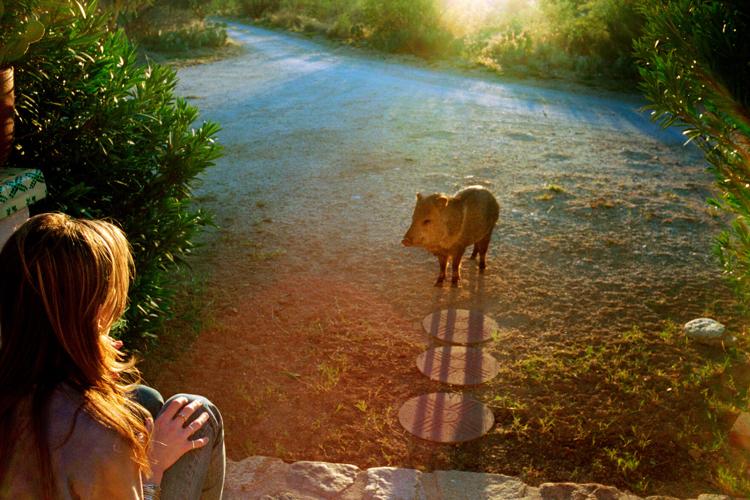

More than 14,000 people have visited the University of Arizona Museum of Art since “Restored: The Return of Woman-Ochre” opened on Oct. 8.
They’ve come from the Catalina Foothills and Casa Grande, New York and New Mexico, anxious to see the famous Willem de Kooning painting that was brutally ripped from its frame at the UA museum in 1985 and remained a mystery until it just as mysteriously was discovered in a Silver City, New Mexico, antiques store 32 years later.
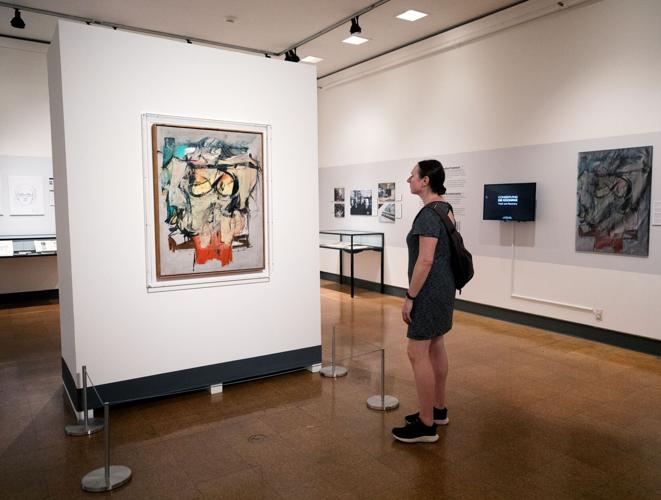
The exhibit recounts the journey “Woman-Ochre” has taken, from its theft on a slow holiday weekend to its discovery and recovery and eventual restoration three decades later that brought it home to the UA where it had been part of the museum’s permanent collection since it was donated to the museum in its infancy in 1959.
“Restored” is open through May 20, when the exhibit will come down and preparations will be made to return the painting to its permanent second-floor space in the newly renamed Manzanita Ridge Gallery.
It is one of several not-to-miss art exhibits on our radar.
‘Restored: The Return of Woman-Ochre’
UA Museum of Art, 1031 N. Olive Road; artmuseum.arizona.edu, 520-621-7567 • Hours and cost: 10 a.m. to 4:30 p.m. Tuesdays through Saturdays; $8, $6 for seniors and groups, free for students with ID, UA faculty and staff and active military personnel
The recovery of Willem de Kooning’s “Woman-Ochre” from the Manzanita Ridge Furniture Antiques store in Silver City, New Mexico, in August 2017 made international news. For three decades its whereabouts had been a mystery until a trio of antiques dealers stumbled upon it when they bought the estate of Rita and Jerry Adler from nearby Cliff, New Mexico. According to the Adlers’ relatives, the painting had been hanging on the back of the couple’s bedroom door for decades.

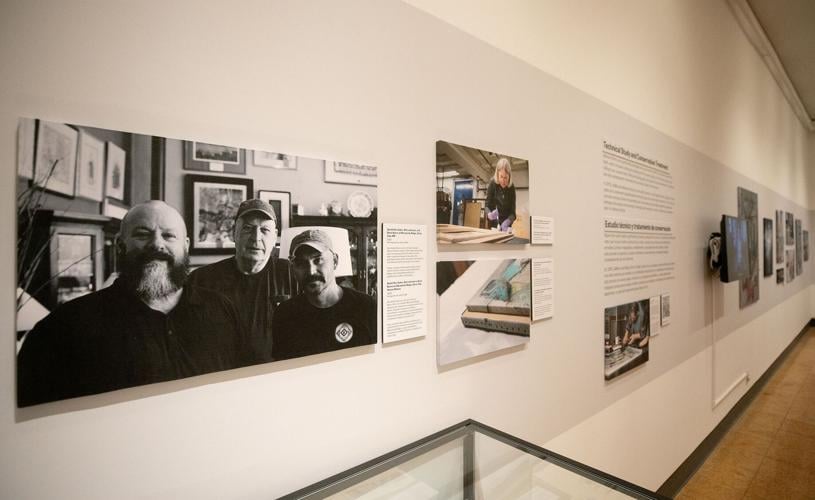
A photograph of David Van Auker, Rick Johnson and Buck Burns is on display as part of the exhibit “Restored: The Return of Woman-Ochre.” The three men contacted the museum after discovering they had the stolen painting in their possession.
Officially, the FBI has never closed the case and never officially named the Adlers as the mysterious couple who cut the $160 million painting from its frame at the UA Museum of Art on the day after Thanksgiving in 1985.
“Restored” chronicles the journey the painting took from its theft to its rediscovery and recovery and the painstaking years-long effort by the famed J. Paul Getty Museum to historically restore it. The Getty exhibited the painting before it was returned to Tucson last fall.
The famed Getty Museum restored the famous painting that was stolen from the UA Museum of Art in 1985.
Since the exhibit opened on Oct. 8, the UA Museum of Art has seen “folks all over the U.S. coming to visit,” said Myriam Sandoval, who works in visitor and members services at the museum on the UA campus.
“We’ve had an increase from visitors from New Mexico especially from Cliff and Silver City,” she added, with many curious how such a famous painting could have remained hidden in their midst for so long without anyone noticing.
“When they see the exhibition they just are truly fascinated by the story because it is very bizarre,” Sandoval said.
In addition to the painting, “Restored” includes newspaper articles about the theft and recovery, the original police sketches of the suspected thieves, interviews with the owners of the antiques store who returned the painting to the UA and the empty non-descript frame that it was in at the time it was found. That frame will be returned to the Manzanita Antiques store where the owners say it will hang with a plaque reminding customers of the role the store played in one of the most intriguing art theft stories in American history.
The exhibit, which as of April had 14,200 visitors, runs through May 20. Sometime this summer, “Woman-Ochre” will move to its permanent and secure gallery space.
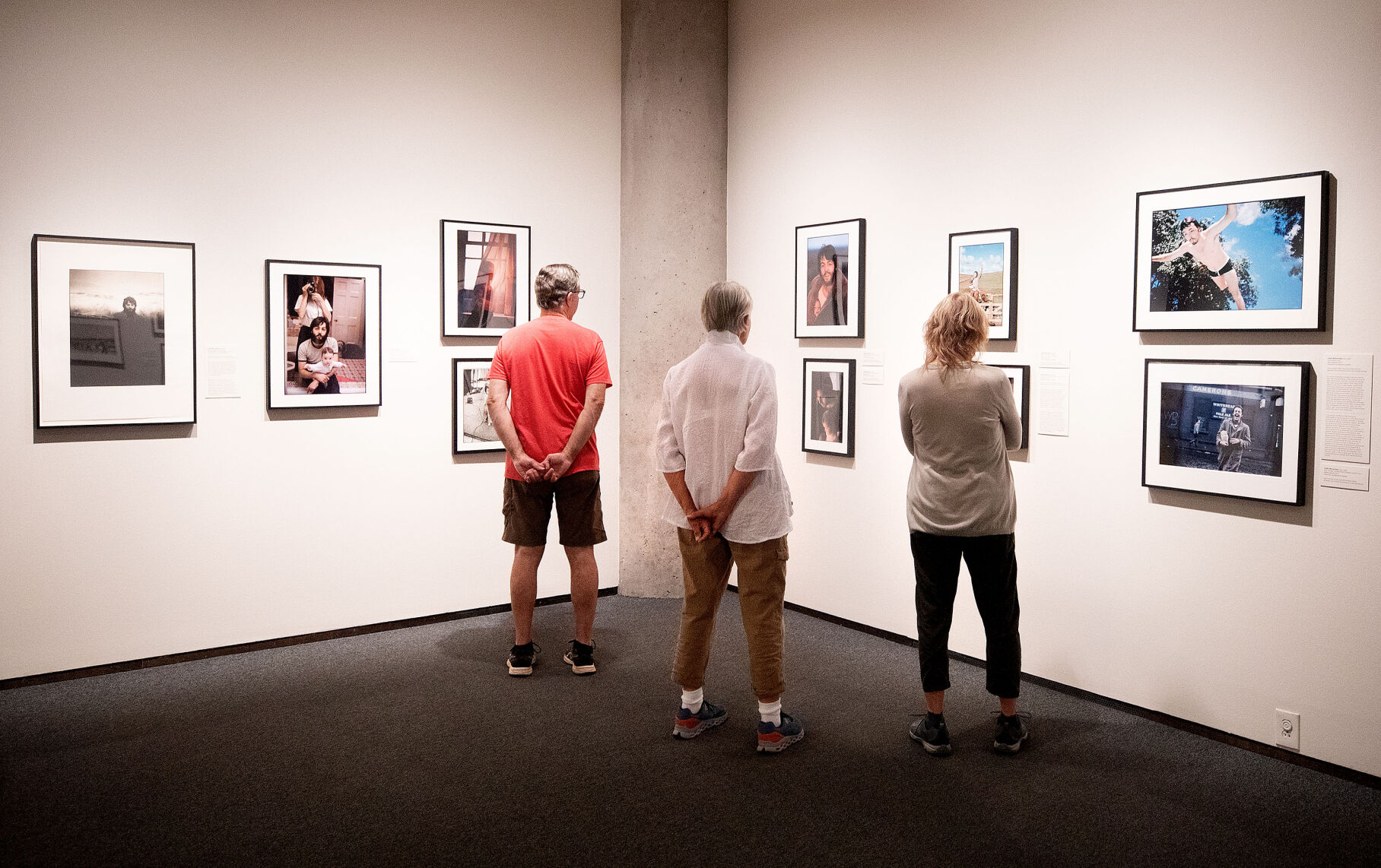
Visitors look at photographs on display as part of the “Linda McCartney Retrospective” at the Center for Creative Photography on May 2.
‘The Linda McCartney Retrospective’
Center for Creative Photography, 1030 N. Olive Road; ccparizona.edu, 520-621-7968 • Hours and cost: 10 a.m. to 4:30 p.m. Tuesdays-Saturdays; free.
Tucson held a special place in Linda McCartney’s heart and her art. A prolific photographer, the wife of Beatle Paul McCartney fell in love with photography when she was a University of Arizona student. It was a love affair that lasted until her death from cancer in 1998 at the Tucson home where she and Paul and their children created memories for more than 20 years.
Her photo retrospective, which was first displayed in London in 2022, features dozens of photographs of famous rock stars including her husband and his Beatles bandmates that she captured over her decades as a photographer. But the version of the retrospective on display at the Center for Creative Photography showcases a side of Linda McCartney that the folks in London didn’t see: her Tucson side.
There are photos of Linda and her family in the Sonoran desert, surrounded by cacti, gorgeous sunsets and the occasional javelina. We get to see the Tucson that she fell in love with and shared with her husband, who was inspired to include his adopted hometown in one of his most iconic songs “Get Back” (“Jojo left his home in Tucson, Arizona/For some California grass”).
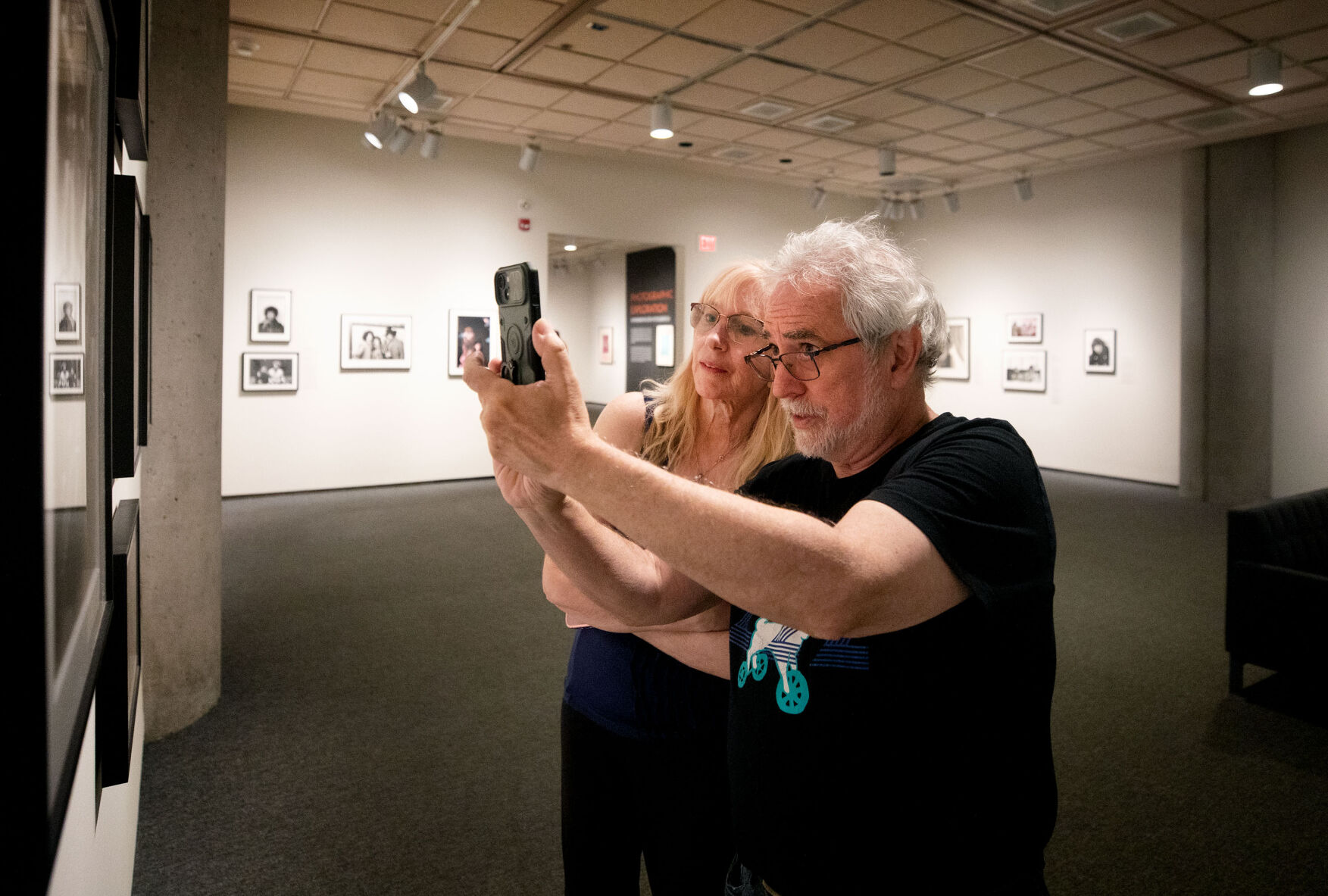
Carol Schochat watches as her husband, Wayne, takes a photo of a photograph at the “Linda McCartney Retrospective” exhibit at the Center for Creative Photography on May 2.
The retrospective opened in late February and runs through Aug. 5. As of mid-April, 15,484 had seen it, CCP officials said.
The exhibit also includes works by Hazel Larsen Archer, the boundary-breaking avant-garde photographer and former Tucson Museum of Art photography instructor who was influential in not only McCartney’s photography but today’s modern photography practices.
Another feature of the exhibit: Local musicians will perform in the CCP’s “8-Track” concert series presented by Arizona Arts Live and the CCP. Performances are at the gallery every other Wednesday through June 7. Coming up: Mo la Flo on May 24 and Nicandro Guereque on June 7. Performances begin at 5:30 p.m.
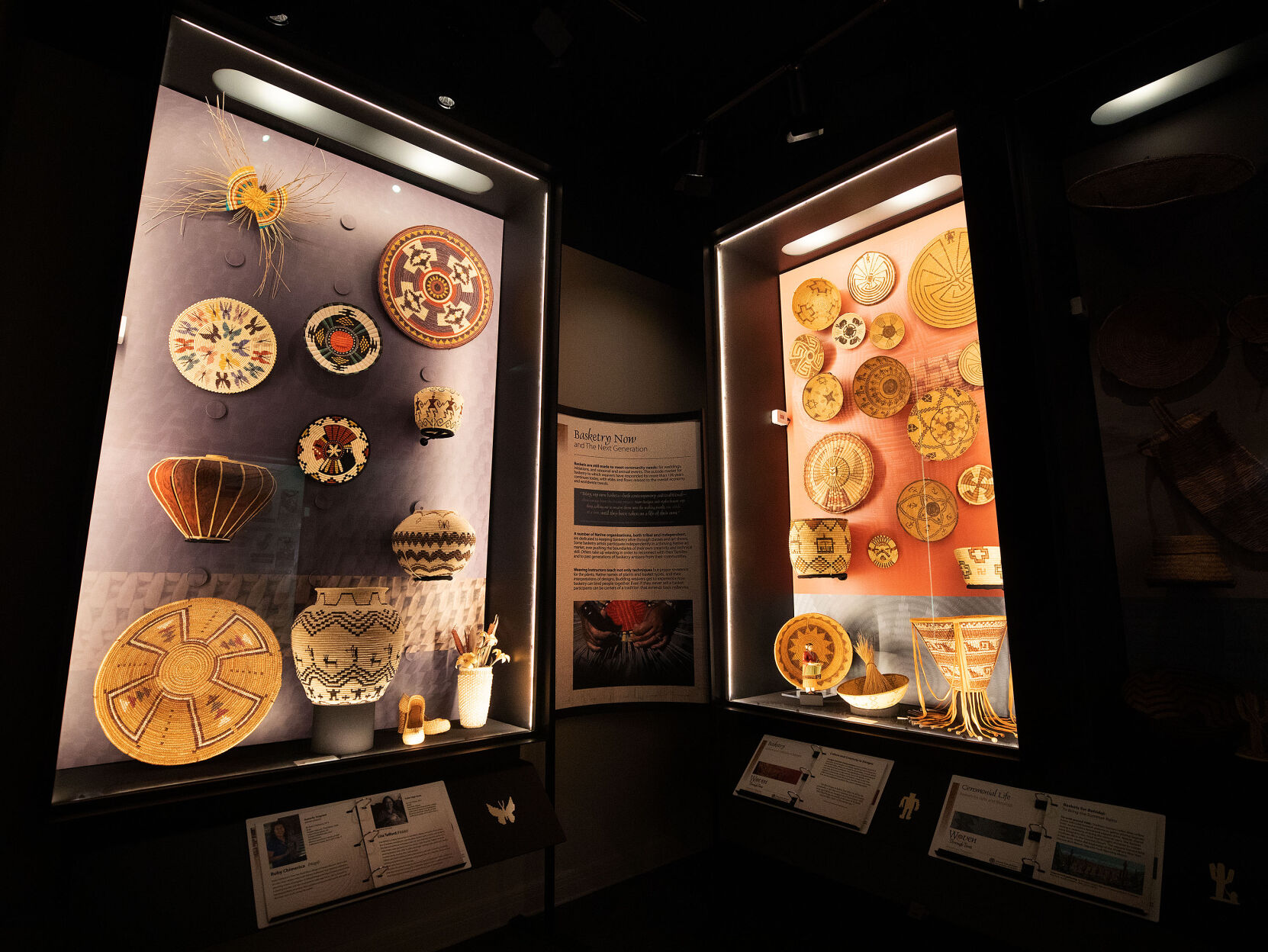
The Arizona State Museum has the world’s largest Native American basketry (35,000 specimens) and pottery collection (24,000 specimens).
Arizona State Museum
1013 E. University Blvd.; statemuseum.arizona.edu, 520-621-6302 • Hours and cost: 10 a.m. to 4 p.m. Tuesdays-Saturdays; $8 adults, $6 for seniors, UA museum members and active military personnel with ID
While you’re on the UA campus, it’s worth taking a 10- or 15-minute stroll across the lush green lawns and towering palm trees lining East University Boulevard. Right across the street from Centennial Hall is a magnificent big building with towering windows and a long red-brick walkway with manicured cactus gardens sandwiched between the greenest, softest grass you’ll find in Tucson.
You can stand out there and admire the gorgeous setting, but inside this building is where the true beauty lies.
That’s where you will discover artifacts unearthed in archeological digs throughout the Southwest that tell the story of the native peoples who have inhabited the region for 13,000 years. Pottery, jewelry, textiles and clothing are among the museum’s expansive permanent collection that also includes more than 350,000 photographic prints, negatives and transparencies that illustrate the prehistory and ethnology of the Southwest and northern Mexico.
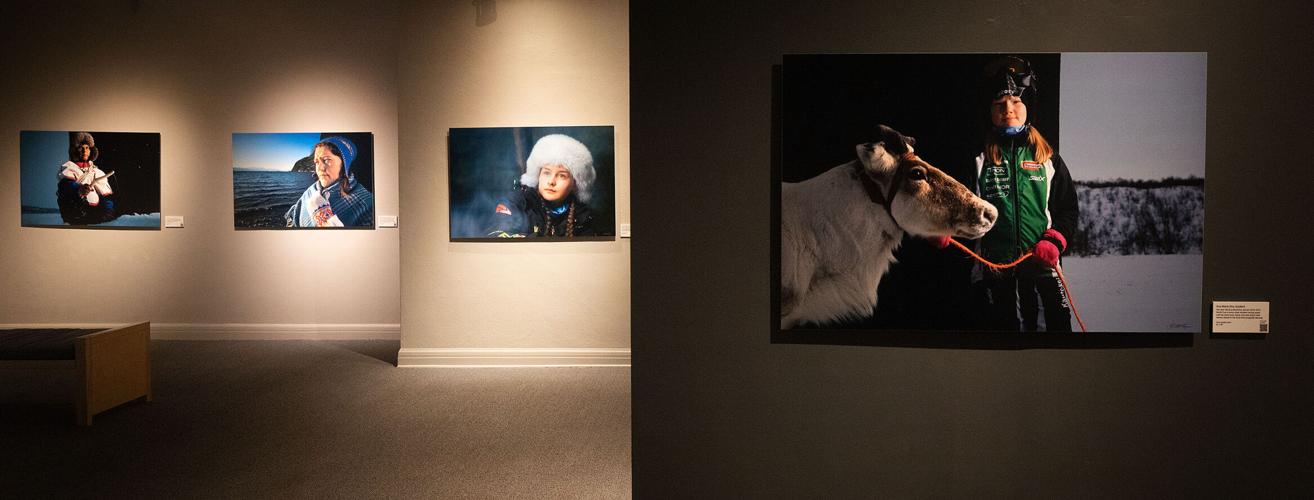
The museum, founded in 1893, is a research facility for students and historians, but it also hosts lectures on art, history, culture and archeology; travel programs; and contemporary exhibits including “Continuity and Innovation in Southwest Native Jewelry” that runs through Oct. 28 and “Sámi Dreams: Portraits of Resilience in the Norwegian Arctic,” on display through June 17.

“Sami Dreams, Portraits of Resilience in the Norwegian Arctic,” by Randall Hyman are on display at the Arizona State Museum on May 3.
Some other fun facts: The museum has the world’s largest Native American basketry (35,000 specimens) and pottery collection (24,000 specimens) and is one of the largest conservation labs and preservation programs in the country, according to museum officials. Its permanent exhibit “The Pottery Project,” celebrating Indigenous pottery-making traditions in the Southwest and northern Mexico, showcases 500 specimens from the museum’s collection of 24,000 whole vessels.
Parking is available at the Tyndall Avenue Garage off East University in Main Gate. From there it’s a five-minute walk to the museum.

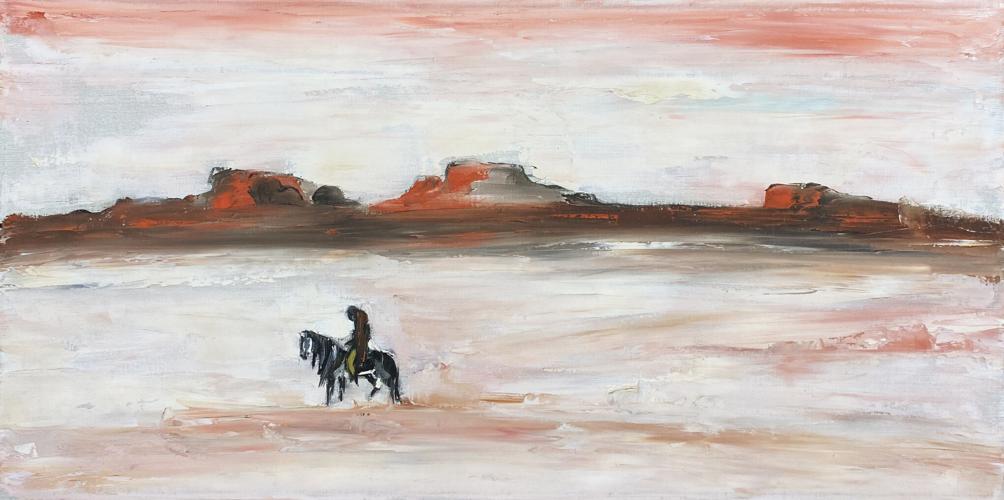
“On the Trail with Ted DeGrazia” is on display through Aug. 30.
DeGrazia Gallery in the Sun Museum
6300 N. Swan Road; degrazia.org, 520-299-9191 • Hours and cost: 10 a.m. to 4 p.m. daily; $8 adults, $5 for kids 12-18, free for kids under 12
Some 15,000 original Ted DeGrazia works, from oil and watercolor paintings to sketches, serigraphs, lithographs, sculptures, jewelry and ceramics are housed at the historic DeGrazia Gallery in the Sun Museum, where they have as many as 10 permanent exhibitions and several rotating exhibits curated from the artist’s vast catalogue of works.
DeGrazia built the gallery in the late 1950s after he constructed a chapel and house on 10 acres that have since been established as a National Historic District. The gallery opened in 1965 and in the early days boasted hundreds of thousands of visitors each year.
The numbers aren’t quite as high these days, but fans of DeGrazia’s impressionist art still find their way to the gallery in Tucson’s foothills area.
“This is the most amazing place in Tucson. We’re a little off the beaten path, but we do get a lot of people here,” said longtime Executive Director Lance Laber.
In addition to DeGrazia’s original work, the gallery houses a few sculptures by his late wife Marion, Laber said.
The current rotating exhibits include “DeGrazia Underground: Miners and Prospectors of the Old West”, “On the Trail with Ted DeGrazia,” a rare collection of “Abstract Paintings of Ted DeGrazia” and “The Way of the Cross,” the annual showcase of DeGrazia’s Lent-inspired oil paintings. All four run through Aug. 30.
From 10 a.m. to 4 p.m. on June 14, the museum will celebrate the 114th anniversary of DeGrazia’s birthday with free admission and free cake and ice cream.
The famous "Woman-Ochre" painting by Willem de Kooning returned home to the University of Arizona Museum of Art after being stolen in 1985. The painting was found in 2017 and has spent the last few years being prepped to be returned home and hung in Tucson. The painting will be exhibited among other works in a new exhibit. Pascal Albright & Rebecca Sansett / Arizona Daily Star
Photos: Roundup of Tucson's not-to-miss exhibits, from de Kooning to Linda McCartney
Center for Creative Photography
Updated
A visitor takes a closer look at Polaroids taken by Linda McCartney, which is on display for the “Linda McCartney Retrospective" at the Center for Creative Photography in Tucson, Ariz. on May 2, 2023.
Center for Creative Photography
Updated
Madeline Bassett, left, reads a description as part of the “Linda McCartney Retrospective" at the Center for Creative Photography in Tucson, Ariz. on May 2, 2023.
Center for Creative Photography
Updated
Carol Schochat watches as her husband, Wayne, takes a photo of a photograph at the “Linda McCartney Retrospective" exhibit at the Center for Creative Photography in Tucson, Ariz. on May 2, 2023.
Center for Creative Photography
Updated
Visitors look at photographs on display as part of the “Linda McCartney Retrospective" at the Center for Creative Photography in Tucson, Ariz. on May 2, 2023.
Center for Creative Photography
Updated
The Center for Creative Photography on the campus of the University of Arizona in Tucson, Ariz. on May 2, 2023.
University of Arizona Museum of Art
Updated
Carly DeBoer looks at Willem de Kooning’s “Woman-Ochre” on display as part of the exhibit called “Restored: The Return of Woman-Ochre” at the University of Arizona Museum of Art in Tucson, Ariz. on May 2, 2023.
University of Arizona Museum of Art
Updated
Police sketches of the two thieves who stole the Woman-Ochre on November 29, 1985 are on display as part of the exhibit called “Restored: The Return of Woman-Ochre” at the University of Arizona Museum of Art in Tucson, Ariz. on May 2, 2023.
University of Arizona Museum of Art
Updated
A photograph of David Van Auker, Rick Johnson and Buck Burns is on display as part of the exhibit called “Restored: The Return of Woman-Ochre.” The three men contacted the museum after discovering they had the stolen painting in their possession.
Arizona State Museum
Updated
“Sami Dreams, Portraits of Resilience in the Norwegian Arctic,” by Randall Hyman are on display at the Arizona State Museum in Tucson, Ariz. on May 3, 2023.
Arizona State Museum
Updated
The Pottery Project room is filled with Southwest Native Pottery at the Arizona State Museum in Tucson, Ariz. on May 3, 2023.
Arizona State Museum
Updated
A display of modern basketry at the Arizona State Museum in Tucson, Ariz. on May 3, 2023.
Arizona State Museum
Updated
Arizona State Museum on the campus of the University of Arizona in Tucson, Ariz. on May 3, 2023.

