


Newly reviewed books by Southern Arizona authors:
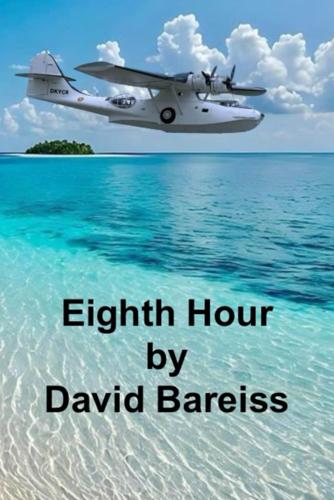
- “Eighth Hour” by David Bareiss (independently published). 224 pp. $12.99 paperback; $4.95 Kindle.
No sooner has “Admiral” Jerry Cummings, CEO of the Dinner Key Yacht Company (DKYC), re-entered the U.S. at Miami International, than he needs to pack up and take off again. Different packing this time, with deadlier luggage: Hijackers have taken over the company's premier vessel, a three-masted schooner, and he has customers — not to mention valuable assets — to protect.

This is the eighth volume in the Jerry and son Hassan (CEO of DKYC Air) adventure series. With a sizable stable of boats and planes, they’re fully equipped to meet this challenge. Fifteen hundred miles out in Caribbean international waters, the hijacked yacht is out of easy range for the Coast Guard, so Jerry assembles a tight crew, and they go about their rescue business like it’s another day in the office. Well, one that involves parachuting out of an airplane onto a tiny spot in a big sea.
The action of “Eighth Hour” is brisk and clear, with much of the text in dialogue. David Bareiss’s familiarity with planes and boats furthers both character and narrative, and the islands in his setting have an appeal all their own.
- “Lost Canyon in the Northern Santa Rita Mountains” by David DeGroot (Green Tree Productions LLC). 54 pp. $15.
David DeGroot, author of the acclaimed “Each Trail Has a Story of its Own: 35 Years of Exploring the Grand Canyon,” has narrowed his focus in this slim volume to highlight the history and threat to one section of the northern Santa Rita Mountains — Rosemont Valley’s Barrel Canyon, about 35 miles southeast of Tucson. Beneath Barrel Canyon is water — linked aquifers. These aquifers feed lush life — trees that can reach 40 to 50 feet in height and abundant animal and plant life — some endangered. He details these with the results of a 2025 “BioBlitz” of the canyon.
Giving a brief history of the area, from prehistoric peoples to today, DeGroot cites studies showing that contaminants from mining in the area have already appeared in the Rosemont’s aquifer, but also — since they are linked — in Tucson basin water. It is an area long exploited for its minerals and today, Canadian Hudbay and Japanese Mitsubishi seem on track to open the Copper World open-pits mine, with all the attendant waste materials and tailings.
- “Memories of a Sea Service Veteran: From Mud to Nucs” by David Bertagnoli (Dorrance Publishing). 119 pp. $15.
In a welcome break from the scowling, strutting current ideal “warrior,” the military man portrayed in David Bertagnoli’s memoir is likable: courageous, yes, but also prank-prone, unafraid to admit mistakes, self-deprecating, often disrespectful, opportunistically unfaithful, rules averse, risk-taking, and entertaining.
David Bertagnoli was a struggling Flagstaff college student in 1966 when he and four buddies decided to join the Marines. He and one other passed parent approval, and in December 1966, he shipped out for Vietnam. He was an A-gunner, in charge of a four-person M-60 fire team — a perilous assignment because the enemy liked to take out the firepower first. Bertagnoli details ambushes, patrols, encounters with the Viet Cong and later with the North Vietnamese Army; he honors fallen comrades and describes the event that won him the Purple Heart.
He writes that luck and lack of planning played roles in his life and career. After his two-year stint in the Marines, he had no desire for a military career, but a persistent client in his part-time wallpaper hanging job persuaded him to stop in at the Navy recruiters’. After an extended chat about SCUBA (Bertagnoli was a certified instructor), the recruiter asked him if he’d like to learn to fly. “Every kid wants to fly for a living,” so his 18-year career as a naval flight officer was launched. It would take him through tracking Russian submarines to nuclear command and control in Washington.
“Memories of a Sea Service Veteran” is an engaging read. Bertagnoli is an adroit storyteller; he had plenty of scrapes — some of his own making — and he candidly wasn’t always a good boy.
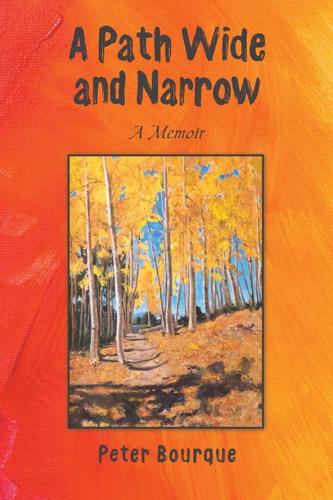
- “A Path Wide and Narrow: A Memoir” by Peter Bourque (Independently published). 163 pp. $16.99 paperback; available in Kindle.
Retired CDO English teacher Peter Bourque observes that everyone’s life journey follows a path that widens and narrows, whether we recognize it or not. Bourque’s own “narrowing” couldn’t be missed: on April 24, 2019, a ruptured disk caused a spinal cord injury that rendered him partially paraplegic. He’s been in a wheelchair (and recumbent bike, swimming pool, cross-trainer, and occasionally, walker) ever since.
What we see in Bourque’s memoir is a strain of altruism. As in many other Boomers, resistance to the Vietnam War seems to have forged an idealism that informed his life choices. Raised in a working-class, Norman Rockwell-ish, Catholic family in Flint, Michigan, of draftable age, he penned a conscientious objection letter and made three trips to Washington to oppose the war. Turns out the draft was abolished by the time he graduated from college in 1973, but the impetus was in play.
After graduation, he joined the Peace Corps, which took him to the Ivory Coast. Other social service experiences would follow: teaching ESL, volunteering with Oxfam America, Peace Corps recruiting out of Boston, establishing the Campus Food and Hunger Coalition at the U of A, teaching English at Catalina and Canyon del Oro High schools (don’t let anyone tell you that teaching English isn’t a social service), a Fulbright Teacher Exchange in Guadeloupe, and volunteering with Literacy Connects up to this day.

Bourque celebrates life in this memoir — with his ex-Peace Corps volunteer wife Suzy, their sons, their families; friends, travels, the “blueness” of Tucson, Willow Canyon cabin; he opines on religion, politics, guns and Donald Trump; and he includes op-ed pieces he has contributed to local media, and doesn’t sugarcoat his challenges.
What “A Path Wide and Narrow” demonstrates is that an altruistic life is indeed a well-lived life.
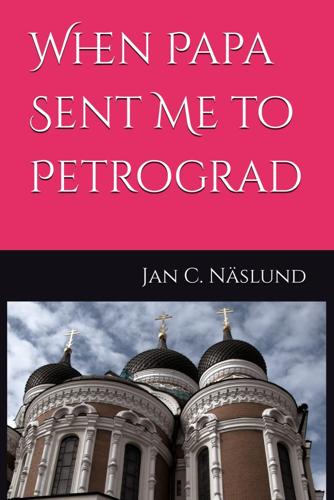
- “When Papa Sent Me to Petrograd” by Jan C. Näslund (Independently published). 319 pp. Hardcover, $23.99; paperback, $17.99; Kindle, $8.99.
Most contemporary writers wouldn’t try to debut with another great Russian novel. Green Valley resident Jan C. Näslund does, however — deliberately or not — and she pulls it off with aplomb.
“When Papa Sent Me to Petrograd” is a sprawling tale that covers the early labor movement in the U.S., the Russian revolution and its aftermath, WW I profiteering, and the treachery and betrayals of post-revolution Russia …. all experienced by members of Näslund’s own family.
Jewish Kristian Nørager works as a tailor in Denmark in the 1890s, but he has grander ambitions. Immigrating to the U.S. and securing a job in Chicago manufacturing clothing, he meets and begins associating with early organizers of the labor union movement. That network would spread. By 1913, he has partnered with a Russian to open an international import-export business. Fortuitously for Kristian, World War I breaks out, and he, as a neutral Dane, feels positioned to manufacture and sell uniforms to all engaged parties. Thus begins his war profiteering career.
Kristian commissions his 19-year-old mechanic son Arndt to represent his business in Europe. In 1916, Arndt settles in Petrograd, with a contract to install a refrigeration system in the Tsar’s Winter Palace. That will set young American Arndt up to be caught up in the turbulence of the Russian Revolution.

This novel isn’t called “When Papa sent Me to Petrograd” for nothing. When Arndt finds himself in trouble and trying to escape Russia, Kristian taps his other child, Arndt’s younger sister, to replace him. He installs Maria in the Petrograd office to manage the books. Then, as before, whatever the situation — Arndt’s flight from marauding Reds, or Maria’s near-poisoning — Kristian acts to value his business over his offspring’s welfare.
The “Russian novel” nature of this work involves personal stories playing out against the political and historic. The Nørager family is part of an activist, progressive Jewish intellectual community (as children, Arndt and Maria learned Russian in their experimental school established by real-life revolutionaries Fanya and Bill Berg). We see a venue — Jane Addam’s Hull House settlement — that fosters wide political debate. In Russia, Arndt suffers the deprivations of the populace as the Bolsheviks, the Reds, the Whites, the moderates vie for power; and the effects of socialism when Bolshevik Lenin prevails. We see murder, unbridled corruption and threat from Maria’s perspective. And Kristian, Arndt and Maria interact with real historical characters — poet Carl Sandburg, Bolshevik revolutionary Mikhail Markovich Gruzenberg (“Bill Berg”), spy Simcha “Sidney” Reilly, Indian revolutionary and philosopher Manabendra Nath Roy.
This is remarkable historical fiction. Näslund writes that, growing up in an immigrant community in Uptown Chicago, she heard many stories, and she and her sister played with tarnished silver plate and cups engraved in Cyrillic that would give rise to her putting her academic investigative skills to use ferreting out her family mysteries, including her grandfather’s, working in the Winter Palace when it was overrun.
It’s a rich, fascinating work; an intimate view of history.
The top stories from Sunday's Home+Life section in the Arizona Daily Star.

