



On the September 2021 day that Rachel Eliza Griffiths married the literary giant Sir Salman Rushdie, her fellow poet Kamilah Aisha Moon — her "chosen sister" — did not show up, which was inconceivable.
Later that day, Griffiths would learn that Moon had died suddenly and inexplicably.
Her wedding day became both the most joyful and the most tragic day of her life.
Just 11 months later, while deeply grieving the loss of her best friend, Griffiths would have to take in the next great shock and trauma of her life.
An attacker had stabbed Rushdie multiple times on stage at a literary event, nearly killing him; he would lose an eye.
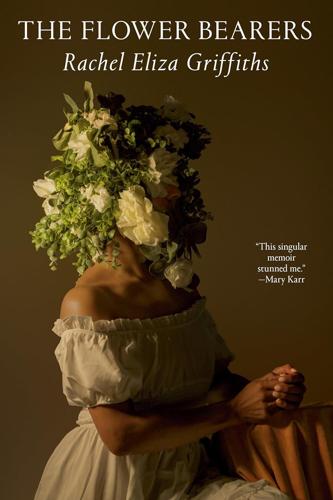
The cataclysmic events of that year form the backbone of Griffith's memoir, "The Flower Bearers," published in January by Random House. It is her first memoir; she is a novelist and visual artist as well as a poet. She brings the new book to the Tucson Festival of Books next weekend.
Rushdie will also be a presenting author at the Tucson festival, highlighting "The Eleventh Hour" (November 2025, Penguin Random House), which marks his return to fiction after his own memoir about the attack, 2024's "Knife."

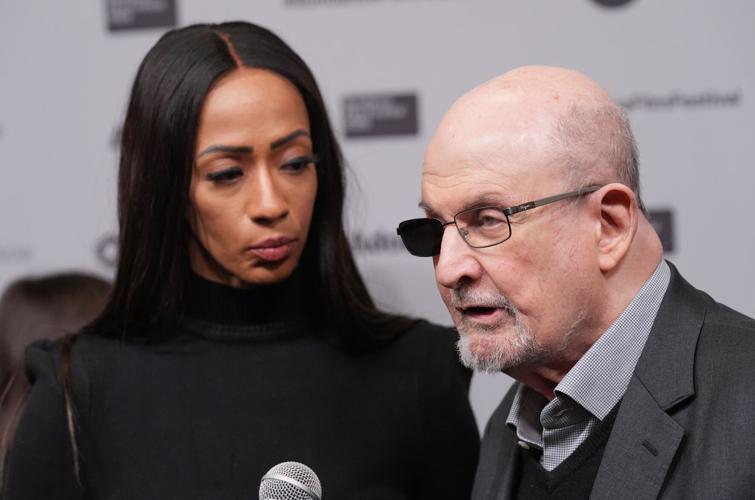
Novelist Salman Rushdie and his wife, executive producer/co-cinematographer Rachel Eliza Griffiths, at the premiere of the documentary film "Knife: The Attempted Murder of Salman Rushdie" during the Sundance Film Festival on Jan. 25. Rushdie and Griffiths will both be featured at the Tucson Festival of Books next weekend.
Griffiths spoke to the Star Monday in this Q&A:
Q: Your memoir is about so many things that matter in a woman's life — the mother-daughter and father-daughter relationships, life-sustaining female friendships, romantic love, meaningful work, joy, loss, pain, healing, surviving. So I wanted to start with the mother-daughter relationship and ask, how essential is it? As you hear from women readers about the book, do you find a universality in these being complicated relationships?
A: Women's relationships, mothers and daughters, it can be very complicated. I think for me, the love wasn't complicated. It was sometimes the behavior, or, trying to know your mother, your mother trying to know you. The things you can ask your mother, the things your mother thinks she can ask you — everything, or tell you everything. But one of the hot spaces in between mothers and daughters is judgment. The space of judgment can be a real battleground.
And so it is complicated. I mean, my mother was my best friend. My mother's been dead for almost 12 years now, but she just feels so immediate, because she had this really larger than life personality, and she was so strong. And to be very young, and watch a woman like that fight illness and all kinds of things and be almost like a self-raised person educating herself. Her mother died when she was maybe 13 or 14. So with women, all of these histories and memories and different things that go into who we become — the presence of the mother, the absence of the mother. I'm obsessed with it. And I don't have children. And so I mother in different ways, but not in a biological way, and so it really interests me to just think about all of the things that mothers go through, but also, now, to the life of the daughter, and how is that defined?
Q: And then there are the female friendships. The loss of Kamilah was just about more than you could bear.

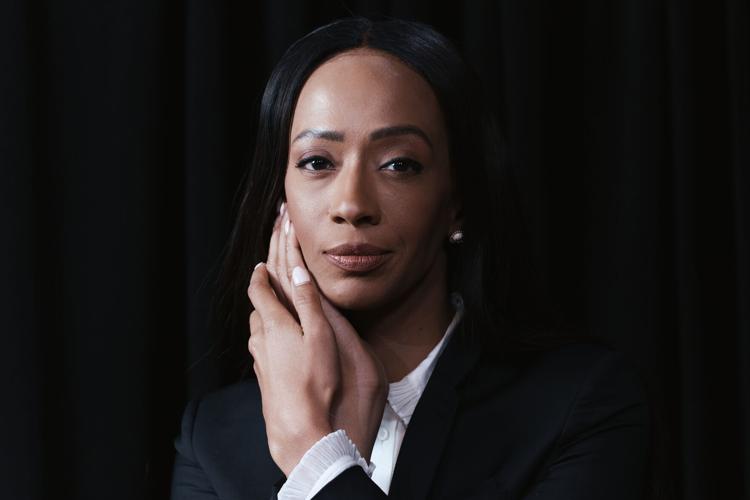
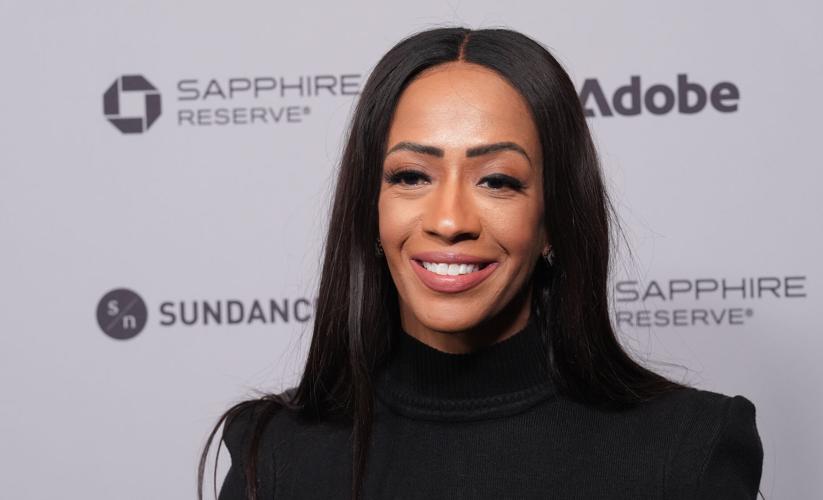
American poet, novelist and visual artist Rachel Eliza Griffiths, who brings her 2026 memoir "The Flower Bearers" to the Tucson Festival of Books next weekend. It chronicles the year Griffith's "chosen sister" died on her wedding day, and her new husband, Salman Rushdie, was nearly killed by a would-be assassin.
A: It really was. The shock of it too, because with your girlfriends, you think we'll get old together. We're going to, you know, experience our lifelines together, our life stories. And so in many ways, Kamilah's death was more shocking than my mother's death. At age 11, my mother was diagnosed with a kind of terminal illness. She had kidney failure and all of these other health problems. So I knew from a young age she was never going to get better. And toward the end of her life, I could just see she's in so much pain and suffering. With Kamilah, nothing could have prepared me for that. I wasn't prepared for that. Even more intensely, in the memoir I write it was the best and worst day of my life. I'm standing in my wedding dress, and this news arrives.
She should be here, and I also accept that it's not for me to know what happened, or why she's not here, but just to celebrate her. I miss her so much. She was just a very, very special person. She was a completely gifted and talented poet, but she was a great chosen sister, is what I called her. And there's so many people in the writing community that respect her, that feel so intensely about her. She came into a room and it would just change the atmosphere of the room, from her grace and dignity and presence. I just will always miss her, and I'll never understand it.
Q: A big part of your connection with her was about writing, and writers. The first thing I saw when I picked up your book was Mary Karr's cover blurb praising it; her "Liars Club" memoir is one of my favorite books. And there's a quote in your book from Joan Didion's "The Year of Magical Thinking" [which has parallels to "The Flower Bearers," as it's about a year in which Didion's husband suddenly died and their daughter was critically ill]. You also write in a moving away about Black American women authors. How important to you is being part of this kind of linear history of female American writers?
A: For me, it feels more like a village. It feels more circular. It feels as though we all stand in space at different moments for each other. And also, as a reader, I found these women's works as I was developing as a writer and as a person and as a woman. I discovered Toni Morrison on my mother's bookshelf. Oh, my God, and Alice Walker and all of those. And they became different kinds of mothers than the mother I had. I could find out different things about life and women and desire and imagination and writing itself. Reading poetry. So when I found those books as a child, I thought, This is my home. This is where I belong. This is where I want to be.
The big question is, how do you eat? (Laughs.) And in (the early years described in) "The Flower Bearers," Kamilah and I were just on the grind all the time, (among) so many young poets, but it was just a special time of coming up. Being a middle-aged one, at this point, and looking at older writers, younger writers, generations behind me now are so exciting and interesting. Community is just very, very important to me, and so listening, giving back and doing my work, these are all ways to be a kind of literary citizen. I mean, I spend a lot of time alone, but when I'm going into community, I always want to just be present and show up. Well, I think these women have helped me learn how to show up, by the lives they've lived and the courage they've had to speak about their lives. They've risked and dared everything.

Q: Well, and that's what you did in this book. Are doing, as well. You have said the writing process on this book was really difficult. Did it just feel like something you needed to get out on paper, despite how hard it was?
A: I didn't really have a choice when it came to writing this book. And that was a new experience to me; my last collection of poetry was grieving my mother's death. My first novel was a story I'd worked on for about a decade, actually, longer. And so there was an intention and a desire to see the story through, see the poems through. I'm also a photographer, and visual art, that's very intentional. But with "The Flower Bearers," I needed to come to terms with the events that had happened in my life. I've never been interested in writing memoir. I always enjoyed reading them and thinking, well, thank goodness I don't ever have to do that, right? And then some things happened in my life and I thought, I think I have some things to say now about my story and who I'm becoming.
But writing a book that you don't want to write is very, very challenging. Eventually, once I surrendered to it, it was a bit better, but the actual content, as you know, is extremely traumatizing. And so how can you actually craft a well-written book and also fight not to re-traumatize yourself every time you sit down? There were certain moments I just had to lay down on the ground. I just couldn't move.
Q: Even now, with the question I'm about to ask you, you have to relive. But, do you mind taking us to the hospital room with Salman, and how you coped and survived in that immediate period after the attempted murder?
A: Well, I think the presence of my mother was there because I'd grown up in hospitals since I was 11 years old. When my mother would be in the ICU — she was on a list for many years for a kidney transplant. We would go to the hospital all the time. I mean, it was a constant part of my adolescence. So in some way, I was in the hospital again, and that was triggering. But to come into a hospital room and your husband has nearly been murdered — it's indescribable, really. There's so many aspects of it that I have real sharp clarity. And then there are other parts of it where I think my brain blocks it out so that I can keep going, so that the trauma of that, I'm protected from it.
I remember the sounds of the room and how he appeared, and just really not knowing what was going to happen. ... But when I saw that he was actually alive, I then immediately began to organize myself internally: We are going to survive this. We are going to get through this. I really don't know how, but we will, because he's breathing. So that was like a sliver of hope I could have — okay, I'm not in the morgue. I'm in this room, right? There's life. There's life in this room.
Q: You've said that's made time even more precious.
A: I feel very present and very grateful, because I know it was very, very close to being something else. And so, I don't take the time that I do have or whatever time remains, I don't take it for granted. Just try to be present.
Q: You've also written and spoken about what the knife did not damage and take away from the two of you despite all that it did damage.
A: Our sense of humor. We both have a very strong sense of humor. So when Salman kind of cracked his first joke in the hospital, I thought, well, we're moving along. We're right on time. And sometimes I will, even when we first met, make him laugh until tears are just running down his face. He's really cracking himself up and so, you know, we still had our sense of humor. We have a very, very strong friendship and respect of each other. All of those things got amplified. And I just felt at all moments, the dignity of human life. And the dignity of two people placing their lives side by side in a story is really something I don't take for granted, and I didn't take it for granted with my friend. By the time I was walking into that hospital room to see my husband, I still mentally and emotionally was standing somewhere in my body, in my wedding dress, getting the worst news of my life. I suddenly had these two events, in a very short amount of time, crash down over me.
Q: I am hoping that after those terrible 11 months, that you, the two of you, have had better times despite the continuing wounds you've both suffered.

Rachel Eliza Griffiths, author most recently of "The Flower Bearers" memoir.
A: I think something gets changed. I'll speak for myself. I am altered forever by everything that happened. And at the same time, there is resilience, there is healing, there is more art, there is another book to write, there's another painting to make. And so, we spend our days together. There are days when things are very hard.
Q: Your documentary about it, "Knife: The Attempted Murder of Salman Rushdie," premiered at Sundance in January.
A: Yes, I'm the executive producer and the cinematographer for the film (directed by Alex Gibney). So that is explicitly what it felt like to be in that room. It's quite graphic. ... The actual videos that were made during that time, which cover the span of a year, actually, it was more documentation between ourselves. We weren't in the hospital ever thinking we're going to make a movie about this. It was, we don't know what's going to happen. We should put this on the record. We need to document this. And I think in some way, for me, it was a lifeline to be able to have my camera and to have these conversations, and to allow the camera, in some ways, to hold a lot of the trauma that I just couldn't mentally hold, because I also had to focus on helping Salman. It was really some time after we left the hospital and we're back home, that he even saw the footage.
Q: Quite a 2026 for you already: Your book came out in January; the movie was at Sundance the same month. And this month, the two of you are coming to the Tucson Festival of Books.
A: Yes, I love Tucson. I was there in March last year, actually, and there was a wonderful festival, and I was downtown, and there's that bookstore that I just love. I'm forgetting the name. It was just absolutely magic. And I got a lot of things to cram back into my suitcase (laughs). I really enjoyed myself and they had some of my books that I got to sign. [Antigone Books, 411 N. Fourth Ave., says she was there last March signing books.]
Q: What is it like for you and Salman to each be highlighting a new work at a book festival? You say in "The Flower Bearers" that you keep your professional lives separate, but you share the writers' life.
A: I think we respect each other as independent artists very deeply. So there are moments when we'll decide that we're doing something together, and then there are things that we just do separately. I think you have to have a special understanding if you're two writers in a life together. Salman is very, very supportive and is always cheering me on, and I'm always cheering him on, and it's always a nice feeling in our home when we're both working on our different projects.
Q: I loved your writing in "The Flower Bearers."
A: I appreciate that so much. It's a very vulnerable book, and at the same time, the vulnerability, I think, is a way to connect with other people. All will grieve in our lives. We all experience grief.
Q: We're not all poets, though. So we need the poets to put it down on paper for us. Thank you.

