


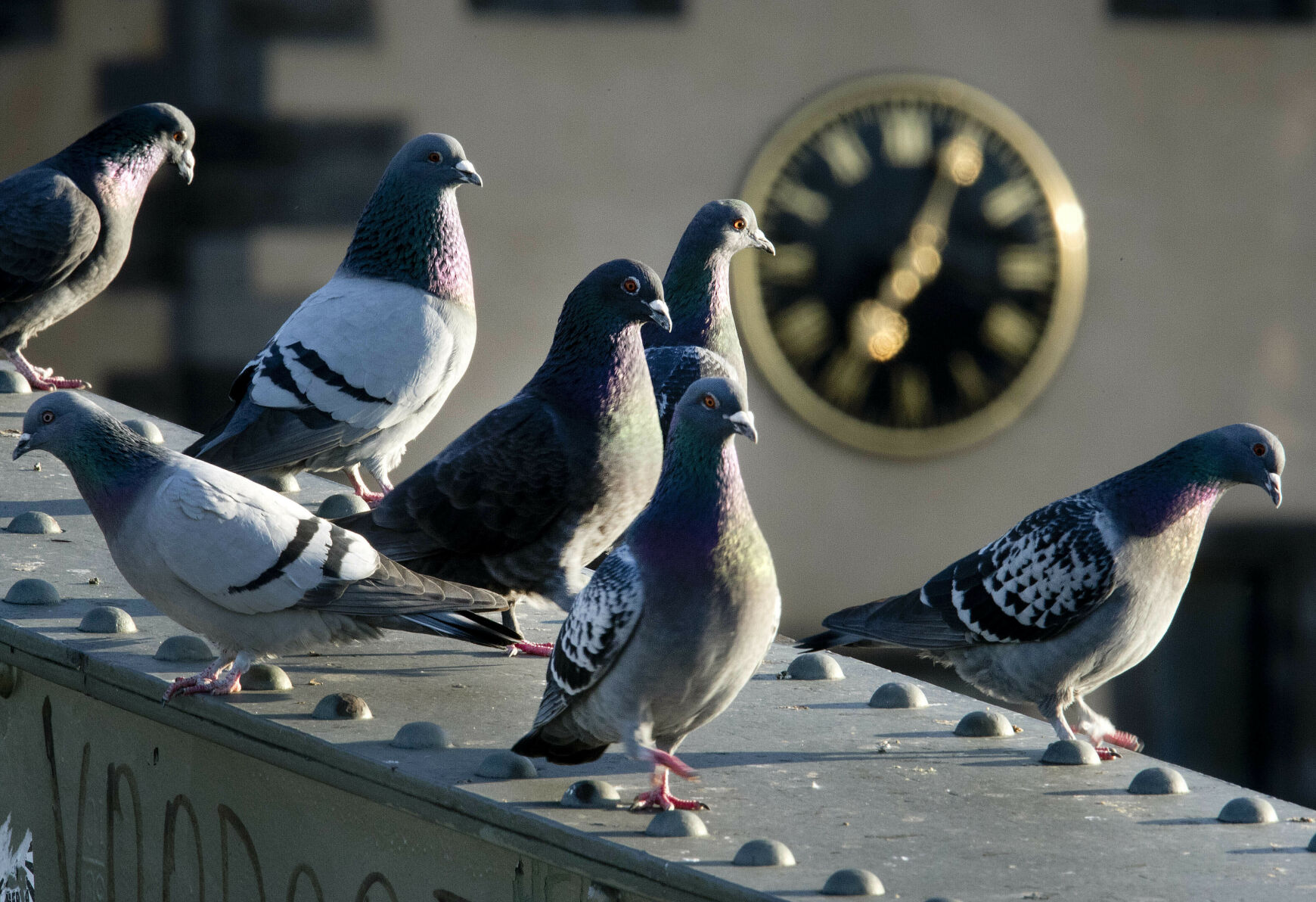
Question: What kind of damage can pigeons do to my property?
Answer: Birds, pigeons, in particular, can cause significant damage to our homes. When pigeons find small niches and set up a nest, the damage begins as they return to the same place all the time. Rosie on the House certified partner Robbie Zelman of Pigeons R Us, tells us pigeons can cause all manner of havoc including:
Waste: Bird waste is quite acidic. This acid causes the materials it lands on, such as roofing, tile underlayment, stucco, and other metal surfaces to deteriorate prematurely.
Disease: Zelman tells us that pigeons can carry up to 60 diseases. Once their waste dries out, it becomes airborne and can infect humans.
While those cute little niches around our homes are attractive to pigeons, there is a more recent development our avian friends are starting to call home — solar panels. They like to nest under the solar panels mounted on the roof. A common call for Zelman’s team is to clear out the nests and bird-proof the panels.
If you are contemplating a solar panel installation, ask your installer about bird-proofing.
Once the birds establish a nest, their waste will deteriorate the roof material. This is a costly fix because the panels must be removed, the area cleaned, and usually involves roof repairs. Then, the panels are reinstalled and are made bird-proof. Zelman tells us that installing bird-proofing when the solar panels are installed can save homeowners a chunk of money.
Q: How do I prevent pigeons from perching on my roof and columns?
A: The styles of homes built over the past 20 years have introduced many architectural features that added to the basic structure, giving our homes more physical relief. Pop-outs, porches at entrances and more ornamentation are aesthetically pleasing additions and have, in some cases, provided a place for birds to find nesting sanctuaries. Many other bird species use trees and brush to build their nests. Pigeons, however, like buildings and the little hideaway spaces their designs create.
Several techniques can be used to bird-proof your home. Your home’s design will dictate what method is best. Some of the tactics used by Zelman’s company are common, and some are new and cutting-edge.
Netting: Typically, this product is a black rubber-coated 19-gauge wire mesh. The black helps to hide the fabric by making it less noticeable. Netting can be strung over a large area or a small area. In areas where beams or rafters are exposed, spreading and fastening netting is a common bird-proofing solution. Installing netting has the added benefit of bat-proofing.
Spikes: These 3- to 4-inch wire spikes sit on the ledges of homes and commercial buildings. Pop-outs on windows, cornices, covered doorways and patios are surfaces where birds can land, hang out, or build a nest. By installing these bird spikes, you will thwart birds from landing on these surfaces, avoiding nest-building and a mess from bird waste.
Bird slide: This is a piece of painted metal, usually on a 45-degree angle that can be installed in the locations we mentioned above with the spikes. Typically, set on a ledge or pop-out, it prevents birds from landing. An advantage of this solid or continuous piece is that it can be painted to match your home or trim and blend in.
Pigeon wire: Zelman tells us that pigeons will post a sentry to warn the nest of approaching predators. Birds commonly perch on the ridge of your roof at the highest location. Bird wire consists of 5-inch posts installed every 15 feet on the ridge. A wire is strung through the posts preventing the pigeons from using this vantage point as a necessary lookout. By not having this opportunity, pigeons will often move on.
Sonic devices: These are sound-emitting devices with small speakers distributed around your home. The sounds can be ultrasonic, high-pitched, avian distress calls to warn other birds away, or sounds of predator birds such as hawks, falcons or owls. Pro tip: make sure you listen to the sounds before you buy.
Bird shock: A flat track installed in places one might see bird spikes or slides, this device emits a low electrical charge that will shock any bird landing on it, causing them to fly away. This solar-powered device comes with a small battery that can operate 24/7. It has the added benefit of being virtually invisible.
Optical bird gels: This is a new device that comes in a small cup-like container that is fixed to surfaces where birds tend to gravitate. This vicious liquid works on a bird’s senses. When they see it, it is mistaken for fire, and there is an odor detected by the birds that they find offensive. These devices, unlike the hardware described above, need to be replaced every two to four years.
Birds, like any other unwanted critter, can cause significant damage to what is likely your biggest investment, your home. Being proactive and installing bird abatement systems before you need them saves you the cost of clean-up and damage repairs.
Watch now: These beautiful native plants will be a great addition to your Tucson garden. Video by Dominika Heusinkveld/Arizona Daily Star.

