



Editor’s note: Tucson Grammy-nominated singer-songwriter/filmmaker Linda Chorney scored a victory of sorts when the Recording Academy announced on April 30 that it was doing away with its nomination review committees.
Chorney was improbably nominated for a Grammy in the best Americana album category in 2012 — the first time an unsigned, indie artist was a finalist for a the prestigious honor. Her nomination set off a firestorm that led to a petition drive that sought to ditch the nomination committee procedure. It took nearly a decade, but the academy finally caved and agreed to disband nomination committees that can decide the merits of a recording or artist without regard to such things as sales and chart success or critical acclaim.
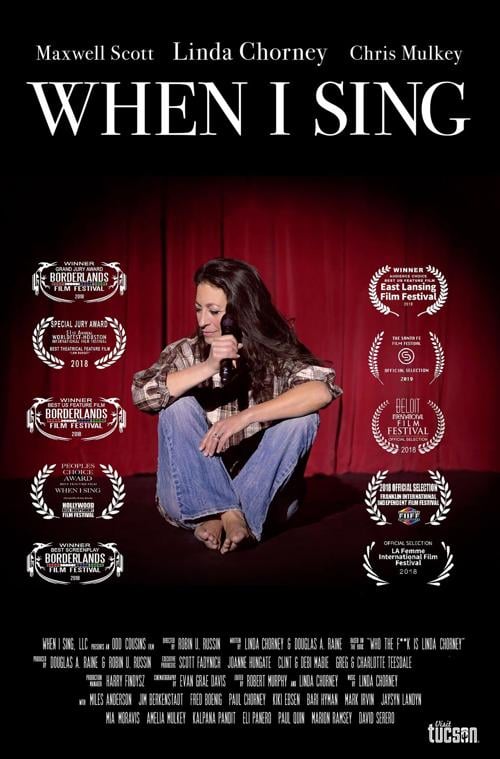
In this column, Chorney, who went on to write a memoir of her Grammy experience — “Who the “F$*$ Is Linda Chorney?” — and a movie, “When I Sing,” that was lauded by film festivals throughout the country when she released it 2018, applauds the academy’s decision.
The nomination review committees ... may they rest in peace, and stay there!
I’m not sure how the major labels feel about the Recording Academy finally eliminating nomination review committees, but I can promise you that independent artists are doing back flips before fainting, kind of like the way I did when I was nominated in 2012 for Best Americana Album, as the first indie without a label, publicist or manager. How did that happen? There was no nomination review committee in the American Roots category. I, and the other four nominees received the most votes, period.
For most of you reading this, not in the crazy business of music, if you are the least bit interested, here is how those committees worked in a nutshell. The members vote, and then a committee takes the top 15 or 20 artists with the most votes, and decides who the five nominees will be. If an artist got the most votes, they may not necessarily be a nominee. That seems pretty messed up, right? Not only that, a member of this committee can suggest that someone who wasn’t even in the top 15 or 20 be thrown into the mix. Not much of a democracy.
I believe the first genre to add a committee was jazz. Luckily for me in 2012, Americana nominees were chosen by a pure democracy. But how did the members know about my album? I was able to present my sixth album, “Emotional Jukebox,” on an in-house social networking site called Grammy 365, where members shared music for consideration. Because of that site, after playing in bars for 30 years, I finally got my break. Former Recording Academy President Neil Portnow went on the record to the Associated Press about my controversial nod, saying “It shows everybody has a shot. That really is the truth.” With all of the press, word spread to thousands of independent artists — who then joined the Recording Academy hoping to get their shot.
Not so fast.
After the 54th Grammy Awards, in 2012, where I had the honor of losing to the late great Levon Helm, a nomination review committee was created for American Roots.
When I found out about this new committee, I took it personally. I thought it was a shame. It broke my heart for the struggling artists out there who are that good, maybe sitting in the corner of a bar playing, waiting for their big break. And now a Grammy was no longer an option. I had an interview about my nomination, and mentioned my disappointment in the undisclosed rule change.
The journalist said it would only mean something if enough members signed a petition opposing it. So I reached out to fellow members, and not many were willing to rock that boat, in fear that they might be blacklisted. The following year another indie was nominated in the electronic dance music category, and magically afterward, another nominating committee was added there, too. And then another and another.
In 2018, I took a crack at another petition with the help of members’ input, especially singer/songwriter Natalie Jean and rocker/lawyer Eric Hall. This time over 100 Recording Academy members signed it, but I was informed that the powers-that-be thought the system was just fine the way it was. (May the petition rest in peace.)
Fast forward to April 30, the Recording Academy trustees voted out the review committees. To be clear, I’m not taking credit. It must have taken a village. But all of our votes actually count now. A true democracy. Well done. This is genuinely exciting. ... May the nominee review committees rest in peace.

