


LONDON — Thousands of people over the weekend celebrated the 200th anniversary of the historic British train journey that laid the foundations for much of the modern age.
On Sept. 27, 1825, the first steam-powered railway engine to run on a public railway — George Stephenson's Locomotion No. 1 — made its 26-mile journey on the Stockton & Darlington Railway between Shildon and Stockton in the northeast of England.
It was a small but significant milestone, which augured rapid changes in the way Britain, and subsequently the world, lived, traded, traveled and communicated.

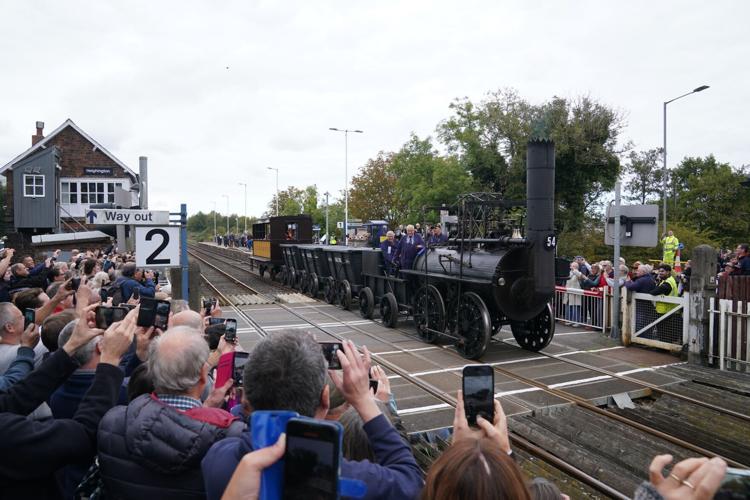
Replica Locomotion No. 1 passes through Heighington, County Durham, on Friday as part of celebrations marking the 200th anniversary of British passenger rail services.
Though the Stockton & Darlington was not the first railway, it was the first to incorporate the standard-gauge, steam-hauled features that would become the foundation of railways around the world.
Railway enthusiasts have marked the milestone at events across the U.K. over the year, and this weekend thousands flocked to the place where it all started to see a newly restored replica of Locomotion No. 1 recreate its original journey.
The steam engine, with three coal wagons and a passenger carriage, set off from the Locomotion Museum in Shildon on Friday to travel along sections of the original line to Stockton.

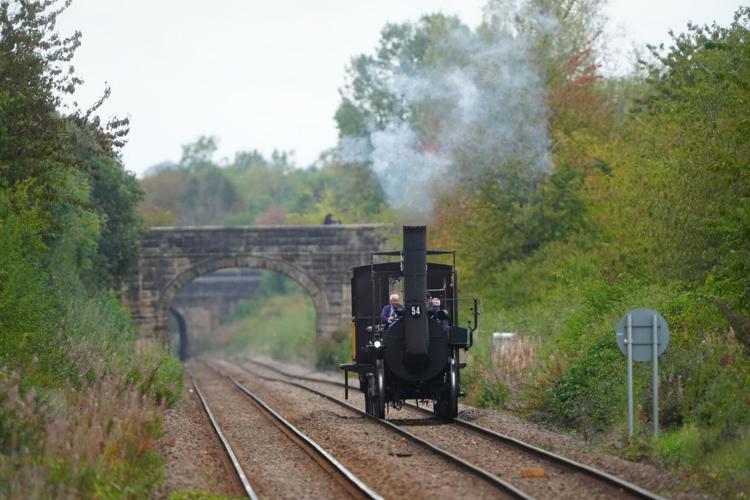
Replica Locomotion No. 1 approaches Heighington station, County Durham, Friday as part of celebrations marking the 200th anniversary of British passenger rail services.
Prince Edward, King Charles III's youngest brother, was among the passengers on board a carriage Friday being pulled by the replica engine.
Doug Haynes, 81, a retired aircraft engineer, traveled about 100 miles to Shildon to witness the reenactment Friday.
"It was tremendous," he said. "The work that they have put in to make this happen has been well worthwhile. It was well worth the trip over for me."
There were equally joyous scenes 200 years ago when people including newspaper reporters traveled from all over the country to line the track. A holiday was even declared for Darlington.

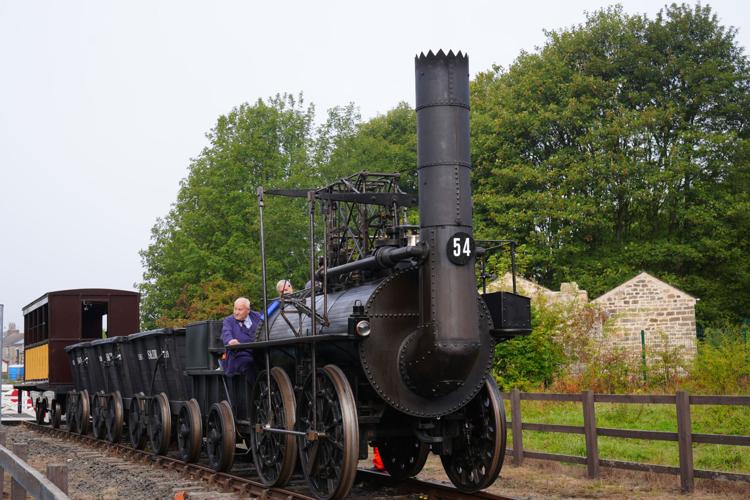
Train driver Chris Cubit rides aboard the Locomotion No. 1 replica Friday at the Locomotion Museum in Shildon, County Durham, on its first official journey in 200 years from the Locomotion Museum in Shildon as part of celebrations marking the 200th anniversary of British passenger rail services.
Those enthusing then could not have possibly imagined what the ripple effects would be as they cheered the passing Locomotion No. 1 — how it would transform their lives, their communities and the future.
Rail soon enabled the rapid transportation of industrial goods and raw materials, like coal and iron ore. It sped up urbanization and transformed social lives, by freeing up time for leisure activities and opening up the country to tourism and the middle classes.
Overall, it played a pivotal role in Britain becoming the global industrial and economic powerhouse of the 19th century and helped fuel the rapid expansion of the British Empire.
"It was amazing to see it moving," said Louise Jones, 39, who watched the replica train begin its journey. "My dad used to work on the railways. This was a once-in-a-lifetime opportunity to see what it would have looked like 200 years ago."

