


Walk into a nondescript building in Alameda, California — which happens to have once been the first telephone exchange on the island, circa 1900 — and you’ll find yourself plunged into an electronic wonderland of Inspector Gadget-type widgets and gizmos.
Vacuum tubes the size of baby dolphins rest on shelves near radios of all shapes and eras, clad in snakeskin, aglow with neon and disguised as Scotch whiskey bottles. Transmitters from World War II bombers are stacked next to CIA communications gear, and a replica of Amelia Earhart’s airplane radio. A telegraph machine clicks away in one corner, and elsewhere are unlikely treasures, like the largest black-and-white TV ever made and a recording of the Beatles that a peevish John Lennon tried to sabotage by repeatedly flushing a toilet.

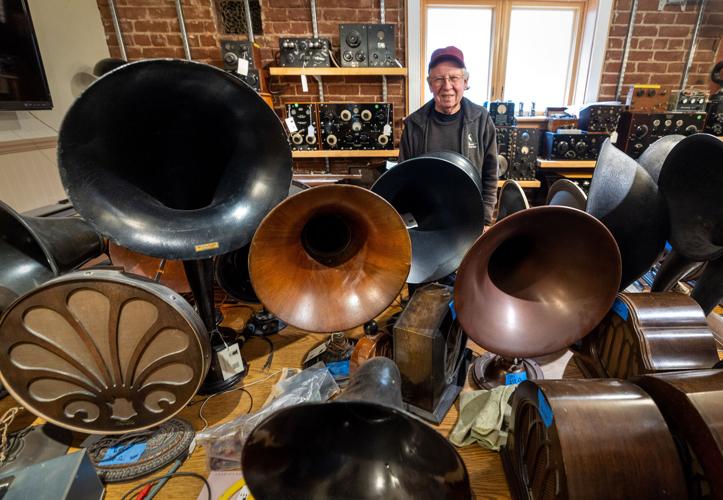
Jim Fink, volunteers March 2 at the Bay Area Radio Museum and Hall of Fame in Alameda, Calif., which stretches back some 120 years to the invention of radio.
The Bay Area Radio Museum and Hall of Fame is devoted to everything under the sun related to wireless communication, stretching back some 120 years to the invention of radio. The museum is run by volunteers from the California Historical Radio Society, who open it to the public on Wednesdays and Saturdays for tours and classes.
During these events, you might see visitors pointing to refrigerator-sized speakers and exclaiming, “Oh God, an old Ampex! That’s where my dad worked!” You can peek into a six-bench repair lab, where hunched-over workers with flashlights on their heads poke at the guts of old radio boxes to save them from landfills, looking like tech-obsessed creatures from the world of Harry Potter. If you have old 8-tracks or wax phonograph cylinders from Grandma you found in a closet, you can bring them in — they’ll digitize them as part of their audio-transfer service.

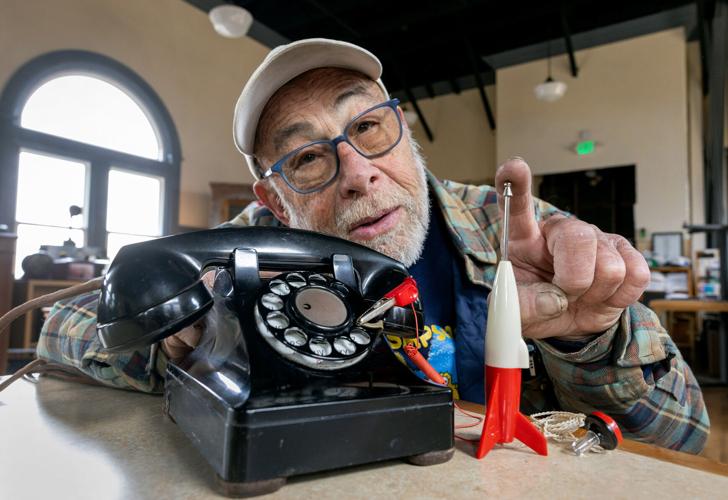
Steve Cushman, former president and current director of the California Historical Radio Society, shows off the type of crystal rocket radio that fascinated him as a child.
Radio’s ‘culture-changing’ place in history
The museum has led a rather itinerant lifestyle. Its thousands of mostly donated artifacts were located in Berkeley’s old KRE radio station before moving there in 2014. For much of its existence, the building has functioned as a social club and hangout space for die-hard radio collectors. But this summer, it plans to open as a full-fledged museum, with rotating exhibits and a burning mission to teach the public that radio is anything but dead.
“Radio was the fastest-adopted technology ever — including the internet and cellphones and television,” says Rachel Lee, executive director of the California Historical Radio Society. “That’s probably my favorite factoid, because these days people are like ‘Ehhh, radio.’ But it really was culture-changing — the ability to have this kind of news communication and entertainment was just huge in a time when you didn’t have widespread communication.”

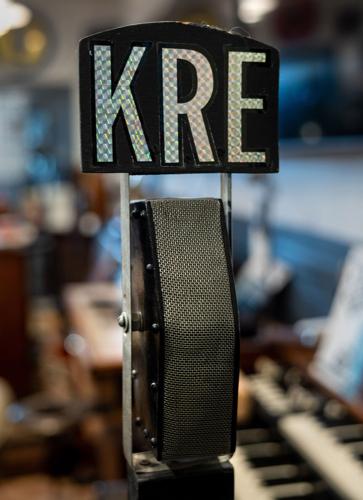
A microphone from pioneering Berkeley radio station KRE is on display inside the museum
It turns out that radio has a unique history in California’s Bay Area. The first entertainment broadcasts in the United States came out of San Jose in 1912, when Charles “Doc” Herrold started broadcasting musical concerts by dangling a microphone in front of a wind-up gramophone. Herrold’s cutting-edge transmitter involved a water-cooled mic and arcs burning in alcohol-filled tubes, and the broadcasts were only really available in the San Jose area. Nevertheless, the “Doc” is remembered as a radio pioneer, and his station later went on to become KCBS in San Francisco.
In the 1920s, radio experienced a growth spurt nationwide, expanding from a couple dozen stations to more than 450. San Francisco led the pack among all cities, with seven operating stations.
The nonprofit California Historical Radio Society began its journey from a collectors’ group into an authentic historical society in the early 1970s.
“There were a bunch of engineers, mostly who worked in what we called the Electronic Gulch — before it was Silicon Valley — for companies like Fairchild and Ampex. These guys collected antique radios, and in 1974, they formed a group that was basically a radio collectors organization,” says Steve Cushman, former president and current director for the radio society. “They would meet in parking lots, and they would exchange radios and parts and schematics and books.”

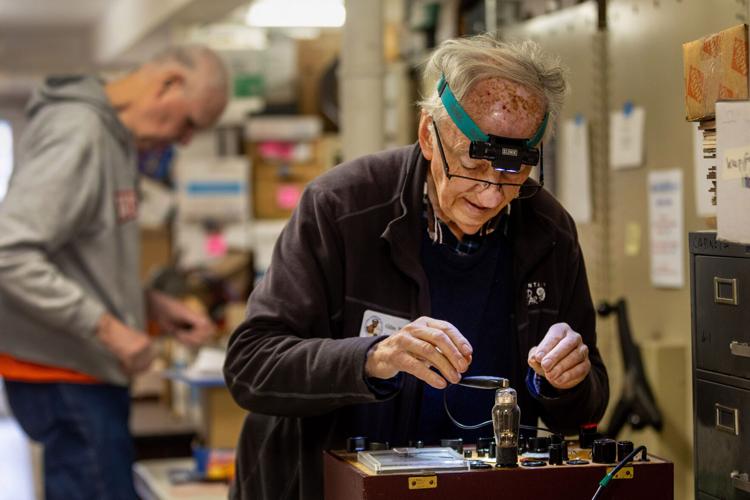
Gilles Vrignaud, a lifetime member of the California Historical Radio Society, tests a vacuum tube while volunteering at the museum.
If you don’t understand the appeal of this hobby, well, maybe you grew up deprived.
“I was fascinated by radio as a kid,” says Cushman. “I had a little crystal set and was always running around the house with an alligator clip, clipping onto things that would be my best antenna. In those days, in the early ’50s, the finger stop on a dial telephone — which was a little piece of metal — you could hook your antenna up to that, and you’d have the whole telephone company as your antenna.”
Jazz to stream worldwide on old equipment
Most of the artifacts in the Bay Area Radio Museum and Hall of Fame are donations. On the bottom level is the largest communications library west of the Mississippi, with a whole section of novels that have something to do with radio, wartime communications or spies, including the “The Radio Boys and Girls” series of books popular in the 1940s.

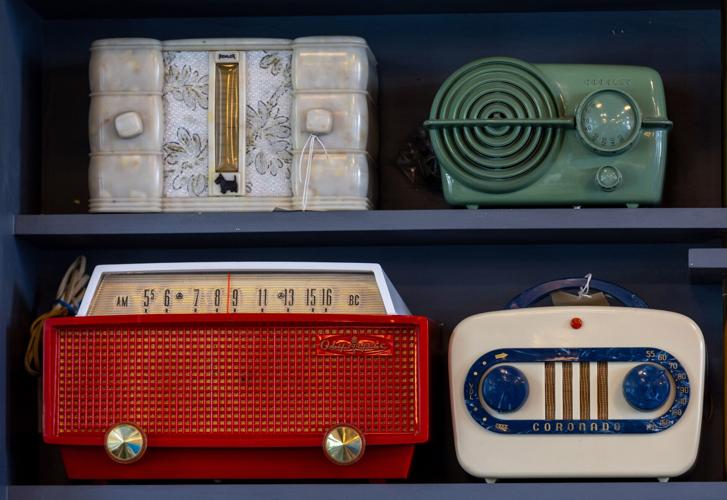
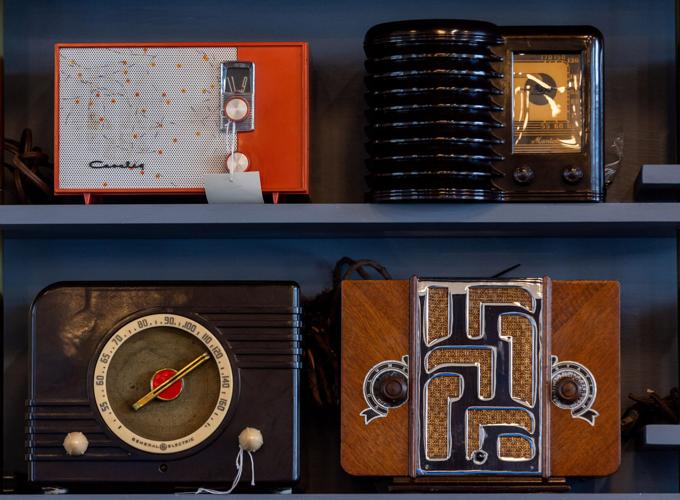
Colorful and exotic radios are on display March 6 at the Silicon Valley museum. Most of its artifacts are donations, and it has the largest communications library west of the Mississippi.

Colorful and exotic radios are on display at the museum, where visitors can buy old radios that have been updated with Bluetooth connectivity.
The oldest piece in the collection might be a 1900 oak-clad phone booth with a telephone that can still dial out. There is British Spark equipment — one of the earlier wireless technologies, sometimes used on antisubmarine planes — and radio-station jackets from renowned personalities.
There is also one of two remaining functional NBC chime machines. Starting about a century ago, these devices initiated and closed every NBC broadcast with a tritone “bing-bing-bong” — a sound so distinctive, it got the first audio trademark in the country. The tritone was originally played by announcers physically hitting metal chimes, which led to inaccurate timing and sour notes by those who didn’t study enough in band class. So the process was automated by the Rangertone company, which built machines for places such as NBC’s New York Radio City and the West Coast Radio City.
And you can actually buy radios there. Volunteers salvage old 1950s and ’60s-era radio boxes, clean them up and install Bluetooth connectivity, so you can listen to music wirelessly in your kitchen.

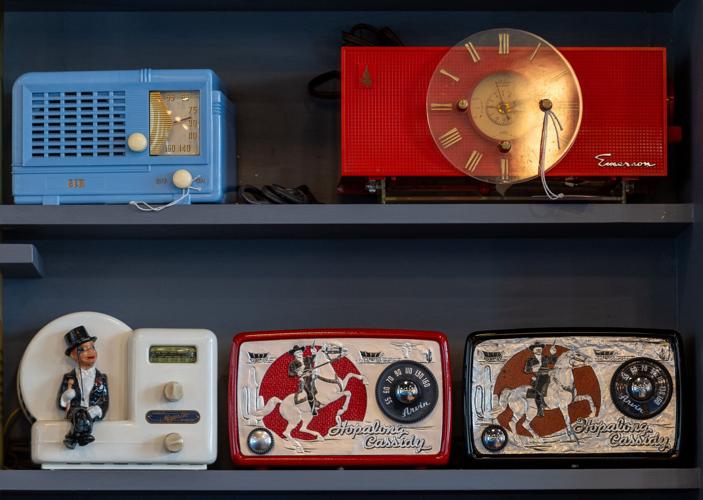
Colorful and exotic radios are on display at the museum. The first entertainment broadcasts in the United States came out of San Jose, Calif., in 1912.
The museum also has a ham-radio room, which is going to be hooked into the Alameda emergency network, and a soon-to-deploy station at 1570 AM that will play old jazz records on old equipment. (The signal will only reach a few blocks out into Alameda but can be heard streaming worldwide on Radio Sausalito at radiosausalito.org.)
Why is it important to preserve such history? Cushman has some thoughts.
If three out of 20 kids take an interest in what he’s talking about, Cushman believes he’s doing a good job. “Because we’re doing what the schools aren’t doing. We’re teaching about what a great portion of society grew up with — and kids today don’t even know what a knob is.”
10 retro appliances for your vintage-inspired kitchen
Unique Appliances Classic Retro Fridge
Updated
If you can’t afford to splurge on a $3,700 1950s-style fridge from Smeg, try this lookalike refrigerator from Unique Appliances that comes in at well under half the cost. We love the pastel blue and mint green for a playful retro look, but you can also keep things classic with black or white.
Nostalgia Electrics Microwave
Updated
Don’t let an ultra-modern microwave ruin the look of your mid-century kitchen. This perfectly retro microwave from Nostalgia comes in pink, red, teal, yellow, aqua, black and ivory, so you can match it to your colorful kitchen.
Big Chill Retro Dishwasher
Updated
No one looks forward to doing the dishes, but you might start if you had a vintage-inspired dishwasher that was this cute. Big Chill’s retro appliances come in a variety of fun standard colors and dozens of custom shades.
Smeg 50s Retro Toaster
Updated
If you want to add a Smeg appliance to your kitchen without breaking the bank, try their countertop options such as this four-slot 50s-style toaster. It comes in multiple colors, from diner red to pastel pink.
Hallman Vintage-Style Oven Range
Updated
This vintage-style range from Hallman is undoubtedly a splurge at over $5,000 for the oven. Still, it’s hard not to fall in love with the perfect antique look of this modern stove.
Laekerrt Mint Green Retro Espresso Maker
Updated
Start your day off right with this vintage-inspired espresso maker from Laekerrt. It comes in a nostalgic mint green or stainless steel if you prefer a slightly more modern look.
Haden Heritage 12-Cup Coffee Maker
Updated
Need a more mild jolt in the morning? Try this 12-cup coffee maker from Haden in a pretty robin’s egg blue. It might look mid-century, but it has all the modern programmable features you love.
Frigidaire Retro Blender
Updated
At under $40, Frigidaire’s retro blender is an affordable way to add a vintage touch to your kitchen. It also comes with an adorable mason jar to-go cup.
KitchenAid Stand Mixer
Updated
If you weren’t lucky enough to inherit a KitchenAid stand mixer from your grandma (because her’s is probably still working), you can buy one that looks just like it. Why mess with a classic design?
Swan Retro Tea Kettle
Updated
This powder blue tea kettle from Swan will fit perfectly in your vintage kitchen. The electric kettle’s cordless design makes it easy to move, too.

Whether you want inspiration you can bring into your own kitchen or you just love watching mouthwatering footage of the best food from around …

