

America’s craft brewers already have enough problems. Hard seltzers and cocktails are muscling into beer sales. Millennials and Gen Z don’t drink as much as their elders. Brewpubs still haven’t fully recovered from the shock of COVID-19 five years ago.
Now there’s a new threat: President Donald Trump’s tariffs, including levies of 25% on imported steel and aluminum and on goods from Canada and Mexico.
“It’s going to cost the industry a substantial amount of money,” said Matt Cole, brewmaster at Ohio-based Fat Head’s Brewery. Trump’ trade war “will be crippling for our industry if this carries out into months and years.”
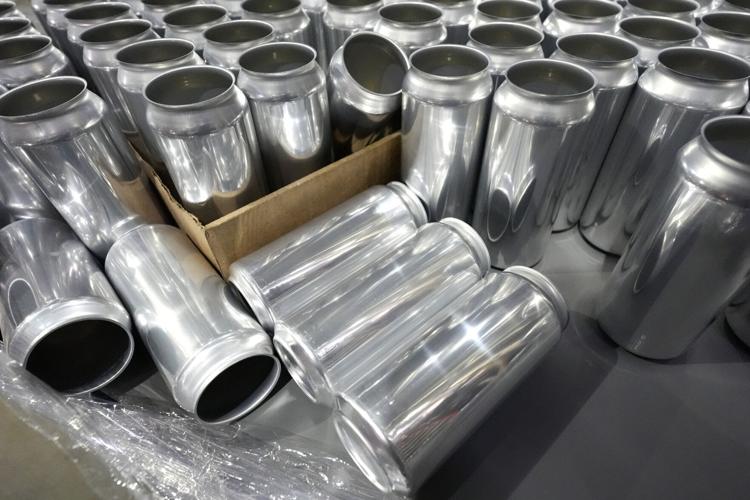
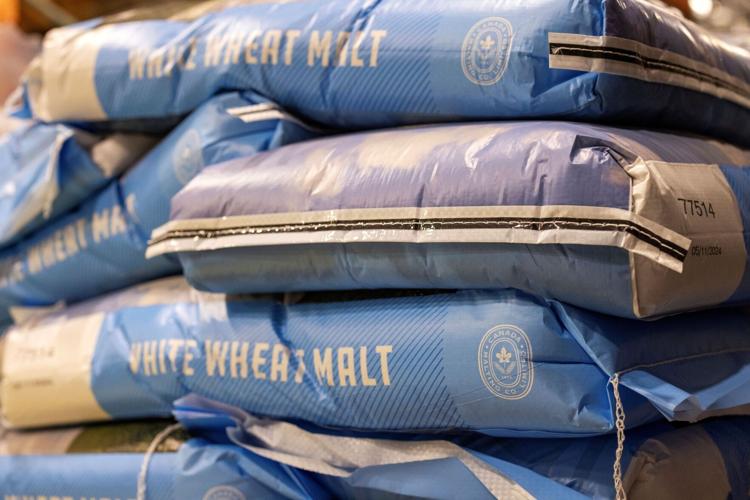
The tariffs could impact brewers in ways big and small, said Bart Watson, president and CEO of the Brewers Association, the trade group for craft beer. Aluminum cans are in Trump’s crosshairs. And nearly all the steel kegs used by U.S. brewers are made in Germany, so a tariff on finished steel products raises the cost of kegs. Tariffs on Canadian products like barley and malt would also increase costs. And some brewers depend on raspberries and other fruit from Mexico, Watson said.
At Port City Brewing in Alexandria, Virginia, founder Bill Butcher worries that he’ll have to raise the price of a six-pack of his best-selling Optimal Wit and other brews to $18.99 from around $12.99, and to charge more for a pint at his tasting room.
“Are people still going to come here and pay $12 a pint instead of $8?’’ he said. “Our business will slow down.’’
For Port City, the biggest threat comes from the looming tariff on Canadian imports. Every three weeks, the brewery receives a 40,000-pound truckload of pilsner malt from Canada, which goes into a 55,000-pound silo on the brewery’s grounds. Butcher said he can’t find malt of comparable quality anywhere else.
Trump’s tariffs also hit Port City in a round-about way: The levy on aluminum, which went into effect March 12, is causing big brewers to switch from aluminum cans to bottles. Port City, which bottles 70% of its beer, found itself unable to get bottles.
“Our bottle supplier is cutting us off at the end of the month,’’ Butcher said. “That caught us by surprise.’’
Fat Head’s Brewery gets its barley from Canada. Cole said it could shift to sources in Idaho and Montana, but the shipping logistics are more complicated. And Trump’s tariffs, by putting Canadian barley at a competitive disadvantage, would allow U.S. producers to raise domestic prices.
Fat Head’s is trying to mitigate the impact of the tariffs. Anticipating higher aluminum prices, for instance, the brewery stockpiled beer cans — which it gets from a U.S. supplier — and now has 3 million cans in its warehouse, 30% of what it needs annually. It has also shifted production to painted cans, which are cheaper than those with shrink-wrapped film sleeves.
In Arizona, some brewers are already eliminating or reducing the beers they offer in aluminum cans to cut costs, said Cale Aylsworth, the director of sales and relations at O.H.S.O. Brewery and Distillery and president of the Arizona Craft Brewers Guild.
“This is a blow to Arizona craft. I hate to see less local options on the shelf,” Aylsworth said.
Some brewers have also lost access to store shelves from one big customer: Canada, which is the top foreign market for U.S. craft beer, accounting for almost 38% of exports. But Canadians are furious that Trump targeted their products, and Canadian importers have been cancelling orders and pulling U.S. beer off store shelves.
The tariffs come at an already difficult time for brewers.
After years of steady growth — the number of U.S. breweries more than doubled to 9,736 between 2014 and 2024 — the industry is struggling to compete with seltzers and other beverages and to win over younger customers. In 2024, brewery closings outnumbered openings for the first time since the mid-2000s, Watson of the Brewers Association said. He estimates that U.S. craft beer production dipped 2% to 3% last year.
“Craft brewing had a period of phenomenal growth, but we are not in that era anymore,” he said. “We’re in a more mature market.”
Port City’s production peaked in 2019 at 16,000 barrels of beer — equivalent to 220,000 cases. Then COVID hit and hammered the company’s draft beer business in bars and restaurants. The comeback has been slow. Butcher expects Port City to produce 13,000 barrels this year.
The brewery seeks to set itself apart by emphasizing its award-winning brews. In 2015, Port City was named small brewery of the year at the Great American Beer Festival. But it isn’t easy with import taxes threatening to raise the cost of ingredients and packaging.
“It’s hard enough to run a small business when your supply chain is in intact,’’ he said. And the erratic way that Trump has rolled out the taxes — announcing them, then suspending them, then threatening new ones — has made it even more difficult to plan.
“The unpredictability just injects an element of chaos,’’ Butcher said.
Aylsworth, in Arizona, said big brewers have whole teams of people to calculate the impact of tariffs, but smaller brewers must stretch their resources to navigate them. That's on top of the other complexities of running a brewery, from zoning laws to licensing permits to labor shortages.
But for many brewers, the heaviest burden right now is lower sales as customers cut back on beer, Aylsworth said. That's why many brewers are trying hard not to raise prices.
“In today’s world, with the economy and the high level of uncertainty, people are spending less,” Cole said. “Beer is an affordable luxury, and we want to make sure we don’t lose that.’’
___

