


Cathy Fisher used to love burpees, which were part of her regular CrossFit workouts.
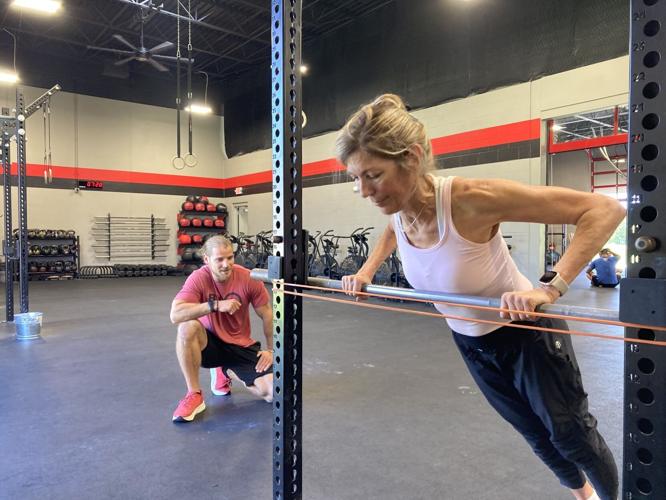
For now, however, the 61-year-old Omaha, Nebraska, woman is happy to be doing a modified version of the vigorous calisthenics — which usually includes jumping up, squatting to the floor and kicking back into a pushup — with the help of a barbell mounted on a squat rack.
“Maybe I’m going to get back to full burpees, sometime,” Fisher said partway through a recent hourlong workout led by Clay Fisher, the youngest of her four sons and a coach and personal trainer at Big Omaha Fitness.
But even her modified exercises represent what her doctors call a remarkable recovery. Fisher spent a month at Methodist Hospital last fall after developing neuroinvasive West Nile disease, a rare complication of the mosquito-borne virus that strikes fewer than 1% of those infected.

Cathy Fisher of Omaha, right, is back to modified CrossFit workouts after suffering a near-fatal bout of neuroinvasive West Nile disease last fall. She’s coached by son Clay Fisher.
She left the hospital still on a ventilator and spent two months at Madonna Rehabilitation Hospitals’ Omaha campus, followed by an additional two months at QLI rehabilitation center. Nearly eight months after leaving Methodist, she continues to work on building her strength, endurance and balance. She is continuing modified CrossFit classes at QLI and working out at Big Omaha Fitness, where she had been a regular. She recently was able to jog, albeit slowly, on a treadmill and return to hosting “gammy Thursdays” with her grandchildren.
She couldn’t breathe, she couldn’t talk, ‘I know what could have been’
She and her husband, Todd Fisher, who will mark their 40th wedding anniversary in January, told her story recently to inspire others who find themselves facing similar situations, whether due to injury or illness. Todd Fisher and his wife’s doctors also credit her healthy lifestyle and overall fitness before her illness — and her willingness to work hard — for how far and how quickly she has come back from her close call with death. Also crucial, the couple said, was the quality care she received throughout her ordeal and the support of family and friends.

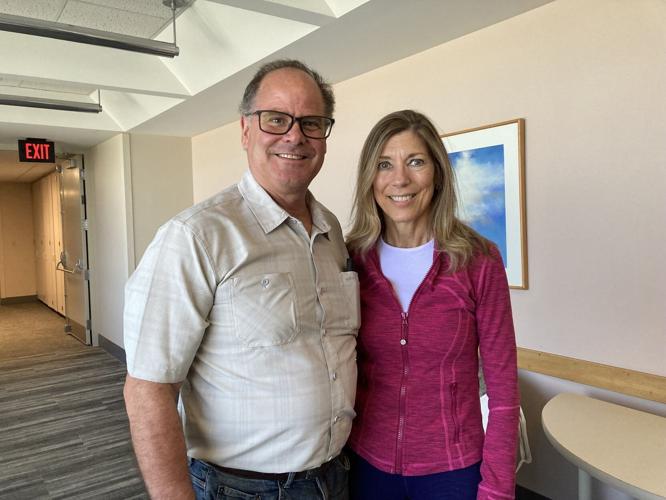
Todd Fisher, left, and wife Cathy returned recently for a visit to the Methodist Hospital intensive care unit where Cathy spent a month after contracting neuroinvasive West Nile disease.
“If there’s anyone else out there that’s going through difficult times with rehabilitation of some kind,” Fisher said, “... maybe they would glean some insight and some basis to help them in their situation through what I went through.”
Fisher said she now can do almost everything she was able to do before. She might just have to do it differently, as with the burpees, or more slowly. Some things she doesn’t care if she does again, like the handstands she used to do during CrossFit classes. Others she’ll keep working on, like fastening buttons and opening the stubborn lock on the back door of her kitchen.
“I know what could have been,” Fisher said. “And I’m just very blessed and try not to take little things for granted.”
The couple suspect she was infected with West Nile during a bike ride, one of their favorite activities, on Labor Day at Omaha’s Flanagan Lake. It was hot, so she went down the bank and dangled her feet in the water for a few minutes during a break in the ride. She remembers scratching her ankle a lot afterward.
She developed a low-grade headache about 10 days later while the couple were visiting her family’s vacation home at Iowa’s Lake Okoboji. After she returned, she experienced double vision. The second oldest of their four sons, Dr. Sean Fisher, a surgeon who is completing a plastic surgery fellowship in Texas, reached out to medical contacts who recommended that they go to the emergency room if they couldn’t get in to see her primary care doctor.
Initially, Todd Fisher said, doctors at the ER thought she was experiencing cranial nerve palsy, with the nerves that control muscles in the eye losing function so the eyes don’t track properly. An MRI found no sign of stroke or tumors.
That night, Cathy Fisher became sick to her stomach when she tried to eat the salad he’d prepared. The next morning, she decided to work from home. At one point, Todd Fisher placed his palms on the sides of her face. “I went ‘Whoa, you are really hot,’” he recalled.
Her temperature measured 104.5 degrees Fahrenheit on their home thermometer. He gave her Tylenol to reduce the fever, but she couldn’t keep it down. The next morning, they went to see a nurse practitioner at her doctor's office.
The practitioner recognized the seriousness of her symptoms and went to get Dr. Chad Reade, Fisher's primary care physician and an internist at Methodist HealthWest. He immediately sent them to the emergency room at nearby Methodist Women’s Hospital. She was transferred to Methodist Hospital.
Fisher remembers little of that time. Todd Fisher said he returned home to get some of her personal items. When he got back, she asked him about some sales credits for her family’s company. She manages its customer service area. A half an hour later, she spoke to him in what sounded like the pig Latin once used by children. Twenty minutes later, she couldn’t speak at all.
Over the next several days, she developed some difficulty breathing and with maintaining proper blood sodium levels. Hospital staff moved her to the ICU and eventually intubated her. Several days later, however, they were able to take her off the ventilator and everyone was feeling good, Todd Fisher said. By that time, doctors were 99% certain she had neuroinvasive West Nile. A test later confirmed it.
Fisher said doctors had been cautioning him that things would get worse before they got better. “And I thought, ‘Well, if this is as worse as worse gets, we dodged a huge bullet,’” he said.
He reluctantly agreed to go a birthday party for one of the couple’s Omaha grandsons. He returned a couple of hours later and dozed off a bit. Then a nurse had difficulty rousing Fisher. Her oxygen levels were dropping. She went back on the ventilator.
Dr. Brian Westerhuis, a neurohospitalist at Methodist, said the encephalitis that had initially impacted Fisher’s brain stem had begun to affect her peripheral nervous system. While she had begun following commands fairly well, the weakness from those issues meant she needed help breathing.
There is no specific treatment for West Nile, he said, so the ICU team’s role was to provide supportive care. But the fact that Fisher became so ill, given her overall health, was somewhat surprising. About that time, he had several other patients who’d also become extremely ill as a result of West Nile. But they all had other health issues.
“I remember in the depths of her case being really humbled by how sick someone can get, particularly in their physiological prime like she was,” he said.
The dangers of West Nile virus
According to the federal Centers for Disease Control and Prevention, most people — 8 out of 10 — infected with West Nile don’t develop any symptoms. About 1 in 5 experience symptoms such as fever, body aches, joint pain, vomiting and diarrhea. But only one in about 150 develop severe illness affecting their central nervous system. While severe illness can occur in people of any age, those over 60 are at greater risk — about one in 50 — of severe illness if infected. Those with certain medical conditions, such as cancer, diabetes and hypertension, also are at higher risk.
Last year’s 190 reported human cases of West Nile — 148 in people tested by health care providers, 42 in those who donated blood — was the highest since 2018, according to preliminary Nebraska Department of Health and Human Services data. That year, 251 clinical cases were reported, plus 46 in blood donors.
The 2023 tally included 90 neuroinvasive cases. Seventy-six people were hospitalized and nine died. West Nile cases generally begin increasing in mid- to late July and fall off by early to mid-October. Last year, however, there was a late jump in mid-September.
“She was so tragically sick, the fact that she survived was just miraculous,” Westerhuis said.
He said he wasn’t surprised, however, to hear Fisher now is back to doing modified CrossFit workouts.
Reade noted that the Fishers are a family of athletes. Todd Fisher is a former Husker linebacker. Ryan, the oldest son and now an Omaha architect, preferred baseball. But the three younger Fisher sons were football standouts at Millard North who went on to play Division I football — Sean at the University of Nebraska-Lincoln; Cole, now a structural engineer in Des Moines, at the University of Iowa; and Clay at the University of South Dakota.
Clay Fisher said seeing his mom so weak and vulnerable was terrifying. He has always thought of his parents as “real-life superheroes.” But the family focused on staying positive.
“I think we all did a really good job of banding together and recklessly holding onto hope,” he said.

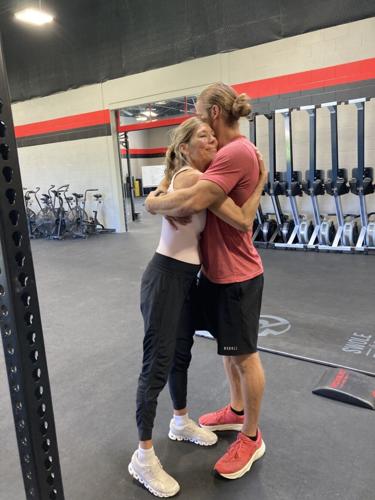
Cathy Fisher, left, shares a heartfelt hug with her youngest son and coach, Clay Fisher, after a modified CrossFit workout. Cathy Fisher suffered a near-fatal bout of neuroinvasive West Nile virus last fall that hospitalized her for a month and required months of rehabilitation.
In mid-October, Fisher was transferred to Madonna, where therapists began the process of reawakening her muscles. Even moving her hand to lift the lightest object was incredibly hard, she said.
“They’re so positive, it’s almost hard not to be positive yourself,” Fisher said. “And just keep working, because they believe in you and your family believes in you ... And I just tried to stay positive and just keep on working.”
Todd Fisher knew that recovery from any kind of traumatic brain injury varies from person to person. “The hardest thing for me,” he said, “was just trying to figure out, ‘OK, well, what version of my wife do I get on the tail end of this thing?’”
Fisher moved to QLI in mid-December. By then, she could walk about 20 yards with a walker. She returned home Feb. 23, able to drive and ride a bike.
“I learned long ago not to look for improvement on a day-to-day basis, because you’re just not going to see that,” she said. “I have pretty much consistently seen improvement every week.”
Reade said doctors typically would expect Fisher’s recovery to take much longer than it has. He saw her in early March. She walked in beaming. By the time he saw her again in April, she was excited about jogging again for the first time.
Fisher, he said, also has excelled at going through the process that patients who lose function face of grieving that loss and adapting to a new normal.
“Even now, it’s hard for me not to be emotional about it,” he said. “It deserves to be celebrated.”

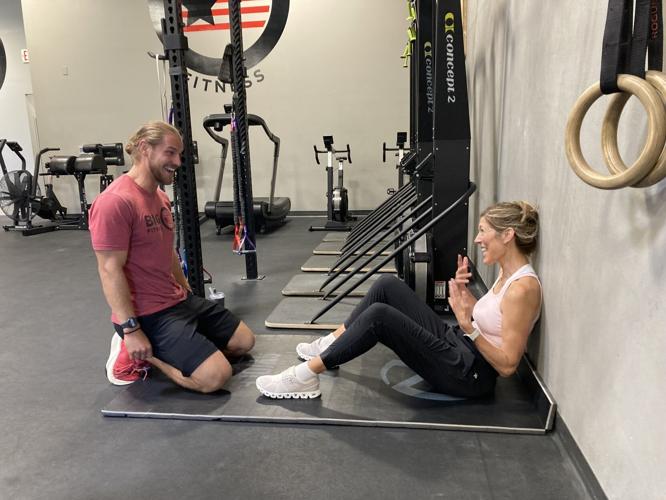
Cathy Fisher, right, laughs with son and coach Clay Fisher during a modified CrossFit workout.
Fisher said she doesn’t feel like she’s hit a plateau yet, though. Her memory is back, and her mental function is nearly what it was before. She’ll continue to work on the rest, including rebuilding some fine motor skills and getting strong enough to ride the hills around Flanagan Lake.
“All in all, it’s been the most difficult thing I’ve ever had to combat in my life,” she said. “All the family and friends and love and support and medical care and therapists, all of that has definitely pulled me through this.”
Shelli Whitehurst talks about her recovery from West Nile Virus on Sept. 23, 2022.
The truth about mosquitoes — and what you may be doing wrong
Is it really a bad year for mosquitoes?
Updated
"For lot of people, it feels like this year is a lot worse," Carlson said, who says on average the levels are similar to those seen in 2019 and 2020. "Last year, there were almost no mosquitoes for pretty much the duration of the entire summer because of the drought."
That said, some areas are experiencing above-average mosquito populations this year because of heavier rain or higher water levels, he added. So if you live in a part of the state that has been wetter than usual, it could be that the mosquitoes are indeed back with a vengeance.
Is my suffering worse than yours?
Updated
My dad used to console me by saying mosquitoes couldn't resist my "sweet blood." Carlson says people like me have "won the genetic lottery." Fact is, some people are more attractive to mosquitoes because of their underlying biology — the amounts of carbon dioxide they emit or the natural scents they carry, for example.
Some of it can be activity-based, Aliota adds. If you're huffing and puffing on a strenuous hike, you might feel them coming for you. Potential bummer alert for your July 4th gathering: Alcohol consumption can also stimulate mosquito attraction.
They also detect us by body heat. So if your body temperature naturally runs warmer than the average person, consider yourself desirable.
"That's why if you're ever around a pregnant woman in the summertime, she tends to get more mosquito bites than anybody else," Carlson said.
So the solution is clear: Invite a pregnant friend to your barbecue.
What works?
Updated
If you're just sitting in the backyard or are hosting a patio get-together, one of the most effective things you can do is plug in an oscillating fan to keep the air moving, Aliota said. The wind can help keep mosquitoes from finding you and your guests.
And don't forget the bug spray. "I am a strong believer of using DEET," said Aliota, though for kids he recommends using a spray with picaridin.
Permethrin is another treatment that can be applied directly to clothing and gear rather than directly to the skin. Before sending my kid to a weeklong camp in the woods, I sprayed his socks, pants, shoes and shirts to keep him a little safer from mosquitoes and ticks.
To provide a spatial repellent to cover an outdoor area such as a deck or patio, both Aliota and Carlson said they were intrigued by Thermacell, which diffuses a synthetic version of a substance found in chrysanthemum flowers. "I've seen some evidence that suggests they work pretty well," Aliota said. "I was actually looking to buy some."
Should I eat garlic?
Updated
"I think you'd have to eat a lot of garlic to have any kind of repellent effect," Aliota said.
Same goes for those citronella candles — or planting citronella, said Carlson. "Your yard has to be entirely made out of citronella plants for it to have any impact."
What about mosquito traps?
Updated
These gadgets promise to lure mosquitoes by mimicking human breath and then killing them by drowning, electrocution or other means. Some have been studied and shown to be effective, but Carlson recommends staying away from these products because they may invite even more mosquitoes to your area and won't succeed in killing them all.
He also advises that people use caution when purchasing foggers that can be applied to your yard. These products can knock down mosquitoes for a number of hours, but may kill more than mosquitoes — such as pollinators and other insects beneficial to the environment. Consider hiring a licensed professional who is trained to apply proper dosages.
Silver linings
Updated
Sometimes it's easy to lose sight of the fact that in other parts of the world, "mosquitoes are Public Health Enemy No. 1," said Aliota.
Even in the Midwest, cases of West Nile Virus pop up every summer. But our cold winters are good for something, he adds. The species that transmit the pathogens that cause dengue or Zika virus aren't established in our state.
What's the 2022 mosquito forecast?
Updated
"Predicting what the rest of the summer is going to be like for mosquitoes is essentially like predicting the weather," Aliota said. "It's somewhat unreliable, and it can vary depending on the mosquito species."
Although more than 50 mosquito species are found in the Midwest, the ones that are most likely biting you in your yard are aedes vexans. They lay their eggs in tree holes or other containers that collect water and thrive when there are intermittent thunderstorms. This species is the most likely to peak at this time of year.

