



I am new to Tucson and desert living. I want to landscape my yard with plants that don’t require a lot of water. Any suggestions?
A: Welcome to Tucson! The website Water — Use It Wisely (wateruseitwisely.com) offers ideas on outdoor landscaping in the low Arizona deserts. Learn the basics of xeriscape landscaping, view their landscaping video series, plant selection ideas, sign up for a local landscaping workshop and more. To get you started, here are some of their top 10 recommendations:
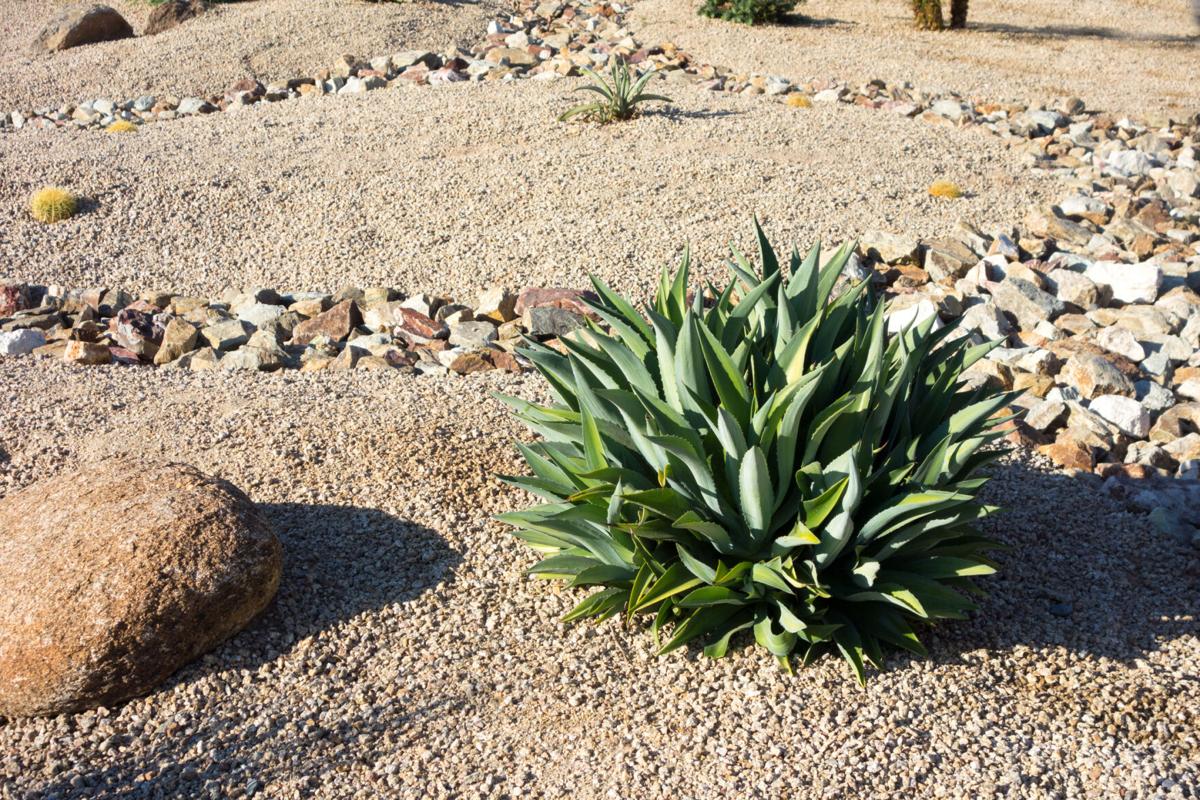
1. GRADE YARD: Grading your yard gives it a natural look and creates more dimension and interest in the landscape. It will also capture rainfall better.
Don’t make mounds greater than 1 inch in height over grade, or it may look unnatural. Make mounds irregular in shape, not perfectly symmetrical and sloped. Create swales (low spots) to capture water and direct water to your plants, not the street.
2. BOULDERS: Use boulders to accent the landscape. A grade of boulders called “surface boulders” looks more natural. Their color usually matches the natural-colored granites. Bury the boulders by at least one-third of their size; place plants close to them to soften them.
3. GRANITE: Use ¼- or ½-inch minus granite (not screened granite). It provides a more natural desert look and is easier to walk on. Use natural colors like desert gold, beige or brown. While organic mulches are not used much here, they are a very beneficial ground cover.
4. GROUP PLANTS: Place plants in natural plant groupings as you would see in the desert. Don’t space plants evenly around the yard. Plant groups in odd numbers. Open space is OK.
5. VIEWS: Block or enhance views. You may want to block an unsightly view, such as the truck your neighbor parks on the street or enhance a scenic view of the mountains. Also, consider the views from inside your home. Place plants accordingly to provide a great focal point out of a window.
6. COMMON THEME: Don’t plant one of every plant you like in a small landscape. It will tend to look like a botanical garden. Use the same plant in different locations of the yard to unify the look.
7. ENERGY CONSERVATION: Be sure to block southern and western exposures of your home from the summer sun. Use deciduous trees for these exposures so that you can take advantage of the sun’s warmth in the winter.
8. HARDSCAPE: Hardscape is the inclusion of any non-plant features for the landscape, such as patios, benches, flagstone walkways, sculptures, boulders, bird features, etc. These spots can provide sitting areas, BBQ space, and will extend your living space to the outdoors. It is usually best to plan and install these areas before plant installation.
9. FLOWERS: Plant wildflowers that will reseed themselves and provide seasonal color and charm to your landscape year-round. Some suggested flowers are penstemons, desert marigold, golden dyssodia, tufted evening primrose, poppies and lupines.
10. NATIVE PLANTS: Use plants native to the Sonoran, Mohave or Chihuahuan deserts for best performance. These deserts are all found in the Southwestern U.S. and Mexico. Although desert plants from other continents such as Africa or Australia will usually perform well, the look may not always fit, like the large Eucalyptus trees.
There are many more considerations for landscape design. Consult a landscape designer/architect to help you design your dream landscape.
As you get acclimated to living in the desert, you will find there are many ways to decrease your water consumption beyond your landscape design. Water – Use It Wisely’s comprehensive community awareness campaign stars ordinary household objects as unexpected, but highly effective, water-saving devices.
The program demonstrates how changing a few simple habits can have a significant impact on water consumption through a bright, colorful and fun approach that encourages everyone to be mindful of when and how they use water.

