

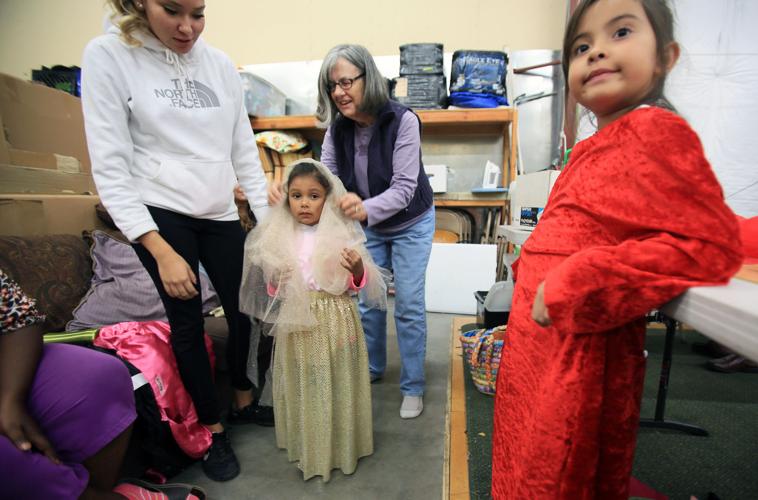
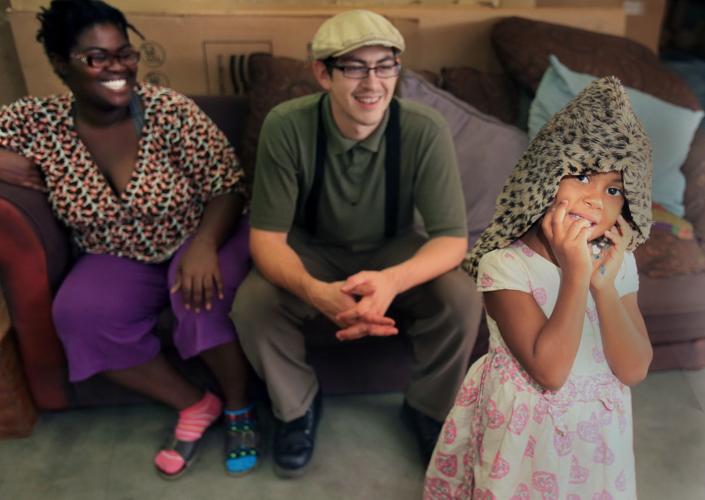
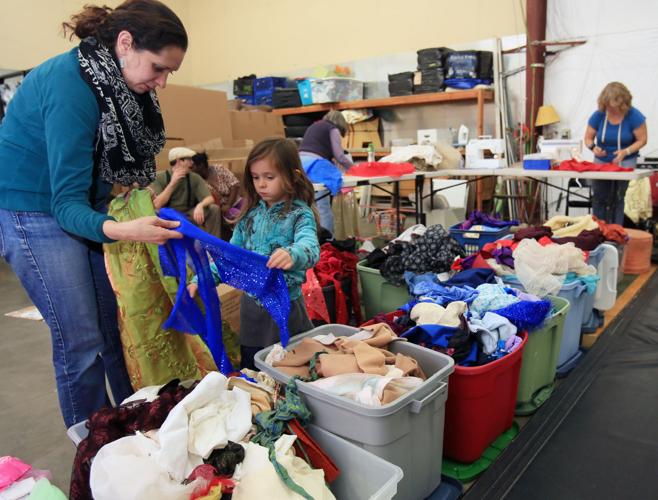
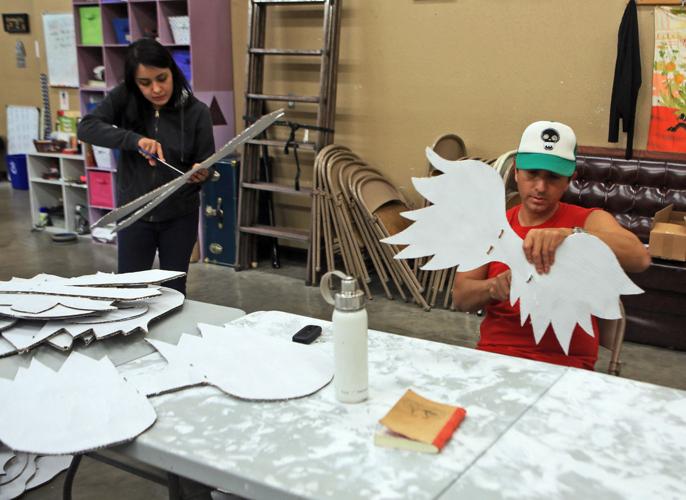

Watching or participating in the All Souls Procession can be a chance to talk with children about death and grief.
The dog died. Or maybe grandma is terminally ill. Now, how to break it to the kids.
When faced with death and grief, it can be hard as parents to talk with their children about it. Seeing their little hearts break when they realize their beloved pet or relative isn’t coming back is no easy sight.
But, as an inevitable part of life, it is important to help them figure out ways to handle death.
“It’s hard because our culture is afraid of it,” said Sharon O’Brien, artistic director of Stories that Soar, a group that promotes literacy by turning children’s writings into plays. “Unconsciously, we teach fear rather than acceptance.”
Community organizations such as Tu Nidito, which provides support for grieving children and families, and organizers of events such as the Procession of Little Angels and the All Souls Procession, are creating opportunities to change that.
“Kids experience sad things and if we don’t acknowledge them, we don’t acknowledge the whole person,” O’Brien said. “At Little Angels we pick stories that celebrate life and honor death and the grieving process of loss ... It comes from kids so they are initiating the conversations and they are wonderful starting points for talking at home.”
Even something as simple as saying the words “die” or “death,” rather than sugar coating it with phrases like “passed away,” is a good way to approach the topic, said Amanda Marks, community impact manager at Tu Nidito.
“We never say ‘Did you lose somebody in your life?’ because a younger kid would say ‘Yeah, but we’re gonna find him,” Marks said. “We say ‘die’ and ‘death’ and kids understand it.”
To illustrate that point, O’Brien recalled a story about a little girl who’s uncle was killed in a car accident.
“They told me he passed away,” she quoted, “But I knew that meant he died.”
With altars, art projects and personal vigils, the All Souls Procession, which takes place Sunday, Nov. 8, and the Procession of Little Angels are good catalysts for conversations on loss and grief.
“It is important to do it (grieve) as a community because it brings us all together in our humanity,” said Jhon Sanders, event director of the Procession of Little Angels. “The events give us pause to recognize and celebrate our mortality … We create the time and space for those conversations to happen because they don’t in every day life.”
Tu Nidito focuses on tools to help children express themselves while in the grieving process.
“For some kids, grief is such an abstract concept,” Marks said. “A bunch of emotions get juggled in their heads. Giving them something visual and tangible helps them understand what’s going on. It helps make it concrete for them.”
Marks suggests a couple different activities to help them make that visual connection.
“Make sure they have different ways to express it, not just verbally,” Marks said. “You have to give them different modalities in a safe environment to express their grief.”
Start with asking a question, such as “Have you felt more or less worried since your special person has died and how does it feel when you worry?” Then give the child a pillow case. On one side they can draw or write about the feelings they have when they worry. On the other side, they draw or write what makes them happy. When it’s time to go to sleep, they lay their head on the happy side and put their worries to bed.
“They may not know what to say, but they draw on the pillow case,” Marks said. “Drawings can open up conversation for kids that haven’t felt like talking.”
Another activity is “grief trail mix,” which Tu Nudito utilizes to help kids visualize how everybody’s grief is different. Fill several bowls with different ingredients to represent different emotions. Have your child fill a Ziploc bag with the foods that represent how they are feeling.
For parents, Marks says it’s OK to not know all of the answers, and that they should be okay with admitting it.
“That makes the parent that much more trustworthy,” Marks said. “Just encourage honesty. And if you don’t know how to respond, take a few minutes to say ‘I don’t know. Good question.’ Encourage them to keep asking questions. Say ‘we’ll figure this out together’ and let them know this doesn’t have to be the only conversation.”
And, remember that at each new developmental level, they’ll experience or re-experience their grief in a different way. For example, a young girl who lost her father might grieve again when it’s time to get married.
“Grief doesn’t end, you just experience different emotions” Marks said. “We don’t get over it. We don’t move on. We move forward through our grief process. And there’s no right or wrong way to grieve.”

