



It’s good kitchen economy to plan a soup or stew toward the end of the week, so you can use up the vegetables you have on hand before they get wrinkled and sad.
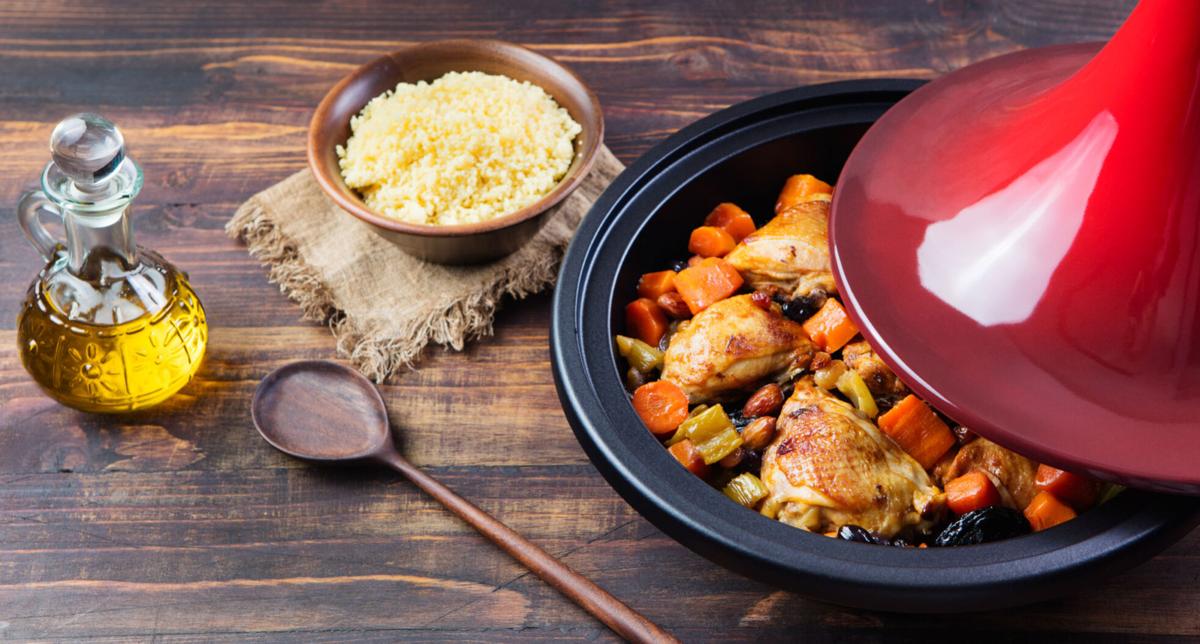
This tagine is one of the best ways I know to put those vegetables to good use. “Tagine” is the Moroccan word both for the stew and the earthen vessel with a conical lid in which it’s traditionally cooked.
I happen to collect tagines, so I have several to choose from if I want to go the traditional route, but just as often, I prepare tagines in a lidded sauté pan or Dutch oven. It’s faster, if less aesthetically pleasing.
In Morocco, it’s considered lucky to eat a tagine aux sept legumes (tagine of seven vegetables) on Fridays. Here in Tucson, it’s a beneficent way to stay on top of the fresh veg in my larder.
As you read through the ingredients here, you may be a bit perplexed. Cinnamon and cumin? That doesn’t seem right. Prunes? Yikes!
It’s typical in Moroccan cooking to combine warm spices like cinnamon and ginger with more savory ones like cumin; it’s one of the reasons why Moroccan food dances across your palate. It’s also typical to combine dried fruit with meat, but if you hate prunes, you could throw in a few apricots or some raisins or both.
In my Southwestern kitchen, I almost automatically replace ginger with a puree of dried chiles and find that their complex flavors ramp up the dish’s sophistication. If you don’t have the so-called “holy trinity” of chiles on hand, you can replace them with fresh grated ginger or ground ginger. About a teaspoon of freshly grated or two of ground ginger would be about right, I think.
A SOUTHWESTERN CHICKEN AND VEGETABLE TAGINE
Makes 3 to 4 servings
Use as many or as few vegetables as you like in this versatile version of the Moroccan stew called tagine.
I generally cram in as many as I have on hand. Other additions: artichoke hearts, whether fresh, canned or marinated; potatoes; onions (pearl onions are lovely here); tomatoes; eggplant; zucchini and summer squash; turnips; cauliflower and so on.
A classic Moroccan tagine would usually include ginger to give it a little heat, but our delightful dried chiles replace them in our tagine. Since most cooks don’t have a tagine, here we’re preparing it in a lidded sauté pan or a Dutch oven.
INGREDIENTS
1 each: ancho, mulato or pasilla and guajillo chiles
2 tablespoons olive oil
6 to 8 meaty chicken thighs
2 cups chicken stock
3 cloves garlic, smashed and peeled
3 carrots, cleaned and cut into ½-inch rounds
1 leek, cleaned, white and green parts, sliced
1 cup chopped winter squash (butternut works well) or sweet potatoes
1 cup green beans, cut in pieces
½ cup red, green, or black olives, or a mix, pitted if possible
½ cup prunes, optional
1 teaspoon cinnamon
1 teaspoon cumin
½ teaspoon saffron threads, crumbled, or ½ teaspoon turmeric
Bunch of cilantro
1 cup peas, fresh or frozen
Steamed couscous or orzo, for serving
PREPARATION
In a dry skillet over medium heat, toast the chiles until they are fragrant, turning often to prevent them from burning. This will take just a minute or two. Set them aside to cool.
In a lidded pan or Dutch oven, heat the olive oil over medium heat until it’s fragrant, about 2 minutes. Place the chicken thighs into the pan skin side down and allow them to cook for 3 to 5 minutes, or until they release naturally without sticking. Turn the thighs over and cook an additional 3 to 5 minutes. Remove the chicken thighs to a plate and set aside. Remove the pan from the heat.
Remove the tops from the chiles and split them lengthwise. Brush out the seeds if you wish. Add them to the container of a blender or food processor, along with the chicken stock and garlic. Whiz until the mixture is smooth, about 3 minutes.
Return the pan to medium heat and pour in the chile sauce you just made. Scrape any browned bits from the bottom of the pan. Add the carrots, leek, winter squash, green beans, olives, prunes, and the whole bunch of cilantro, still tied together. Stir to blend. Stir in the cinnamon, cumin and saffron threads.
Nestle the chicken thighs into the vegetables. Bring to a boil, reduce heat, cover and simmer until the chicken is nearly fork-tender and the vegetables are, too. This will be about 20 to 30 minutes.
Stir in the peas, remove lid and cilantro, and cook, stirring, until the peas are soft, about 10 minutes (2 to 5 minutes if you’re using frozen peas).
To serve, spoon some of the vegetable mixture and sauce over a mound of steamed couscous or cooked orzo. Place two chicken thighs on each serving.

