



Someone gave me an ice cream maker — the kind where you freeze the container and churn it on your countertop — and I’ve been having a lot of fun with it recently.
The ice cream maker is small, so its container doesn’t take up a lot of precious space in my side-by-side refrigerator’s freezer. It’s also exactly the right size for my small household; I don’t need to make a quart or more of a frozen treat because I don’t need to be tempted to eat that much.
I haven’t actually used it to make ice cream yet, though. Instead, I’ve been playing around with sorbets, granitas and sherbets. And boy, are they welcome as the temperature rises.
Let’s take a moment to define the confusing family of frozen confections, just for the record.
Granitas are fruit-flavored ices, literally. Their fruit base gives them intense flavor, which is why chefs favor them as a palate cleanser between courses. They are usually made in a loaf pan, scraping from time to time with a fork as they freeze, to keep the largish ice crystals distinct and kind of fluffy.
Sorbets are granitas that are churned or stirred rather than scraped if made in a loaf pan, to keep them somewhat creamy. They’ll be creamier if they’re churned, but the difference is negligible. Again, their fruit-forward flavors make them good as palate-cleanser or light dessert. Both granitas and sorbets can be savory or sweet, and I’ve had some terrific, odd ones, such as a beet sorbet with cumin and black pepper that dances on my mental palate to this day.
Add a little milk to either granita or sorbet and they turn into sherbet. My mom used to buy vast tubs of sherbet when I was a kid; looking back, I think sherbet was probably more affordable than ice cream for her brood. I liked lime best, and lime sherbet still tastes just right on a late-afternoon summer day.
These are the easiest frozen treats to make.
On the ice cream spectrum, there are true ice creams, gelatos, and frozen custards. These all require churning in an ice cream maker.
Ice cream is usually made with a cooked base of some combination of cream, milk, and other additions such as flavor extracts, add-ins like nuts or chocolate chips, or berries. Ice cream relies on air beaten into it during churning to lighten and smooth its texture.
Gelatos share the same base as ice creams but are not churned as long, so they have less air beaten into them.
Frozen custards add eggs to ice cream’s base, with the raw eggs beaten into the still-warm base. Once the eggs are incorporated, the base continues to cook to a temperature of 160 degrees, and then is usually strained before chilling and churning.
Most recently, I’ve been playing around with fruity sorbets with herbs and just a touch of booze — typically, tequila, white rum or gin. But I think I’ll soon try a cherry sorbet with vanilla paste and a little bourbon, or a strawberry-mint sorbet with a hint of crème de cacao.
My paleta molds should arrive just in time to try those out.
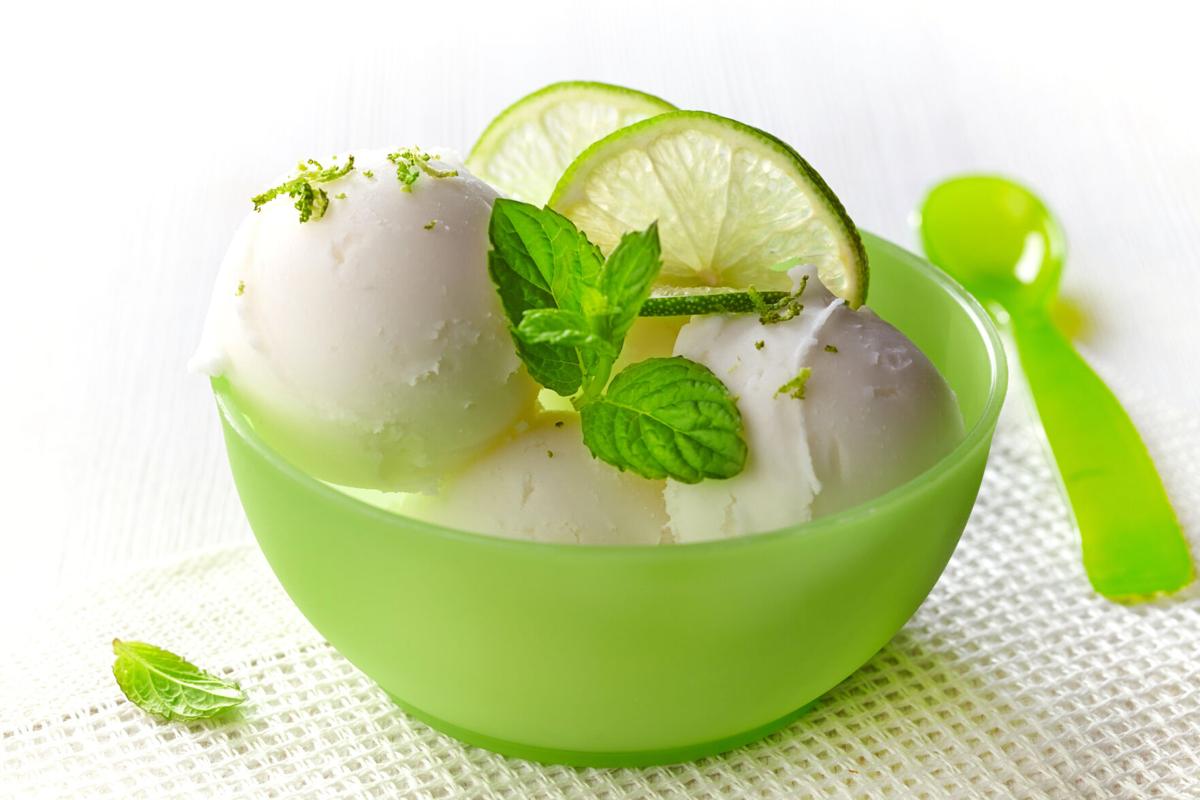
Lime sorbet
Makes about 5½-cup servings
If you add a little milk (about ¼ cup) to this recipe, you’ll make lime sherbet instead. Add the milk in step three, just before freezing. And if you don’t make the simple syrup — just whisking the water and sugar together until the sugar dissolves completely — you’ll make lime granita. Or just pour whatever version you’re making into a paleta mold, rather than churning and/or scraping.
Ingredients
1½ cups water
½ cup sugar
2 tablespoons chopped mint
3 to 4 limes
2 tablespoons tequila, white rum, or gin, optional
Preparation
Combine water, sugar, and mint in a small saucepan. Bring to a boil; cook one minute or until sugar dissolves. Strain the mixture into a measuring cup to remove mint leaves. Cool completely.
Grate two tablespoons of rind from the limes. Juice the limes; you should have about ½ cup of lime juice.
Combine sugar syrup, rind, juice, and optional liquor. Chill the mixture for at least two hours.
Pour mixture into the freezer can of an ice-cream freezer; freeze according to manufacturer’s instructions. Spoon the sorbet into a freezer-safe container, cover and freeze for an hour or until firm.
If you don’t have an ice cream maker, pour the mixture into a metal 9-by-5-inch loaf pan. Place the loaf pan in the freezer; stir the mixture every hour for the first three hours.
Note: For granita, freeze the mixture in a metal 9-by-5-inch loaf pan. Place the loaf pan in the freezer. Using a fork, scrape the granita every hour for the first three hours.

