



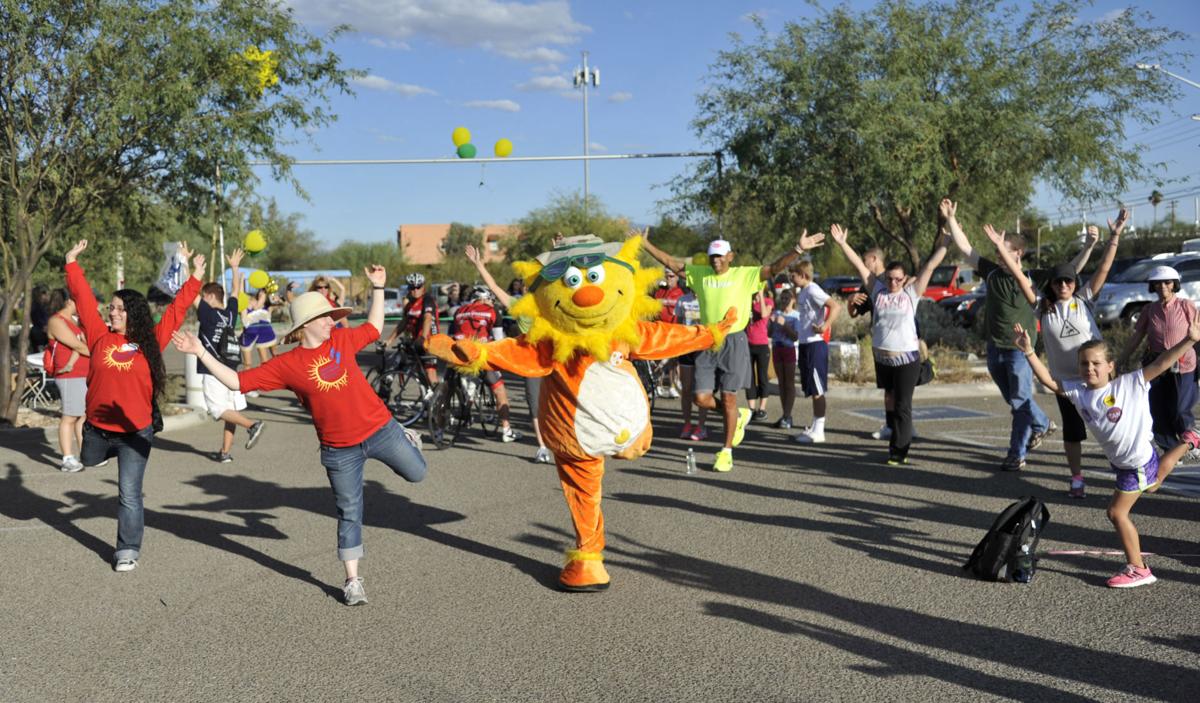
Sun safety for Tucsonans is just steps away with the University of Arizona Skin Cancer Institute 2022 Melanoma Walk/Run on Saturday, Nov. 12, at the University of Arizona Mall.
“Not all melanoma is preventable, but if you detect it early enough, it can be very treatable,” said Lisa Quale, senior health educator with the Skin Cancer Institute.
Melanoma, which is a less common form of skin cancer than basal cell carcinoma and squamous cell carcinoma, can be deadly if not found and treated early. In 2022, about 100,000 cases of melanoma will be diagnosed nationwide according to the American Cancer Society.
“This year, 7,650 people in the United States will die from melanoma, which is why early detection is so important,” said Quale.
The upcoming walk seeks to promote awareness about melanoma and other forms of skin cancer along with the importance of sun protection.
“We definitely encourage sunscreen, but even more, we encourage people to cover up as much as possible. We know that is not always a practical option: When going to the beach or swimming or doing other activities, people may not want to be covered all the time. Staying in the shade is also great, but sunscreen needs to be used,” said Quale.
The Skin Cancer Institute recommends 30 SPF (sun protection factor) or higher and endorses sunscreens containing zinc oxide, titanium dioxide or Avabenzone, a chemical that absorbs and neutralizes ultraviolet radiation from the sun before it can cause damage.
“These are the three ingredients that make sunscreen ‘broad spectrum,’ which means it protects from ultraviolet A and ultraviolet B radiation from the sun,” said Quale.
Khadija Sawayz, a senior at the UA’s Mel and Enid Zuckerman College of Public Health who will volunteer at the walk, understands that it is vital to educate people from all backgrounds about skin cancer prevention. Sawayz is also a member of Project SASS (Students Are Sun Safe), which provides outreach to people of all ages through various presentations and venues.
“People with darker skin think that they are not prone to skin cancer, and we want them to know that everyone is at risk. We want to push that to the community. Project SASS has been an eye-opening opportunity for me to see how the community perceives these issues, and it is very rewarding to realize that we are providing people with resources to help them live healthier lives,” said Sawayz.

