



A longtime bohemian standard during the 1970s, hanging houseplants have returned in a big way as demand for plants has skyrocketed in the pandemic and Instagram influencers create indoor jungles. Plant parents love to dote on their houseplants, especially now that everyone is hunkering down at home, but are all indoor plants well suited to hanging?
Bloomscape’s resident plant expert Joyce Mast advises evaluating your home and lifestyle before choosing a houseplant to hang in your home.
“What kind of light will your plant enjoy?” Mast asked. “How much time will you have to take care of its needs? And are you able to reach the plant (to water) once it is hanging in your home?”
Here are varieties that will do well in baskets and macrame hangers:

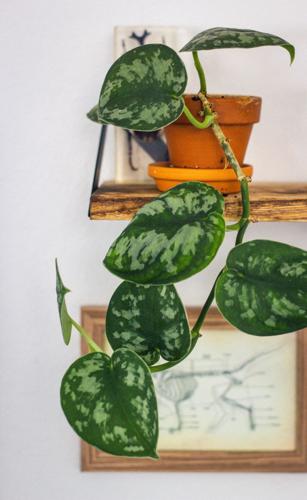
Silver satin pothos (Scindapsus pictus)
Silver satin pothos (Scindapsus pictus)
In the wild, a Scindapsus plant can climb as high as the crown of a tree, while indoors, it can grow up to 6 feet tall. “This trailing plant enjoys low to bright indirect light areas, is very easy to care for, and looks lovely as a hanging plant as its patterned silvery green leaves drape over,” Mast said. Tip: Feel free to take a cutting from this one and share at plant swaps as they are easy to propagate.
Heartleaf philodendron (Philodendron hederaceum)
This popular philodendron features distinctive pointed tips and can be grown as a climber or a trailing vine. “These fast-growing heart-shaped plants enjoy low to bright indirect light areas and are very easy to care for — they’re happy in most areas of the home,” said Mast. Tip: This plant can handle its soil drying out from time to time. Just water it thoroughly and then hang it back up. As a quick grower, it is an excellent choice for the trailing-plants-as-curtains look.
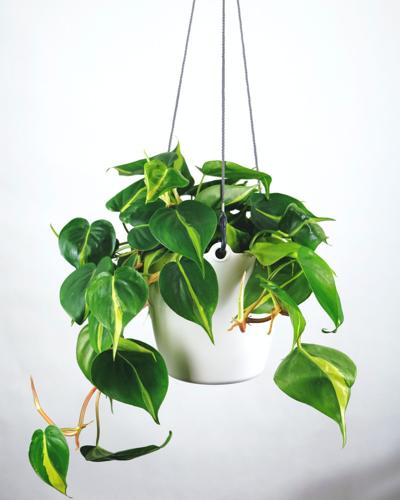
Philodendron hederaceum ‘Brasil’
This variety of the popular heartleaf philodendron features beautiful yellow and lime green leaves that look dramatic cascading from bookshelves and hangers. Mast likes it as a “fast-growing, vining plant that is very easy to care for and will thrive in low to bright indirect light.” Tip: If it gets long and leggy, simply pinch it back for a fuller look.

Heartleaf philodendron (Philodendron hederaceum)
Neon prayer plant (Maranta)
Hardy Maranta earned its common name because of the way its leaves close at nightfall. “This vibrant plant stands out with bright green oval leaves and a herringbone-like pattern of light yellow veining,” said Mast. Tip: Maranta thrives in humid conditions, so it’s a good idea to give it a light mist every few days.
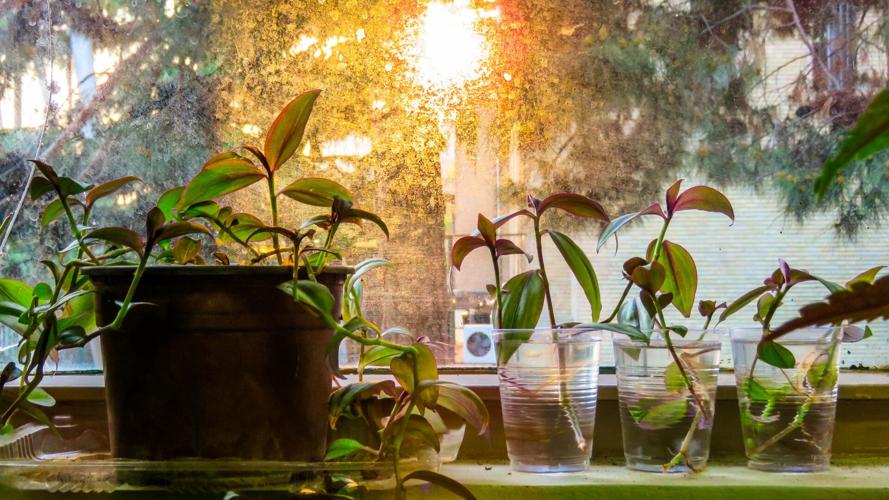
Wandering dude (Tradescantia zebrina)
This striking purple plant, now commonly known as the Wandering dude plant is easy to care for, fast-growing and will trail quickly. It can also take some direct sunlight if necessary. Tip: Pinch back the long vines at a joint on the stem to encourage branching as it can become leggy with bare stems.

Wandering dude (Tradescantia zebrina)
Hoya obovata
Hoyas have thick, waxy leaves, are great climbers and prefer bright, indirect light. With their striking trailing leaves, hoyas are perfect for bookshelves, mantles and hangers. Tip: Group a variety of hoyas in a row (other popular varieties include Hoya kerrii and Hoya carnosa) to make a statement.
String of bananas (Curio radicans)
Native to South Africa, this succulent features distinctive banana-shaped foliage, also known as “fish hooks,” and is a good choice for sun-drenched south-facing windows. Tip: String of bananas is prone to aphids, so watch the tips of the plants for insects.
String of pearls (Curio rowleyanus)
String of Pearls, formerly known as Senecio rowleyanus, is a popular trailing plant with pea-shaped leaves. It loves heat and indirect sunlight but can tolerate lower light if necessary. As a drought-tolerant succulent, water String of pearls when the soil is dry. Tip: The attractive stems can break off easily, so install it in a place with limited traffic.

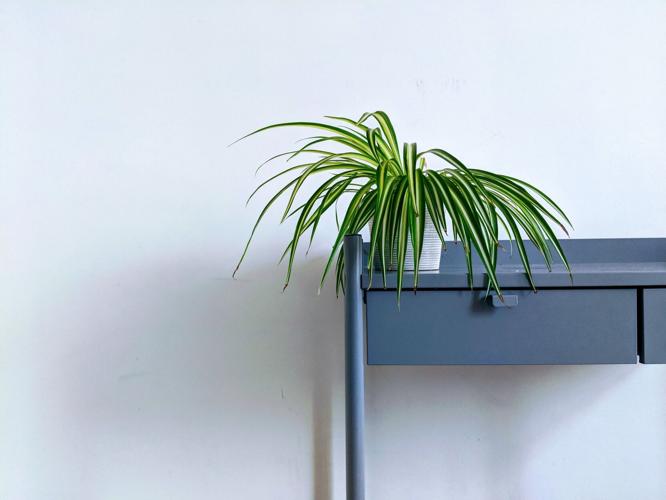
Spider plant (Chlorophytum comosum)
Spider plant (Chlorophytum comosum)
Spider plants, sometimes called airplane plants because of their arching leaves and floating plantlets, grow well in hanging baskets. They prefer bright, indirect light, but too much sun can scorch their leaves. Water regularly and allow to dry out in between feedings. Tip: Propagate single plantlets by removing them from the stem and rooting them in water. When roots are an inch long, transfer them to potting soil.
Baby tears (Pilea depressa)
This delicate plant creates a stunning mat of creeping stems that prefer moist, well-drained soil in a part shade to full shade location. They are thirsty plants and require frequent watering. Tip: Baby’s tears thrive in humidity, so they are an ideal choice for steamy kitchens and bathrooms.
RELATED: Tired of cooking in your kitchen? 5 easy and cheap tips to organize and upgrade
Tired of cooking in your kitchen? 5 easy and cheap tips to organize and upgrade
How to do a kitchen overhaul on the cheap
Updated
So maybe you don't have the energy for a full Marie Kondo-style purging of your household, but if the novelty of home cooking has worn thin as the pandemic continues, consider a kitchen overhaul. Here's a roundup of cheap — mostly free — tips for inspiration. If they sound like no-brainers, well, maybe they are.
But minor adjustments can make our lives noticeably better — and easier. And who couldn't use an easier life right now?
Do a deep cleaning.
Updated
It may sound like a drag, but put on some dance music and see how much pent-up aggression you can work out.
Do all the crummy jobs: Get in the corners; clean the grease off the tops of the cupboards; pull out the stove and the refrigerator. Getting rid of that blanket of dust on the fridge motor will make it function more effectively too.
You need a clean slate.
Rearrange your refrigerator.
Updated
Yes, clean it and throw out the long-expired condiments. But then, take a look at the shelves. Are you always struggling to find a spot for the milk? Consider reconfiguring them to eliminate minor daily hassles.
Rethink your drawers and cabinets.
Updated
What other annoyances could you eliminate with a bit of rejiggering? Where else could you put the tongs that make the drawer jam every time you open it? How about employing a little-used vase as a utensil bucket so you don't even need to open a drawer for those tongs?
Could you streamline your movements around the kitchen if you shuffled what you have in your cabinets? Moving plates to a cupboard can make your prep area more efficient and save a few steps — which may seem minor, but who has even a few steps' worth of energy to spare these days?
Engage in some gentle KonMari.
Updated
As you reorganize, think about what you have and whether you really need it; if you can shed it, get rid of it.
Note what's worn out and needs to be replaced. If you can afford to replace that dull can opener, do it; if not, put it on a list for down the road.
Invest in a few organizers for convenience.
Updated
Some organizer suggestions include: a small, cardboard box for root vegetables, plenty of hooks for bags, utensils, and racks, a plastic bin for pot lids, a rack for plastic wrap and foil and a plastic-bag organizer.


