


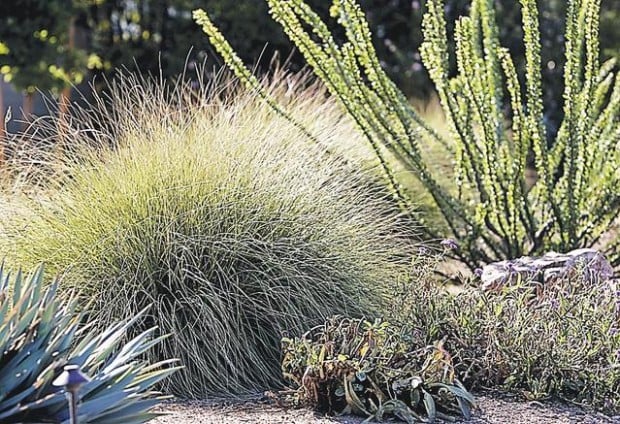

What do you find most enjoyable about your garden? The vibrant colors? The scents of the plants? The greenery?
A well thought-out garden design can provide a feast for all of your senses. The multi-sensory garden has elements of sound, texture, smell, shape and color. Designing for all the senses not only makes for a more immersive experience in your garden, it can also provide enjoyment for people who have sensory limitations.
For example, 1 in 12 men and 1 in 200 women in the world have color blindness, chiefly due to genetics. Most people with color blindness can’t distinguish between reds, greens, oranges and browns. These colors can look greyish to them.
And not everyone can enjoy the smells of aromatic plants. Inability to perceive smells used to be rare, but now a third of people with COVID-19 can’t smell (or taste) to varying degrees, sometimes long-term.
People may also have a lifelong sensory impairment, such as visual issues. For those individuals, the smells and sounds of a garden as well as plant textures can still bring a lot of joy.
For people with visual difficulties, focus garden design on sound, smell and texture. For example, include plants that make pleasing sounds in the wind, such as pines, grasses and palm trees, and plants with seeds such as hopbush (Dodonaea viscosa). You can add flowing water for that wonderful peaceful sound.
To appeal to smell, plant aromatic plants such as creosote, desert lavender, herbs, lavender, citrus, eucalyptus and sages.
People with color blindness can still appreciate design elements such as shape. Plants with sculptural elements include many succulents and cacti. If you’re looking for something non-spiny, you can choose soft, flowing grasses. You can also pay attention to leaf shape — certain vines, passionfruit (Passiflora spp.) for example, can have unusual leaves and can twine around trellises or trees for visual interest. Palm trees also have a sculptural essence. And don’t forget about hardscaping elements, pots and garden sculptures, which can also add visual interest.
If you’re focusing on touch, choose soft plants such as grasses, herbs, and shrubs and trees without thorns. Good candidates are desert willow (Chilopsis linearis) and Arizona yellow bells (Tecoma stans). Water features are nice here as well, particularly if visitors can dip a hand or toe in cool water.
Don’t forget about taste. You can choose plants like figs, citrus and pomegranates, which have both visual appeal and produce tasty fruits. Aromatic herbs that can be used for cooking are also a great option, particularly since they appeal to the sense of smell as well. Mint and basil are perennial favorites, as is rosemary, thyme, sage and lavender.
Other elements of good multi-sensory design include good lighting, well-designed pathways for safe passage through the garden, and raised beds for easier access for gardeners who have mobility issues. Make sure your garden has level paths with no tripping hazards. With some forethought, you can have a lovely garden that everyone can enjoy.

