

Collectibles: From commode to $2 million dime
- Updated
Arm yourself with knowledge to become a smart investor!

- By Danielle Arnet The Smart Collector
- Updated
WHAT: A 14-by-22.25-inch cardboard window card advertising a Ray Charles concert in San Diego on Sept. 9, 1961, brought in about $5,440 when it sold in a recent pop culture/political memorabilia auction by Hake’s Americana & Collectibles. The concert promised the artist’s greatest hits, including “Georgia” and “What’d I Say.”
MORE: Note the ticket prices of $2 to $4 and the mention of The Singing Raelets and Betty Carter, plus credit for the musical arrangements by Quincy Jones and Ralph Burns.
SMART COLLECTORS KNOW: Concert posters in excellent condition that promote major stars of the ’50s, ’60s and ’70s, such as Charles, will become even more valuable as older buyers buy back memories of their youth. They are the generation with disposable income to spend.
HOT TIP: Watch for rock star posters to experience the same trajectory. Music posters from that era are already gold, but rock posters of the ’50s, ’60s and ’70s, including those featuring the Beatles and The Doors, are not far behind and climbing. A 1969 first printing Jimi Hendrix psychedelic poster for a Toronto concert sold for a little more than $5,705 in the same sale.
BOTTOM LINE: Pop and rock posters were never made to be collectible. They were advertising, period. Anyone could take home a program. The lucky person who thought to take a top condition poster as a souvenir, and then preserve it for 50-plus years, hit the jackpot.
BOOK IT! “The Historical Apothecary Compendium: A Guide to Terms and Symbols” by Daniel A. Goldstein (Schiffer, $50) is an encyclopedic guide to terms used on apothecary bottles and other wares. Many of us admire the bottles as attractive curiosities but don’t have a clue to what labels mean. There are more than 10,000 entries, so no alchemical symbol or apothecary squiggle should remain unidentified. Written by a medical toxicologist, understood by the lay person.

- By Danielle Arnet The Smart Collector
- Updated
WHAT: When Christie’s New York sold Part II of a private collection of Chinese snuff bottles last month, the 154 lots totaled just under $1 million. One, a sandwiched pink glass bottle in the form of an elongated Chinese cabbage, brought $10,625.
MORE: Sandwiched glass involves layers of differing color glass that are pressed or cut down into. Only 3 inches high, this bottle has a layer of pink glass between two layers of white glass. The white is carved on the exterior to form cabbage leaves that extend upward. The neck is speckled with green and pink glass; the stopper is carved jadeite.
SMART COLLECTORS KNOW: Chinese cabbage, “baicai” or “qingcai,” is a symbol for wealth because it has the same sound as the word for money or wealth. Hence the cabbage shape of the bottle.
HOT TIP: Tobacco was introduced to the Beijing court by the Portuguese in the 16th century. At first, snuff bottles were strictly a court or upper class item. Intended to fit into the palm of a hand, early examples acquired a patina that is much prized today.
BOTTOM LINE: Significant collections built by knowledgeable collectors tend to sell high — often spectacularly — when they come to market. Built by focused individuals who do their research and buy only the very best, important single owner collections are often a bonanza for both seller and buyer.
MORE: On June 22, Christie’s will disperse another single owner collection when it sells items from Joan Rivers’ penthouse. Included are a silver Tiffany water bowl engraved “Spike,” Bob Mackie costumes, Faberge and French furniture, and designer jewels of all kinds.

- By Danielle Arnet The Smart Collector
- Updated
WHAT: Printed in what was the wilderness of the Massachusetts Bay Colony, the Bay Psalm Book was the first book made by Congregational Pilgrims who arrived seeking religious freedom. As the first book printed in America, the book is precious as a historical document and religious artifact.
MORE: A poetic translation of the Psalms intended to reflect the Hebrew original, the text was created by leading ministers and scholars of the colony including Richard Mather and John Cotton. The press, paper and type were sent from England by an indentured locksmith.
SMART COLLECTORS KNOW: With printed matter, the first edition is the most sought and most valuable.
HOT TIP: Of the 1,700 copies of the first edition, only 11 are known to survive. In 2013, one set a new world record for a printed book at auction when it sold for $14.1 million in London. It was the first time since 1947 and only the second time since the 19th century that a first edition had come to auction.
BOTTOM LINE: At the Swann auction, it was the first time the seventh edition has surfaced. Published in Boston in 1693, it has provenance dating from a Salem witch trial judge.

- By Danielle Arnet The Smart Collector
- Updated
WHAT: In New York City on April 6, the chair where author J.K. Rowling sat as she wrote “Harry Potter and the Philosopher’s Stone” and “Harry Potter and the Chamber of Secrets” will sell at the Heritage Auctions gallery there.
Before donating the chair to a small charity auction in 2002, Rowling painted it with lettering that reads: “You may not find me pretty, but don’t judge on what you see.” On the seat apron she painted, “I wrote Harry Potter while sitting on this chair.” The backrest is signed, and under the seat on a stretcher is “Gryffindor.”
MORE: The chair comes from a set that Rowling was given in government housing when she was a young, single mother living in Edinburgh, Scotland. Rowling used the most comfortable chair in the set as her main writing chair.
SMART COLLECTORS KNOW: Short of laying hands on original manuscripts for the first two Potter books, this chair is the most important piece of original Potter memorabilia to sell to date. Rowling’s hand lettered message adds immensely to value.
HOT TIP: The chair will sell with the original “Owl Post” that Rowling typed for the first charity auction. In it, she writes of receiving four mismatched dining chairs in 1995 and how this “was the comfiest one.” We also learn that she produced the manuscripts by typewriter.
BOTTOM LINE: Potter enthusiasts of all ages will want this piece of literary memorabilia. Expect bidding to be fierce: The chair could end up in an institution such as a university or library.

- By Danielle Arnet The Smart Collector
- Updated
WHAT: A 25-cent Mills roulette floor model slot machine circa 1901 that sold recently at Morphy Auctions for $158,600 is one of only a few known to exist. The roulette wheel can be viewed by looking down into the top of the 45-inch tall case.
MORE: Called a seven-way machine because it accepts seven different coins on a single pull, the machine features an unusual hexagonal wooden box hiding nickel plated works. Total restoration in 1987 included replating the works, plus exterior fixtures including claw feet.
SMART COLLECTORS KNOW: The machine sold as part of a dedicated auction limited to coin-op machines and collectible advertising. Smart collectors know that dedicated sales of antiques and collectibles offer focused collections of better goods.
HOT TIP: Pennsylvania-based Morphy Auctions held this sale in their Las Vegas gallery because they knew that the best way to cash in on collectible coin-ops is to sell where there is a focus of interest.
BOTTOM LINE: Early coin-operated machines — from peep shows to vending machines, amusement machines (think fortune tellers) to player pianos and musical machines of all kinds — are hugely popular with buyers who seek out the rarest in working condition.

- By Danielle Arnet The Smart Collector
- Updated
WHAT: In a world where competition between auction houses for top goods has become fierce, even high-end houses are slugging it out for newsworthy sales and consumer recognition. Once a stuffy white-glove pursuit, prestige auctions have increasingly become theatrical events.
Christie’s London recently sold memorabilia from “Spectre,” the 24th film in the James Bond series. Held in-house and online, the first part alone realized about $3.9 million, with all proceeds to be donated to charities including Medecins Sans Frontieres (Doctors Without Borders) and United Nations Mine Action Service. Bond’s car, an Aston Martin DB10, brought more than $3.4 million.
MORE: In late December at Sotheby’s New York, 600 Star Wars toys and memorabilia from a Japanese mega fan sold for $550,000. Top lot was a $32,500 5-figure pack originally sold only at Canadian Sears stores.
SMART COLLECTORS KNOW: In collectibles, it’s always the unusual and pristine that bring top dollar. Memorabilia made to be collectible never soars.
HOT TIP: Smart collectors hunt for recalled memorabilia. A Luke Skywalker figure with double telescoping lightsaber, made in limited numbers then recalled because the lightsaber tended to break, is the one everyone wants.
BOTTOM LINE: Everyone wins in sales like the one at Christie’s London. Bond producers, already under flak for flagrant product placement (said to be 17 in “Spectre”), get props for giving to charity. Collectors get a chance to bid for iconic items, and auction houses bring in new bidders. All involved gain publicity.
- By Danielle Arnet The Smart Collector
- Updated
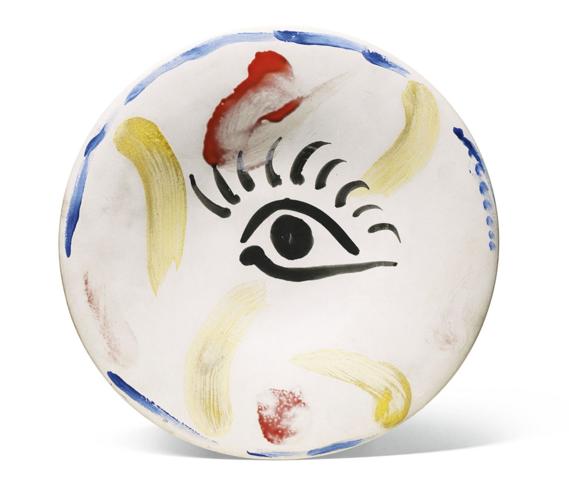
WHAT: Estimated to sell at about $17,000 to $26,000, a 10-inch partially glazed ceramic plate titled “Visage” (eye) painted by Pablo Picasso ended up selling for more than $90,000 at Sotheby’s London recently. The plate, decorated with a hand-painted eye, plus swipes of color, is dated May 16, 1963, and numbered on the reverse.
MORE: Sold in a collection of works owned by Marina Picasso, the artist’s granddaughter, authenticity is confirmed by Claude Picasso, the artist’s son and Marina’s uncle.
SMART COLLECTORS KNOW: Celebrated for his paintings and flat artworks, Picasso also worked in wire, wax, sculpture, weavings and clay.
HOT TIP: Marina Picasso’s sale of works on paper, ceramics and terracotta sculpture — 186 in all —happened as a battle raged between a major art dealer and the royals of Qatar over a bust the artist did of a mistress, and whether or not Picasso’s aged daughter actually sold it twice.
BOTTOM LINE: With Picasso paintings bringing astronomical prices when they come to market, collectors have turned to his less traditional pieces. As this heavily documented plate demonstrates, they, too, have soared out of reach for many.

- By Danielle Arnet The Smart Collector
- Updated
WHAT: A rare composition toy with George Washington watching as a child chops down a cherry tree brought $10,620 in a recent auction of antique and collectible toys at Bertoia Auctions. Composition refers to the makeup of the body, which ranged from sawdust with glue to clay, fabric or you name it. The base is wood.
MORE: At 11 inches wide and 14 inches high, this toy was probably made as a display figure. Animated figures in shop windows lured passers-by to linger, then shop inside.
SMART COLLECTORS KNOW: The 19th century was the golden age of clockwork toys, when movement was driven by clock mechanisms. Expensive and special, clockwork toys were not meant for rough and tumble play. Those that survive were probably kept for “good.”
HOT TIP: This tableau is in excellent condition. Everything, including fabrics, is intact with no fading, tears or smudges.
BOTTOM LINE: Rarity of subject, a larger size and pristine condition combined to bring top dollar.

- By Danielle Arnet The Smart Collector
- Updated
WHAT: A red- and gilt-painted Louis XV commode that sold for $7,500 last month at Doyle New York was made in the second quarter of the 18th century. The decoration is described as parcel gilt, meaning that it is partially, not completely, decorated with gold (gilt).
MORE: The piece has a gray and white marble top plus three long drawers painted with gold chinoiserie, a fashionable look that was a rage at the time.
SMART COLLECTORS KNOW: Chinoiserie (sheen-wahs-ree) is a French term meaning, loosely, “in the Chinese style.” It almost always refers to Chinese figures, pagodas, blossoms and other motifs, and is generally seen on painted furniture.
HOT TIP: Design styles cycle in and out of fashion, and variants of chinoiserie have been used for centuries. Quality of the gilding or decoration matters for top dollar. Good chinoiserie remains a favorite, which may explain why the chest’s estimated pre-sale was at $2,500 to 3,500 and the price soared to $7,500.

- By Danielle Arnet The Smart Collector
- Updated
WHAT: Provenance mattered — a lot — when a plain, walnut-framed, vintage massage table soared to $10,625 in a Palm Beach auction by Leslie Hindman Auctioneers. Pre-sale estimate was $2,000 to 4,000.
The sale of 153 lots involved furniture and decorations from the former Kennedy winter compound in Florida. The home was sold by the Kennedy family to the current owners in 1995, along with most contents. The massage table was used by JFK as he recovered from back surgery.
MORE: Hundreds of local and national bidders attended the auction. High prices went to items linked to the Kennedy family, especially by photos or anecdote. The Kennedy dining table sold for $16,250; a pair of walnut twin beds, along with a photo of JFK sitting in one, brought $20,000.
SMART COLLECTORS KNOW: Items related to celebrity or infamy usually sell best in locations linked to the individual during their lifetime. Palm Beach and the Kennedy family were linked for decades.
HOT TIP: Chicago auctioneer Hindman went to the most likely buyers by selling the Kennedy lots in her Palm Beach saleroom. Interest from worldwide bidders expanded participation via phone and online bidding.
BOTTOM LINE: Celebrity sold big time as advance press and the Kennedy aura drove the total to almost $500,000. Bonus: Many, attracted by the Kennedy connection, were new to the auction process. They’ll be back.

- By Danielle Arnet The Smart Collector
- Updated
WHAT: The 1894-S Barber dime made auction history in January. Sold in a Heritage auction at the Florida United Numismatists (FUN) Convention in Tampa, the coin has been called “one of the most famous, mysterious and elusive coins in American numismatics.”
MORE: Considered one of the “Big Three” gets in American coin rarities (along with the 1804 dollar and the 1913 Liberty nickel), the dime was first noticed by collectors in 1900 and has come to auction only four times. At this sale, 16 advanced collectors vied for the piece.
SMART COLLECTORS KNOW: Only 24 Barber dimes were struck at the San Francisco Mint in 1894, probably in order to balance a bullion account. No more than nine — and possibly only eight — examples of the 1894-S are known to collectors today. This one is the finest certified survivor.
HOT TIP: Heritage believes that “at least a couple more” of these dimes are still in circulation, and has announced a $10,000 reward to anyone who allows them to be the first to examine and verify a previously unknown and authentic 1894-S dime.
BOTTOM LINE: The actual selling price was $1,997,500.
MORE: PBS powerhouse “Antiques Roadshow” plans to visit six cities this summer. For 2016, tapings will happen in Orlando, Fla., Virginia Beach, Va., Indianapolis, Fort Worth, Texas, Palm Springs, Calif., and Salt Lake City. Admission is free but tickets, obtained in advance, are required. Visit www.pbs.org/antiques/tickets or call 888-762-3749. Deadline for applications is April 18, 2016.

- By Danielle Arnet The Smart Collector
- Updated
WHAT: The 1964 Porsche 356 C 1600 SC Cabriolet painted for rock icon Janis Joplin that sold for $1.7 million at Sotheby’s in December was a used car when acquired by the star. Spotted in a used car lot in 1968, the then-undecorated vehicle was custom-painted by a friend, a roadie with her band Big Brother and the Holding Company.
MORE: Collectors went wild for the psychedelically embellished car painted, per Joplin’s request, with a “history of the universe” theme. Seven bidders duked it out in phone bidding.
SMART COLLECTORS KNOW: Items connected with the famous and linked to their persona interest collectors most. As an example, this car fits the Joplin image — a staid sedan would not.
HOT TIP: The psychedelic Porsche was one of the first widely known “art cars.” Sold by Joplin’s brother and sister, the vehicle had been on display for 20 years at the Rock and Roll Hall of Fame Museum in Cleveland.
BOTTOM LINE: The sale price marks a record for any Porsche 356 sold at auction.

- By Danielle Arnet The Smart Collector
- Updated
WHAT: Market value of American artist Norman Lewis (1909-1979) took a giant leap when his painting, “Untitled,” circa 1958, brought $965,000 in a recent record-breaking sale of works by African-American artists at Swann Galleries in New York. Pre-sale estimate was $250,000 to $350,000.
MORE: Lewis was the first African-American artist to receive the Carnegie International Award for his celebrated painting, “Migrating Birds” (1953).
SMART COLLECTORS KNOW: Works by African-American artists have enjoyed a steady climb during the past decade.
HOT TIP: Galleries and auction houses are divided on if black artists should be categorized by color. One thought is that they are American artists, period. Others maintain that collectors of the genre (and there are many) seek them out by race.
BOTTOM LINE: Adding to appeal (and probably the price), this is a previously unknown work by Lewis. Originally given as a gift by the artist, it has remained in one family since. New to the market is catnip for collectors.
MORE: Auctions are a big business. Heritage Auctions in Dallas announced that 2015 was their second best year ever, with $860 million in total prices. Coins and currency remain the base strength, but the fastest growth was in sports collectibles. The category grew by 41 percent to more than $42 million.
- By Danielle Arnet The Smart Collector
- Updated
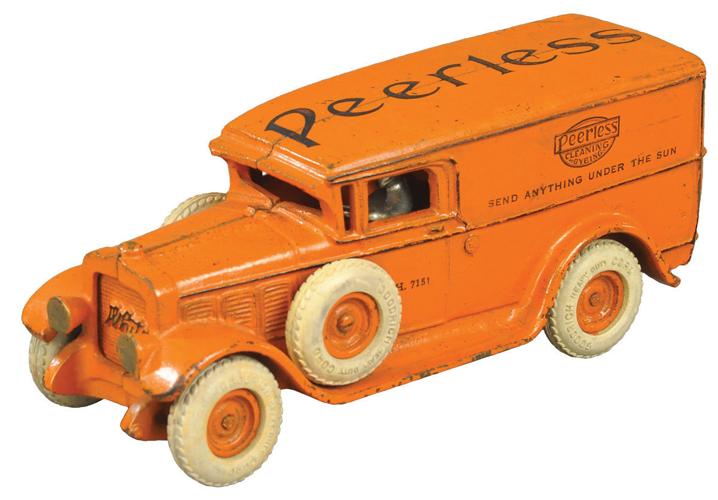
WHAT: With an estimated pre-sale at $10,000 to $12,000, a circa 1929 cast iron delivery panel van soared to $21,240 in a recent sale of antique toys at Bertoia Auctions. Embossed “White” on the front grill and marked “Peerless Cleaning,” the vehicle is a rare all-original toy.
MORE: To begin, the truck is rare. On top of that, it is in super excellent condition. Rubber tires are intact, as are spares on each running board. As a bonus, the seated driver is intact and the rear doors open.
SMART COLLECTORS KNOW: The problem with early toys is that once played with, value usually plummets. Depending on the toy, top dollar goes to un-played with and pristine toys.
HOT TIP: A dream scenario for today’s committed collector would be a new toy gifted at Christmas or a birthday sometime around 1900, deemed too good to be played with and put away for safekeeping, then forgotten.
BOTTOM LINE: Toy collectors are big kids at heart. As adults, they have the money to buy back toys of their youth or buy toys their parents could not afford or would not let them have. Top-line antique toys are big business: Total for this auction hit close to $1.9 million.
BOOK IT! “Scootermania: A Celebration of Style and Speed” by Josh Sims (Bloomsbury, $20) is all about transport scooters, a favorite big boy toy of the 20th century. Through text, photos and period ads, the book highlights and explains Mitsubishi, Honda, Vespa, Lambretta, Fuji and Ducati scooters, plus others.
- By Danielle Arnet The Smart Collector
- Updated
WHAT: Magnificent jewels brought magnificent prices in the past year. Multiple world records fell as international buyers put their money into serious gems.
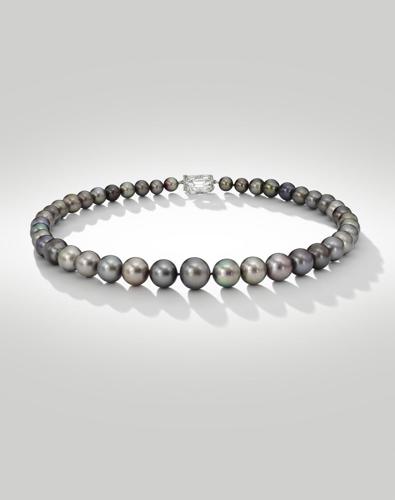
MORE: Sotheby’s final jewelry auction of 2015 fetched $52.3 million, including the sale of a record-breaking Kashmir sapphire for $5.1 million, or $197,990 per carat. Earlier, a rare gray pearl necklace with 42 natural saltwater gray pearls matched by Cartier brought $5.27 million in Hong Kong. In all, the auction house hit $571 million worldwide in jewel sales last year.
Christie’s has not yet released a year total, but a final New York jewels sale brought $59.6 million, including a D color rectan-
gular diamond of more than 31 carats that sold for $4.3 million, or $137,500 per carat.
SMART COLLECTORS KNOW: At this level, jewelry and gems are absolutely top grade and rare. Exceptional and celebrity provenance helps, especially if there are photos of the famous owner wearing the piece.
HOT TIP: Increasingly, cash-strapped royal houses are letting go of family pieces. Now is a good time to pick up tiaras and baubles, even fine gent’s jewelry, from lesser (and usually unidentified) nobles or cafe society figures of bygone eras.
BOTTOM LINE: The boom in fine jewels is a trend that looks to continue. World economies call the shots on likely buyers: Today it’s East Asians. Before, Middle Easterners and Russian oligarchs bought big. Decades ago it was wealthy Germans, and so it goes.
BOOK IT: We’ve always promoted the use of online databases such as liveauctioneers.com and worthpoint.com to research prices. But sometimes you want a print version.
“Miller’s Antiques Handbook & Price Guide 2016-2017” by Judith Miller Mitchell Beazley, ($45) has almost 700 pages with some 8,000 new results showing worldwide auction results for porcelain, clocks and watches, posters, antiquities, decorative arts and more.
More than a reference, it’s also fun reading.
- By Danielle Arnet The Smart Collector
WHAT: A 14-by-22.25-inch cardboard window card advertising a Ray Charles concert in San Diego on Sept. 9, 1961, brought in about $5,440 when it sold in a recent pop culture/political memorabilia auction by Hake’s Americana & Collectibles. The concert promised the artist’s greatest hits, including “Georgia” and “What’d I Say.”
MORE: Note the ticket prices of $2 to $4 and the mention of The Singing Raelets and Betty Carter, plus credit for the musical arrangements by Quincy Jones and Ralph Burns.
SMART COLLECTORS KNOW: Concert posters in excellent condition that promote major stars of the ’50s, ’60s and ’70s, such as Charles, will become even more valuable as older buyers buy back memories of their youth. They are the generation with disposable income to spend.
HOT TIP: Watch for rock star posters to experience the same trajectory. Music posters from that era are already gold, but rock posters of the ’50s, ’60s and ’70s, including those featuring the Beatles and The Doors, are not far behind and climbing. A 1969 first printing Jimi Hendrix psychedelic poster for a Toronto concert sold for a little more than $5,705 in the same sale.
BOTTOM LINE: Pop and rock posters were never made to be collectible. They were advertising, period. Anyone could take home a program. The lucky person who thought to take a top condition poster as a souvenir, and then preserve it for 50-plus years, hit the jackpot.
BOOK IT! “The Historical Apothecary Compendium: A Guide to Terms and Symbols” by Daniel A. Goldstein (Schiffer, $50) is an encyclopedic guide to terms used on apothecary bottles and other wares. Many of us admire the bottles as attractive curiosities but don’t have a clue to what labels mean. There are more than 10,000 entries, so no alchemical symbol or apothecary squiggle should remain unidentified. Written by a medical toxicologist, understood by the lay person.
- By Danielle Arnet The Smart Collector
WHAT: When Christie’s New York sold Part II of a private collection of Chinese snuff bottles last month, the 154 lots totaled just under $1 million. One, a sandwiched pink glass bottle in the form of an elongated Chinese cabbage, brought $10,625.
MORE: Sandwiched glass involves layers of differing color glass that are pressed or cut down into. Only 3 inches high, this bottle has a layer of pink glass between two layers of white glass. The white is carved on the exterior to form cabbage leaves that extend upward. The neck is speckled with green and pink glass; the stopper is carved jadeite.
SMART COLLECTORS KNOW: Chinese cabbage, “baicai” or “qingcai,” is a symbol for wealth because it has the same sound as the word for money or wealth. Hence the cabbage shape of the bottle.
HOT TIP: Tobacco was introduced to the Beijing court by the Portuguese in the 16th century. At first, snuff bottles were strictly a court or upper class item. Intended to fit into the palm of a hand, early examples acquired a patina that is much prized today.
BOTTOM LINE: Significant collections built by knowledgeable collectors tend to sell high — often spectacularly — when they come to market. Built by focused individuals who do their research and buy only the very best, important single owner collections are often a bonanza for both seller and buyer.
MORE: On June 22, Christie’s will disperse another single owner collection when it sells items from Joan Rivers’ penthouse. Included are a silver Tiffany water bowl engraved “Spike,” Bob Mackie costumes, Faberge and French furniture, and designer jewels of all kinds.
- By Danielle Arnet The Smart Collector
WHAT: Printed in what was the wilderness of the Massachusetts Bay Colony, the Bay Psalm Book was the first book made by Congregational Pilgrims who arrived seeking religious freedom. As the first book printed in America, the book is precious as a historical document and religious artifact.
MORE: A poetic translation of the Psalms intended to reflect the Hebrew original, the text was created by leading ministers and scholars of the colony including Richard Mather and John Cotton. The press, paper and type were sent from England by an indentured locksmith.
SMART COLLECTORS KNOW: With printed matter, the first edition is the most sought and most valuable.
HOT TIP: Of the 1,700 copies of the first edition, only 11 are known to survive. In 2013, one set a new world record for a printed book at auction when it sold for $14.1 million in London. It was the first time since 1947 and only the second time since the 19th century that a first edition had come to auction.
BOTTOM LINE: At the Swann auction, it was the first time the seventh edition has surfaced. Published in Boston in 1693, it has provenance dating from a Salem witch trial judge.
- By Danielle Arnet The Smart Collector
WHAT: In New York City on April 6, the chair where author J.K. Rowling sat as she wrote “Harry Potter and the Philosopher’s Stone” and “Harry Potter and the Chamber of Secrets” will sell at the Heritage Auctions gallery there.
Before donating the chair to a small charity auction in 2002, Rowling painted it with lettering that reads: “You may not find me pretty, but don’t judge on what you see.” On the seat apron she painted, “I wrote Harry Potter while sitting on this chair.” The backrest is signed, and under the seat on a stretcher is “Gryffindor.”
MORE: The chair comes from a set that Rowling was given in government housing when she was a young, single mother living in Edinburgh, Scotland. Rowling used the most comfortable chair in the set as her main writing chair.
SMART COLLECTORS KNOW: Short of laying hands on original manuscripts for the first two Potter books, this chair is the most important piece of original Potter memorabilia to sell to date. Rowling’s hand lettered message adds immensely to value.
HOT TIP: The chair will sell with the original “Owl Post” that Rowling typed for the first charity auction. In it, she writes of receiving four mismatched dining chairs in 1995 and how this “was the comfiest one.” We also learn that she produced the manuscripts by typewriter.
BOTTOM LINE: Potter enthusiasts of all ages will want this piece of literary memorabilia. Expect bidding to be fierce: The chair could end up in an institution such as a university or library.
- By Danielle Arnet The Smart Collector
WHAT: A 25-cent Mills roulette floor model slot machine circa 1901 that sold recently at Morphy Auctions for $158,600 is one of only a few known to exist. The roulette wheel can be viewed by looking down into the top of the 45-inch tall case.
MORE: Called a seven-way machine because it accepts seven different coins on a single pull, the machine features an unusual hexagonal wooden box hiding nickel plated works. Total restoration in 1987 included replating the works, plus exterior fixtures including claw feet.
SMART COLLECTORS KNOW: The machine sold as part of a dedicated auction limited to coin-op machines and collectible advertising. Smart collectors know that dedicated sales of antiques and collectibles offer focused collections of better goods.
HOT TIP: Pennsylvania-based Morphy Auctions held this sale in their Las Vegas gallery because they knew that the best way to cash in on collectible coin-ops is to sell where there is a focus of interest.
BOTTOM LINE: Early coin-operated machines — from peep shows to vending machines, amusement machines (think fortune tellers) to player pianos and musical machines of all kinds — are hugely popular with buyers who seek out the rarest in working condition.
- By Danielle Arnet The Smart Collector
WHAT: In a world where competition between auction houses for top goods has become fierce, even high-end houses are slugging it out for newsworthy sales and consumer recognition. Once a stuffy white-glove pursuit, prestige auctions have increasingly become theatrical events.
Christie’s London recently sold memorabilia from “Spectre,” the 24th film in the James Bond series. Held in-house and online, the first part alone realized about $3.9 million, with all proceeds to be donated to charities including Medecins Sans Frontieres (Doctors Without Borders) and United Nations Mine Action Service. Bond’s car, an Aston Martin DB10, brought more than $3.4 million.
MORE: In late December at Sotheby’s New York, 600 Star Wars toys and memorabilia from a Japanese mega fan sold for $550,000. Top lot was a $32,500 5-figure pack originally sold only at Canadian Sears stores.
SMART COLLECTORS KNOW: In collectibles, it’s always the unusual and pristine that bring top dollar. Memorabilia made to be collectible never soars.
HOT TIP: Smart collectors hunt for recalled memorabilia. A Luke Skywalker figure with double telescoping lightsaber, made in limited numbers then recalled because the lightsaber tended to break, is the one everyone wants.
BOTTOM LINE: Everyone wins in sales like the one at Christie’s London. Bond producers, already under flak for flagrant product placement (said to be 17 in “Spectre”), get props for giving to charity. Collectors get a chance to bid for iconic items, and auction houses bring in new bidders. All involved gain publicity.
- By Danielle Arnet The Smart Collector
WHAT: Estimated to sell at about $17,000 to $26,000, a 10-inch partially glazed ceramic plate titled “Visage” (eye) painted by Pablo Picasso ended up selling for more than $90,000 at Sotheby’s London recently. The plate, decorated with a hand-painted eye, plus swipes of color, is dated May 16, 1963, and numbered on the reverse.
MORE: Sold in a collection of works owned by Marina Picasso, the artist’s granddaughter, authenticity is confirmed by Claude Picasso, the artist’s son and Marina’s uncle.
SMART COLLECTORS KNOW: Celebrated for his paintings and flat artworks, Picasso also worked in wire, wax, sculpture, weavings and clay.
HOT TIP: Marina Picasso’s sale of works on paper, ceramics and terracotta sculpture — 186 in all —happened as a battle raged between a major art dealer and the royals of Qatar over a bust the artist did of a mistress, and whether or not Picasso’s aged daughter actually sold it twice.
BOTTOM LINE: With Picasso paintings bringing astronomical prices when they come to market, collectors have turned to his less traditional pieces. As this heavily documented plate demonstrates, they, too, have soared out of reach for many.
- By Danielle Arnet The Smart Collector
WHAT: A rare composition toy with George Washington watching as a child chops down a cherry tree brought $10,620 in a recent auction of antique and collectible toys at Bertoia Auctions. Composition refers to the makeup of the body, which ranged from sawdust with glue to clay, fabric or you name it. The base is wood.
MORE: At 11 inches wide and 14 inches high, this toy was probably made as a display figure. Animated figures in shop windows lured passers-by to linger, then shop inside.
SMART COLLECTORS KNOW: The 19th century was the golden age of clockwork toys, when movement was driven by clock mechanisms. Expensive and special, clockwork toys were not meant for rough and tumble play. Those that survive were probably kept for “good.”
HOT TIP: This tableau is in excellent condition. Everything, including fabrics, is intact with no fading, tears or smudges.
BOTTOM LINE: Rarity of subject, a larger size and pristine condition combined to bring top dollar.
- By Danielle Arnet The Smart Collector
WHAT: A red- and gilt-painted Louis XV commode that sold for $7,500 last month at Doyle New York was made in the second quarter of the 18th century. The decoration is described as parcel gilt, meaning that it is partially, not completely, decorated with gold (gilt).
MORE: The piece has a gray and white marble top plus three long drawers painted with gold chinoiserie, a fashionable look that was a rage at the time.
SMART COLLECTORS KNOW: Chinoiserie (sheen-wahs-ree) is a French term meaning, loosely, “in the Chinese style.” It almost always refers to Chinese figures, pagodas, blossoms and other motifs, and is generally seen on painted furniture.
HOT TIP: Design styles cycle in and out of fashion, and variants of chinoiserie have been used for centuries. Quality of the gilding or decoration matters for top dollar. Good chinoiserie remains a favorite, which may explain why the chest’s estimated pre-sale was at $2,500 to 3,500 and the price soared to $7,500.
- By Danielle Arnet The Smart Collector
WHAT: Provenance mattered — a lot — when a plain, walnut-framed, vintage massage table soared to $10,625 in a Palm Beach auction by Leslie Hindman Auctioneers. Pre-sale estimate was $2,000 to 4,000.
The sale of 153 lots involved furniture and decorations from the former Kennedy winter compound in Florida. The home was sold by the Kennedy family to the current owners in 1995, along with most contents. The massage table was used by JFK as he recovered from back surgery.
MORE: Hundreds of local and national bidders attended the auction. High prices went to items linked to the Kennedy family, especially by photos or anecdote. The Kennedy dining table sold for $16,250; a pair of walnut twin beds, along with a photo of JFK sitting in one, brought $20,000.
SMART COLLECTORS KNOW: Items related to celebrity or infamy usually sell best in locations linked to the individual during their lifetime. Palm Beach and the Kennedy family were linked for decades.
HOT TIP: Chicago auctioneer Hindman went to the most likely buyers by selling the Kennedy lots in her Palm Beach saleroom. Interest from worldwide bidders expanded participation via phone and online bidding.
BOTTOM LINE: Celebrity sold big time as advance press and the Kennedy aura drove the total to almost $500,000. Bonus: Many, attracted by the Kennedy connection, were new to the auction process. They’ll be back.
- By Danielle Arnet The Smart Collector
WHAT: The 1894-S Barber dime made auction history in January. Sold in a Heritage auction at the Florida United Numismatists (FUN) Convention in Tampa, the coin has been called “one of the most famous, mysterious and elusive coins in American numismatics.”
MORE: Considered one of the “Big Three” gets in American coin rarities (along with the 1804 dollar and the 1913 Liberty nickel), the dime was first noticed by collectors in 1900 and has come to auction only four times. At this sale, 16 advanced collectors vied for the piece.
SMART COLLECTORS KNOW: Only 24 Barber dimes were struck at the San Francisco Mint in 1894, probably in order to balance a bullion account. No more than nine — and possibly only eight — examples of the 1894-S are known to collectors today. This one is the finest certified survivor.
HOT TIP: Heritage believes that “at least a couple more” of these dimes are still in circulation, and has announced a $10,000 reward to anyone who allows them to be the first to examine and verify a previously unknown and authentic 1894-S dime.
BOTTOM LINE: The actual selling price was $1,997,500.
MORE: PBS powerhouse “Antiques Roadshow” plans to visit six cities this summer. For 2016, tapings will happen in Orlando, Fla., Virginia Beach, Va., Indianapolis, Fort Worth, Texas, Palm Springs, Calif., and Salt Lake City. Admission is free but tickets, obtained in advance, are required. Visit www.pbs.org/antiques/tickets or call 888-762-3749. Deadline for applications is April 18, 2016.
- By Danielle Arnet The Smart Collector
WHAT: The 1964 Porsche 356 C 1600 SC Cabriolet painted for rock icon Janis Joplin that sold for $1.7 million at Sotheby’s in December was a used car when acquired by the star. Spotted in a used car lot in 1968, the then-undecorated vehicle was custom-painted by a friend, a roadie with her band Big Brother and the Holding Company.
MORE: Collectors went wild for the psychedelically embellished car painted, per Joplin’s request, with a “history of the universe” theme. Seven bidders duked it out in phone bidding.
SMART COLLECTORS KNOW: Items connected with the famous and linked to their persona interest collectors most. As an example, this car fits the Joplin image — a staid sedan would not.
HOT TIP: The psychedelic Porsche was one of the first widely known “art cars.” Sold by Joplin’s brother and sister, the vehicle had been on display for 20 years at the Rock and Roll Hall of Fame Museum in Cleveland.
BOTTOM LINE: The sale price marks a record for any Porsche 356 sold at auction.
- By Danielle Arnet The Smart Collector
WHAT: Market value of American artist Norman Lewis (1909-1979) took a giant leap when his painting, “Untitled,” circa 1958, brought $965,000 in a recent record-breaking sale of works by African-American artists at Swann Galleries in New York. Pre-sale estimate was $250,000 to $350,000.
MORE: Lewis was the first African-American artist to receive the Carnegie International Award for his celebrated painting, “Migrating Birds” (1953).
SMART COLLECTORS KNOW: Works by African-American artists have enjoyed a steady climb during the past decade.
HOT TIP: Galleries and auction houses are divided on if black artists should be categorized by color. One thought is that they are American artists, period. Others maintain that collectors of the genre (and there are many) seek them out by race.
BOTTOM LINE: Adding to appeal (and probably the price), this is a previously unknown work by Lewis. Originally given as a gift by the artist, it has remained in one family since. New to the market is catnip for collectors.
MORE: Auctions are a big business. Heritage Auctions in Dallas announced that 2015 was their second best year ever, with $860 million in total prices. Coins and currency remain the base strength, but the fastest growth was in sports collectibles. The category grew by 41 percent to more than $42 million.
- By Danielle Arnet The Smart Collector
WHAT: With an estimated pre-sale at $10,000 to $12,000, a circa 1929 cast iron delivery panel van soared to $21,240 in a recent sale of antique toys at Bertoia Auctions. Embossed “White” on the front grill and marked “Peerless Cleaning,” the vehicle is a rare all-original toy.
MORE: To begin, the truck is rare. On top of that, it is in super excellent condition. Rubber tires are intact, as are spares on each running board. As a bonus, the seated driver is intact and the rear doors open.
SMART COLLECTORS KNOW: The problem with early toys is that once played with, value usually plummets. Depending on the toy, top dollar goes to un-played with and pristine toys.
HOT TIP: A dream scenario for today’s committed collector would be a new toy gifted at Christmas or a birthday sometime around 1900, deemed too good to be played with and put away for safekeeping, then forgotten.
BOTTOM LINE: Toy collectors are big kids at heart. As adults, they have the money to buy back toys of their youth or buy toys their parents could not afford or would not let them have. Top-line antique toys are big business: Total for this auction hit close to $1.9 million.
BOOK IT! “Scootermania: A Celebration of Style and Speed” by Josh Sims (Bloomsbury, $20) is all about transport scooters, a favorite big boy toy of the 20th century. Through text, photos and period ads, the book highlights and explains Mitsubishi, Honda, Vespa, Lambretta, Fuji and Ducati scooters, plus others.
- By Danielle Arnet The Smart Collector
WHAT: Magnificent jewels brought magnificent prices in the past year. Multiple world records fell as international buyers put their money into serious gems.
MORE: Sotheby’s final jewelry auction of 2015 fetched $52.3 million, including the sale of a record-breaking Kashmir sapphire for $5.1 million, or $197,990 per carat. Earlier, a rare gray pearl necklace with 42 natural saltwater gray pearls matched by Cartier brought $5.27 million in Hong Kong. In all, the auction house hit $571 million worldwide in jewel sales last year.
Christie’s has not yet released a year total, but a final New York jewels sale brought $59.6 million, including a D color rectan-
gular diamond of more than 31 carats that sold for $4.3 million, or $137,500 per carat.
SMART COLLECTORS KNOW: At this level, jewelry and gems are absolutely top grade and rare. Exceptional and celebrity provenance helps, especially if there are photos of the famous owner wearing the piece.
HOT TIP: Increasingly, cash-strapped royal houses are letting go of family pieces. Now is a good time to pick up tiaras and baubles, even fine gent’s jewelry, from lesser (and usually unidentified) nobles or cafe society figures of bygone eras.
BOTTOM LINE: The boom in fine jewels is a trend that looks to continue. World economies call the shots on likely buyers: Today it’s East Asians. Before, Middle Easterners and Russian oligarchs bought big. Decades ago it was wealthy Germans, and so it goes.
BOOK IT: We’ve always promoted the use of online databases such as liveauctioneers.com and worthpoint.com to research prices. But sometimes you want a print version.
“Miller’s Antiques Handbook & Price Guide 2016-2017” by Judith Miller Mitchell Beazley, ($45) has almost 700 pages with some 8,000 new results showing worldwide auction results for porcelain, clocks and watches, posters, antiquities, decorative arts and more.
More than a reference, it’s also fun reading.
Tags


View this profile on Instagram#ThisIsTucson 🌵 (@this_is_tucson) • Instagram photos and videos
Most viewed stories
-
More than 40 fun events in Tucson, December 12-14! ❄️✨
-
Over 40 free events happening in Tucson this December! ⛄
-
Save the date! Here's the ultimate list of Tucson holiday events 🎄
-
A local gift guide for the foodie in your life 🍽️
-
17 festive holiday markets that support Tucson artisans
-
Satisfy your pozole craving at these 9 local places!
-
Cafe Maggie suddenly closes doors on Tucson's North Fourth Avenue
-
20 gifts under $20 from Tucson shops! 🎄🎁
-
‘Less screen time, more hobbies:’ Tucson journaling group helps young adults connect
-
Get fresh bread and flaky, buttery croissants at the MSA Annex's new micro-bakery 🥖