




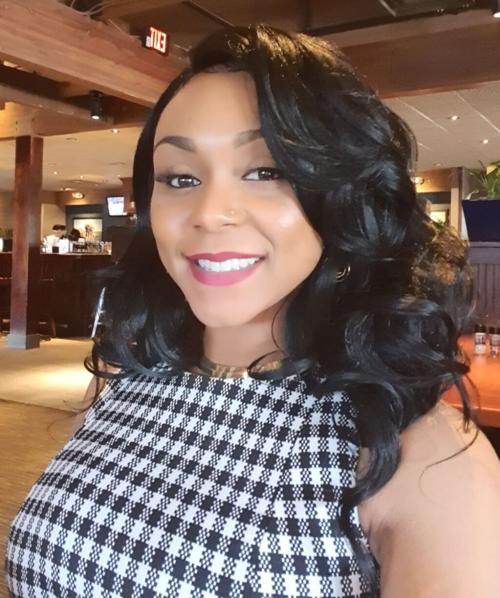
Note: If you would like to contribute to Alicia Deals' GoFundMe page, where she is raising money to help fund her social equity dispensary, you can do so here.
Alicia Deals knows she got lucky. "I'm virtually a miracle," she said.
Here Weed Go! Ep. 11 Alicia Deals Social Equity
To win one of the 26 social equity marijuana dispensary licenses handed out by the Arizona Department of Health Services (out of over 1,500 applicants) in April, she had to be lucky.
But when you listen to Deals' story — about how her faith, her family and her plan to finance the operation that will now become her life's work — you get the sense that maybe it was all meant to be.
"We formed Life Changers (the name for her LLC) on 11/11/2021. And coming through it, we were pulled as number 11. Some of these factors, in my story and in my case, they continue to amaze me day-by-day," she said.
Paying it forward
Before ever hearing about the state's social equity program for marijuana dispensaries, Deals, a Black single mother of three, was helping run her family's power washing company and doing entertainment promotions.
It wasn't until her aunt told her about the program that she began to take notice. Deals first move was to reach out to Demitri Downing, founder of the Marijuana Industry Trade Association Arizona, or MITA.
"I found Mr. Downing, and then that's when I really got a better understanding of the program. Following that mentorship helped guide me through the process."
Downing ran a free mentorship program, with courses available online, to help guide potential social equity applicants through the labyrinthine process of gathering and filling out the correct documents to qualify for the state's "lottery" distribution process.
"There's no more licenses being issued, but we've left them online for others to study the industry," he said. "All these classes, they're all sitting online filled with tons of information about the Arizona industry."
There were financial hurdles to overcome as well. While Downing's classes were free, applications to the program were initially $8,000.
Jon Udell, co-chair of the cannabis department at Rose Law Group — for which Deals is a client — and political director for Arizona NORML, said that in his opinion, the application fee was the toughest hurdle to clear.
"Just that fee is going be the biggest hurdle, because it will DQ you all together," he said. "You can't afford $8,000 or come up with the cash? You're fully out of luck, unless you have someone else who's willing to pay for you and it's probably in exchange for something."
Deals was able to ask family and friends for help getting the first application paid for, it was getting a second one financed that required what she called "a leap of faith." She charged it to a credit card.
"Look, things usually change when you're all in, when it's all or nothing," she said. "When you're like, 'I have to have it, no matter what,' that's when things change and that's the ticket that won. So I got the golden ticket."
A hurdle cleared, and the 'biggest burden'
Eligibility into the social equity program lotter had other requirements.
One was the that Deals, or someone in her family, have a marijuana-related expungable arrest or charge on their record. While Deals did not, her sister, a partner in Life Changers who asked not to be named, did. She filed to have a small charge expunged, a free process that can however be time consuming and is in no way guaranteed due to how some jurisdictions have interpreted the language granting expungements in Prop. 207.
"That's another thing that I must be grateful for in the program," Deals said. "That she was able to expunge that small infraction, which was making large effects in her life."
However her sister's charge wasn't the only marijuana-related charge hanging over the family.
Deals' father is currently serving a lengthy prison sentence.
"He was with some people, they were buying from some undercovers," Deals explained. "They were buying a decent amount of marijuana, but marijuana."
The arrest of her father and the proceeding malicious prosecution, according to Deals, and his eventual imprisonment left her family devastated.
"It's honestly been the biggest burden of our lives. I'll say that it's been the biggest trial. To say that every other Saturday, for the last decade, I've been in a prison visitation room and that my son's never seen his grandfather outside of a prison yard," she said.
Deals said she stays in contact with her father as much as possible, who she calls him an "amazing man." He was one of the first people she let know when she won her license.
And while she said her goals are bringing jobs, opportunity and ultimately good cannabis to a disadvantaged community with her eventual dispensary, her inspiration for the venture going forward remains her father.
"We're gonna win for every person that they've mistreated. We're gonna win for everything they've taken for us, for everything they've done to us on the basis of marijuana."
A 'Golden ticket,' and what comes next
The AZDHS drawing for the social equity licenses took place April 8 this year, after nearly a year for the social equity licensing process to play out. The event itself was somewhat anti-climactic. Instead of a BINGO wheel or some sort of visual aid, a computer program choose 26 applications at random.
Deals 'golden ticket,' just happened to be one of them. But at first, she didn't even notice she'd won.
"Luckily my mom had asked me to record it for her," Deals said. "She's like record it! And the numbers are going across the screen and I really don't even know what's going on. I turned it off! But in the 15 seconds, I turned it off right at my number, my number hits the screen and then I turn it off and I didn't know. And then we realize, no, that was it!"
After celebrating her win, the reality of what laid before Deals had to be dealt with. First came the offers.
Arizona is a limited license state, and since the 26 social equity licenses could be the last issued by the state for sometime (perhaps ever), and since license winners can "transfer" their licenses upon receiving them from the state, the market for licenses is hot. Deals said she's been offered between $12 and $18 million dollars to hand over her license.
But she said this venture is about a lot more than money.
"It's not enough for me to do what I really have to do," she said. "And my motivation and intention behind all of this. One intention is to change lives. That's what I'm here to do. That's what I'm motivated and desperately determined to succeed in this."
So after listening to offers, she turned to the Rose Law Group and Udell for help.
Although he could not get into specifics about what Deals would face, in general terms, he was able to lay out the three largest challenges facing all the social equity winners.
"You need to get capital," he said. "And then once you have capital, you've got to get your property and accomplish all the requirements for approval to operate. And then from there, you need have a good plan in place for actually being able to compete with whatever competition you have."
While the Rose Law Group is helping with the legal side, Amber Cordoba, the director of business education and consulting services for Prestamos CDFI, a division of Chicanos Por La Cause, is helping Deals out with the business plan, fundraising and navigating the bureaucracy around opening a small business.
She said while she's helped many women open small businesses in many different industries before, this is her first time dealing with everything that surrounds opening a pot shop. There are some unique challenges she said.
"There is a lot of regulations, not that other industries don't have regulations, but there's been a lot of research that I've done to make sure I understand the social equity piece of it," she said.
Deals knows there are still plenty of hurdles and barriers left in her way. However, every person interviewed for this piece said she posses the skills needed to make it work.
"She's determined, she's got a good business head about her, she's committed to seeing it through, no matter what it takes," said Cordoba.
"I think she's someone who really falls in the category of a true believer, but she has the added benefit of also having business experience," Udell said.
Ultimately however, it's up to Deals to make it work, something she is fully aware of and ready for. She can envision what success at her dispensary will look like.
"The moment you walk in the door to the time you leave, we know the smallest gesture, the smallest kind word, you can change someone's day. You can change someone's week. You can save someone's life," she said. It already has changed hers.
More Info
You can visit some of the websites mentioned in this piece, and access all of Eddie Celaya's stories on Arizona's social equity marijuana dispensary program.
Marijuana Trade Industry Association of Arizona: https://mita-az.org/
NORML Arizona: https://norml.org/us-governors/arizona/
The Rose Law Group: https://www.roselawgroup.com/
Chicanos Por La Causa Prestamos: https://cplc.org/econ/lending.php
Link to Eddie Celaya's work on social equity in Arizona: TucsonMarijuanaGuide.com
Here is the link to her GoFundMe Page:

