


100 years ago in Tucson series: June 1916
- Updated
Things were different 100 years ago. How different were they?

While the Red Cross didn't allow its members to carry weapons, a local organizer for nurses felt they should be able to ride and shoot.
From the Arizona Daily Star, June 30, 1916:
Nurses Who Can Shoot Is Miss Farrar’s Idea
Carrying Arms Bars Home Defense Auxiliary From the Red Cross
All young ladies who have volunteered to join the corps of nurses being organized by Miss Katherine Farrar, violiniste at the Tucson opera house roof garden, are requested to meet this morning at 10:30 o’clock at her home, 741 East First street.
Whether the newly organized nurses’ corps will affiliate with the local Red Cross is a problem. The latter organization does not allow its members to carry “arms” and Miss Farrar’s idea is to have young women who can both ride and shoot. She declares that rather than give up these two ideas she would rather not affiliate with the Red Cross.
More than twenty-five young women have volunteered already and Miss Farrar is quite enthusiastic over the prospects for an effective organization.
The Star began a fund to provide for soldiers from Tucson who were at the front.
The Star Starts Mess Fund for Tucson Guardsmen at Front
In order that local national guards organizations at the border, Companies K and E and the Tucson hospital corps, may not longer feel that they are not being treated as well by the “home folks” as are the other companies in the state, The Daily Star is announcing a plan by which a fund will be raised for the guardsmen for which to buy such small comforts as ice and fruit. The plan received the enthusiastic endorsement of Acting Mayor Bernard yesterday evening.
The Star will start the fund with a contribution of $5.00 and will acknowledge all contributions sent to it, in the columns of the paper, or any contributions for the purpose turned in the the chamber of commerce. In this way it is believed that a large fund can be raised.
Soldier lads at the front from Tucson say that they are given none of the favors that companies from other parts of the state enjoy. Yuma and Phoenix companies have sent melons and other dainties, while the tucson boys are forgotten. It is believed that this neglect is the result of oversight rather than anything else, and the movement started by The Star should remedy the whole matter.
Send your contribution into The Star or else leave it at the chamber of commerce, and it will be acknowledged in The Star. The fund will be turned over to the proper authorities for the use of the troops.
Bootlegging was a constant problem during Prohibition.
MANY HELD FOR BOOTLEGGING AFTER BIG RAID
Warrants Issued by Superior Court for 25, Most of Whom, Are in Custody; a Large Quantity of Booze Is Seized
Wholesale arrests of persons about Tucson hotels, restaurants and soft drink places, on charges of violating the prohibitory law, followed raids yesterday by county officers armed with search warrants which yielded returns of bottled goods, including both beer and whiskey. Warrants were sworn out for about twenty-five persons, most of whom were taken into custody.
The warrants were obtained in the superior court by County Attorney George Hilzinger, and the cases will not go through the justice court as usual. The warrants were placed in the hands of Sheriff Forbes by County Attorney Hilzinger in the morning and the force of deputies did fast work in serving them. A quantity of bottled goods obtained in the raids was placed in the custody of Justice Comstock. It is understood that the warrants were issued as the result of complaints made after investigation by private parties in co-operation with authorities.
Of course, part of the problem with bootlegging, was public drunkenness.
COMPLAINANT WOULD NOT MAKE AFFIDAVIT
So City Attorney Disregards Charge Against a Cop
Charges that Patrolman Stewart, who arrested him on a charge of drunkenness, has sold him the liquor on which to get drunk, were made yesterday to City Attorney Dunseath by William Walsh, a local plumber, who was arrested Wednesday evening on a charge of being drunk and down.
“Will you swear to that statement?” Mr. Dunseath asked him.
“No, I won’t,” Walsh replied.
“Then I won’t have anything more to do with it,” Dunseath replied. Later Walsh state that he was willing to make an affidavit to that effect. Mr. Dunseath state that he would report the charge of Walsh to the police committee.
Stewart laughed about the charges.
“It is quite likely that I would arrest him after selling him the booze to get drunk on, isn’t it?” he said. “Walsh was mad because I took him to the police station instead of home.”
The trial of Walsh will take place today before Recorder Cowan in police court.
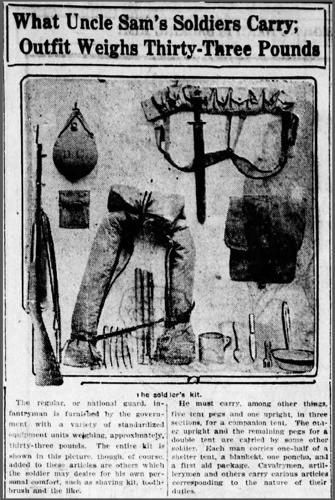
The major Independence Day celebrations were cancelled in 1916, but many activities that weren't sponsored by the city would still go on.
From the Arizona Daily Star, June 29, 1916:
Fourth Celebration Has Been Cancelled
Unsettled Conditions Explanation Given by the Committee
There will be no Fourth of July celebration under the auspices of a joint committee from the Tucson Luncheon club, the chamber of commerce and the Tucson Rifle club, according to a decision arrived at yesterday.
Chairman McDermott stated that because of the unsettled condition of public affairs at the present that it had been thought best by the committee not to hold the celebration at this time. The committee feels that there have been great demands made on the public at this time, and it is thought that it would be unwise to attempt to carry through the extensive program planned.
Notwithstanding the fact that the joint committee has given up the celebration, it is probable that there will be a number of features on the Fourth for the entertainment of Tucson people. The Douglas-Tucson motorcycle road race will finish in the city between 10:30 and 11:30 o’clock, and there will be other attractions planned for the evening.
One event that would still take place was a swimming competition.
ENTRY LIST IS OPENED FOR JULY 4TH SWIM
All persons desiring to enter the swimming events at the Y. M. C. A. pool on the afternoon of July 4 at 4:15 o’clock, are requested to register their names between now and July 2. Early registration is asked by the officials in charge to aid in arranging the events.
The list is as follows.
Forty yard dash; 80 yard dash; 440 yard; under water for distance; on the back 20 yards; best all-around diving; four men relay, 40 yards to each man; fat men, 20 yards; boys under 100 pounds, 20 yards; boys under 125 pounds, 40 yards.
Unrelated to the holiday, one young lady would be forced to retain her own independence, although at age 14, perhaps there would not be any independence at all.
BRIDE TOO YOUNG.—A general lack of confidence in the wisdom of a child of 14 getting married caused Justice O. E. Comstock to refuse to perform the wedding ceremony for Ramon Alvarez, aged 20 years, and Josefina Martinez, aged 14, yesterday. Parents of both young man and girl were present, but Justice Comstock declined to perform the ceremony. The age of 14 is the lowest at which minors can be married with the consent of their guardians.
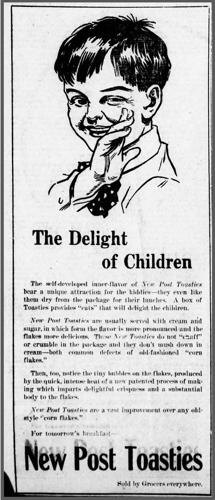
It's a sad thing when government entities don't cooperate with each other, much less communicate. Based on this article, that's nothing new. But these people managed to find a way to work together.
From the Arizona Daily Star, June 28, 1916:
PEACE REIGNS AFTER SPLIT THREATENED
Misunderstanding Between the Sheriff and Chairman Parker of Safety Committee ends With Deputizing the Guard
Misunderstanding between Sheriff Forbes and members of the Tucson Safety committee, originating over the investigation of a supposed case of cattle stealing Monday evening, and which threatened to handicap the work of the committee in work outside the city, was averted yesterday evening by a complete understanding. Officers of the safety committee and the Tucson Rifle club were sworn in as deputies, thus ending all chance for trouble. In the future the Safety committee and deputies from the sheriff’s office will co-operate with each other.
The misunderstanding arose over a report that 125 Mexicans had invaded the United States southeast of Tucson and had killed several beeves. In order to find out whether there had been an invasion, Chairman Parker dispatched several of his men to investigate, and on their return found out that there had not been.
On the other hand it was reported to Sheriff Forbes that the men had been sent by Chairman Parker to make arrests for cattle stealing. Yesterday afternoon Sheriff Forbes went to Chairman Parker and declared that in case any officers of the Safety committee attempted to exercise any functions of officers outside of the city that he would cause their arrest.
Chairman Parker then declared that he would withdraw all special men guarding roads and doing scouting duty immediately, and issued orders to that effect, stating that hereafter the safety committee would work only within the city limits. Later, however, a complete understanding was arrived at. Sheriff Forbes deputized all leading officers of the Rifle club so that they are now empowered to use members of the club to carry out their orders for arrests in case of necessity. On the other hand, officers of the Safety committee promised to co-operate with Sheriff Forbes in every way.
The fact that trouble between the two agencies had been averted in the present threatening situation caused much gratification yesterday evening among people who had heard of the threatened split, as it was felt that Chairman Parker and his aides were working faithfully for the public good and also that Sheriff Forbes had been very active in watching all threatening conditions.
Concerns that war might be at Tucson's doorstep were evident in the story that a local branch of the American Red Cross would be formed.
TUCSON BRANCH OF RED CROSS BEING FORMED
Forty-four Members Already Secured and Organization Will Be Perfected Tonight; National Officers Aid Move
The organization of a Tucson branch of the American Red Cross society will be completed this evening at a meeting of the executive committee at the home of Mrs. Nathan Kendall, 907 North Fifth avenue. The organization of the Tucson branch has been undertaken with the approval and assistance of Charles J. O’Conner, assistant director general at Washington, D. C., and John L. Clymer, of San Francisco, director of the Pacific division.
Miss Jane Rider, of Tucson, has worked faithfully during the past few days to get the organization started, and others prominent in the work of organization are Mrs. Nathan Kendall, Dr. H. W. Fenner and Dr. C. A. Thomas.
At the meeting this evening, a chairman, vice chairman, secretary and treasurer will be elected. The dues are $1.00 and may be sent by check to Miss Jane Rider. Her phone number is 316J.
The organization has been started in the interests of “preparedness” in case war actually comes. The Tucson branch will be affiliated with the national organization and the purpose is to guarantee that the work will be done efficiently. The name and emblem of the Red Cross are protected by federal law and cannot be used without the permission of the government.
Miss Rider stated yesterday evening that she was very much pleased with the work undertaken by Miss Katherine Farrar, violiniste of the Tucson Opera House Roof Garden, and would be glad to have the volunteer nurses become affiliated with the Red Cross.
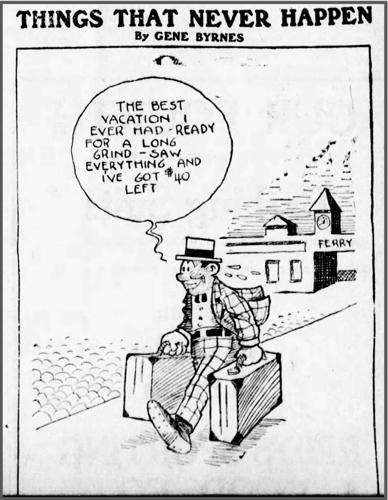
A fire destroyed a home so quickly that the families lost all of their possessions.
From the Arizona Daily Star, June 27, 1916:
So. Fifth Avenue Home Destroyed By Fire
Flames Spread So Rapidly Occupants Lost Household Goods
Fire of unknown origin that gutted the double brick residence on South Fifth avenue opposite the Safford school yesterday afternoon at 2:20 o’clock, caused damage estimated at more than $2,000.
The north side of the house was occupied by Mr. and Mrs. Frank Dwyer, and the south side by Mr. and Mrs. E. J. Darnell and their sins, Marion and Ed. The house furnishings of both families were destroyed, and the aggregate loss of the household goods of both is estimated to $1000. The damage to the house is estimated at $1000, which was partly covered by insurance. the house is owned by E. P. Drew.
The fire started at the back porch and burned so rapidly that persons in the house were not aware that anything was wrong. When they were roused the flames had enveloped the roof and were starting on the front porch. The alarm was given and the department made a fast run but was unable to stop the flames.
The brick walls are undamaged and it is understood that the residence will be rebuilt as soon as possible. A motorcycle owned by Ed Darnell was destroyed by the fire. Marion and Ed Darnell and also Mr. Dwyer are employed by the Arizona Eastern railroad.
We would hardly call an attempted suicide a comic opera, but it does appear in the following article that the man who claimed he wanted to end it all didn't have his heart in the attempt.
Deputy Montgomery Hero in Comic Opera Attempt at Suicide
Man Tired of Life Leads Officer Chase Over Sentinel Peak
Deputy Sheriff Montgomery figures as the “hero” in a comic opera suicide attempt Saturday afternoon. A Mexican, whose name the deputy refused to make public, left a note saying that he intended to end his life because his wife would not live with him, and the note said that his body would be found on Sentinel Peak. The missive was turned over to the deputy, who made a hurried trip to the mountain west of the city.
A little scouting revealed the whereabouts of the unhappy benedict, equipped with a pistol with which to end his life. The deputy called upon to halt and to desist in his fell purpose of filling himself with lead. With ample time in which to carry out his purpose, the Mexican, instead of turning the weapon on himself, took to his heels and led the deputy a merry chase over the mountain side, up one arroyo and down another, scaling precipitate walls, jumping boulders. The Mexican seemed to dear Deputy Montgomery more than he did death, for while he held the pistol cautiously to prevent it from going off, he did not stop his wild chase until the fleet-footed deputy collared him from behind and took the pistol from him.
It is an offense against the laws of the state to attempt to commit suicide, but no charge has been placed against the Mexican, it being apparent that he had no well-developed intention of ending his life. His spectacular attempt may have the effect of causing his wife to believe that without him her life is a bauble, and if it ends in a reunited family Deputy Montgomery will, perhaps, be willing to call it square.
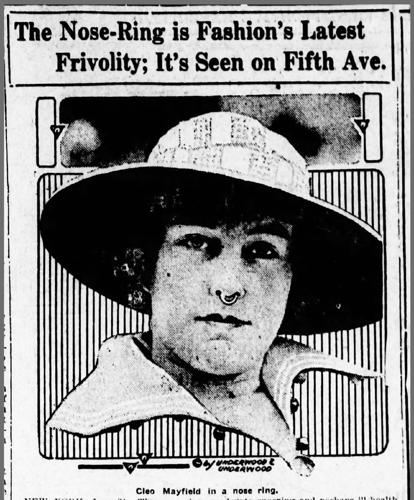
The Arizona Daily Star of Sunday, June 25, 1916, ran two separate stories about the "Human Fly," who scaled buildings in Tucson. We present both:
‘HUMAN FLY’ PROMISES STUNT SATURDAY NIGHT
“Satan” Billy Weber, the “Human Fly,” didn’t get to the top of the court house flagpole yesterday evening as he had announced.
“Because I painted it this afternoon,” Billy announced from the top of the second story window on the north side, which was as far as he elected himself. He made a speech from this point to the big crowd assembled, stating that he was rather tired from his work of the afternoon, painting the pole, and would give the exhibition of going clear to the top Saturday evening at 7 o’clock. He also announced that he would climb any building in the city to be selected by a committee of three, on Sunday evening at 9 o’clock.
Weber pleased the crowd just the same with his clever work in getting as far as he did and demonstrated that he has the goods when it comes to imitating the difficult feats of the acrobatic but unpopular fly. He worked slowly but carefully, and tested every hold before he progressed.
He had his working clothes on yesterday evening, but tonight will be dressed in tights and give a regular exhibition. The flagpole was painted white and makes a better showing.
And then there was this:
500 See ‘The Human Fly’ Climb Court House
“Satan Billy” Weber Will Repeat at 4 o’Clock This Afternoon
“Satan” Billy Weber, “The Human Fly,” climbed the Pima court house from the ground floor up to the base of the flagpole yesterday evening before a crowd of about 500 applauding spectators. He would have climbed the flagpole also, but he explained that it had just been painted by him Saturday and was not yet dry.
Weber’s hardest stunt was making the cornice at the roof, and it took him seem little time to negotiate this stunt, but he was rewarded by a big hand.
“That sounds good,” Weber yelled back, “but remember that it will be a little more substantial to drop something into my hat that my wife is holding.”
Weber hesitated a little at getting up the cupola, although it did not seem as tough a stunt as the cornice feat. When he did go he went so fast that hardly anybody in the crowd saw just how he did it. Never, however works very carefully and does not take any chances from rotten timbers or shaky concrete work, as he tests everything before starting. A false step or an insecure footing would mean death or a bad injury.
From the cupola Weber did a little advertising for The Star, and said some kind words for its hustle in furnishing the news.
He will repeat the courthouse stunt at 4 o’clock, and at 9 o’clock this evening will climb the Kress building, on Congress street, which he says is the hardest proposition in town.
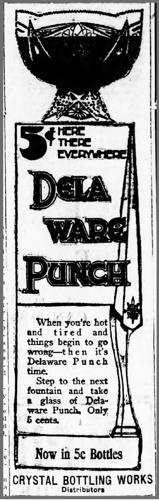
Happy news for Tucsonans came when they were told beer and whiskey could be delivered by freight as long as it was for personal use.
From the Arizona Daily Star June 24, 1916:
ESPEE ACCEPTS PERSONAL USE CONSIGNMENTS
Road Announces Intention to Haul “Wet Goods” Into Arizona by Freight; Company May Follow Wells Fargo Rule
Liquors for personal use can now be obtained from El Paso and Los Angeles by freight, as yesterday local traffic officers of the Southern Pacific announced that they had received instructions that such shipments for points in Arizona would be accepted wherever originating.
This far the Wells Fargo Express company, which has been transporting shipments to Tucson, has only accepted consignments originating in Missouri. The detailed instructions for the delivery of personal use shipments have not arrived as yet, but are expected within a day or two. It is believed that the requirements will be similar to those already announced by the Santa Fe and the Wells Fargo, an affidavit stating that the consignment is for the personal use of the consignee and will not be used by him in violation of the state law.
The effect of the acceptance of shipments by the Southern Pacific will be to make the transportation of beer much cheaper. This far it has been impossible to transport it otherwise than by express from Missouri.
It is predicted now that the Wells Fargo company will announce within a few days that shipments for Arizona will be accepted from points other than Missouri.
Already advertisements are appearing on Los Angeles newspapers offering to ship Liquor, wine and beer to Arizona.
In other news, Mexicans did not perpetrate a raid near Oro Blanco as had been reported earlier.
ORO BLANCO RAID STORY IS DENIED
Denials From Three Sources Controvert Published Reports
Denials from three authoritative sources of a story in the local afternoon paper yesterday saying that Mexicans raided the vicinity of Oro Blanco, reached the sheriff’s office yesterday. The story was published in two editions. It is said that Mexicans raided ranches in the vicinity of Oro Blanco and Montana Late Wednesday night and early Thursday morning, driving off 150 head of horses and wounding two cowboys.
That no such raids occurred was the statement made to the sheriff by Jack McVay and William Earl, and another man from that part of the county. McCoy came in from his ranch below Oro Blanco, having left there Thursday afternoon. William Earl came in from Las Guijas and he denied that any ranches had been raided in that section. It was said in the story that a large ranch between Las Guijas and Arivaca “suffered most seriously.”
The sheriff’s office is in constant communication with all parts of the county and deprecated the publication of statements such as those contained in the afternoon paper concerning raids and clashes between American troops and Mexicans in they county, which, he said, are absolutely without foundation.
Sheriff Forbes received from the governor yesterday, with a request that he give it wide publicity, the following proclamation:
“Whereas, recent developments in Mexico, whereby the United States has come to assume a new and important relation toward all elements of the Mexican people, may reasonably be assumed to have given rise to some uncertainty as to the attitude that would be observed by the state government of Arizona, in the event of further complications, however serious, toward all foreign people of whatever class or faction, residing permanently or temporarily within this state;
“Now, therefore, I, George W. P. Hunt, governor of Arizona, by virtue if the authority bested in me by law, do give assurance of the intent and purpose of the state of Arizona to maintain toward every Mexican and other foreign resident not a fugitive from justice or otherwise directly answerable to the lawful authority of another state, or to the government of the United States, such an attitude of guardianship, protection and justice as ordinarily characterizes the state’s demeanor in time of peace toward its acknowledged individual residents; according them all usual and reasonable privileges and every safeguard of security compatible with the public peace and safety.”
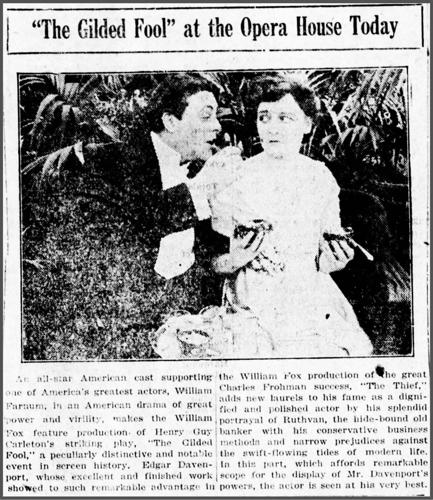
The mysterious signals reported a day earlier were still a mystery. Perhaps there were people who knew the answer but felt the mystery was preferred.
From the Arizona Daily Star, June 23, 1916:
Mysterious Signals Baffle Investigators
No Explanation of the Lights Flashed From Sentinel Peak
Efforts to explain the mystery of the supposed signals sent from the top of Sentinel Peak Wednesday evening were unsuccessful yesterday, although investigations were made by the officers of the Safety committee and Sheriff Forbes and deputies.
The idea that someone was sending signals to another observer many miles away is considered rather improbable by most who worked on the case.
Another explanation offered by deputies from the sheriff’s office who investigated the case, was that it was the light from a lantern at the stone quarry which caused observers to believe that men were signaling. Men were working at the stone quarry Wednesday evening, and it is the theory that the lantern swinging in the wind was responsible for the supposed signals. In the dark the lights would appear much higher than they actually were.
Observers from the city who actually saw the lights stated that the looked just as if they came from an electric flashlight.
In other news, Tucsonans were worried about bandits crossing the border and threatening Tucson. As is still the case, there were border issues, but fears were heightened at the time.
ASK FUNSTON FOR TROOPS TO GUARD TUCSON
Acting Mayor A. C. Bernard and Party Leave for San Antonio Thursday to Inform Commander of This City’s Plight
In order to lay before General Fred Funston the unprotected state of Tucson, Acting Mayor A. C. Bernard left early Thursday afternoon for San Antonio by special train. He was accompanied by Fred Ronstadt, a merchant, and John Mets, a Tucson banker. Superintendent T. H. Williams accompanied them on the train, which was made up of a Pullman coach and engine.
The mission of Mayor Bernard and his two companions was not announced publicly, but it is hoped by local businessmen that it will be successful, as nothing has been done to protect the city outside of local efforts.
The decision to appeal directly to General Funston was made after a meeting of a few prominent business men. It was pointed out that Tucson was the most unprepared city along the border, and that it would be possible for a small detachment of mounted bandits to cross the border in the night, opposite Tucson, and ride directly into the city without any opposition but what could be offered by the local force.
As appeals to Washington by wire have failed thus far, it was decided to appeal directly to General Funston himself, who is much better acquainted with border conditions.
Last fall repeated appeals for aid resulted in the sending of two companies of cavalry to Tucson from Fort Huachuca during a period thought threatening.
Bankers and business men contributed the expenses for the trip.

While it is unlikely E.T. was attempting to phone home — or anyone else for that matter — flashing lights emanating from Sentinel Peak had a few observers on edge.
One must remember that the nation was at war at the time, and while the messier facts didn't cross the ocean, uneasiness did.
From the Arizona Daily Star, June 22, 1916:
Mysterious Signals From Sentinel Peak Cause Uneasiness
Officers Make Futile Effort to Decipher Flashes From Mountain Top
Mysterious signal lights from Sentinel peak, flashed for more than an hour yesterday evening up to about 11:45 o’clock, resulted in an investigation by officers of the Tucson Safety committee, and also by Sheriff Forbes and deputies.
The lights appeared to be from a large electric flashlight or searchlight, and were flashed in “long” and “short” signals. they were first noticed by J. Monahan, a watcher stationed at the water plant, who communicated with local officers. At the same time D. L. Krebs, undertaker at the Parker Undertaking company, noticed them.
Chairman Parker of the Safety committee, and Chief Parker were notified and Mr. Parker order a detail of members of the Home Guards, including Emmanuel Drachman and Oney Anderson, in a machine, to investigate.
They went near the mountain and also saw the lights at close range, but did not attempt to climb the peak.
About 11:45 the signals ceased. Up to that time they had continued at regular intervals of perhaps 15 minutes. Twelve “long” and one “short” was a signal which was repeated a number of times. The light was a powerful one and could be seen a long distance.
The theory was that it was someone practicing signaling who had not notified the members of the committee, or else someone signaling to an observer at another peak miles away toward Mexico.
The matter was investigated later by Sheriff Forbes. A thorough search will be made for the person signaling today and an explanation demanded.
Motorcycle guards stationed on all of the roads leading into the city made no report on the matter up to an early hour this morning.

A young man needed money to make a trip, and he stole it from his sister-in-law, planning to pay it back. Even so, it was still a crime, and he was caught.
From the Arizona Daily Star, June 21, 1916:
Boy Stole Money From Brother’s Wife to Visit Father, Dying in Mexico
Plan to Work and Repay Is Spoiled by Illness; Court Deals Mercifully
When the father of Juan O. Garcia, a young man about 26 years of age, lay dying in Mexico, the son had no means of reaching his bedside before the end came, so he stole $25 from his sister-in-law, Mrs. Concepcion Martinez, with the mental promise to himself that when he had bidden his father farewell he would return to the states, work hard and pay back the money he had stolen from his brother’s wife.
Juan went to Mexico, saw his father and returned to Tucson, but he had no sooner started to work to make money so that he could repay the secret debt than he fell ill, and in the meantime the sister-in-law discovered the theft, accusing Juan of it. Juan did not deny it, not even to the judge yesterday, but his sister-in-law had little faith in his fair promises, so she had him arrested on the charge of larceny.
Garcia was arraigned before Justice Comstock and he told the judge his story of his yearning to see his old father once more before he died, of his yielding to temptation to steal the money in order to gratify his desire, with the mental reservation that it was not stealing but only borrowing, with a clear intention to return it as soon as he was able.
After hearing the story, the justice imposed on Garcia a sentence of three months in jail. Juan was about to descend into the depths of despair when the court qualified its decision with:
“But I will suspend the sentence during good behavior and on condition that you return to your sister-in-law the money that you took from her.”
Juan promised.
The Morgue Lady can't help but wonder where the young man's brother was in all this and why he didn't help out. They may have had different fathers, since the sister-in-law's last name was different. Perhaps the brother was no longer among the living.
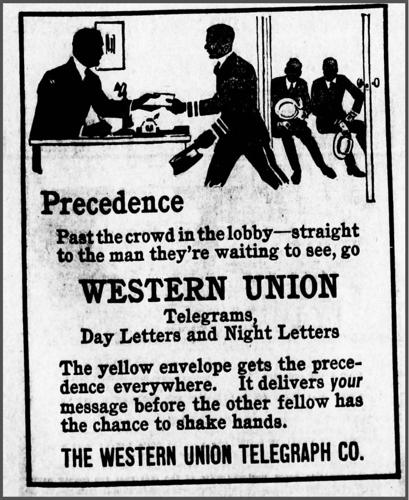
The naming of Gay Alley as a restricted district may have been premature. The city council may not have followed all the rules.
From the Arizona Daily Star, June 20, 1916:
No emergency Clause to Redlight Measure
Ordinance No Good, Says Hilzinger; Referendum Is Discussed
If the city council intended by hurrying the passage of the ordinance setting aside Gay Alley as a restricted district, to forestall proceedings to be instituted by County Attorney Hilzinger to have the district removed from its present location, or to legalize the district before proceedings could be instituted, they overlooked something, according to the county attorney, who pointed out yesterday that the ordinance passed by the council Saturday night failed to carry an emergency clause. Such a clause would have had the effect of putting the ordinance into effect at once. Without it, the ordinance will not become effective for thirty days.
If at first you don't succeed ...
In other news of the day, whooping cough was a scourge at the best of times. In one particular household, the parents of six children likely felt the best of times would never come again because they could not be shared with three of their children.
Editor's note: Mr. Allamariano's first name was spelled two different ways in this article. Not knowing which is correct, both are shown here.
Death Angel Guest at Humble Mexican Home
Three Children Die in One Week; Three Others Are Ill
There is no crepe on the door of the home of Lemon Allamariano, on the outskirts of this city. Lamon has no money with which to buy crepe, but there is not enough crepe in the world to symbolize the awful sorrow that pervades the humble home. A month ago children romped and played and laughed in the little home—six of them. Today three of them sleep in Holy Hope and the laughter of the other three is stilled. They lie on blankets on the earth floor, their little forms doubled, their little faces drawn as in a spasm—victims of a malignant form of whooping cough, which has carried away the other three children in the short space of ten days.
Saturday morning Allamariano headed a procession that went out Stone avenue to the cemetery and he carried on his lap a little casket which contained the body of a little girl. A week prior to that the first had died, a victim of the whooping cough. When he returned Saturday from the funeral of the second victim, to the home where his remaining children lay ill, as he thought, his wife met him at the door and informed him that the death angel had claimed another, a 13-year-old girl. Yesterday another little procession went out Stone avenue to Holy Hope.
The other three children are ill of the same disease, one of them seriously ill.
One hundred years later, such news still hurts.

The Tucson City Council met and made a few decisions including the location of the local red light district. The "restricted district" as it was called was to be located in "Gay Alley" (no, not that kind if "gay").
From the Arizona Daily Star, June 18, 1916:
CITY COUNCIL DECLARES GAY ALLEY RESTRICTED DISTRICT
WHAT THE COUNCIL DID YESTERDAY EVENING
- Located the restricted district in Gay Alley.
- Approved assessment roll of southside paving in spite of protests.
- Postponed proposed closing of Yuma Road on protest of Menlo Park company.
- Referred resolution for extending the city limits to street committee.
- Cut off free water from public schools, Y.M.C.A. and the two railroad parks.
- Added another patrolman, Owen Nugent, to offset absence of three officers.
The ordinance for the location of the restricted district in its present location in Gay Alley was passed by a unanimous vote of all six councilmen. Acting Mayor Bernard, elected at the beginning of the meeting to fill the place of Mayor Corbett during his absence, stated that its passage was necessary in view of the fact that legal proceedings had been started against the district.
Council Hohusen read figures showing that the vote on the question of maintaining the restricted district in Gay Alley two years ago had been as follows: First ward, Yes, 798; No, 316. Second ward, Yes, 164; No, 32. Total, Yes 962; No, 348, a majority of more than 600 in favor of the district.
“You have done a very wise thing,” Acting Mayor Bernard said after the resolution had been passed.
Protests from Mary Zabriskie, A. Olsen, Chas. Odell, Josephine Goodwin, against the southside assessment roll, and a general protest against property being assessed for paving, from Mrs. Eva Mansfeld, were read. The southside assessment roll was then passed by Resolution No. 450.
City Attorney Dunseath was about to read Resolution No. 451, closing the Yuma Road, when a protest was read by City Clerk Cowan. As the resolution had been drawn on the request of this company, it was stated, the whole matter was referred to the building and land committee with instructions to report at the next meeting.
The resolution for the extension of the city limits was read by City Attorney Dunseath. It directs that the Mayor petition the superior court to extend the city limits and take the other necessary steps to have the boundaries extended. The proposed extension includes a strip of land on the west extending to the foothills, the Lester addition on the north, the University and other property on the east, and a strip of land on the extreme south end of the city. The resolution was referred to the building and land committee with instructions to report back at the next meeting. Councilman Parker voted “No,” while the five others voted “Aye.”
The water question came up in the form of an announcement by Acting Mayor Bernard of a meeting at the private office of City Manager Clark Monday afternoon at 4 o’clock to consider the matter of the water department deficit.
After some discussion a motion was carried cutting off all free water, which includes allowances to the public schools, the Southern Pacific and El Paso and Southwestern depot parks, and the Y. M. C. A. Councilman Grossetta declared emphatically for metering the city as the only remedy for the water deficit question.
A quit claim deed for Lot 11, Block 136 to Irene Dunseath was ordered given. Permission for the erection of an iron shed at the rear of 144 Alameda street, was granted. The Standard Oil company was granted permission to make alterations in their plant. Officer Duffy of the police force was granted five days leave of absence. Owen Nugent was appointed on the police force because of the absence of three officers.
A communication was received from Superintendent F. B. King, of the El Paso and Southwestern railroad, proposing to accept the offer of free electricity for lighting the railroad park by making connections with the 110 volt system and installing a time clock.
The council adjourned to meet June 26.
In other news, not only was a man robbed of the money he had planned to use to purchase a car, but he was then left outside the sheriff's office. He was arrested for public drunkenness.
MAN ROBBED ON MEYER ST. OF FORD PRICE
Alleges He Was Drugged and Relieved of $200; Found at Door of the Sheriff’s Office; Romero, a Musician, Is Held
After having been drugged and robbed of more than $200, Elias Fernandez, a miner of Ray, Arizona, was taken by some person or persons yet unknown to officers, and laid on a bench just outside the sheriff’s office in the court house yesterday morning. There he was found by officers when the sheriff’s force came down to work.
Whether this was a fine bit of irony perpetrated by the robbers or whether some one in a charitable spirit picked up the robbers’ victim and took him to the court house for his further protection, is not at this time known, in fact it was not until when Fernandez was being in police court on the charge of drunkenness that it became known to Deputy Sheriff Ezekials that there had been another robbery staged on South Meyer street.
Having seen Fernandez at the court house before he was delivered to the police for trial on the charge of drunkenness and having subsequently heard reports of the robbery, Ezekials connected the two cases and after working all day on the case not only had under arrest the man charged with the robbery but also had witnesses, when four o’clock came.
The man under arrest charged with robbery is Cruz Romero, a musician. A complaint was issued by Justice Comstock yesterday charging him with grand larceny and he was remanded to jail.
Fernandez, whose calloused hands show that he has been a hard-working miner, says he came from Ray to purchase a Ford automobile which he and a partner planned to run as a jitney bus. He says that he was held up on South Meyer street and forced to drink from a bottle of liquor and that after several drinks he became oblivious to what was happening, which was his state when he was delivered by someone, friend or foe, to the sheriff’s office prior to seven o’clock in the morning.
He had over $200 when he arrived in Tucson, enough presumably to buy the Ford car. After paying a $20 fine in police court on the charge of drunkenness, he had $70 left, so it is figured that Fernandez was robbed of over $200.
The car in which Fernandez was seeing the sights and lights of the city driven by a youth, Luis Zabalo. He told officers yesterday that Fernandez’ purse was lying on the back seat of the car and that he saw Romero take $20 therefrom but that he forced him to return it against Romero’s protest. He had also said that earlier in the day he had seen in Fernandez’ purse two fifty-dollar bills.
The presence of Romero in the car was explained by Zabalo’s statement that as he was driving the car down South Meyer street Fernandez saw the musicians pass by and he invited them to take a ride. It is alleged that the robbery occurred during the ride that followed. Zabala denies having anything to do the placing the victim on a bench in the court house corridor.
Romero and his companions were still enjoying the spree which they started yesterday morning when he was found yesterday afternoon about 4 o’clock at a house in Barrio Libre. Deputy Ezekials had some trouble in getting Romero, as his companions protested and would have intervened has they been less drunk.
Officers do not take seriously Fernandez’ statement that he was held up and forced to drink from a bottle. It is believed that he obtained the booze from a bootlegger, who are said to ply their trade in the streets of the hinterland.
And after all this talk of bringing beer and whiskey in on the railroad, we thought this advertisement would be if interest:

Note: The Arizona Daily Star did not publish on Mondays in 1916; therefore there will be no news of 100 years ago for June 19, 1916, a Monday.
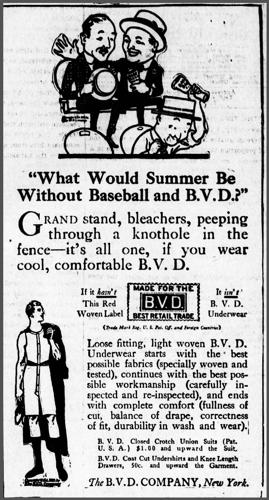
- Johanna Eubank Arizona Daily Star
- Updated
When five children died within a few days in the Pantano area, public officials took notice and worked to find the cause and prevent the spread of the disease.
From the Arizona Daily Star, June 17, 1916:
PANTANO SWEPT BY EPIDEMIC OF NEW MALADY
County Authorities Act Quickly to Arrest Spread to Tucson; Mortality Rate High Among Children; Inquest Today
An epidemic of some disease which county authorities have not yet been able to identify, is raging at Pantano, having claimed five victims, all children, within a few days, according to information brought to the city yesterday. In order to stem, if possible, the further spread of the disease at Pantano and to prevent its communication to other parts of the county and the state, Dr. Schnabel and Sheriff Forbes, under orders from the county board of health, left yesterday afternoon at 4 o’clock for Pantano, with instructions to clean up the place.
The mortality rate of the disease is exceedingly high and it is apparently highly contagious. County authorities received word yesterday that another had been added to the death list, a child, making a total, it is said, of five deaths since the first appearance of the disease several days ago.
The epidemic spread from a camp of Southern Pacific railroad section employees and their families. The majority of them, it is said, came recently from Mexico and, it is believed, brought the disease over the border.
When news of the epidemic was brought to the city yesterday, Dr. Schnabel went to Pantano and reported to County Attorney Hilzinger upon his return. While he was unable to identify the disease from his casual observation yesterday, he said he was satisfied that it was caused by bad sanitation, the camp being in an extremely filthy condition.
Chairman Estill, of the county board of health, being out of the city, County Attorney Hilzinger called a meeting of the board, at which the epidemic was discussed. It was decided to have made a thorough clean-up of the camp and to take stringent methods of preventing the spread of the disease to other parts of the county. Accordingly, Dr. Schnabel and Sheriff Forbes were instructed to go to Pantano and institute a clean-up campaign.
An inquest will be held in the case of the child who died yesterday, in order to determine the nature of the disease and its causes.
Sheriff Forbes and Doctor Schnabel returned to the city last night. The sheriff said that the total of deaths, so far as they could ascertain, might be as high as eight. Doctor Schnabel now believes that the deaths have been caused by acute bronchitis caused by exposure while the children were recuperating from whooping cough. At Pantano the nights are very cool, and it is believed that lack of sufficient covering made the victims an early prey to bronchitis.
This may serve to make many of us grateful that we now have vaccines to prevent many dangerous diseases, especially those that can be fatal to our children.
- Johanna Eubank Arizona Daily Star
- Updated
A decision was needed: Was a justice permitted to sentence a person for contempt of court in his courtroom or is he required to have the person arrested, arraigned and tried in another justice's court?
From the Arizona Daily Star, June 16, 1916:
New Legal Wrinkle in Singer Contempt Case
Can Justice Summarily Punish for Contempt, Is Asked
Whether a justice of the peace can summarily fine any person for contempt of court, is a legal question that has arisen over the sentence of $10 or ten days in the county jail imposed on Sam Singer Wednesday by Justice Comstock after Singer had given him a profane retort upon receiving a sentence of sixty days for beating his wife.
According to the views of some lawyers, a justice has the power to punish contempt of court when committed in his own court and it is claimed that the present offense would fall under the definition of contempt of court as contemptuous, insolent or disorderly conduct. According to this view, the justice could assess a fine or jail sentence for a misdemeanor without a regular trial.
On the other hand, it is claimed that the penal code does not provide any method of procedure by which an inferior court can punish contempt of court summarily, and that by classifying contempt as a misdemeanor, which, according to the general rule, may be punished by not more than six months in jail or $300, the regular method of filing a complaint and trying the case must be followed. According to this view, a complaint would have to be issued and the case tried before an other justice, who would decide the matter, or the person charged could call for a trial by jury.
County Attorney Hilzinger stated yesterday evening that he was investigating the legal phases of the question. Meantime Singer is serving his 60-day sentence for assaulting his wife.
Perhaps the justice should have sentenced the man to more than 60 days for beating his wife. That wouldn't solve the contempt question, but it seems a light sentence for such an egregious crime.
It does seem as if a sentence by the justice at the time the contempt is committed is more efficient and much less expensive that going through channels.
In other news, the possibility of Arizonans receiving beer and whiskey for personal use — that is, not for resale — was still an issue. No booze had arrived by rail, but it appeared railroad lawyers weren't quite sure the railroads should be shipping it.
Another Far-Reaching Personal Use Decision
Wells-Fargo enjoined From Rejecting Liquor Shipments for Arizona
The shipment of liquor and beer for personal use by transportation companies into the state of Arizona was forwarded another step yesterday by the announcement that Judge Van Valkenburg, of the United States district court of Missouri had issued an order compelling the Wells Fargo Express company to accept shipments of intoxicants to Arizona for personal use. This information was received in a telegram to The Star received yesterday afternoon.
This order is in addition to another order recently issued by the federal court compelling the Santa Fe railroad and connecting lines to carry intoxicants by freight, which was told in a Star news story Tuesday morning. The orders were secured by Schiller Brothers.
So far as is known no cars of intoxicants have actually gotten as far as El Paso, notwithstanding reports to the contrary, and it is certain that no cars under this ruling have crossed the state line.
Bills of lading for shipments to Tucson people have already been received, and it is hoped by people who have sent in orders that they will be able to get in the actual shipments within a few days.
The attitude of the railroad companies is not known, and it seems uncertain whether they will resist the order of the federal court. It was rumored yesterday that the Santa Fe railroad would oppose the order. It is being argued as to whether it will not be necessary for Schiller Brothers will not have to get an additional order from the local United States court before the railroads can accept and deliver the shipments.
- Johanna Eubank Arizona Daily Star
- Updated
It's an age-old question. No newspaper can keep all of its readers happy all the time. One person's idea of news worth printing is another's idea of junk.
Complaints about politics are probably more common than most. This item ran on the editorial page of the Arizona Daily Star, June 15, 1916:
NEWS
“When these blamed conventions are over,” writes a weary reader who isn’t much interested in politics, “will there be some news in the papers again?”
Well, maybe. War stuff, for example. Things seem to be warming up in Europe again. And then some other weary reader who ins’t interested in the war will write in and want to know if there’ll be some news in the paper when peace comes. And it all goes back to the question that nobody has ever answered satisfactorily: “What is news?”
As a matter of fact, there seem to be about as many kinds of news as there are kinds of people. And since it would be a bit difficult to print a newspaper to order for every reader, an editor has to figure mostly on the average man, and give him what he wants. And we rather guess the average man is really interested in the political campaigns in this country and the military campaigns in Europe.
That being the case, why not criticize the average reader, rather then the editor? Or why not roast the politicians and war boards that made the news?
We don't really recommend criticizing out readers. If everyone had the same opinions as everyone else, it would be a boring world. We do like to hear readers' opinions.
However, in light of recent events in Florida, this writer would like to see differing opinions aired without violence.
- Johanna Eubank Arizona Daily Star
- Updated
An alert night watchman saved the Steinfeld's store from pyromaniacal rats.
From the Arizona Daily Star, June 14, 1916:
RATS START FIRE IN STEINFELD STORE
Night Watchman Discovers Blaze and Douses It Before Firemen Arrive
Rats gnawing on matches are believed to be the cause of an incipient blaze discovered about 11:45 o’clock last night under the base of a display case behind a counter in the dry goods department of the Seinfeld store.
Night Watchman Carl Walk discovered smoke issuing from under the box-like base of the case, and thinking that the fire was in the basement, hurried down only to find there was no fire. He then came back to find flames bursting from the bottom of the case and on both sides.
He turned in an alarm and then quenched the blaze with water. When the firemen arrived, they broke open the base of the case with axes and found a charred rat’s nest among the rubbish. It is supposed that several matches were among the trash brought by the rats to build their nest and that by chewing the matches was the cause of the fire.
The damage was slight.
It would appear the rats fled like guilty children caught playing with matches.
In the same edition, a fraud case was decided quickly, although the charges could have been more severe.
CHAS. HOFELT FOUND GUILTY IN FRAUD CASE
Government Tried Douglas Man on Charge of Using Mails to Defraud, Instead of Luring Girls Into State of Arizona
After being out fifteen minutes, the jury in the case of Charles Hofelt, charged with misusing the mails by transmitting fraudulent newspaper advertisements, returned a verdict of guilty as charged in the indictment.
It had been intended to try Hofelt on a charge of luring girls to Douglas for improper purposes on promise of employment, but yesterday the government decided to try him on another indictment. On this charge, Hofelt was alleged to have inserted in Denver and Los Angeles newspapers advertisements of a book selling for 25 cents, entitled, “opportunities for Labor and Employment in Mexico.”
According to the evidence, Hofelt never mailed books for any of the 20 orders received, but did refund money after he was arrested.
He claimed that he was to get the books from a man named J. C. Carson. Inspector Stone, of the postal service, testified that in an interview with Hofelt he admitted that Carlson was a fictitious person. Hofelt denied this on the stand and maintained that Carson resided in El Paso.
Testimony to the effect that Hofelt had afterwards inserted an advertisement in the El Paso Herald for a housekeeper, signing Carlson’s name, was introduced, and numerous letters from applicants were exhibited to the jury, many of them being from widows.
Addresses to the jury were made by Attorney A. I. Winsett, representing Hofelt, and Attorneys Pattee and Flynn for the government.
The case against Mrs. Nellie Wiseman, charged with conspiracy to violate the immigration law by bringing in a girl for improper purposes, will probably be begun this morning in the federal court.
In other news, a shipment of booze by railroad was so eagerly anticipated that crowds awaited the train. When the train carried no liquor, the disappointment must have been palpable.
CARLOAD OF BOOZE FAILS TO APPEAR
Regular Circus Crows Watched for Argosy From Kansas City
News that a car of intoxicants for personal use, shipped from Kansas City by Schiller Brothers, in accordance with a court order compelling railroads to transport it, was to arrive in Tucson yesterday evening, caused much excitement among thirsty Tucson’s, officers sworn to enforce the law, and railroad officials who are supposed to shoo off shipments of the tabooed stuff in accordance with a decision of railroad attorneys at Los Angeles last week. However, the car did not arrive so far as was known yesterday evening.
County officials were more or less uncertain as to what should be done in case the car arrived. County Attorney Hilzinger tried to get an opinion from Wiley Jones, attorney general, but Mr. Jones was in Nogales and was not located in the afternoon.
Mr. Jones himself, who arrived in Tucson on the afternoon Burro, stated yesterday evening that he could not say what action he would take until he had seen the court order accompanying the shipment, if such had been made. He refused to commit himself further.
He stated, however, that according to the personal use decision, railroads had a right to carry intoxicants for personal use, although they of course ran certain risks. He stated that he had been very much misquoted on the matter and had never made any statements that railroads were prevented from carrying intoxicants for personal use by the decision. He stated that he had not been advised of any court order in regard to the shipment of liquor for personal use into the state.
Mr. Jones stated that he would be a candidate for attorney general at the coming primary. He stated that he had been at Nogales in the Baca Float tax case which was argued yesterday before the superior court.
We can offer no news as to the nature of the "afternoon Burro," but if we find out, we'll let the readers know.

- Johanna Eubank Arizona Daily Star
- Updated
We should not be surprised to find that news of beer deliveries to Arizona would make headlines. The news is rather sketchy though. We hope Tucsonans were prepared for disappointment just in case the beer didn't arrive.
From the Arizona Daily Star, June 13, 1916:
COURT FORCES ROADS TO TAKE SHIPMENTS FOR PERSONAL USE
Will Tucson thirsty ones get their cool beer this summer?
A surge of hope thrilled through the breasts of numerous lovers of the amber bubble water when a telegram announcing that the federal court at Kansas City had issued an order compelling railroads entering Arizona to accept shipments of intoxicants for personal use arrived in Tucson. The information was contained in the following telegram from Schiller Brothers, who have recently been soliciting mail orders of intoxicants from Arizona and guaranteeing delivery:
“We secured federal court order compelling Santa Fe to ship by freight to Arizona. Your shipment forwarded yesterday. Will secure federal court order compelling Fargo express to transport goods beginning June 19. Notify your friends to send us their orders. Guarantee immediate shipment and deliver by freight. We are the only firm having this privilege.
“Schiller Brothers.”
It is hoped by Tucsonans who have been yearning for the sudsy stuff this hot weather that the information contained in the wire is gospel truth, but a lot more will be convinced when the shipments actually arrive and are safely delivered.
The news of the federal court order appears to have escaped the regular news gathering associations. The Bisbee Review, however had the story Sunday morning, as follows:
“KANSAS CITY, Mo., June 10.—The federal court today ordered the transportation companies to deliver beer and whiskey ordered from Schiller Brothers for personal use.
“This message was received last evening by the Review and if true, it clears up a great amount of advertising done by the Kansas City liquor firm and much other speculation indulged in during the past few weeks in every section of the state of Arizona.
“Judging from the brief message, received from Kansas City, the decision will affect all shipments of liquor for personal use into the state. The complaining company, some weeks ago, advertised for business in the state of Arizona and guaranteed delivery. They at once mandamused the transportation companies and, according to the telegram, the federal court granted the application.
“If the decision is as broad as it promises to be the transportation companies will have some definite court action to base their acceptance of liquor for delivery in the state. The Santa Fe officials, recently in Prescott, declared their line would not accept liquor until the federal court had decided the matter.
“Detailed information as to the effect of the decision is eagerly awaited throughout the state.”
The Star Sunday morning published an exclusive story to the effect that railroad attorneys in conference at Los Angeles had refused to take the risk of accepting shipments on their own initiative and would await a court order compelling them to do so. Apparently they were in ignorance of such an order as referred to in the story and telegram. None of the local railroad traffic officers in the city knew of the reported court order yesterday.
In other news of the day, it's hard to put a man on trial when he has met his maker. As the story suggests, we must assume he answered to a higher authority.
Tollner Departs From Court’s Jurisdiction
Douglas Man Under Indictment on Serious Charge Is Dead
The case against Gottfried Zollner, who was indicted by the federal grand jury on a charge of luring girls to Arizona on the promise of employment, will not be tried in the federal court today as had been scheduled, for Zollner died last week in Douglas, and his faults, whatever they may have been, will be passed on by a higher court.
Tollner was indicted together with Charles Hofelt on this charge, and the trial of Hofelt will be held today or tomorrow. The men lived at Douglas and are alleged to have brought girls from the middle states on the promise of employment. The case of Hofelt will be a hard fought one.
- Johanna Eubank Arizona Daily Star
- Updated
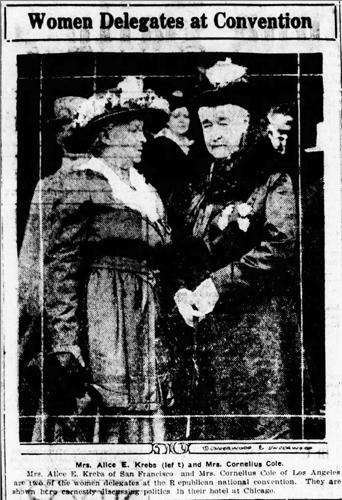
That women were admitted as delegates to the Republican National Convention in 1916 must have been a big deal, especially considering the fact that very few women would be able to vote in the presidential election.
Closer to home, danger lurked in the shadows for a Chinese merchant. From the Arizona Daily Star, June 11, 1916:
MERCHANT IS ASSAULTED AND STORE ROBBED
Highwaymen Brutally Beat a Chinaman, fracturing Skull; May Have Been Escaped Convicts; thugs Are Known
The boldest daylight robbery that has occurred in Tucson since the epidemic of assaults upon Chinese aroused the Chinese Six Companies last year, occurred yesterday afternoon at 12:30 o'clock, when Lee Shan Man, a merchant at Eighteenth and Convent streets, was assaulted, and between $50 and $100 taken from a cigar box that served as the merchant's cash register.
Lee was hit over the head with an iron bar as he was reaching for a piece of pie for which the highwayman-customer had called. His skull was fractured and he is in a serious condition, according to Dr. C. A. Schrader, who was called to examine the man's wounds. There are four other scalp wounds produced by the iron bar.
County Attorney Hilzinger visited the wounded man shortly after the robbery was reported and he was still conscious at that time, though suffering greatly. From the victim, officers learned the story of the robbery. At about 12:30 o'clock a man whom the Chinaman describes as being tall and sunburned, looking like an American, entered the place and bought a bottle of soda water. He drank this, went out, and in a few moments returned. This time he called for a piece of pie and as the merchant was reaching for it to serve him, the man grabbed him by the throat, while another man, described as a short, stocky Mexican, assaulted Lee with an iron bar, beating him down to the floor.
The men then rifled the cash box, located, it is believed, on the tall man's first trip to the store, and fled. They were seen running from the store by persons residing close by, who hurried into the store to find the merchant lying in a pool of blood.
Officers have as a witness a Mexican boy who claims to know the robbers, and any suspects arrested will be presented to him for identification.
Officers believe that the men may have been two of the escaped federal convicts and this theory was strengthened when it was learned that two of the convicts, Reynolds and Smith, had been arrested in the northern part of the city.
In other news, ownership of a mule was in question. The mule had changed hands, as it were, a few times, so it is no wonder there was confusion.
INSPECTOR'S LETTER PROVES SENSATION
Advised Claimant of Mule to "Bar Out Other Brand"; Lopez Loses Suit
His right to possess one certain mule being questioned, in this case of James Westfall against Pedro Lopez, the defendant, Lopez, offered in evidence at the hearing of the case before Justice Comstock yesterday, a letter purporting to have been written by W. J. Bennett, livestock inspector at Benson. the letter proved a sensation and was taken possession of by Justice Comstock.
The letter, written on the stationery of a Benson hotel and dated December 27, 1915, was in reply, apparently to one that had been written Bennett by Lopez and said, in part:
"I would advise you to keep the mule. Bar out the other brand and say nothing about it to no one."
The writer of the letter advised Lopez that "they," the other claimants of the mule, could not obtain possession of the animal without replevin proceedings and expressed the belief that an attempt to obtain possession would not be made.
No evidence regarding the letter, whether or not there was an explanation that might controvert the literal sense of the words, was introduced, and in the absence of this the letter caused surprise, inasmuch as it is a serious offense to so change a brand.
After hearing the evidence, the court awarded the mule to the plaintiff, Westfall, and assessed the costs of the case against Lopez. The mule has a history that is more exciting that the ordinary, prosaic mule existence. It was taken up as a stray by the city poundmaster in 1912 and sold to the poundmaster. Prior to that the animal's life is veiled in mulelike obscurity. McCormick sold it to one McDaniels, McDaniels sold it to Albert Franco and Albert Franco sold it to James Westfall. From Westfall's premises the animal strayed to the premises of Pedro Lopez and when Westfall, learning of the mule's whereabouts, sent for it, Lopez, it is alleged, refused to surrender it. Thereupon, Westfall filed suit.
Since the filing of the suit, witnesses in the case have been called into court three times, traveling a distance of ninety miles to Tucson. The summons and subpoenas in the case now are mere tattered fragments. There was a touch of the pioneer ways of justice in this feature of the case. The deputy sheriff to whom the papers were sent by the justice, residing at Mammoth, instead of serving them and making a return, merely delivered them to Lopez. Lopez himself made the "return," inquiring of the court what they meant. As it turned out, they meant his dispossession of the mule.
The poor mule must have been confused as to its identity and home by this time. At least it was wanted by a number of people.
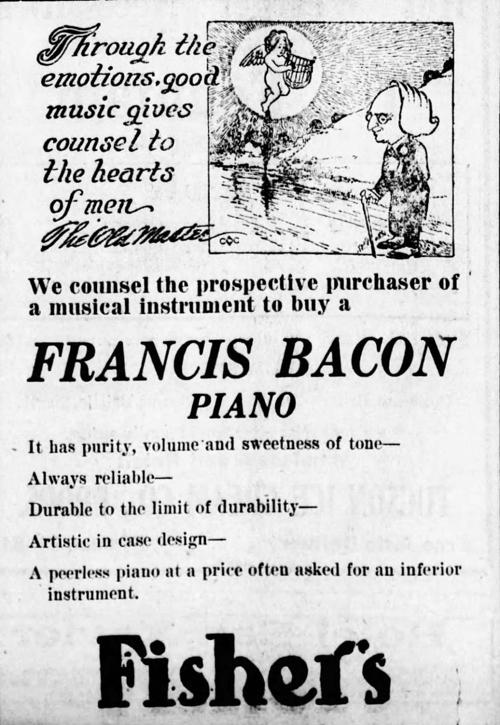
In the following advertisement, the Morgue Lady might have been more disposed to buy if the ad had contained a picture of a piano:
On a lighter note, it may be rare for the birthday party of a six-year-old to be news, but this one made the society page:
SIX-YEAR-OLD GIVES PARTY
Miss Pauline Margaret Hohusen, the winsome little daughter of Mr. and Mrs. J. P. Hohusen, celebrated her sixth birthday anniversary Thursday afternoon at her home, 316 South Sixth avenue, when she was showered with presents and congratulations by many playmates.
A particularly dainty color motif was evolved with quantities of pink sweet peas and feathery ferns, while the birthday tables were captivating with their exquisite decorations. Low crystal bowls centered each table, holding the fragrant blossoms. A large, pink birthday cake, radiant with six lighted tapers, held the interest of the children. Diminutive baskets, the handles tied with stunning bows of pink satin ribbons, and filled with bon bons, were the favors given to the little guests. It was an unusually pretty sight with the thirty-two small guests seated at the low tables, which had been placed in the garden.
During the afternoon all sorts of fascinating games were played by the merry children. Mrs. Hohusen was assisted in entertaining by Miss Elsie Siewart.
Those who shared Miss Pauline's birthday were: Pauline Seineke, Jessie Perry, Mary Langers, Audrey McClear, Helen Thorpe, Jane Thorpe, Genevieve Powers, Katherine Kindenfeld, Hortense Lindenfeld, Helen Schell, Wanda Hitchens, Sophie Pauli, Emily Pauli, Pauline Binkhorst, Margaret Stratton, Jane Butler, Alice Plumer, Edith Parker, Virginia Roberts, Gulie Caperton, Margaret Coberly, Ynez Ezekial, Dahlia Robles, Elsia Robles, Edna Arnold, Marguerite Yarbrough, Billy Schell, William Coberly, Harold McPherson, Mitchell, Hanovan, Knox Corbett, Billy Seineke.
The Morgue Lady can't help but wonder what will top this on the little girl's seventh birthday.
Note: This feature will not run tomorrow, June 12. The Arizona Daily Star did not publish on Mondays, including June 12, in 1916.

- Johanna Eubank Arizona Daily Star
- Updated
We're betting this company changed it's name later on, but in 1916, the term "swastika" didn't carry the same emotion it does today. The symbol meant good fortune before it was co-opted by the Nazis.
From the Arizona Daily Star, June 10, 1916:
Swastika Copper Co. Sues Whitcomb For $100,000 Plus Interest
_____
Allege Violation of Agreement Under Which Claims Were to Be Worked
_____
Mrs. L. H. Whitcomb and Hiram Whitcomb are defendants in a suit filed in the superior court yesterday by the Swastika Copper and Silver Mining company, asking a total award of $100,000.
The basis of the suit is an agreement entered into by the terms of which the defendants were to go upon and do development work on a number of mining claims in the Pima mining district, in this county.
It is alleged that the defendants mined and shipped ore worth $50,000, contrary to the agreement in that "no ore was to be taken out or stoping done on any ore now exposed by workings of the vendor: but in all cases vendor has the right to take out and ship all ores developed by said new workings."
It is also alleged that the defendants failed to do work specified to be done in the agreement. An award to include the value of ore shipped, damages and expenses incurred by reason of the defendants' alleged failure to do work specified to be done, totaling $100,000, with interest at six per cent from April, 1915. is asked.
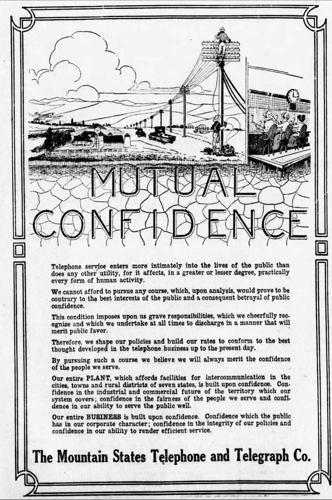
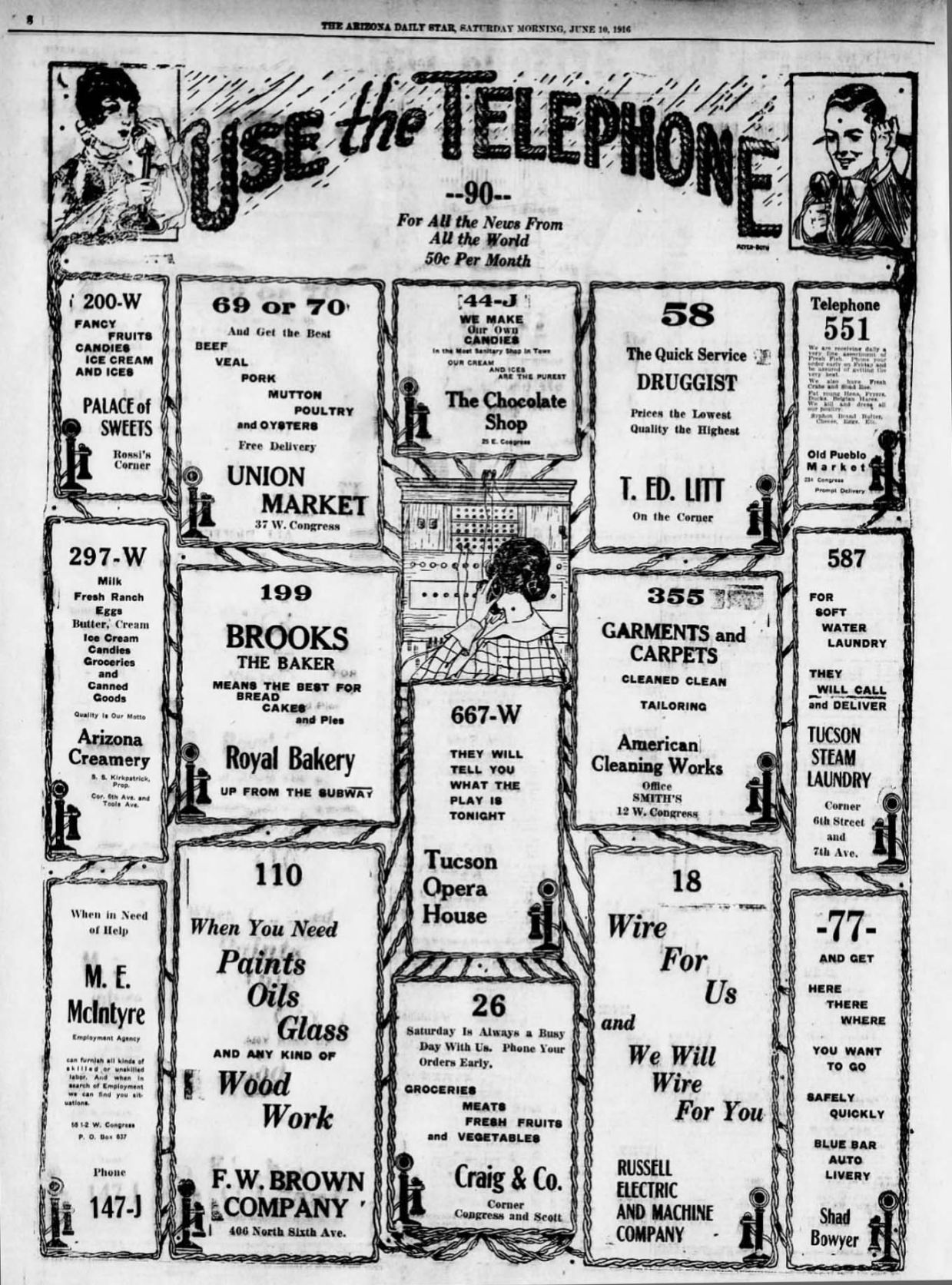
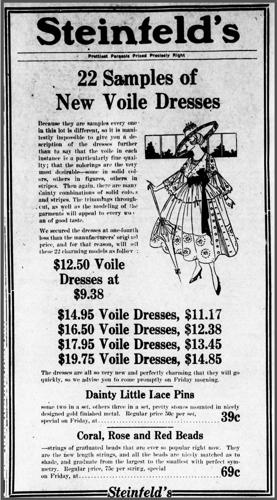
In that same edition of the Star, a full page was devoted to the ways the telephone can make life easier for Tucsonans.
- Johanna Eubank Arizona Daily Star
- Updated
A few news items from the Arizona Daily Star June 9, 1916:
MOVIE KING GETS STOLEN AUTO BACK
_____
Recognizes Car on Tucson Street as One Taken Down in Torreon
_____
The sensational recovery of an automobile which had been stolen from him in Torreon two years ago was an adventure happening to Lino Saenz Polo, president of the Cuauhtemoc Film company, this week, which was a little bit stranger than any lurid happening ever filmed in a motion picture.
Mr. Polo not only had one auto stolen in Torreon, but he had five. He really never expected to see one of them again and had bidden them a find and sad farewell.
What was his surprise Tuesday afternoon to see one of his machines coming down Congress street, and driven by a man whom he had never seen before.
Mr. Polo, however, astounded for the moment at the sight of his lost motor car, soon recovered his presence of mind. He rushed into the office of Ben Hill, local attorney, and used the best English that he could command.
"Mi automobile," he gasped, "aqui, you grab it, grab it."
Mr. Hill proceeded to translate Mr. Polo's English-Spanish into legal proceedings. He said the film magnate wrote down a complete description of the car, even to the number, and then obtained a search warrant from Recorder Cowan and levied the car.
The holder, however, was one of the kind men for whom Diogenes is on the hunt with a lamp, and when he was convinced that the car had actually belonged to Mr. Polo, he gave it up without further legal proceedings. It seems that he had purchased it in the United States and knew nothing about the shady history connected with it.
"It beats anything story we ever filmed," Mr. Polo said yesterday. "Maybe it will make a good scenario."
100 years later, one would probably never find such a reference to Diogenes in an article. One might expect that there are few in a modern newsroom who know the story.
For those who don't know, Diogenes of Sinope, also known as Diogenes the Cynic, was known, among other things, for going about carrying a lamp claiming he was looking for an honest man (and not expecting to find one).
Indians were an issue in the early 20th century. However, it would seem some spoke of violence without any proof except heresay. One must remember that while stealing is wrong, it is a far cry from murder.
YAQUI INDIANS RAID SMALL TOWNS
_____
Ranchers in Sonora Are Kept In Perpetual State of Terror.
By A. P. Leased Wire
DOUGLAS, June 8—Reports that Yaqui Indians have been raiding ranches and small towns in the southern part of the Arizpe district of Sonora, were officially confirmed here today by Ives G. Lelevier, de facto Mexican consul. While the consul has received no list of those killed by the Indians, he said that official reports received in Agua Prieta state that the casualties have been numerous.
The Indians are making their headquarters in Sierra de Aconchi, a range of mountains near the Sonora River, and are raiding the surrounding country for food and clothing.
American arriving here today from Cumpas, Sonora, said that while depredations have been reported from the section described by the consul, it was stated that the Yaquis are accompanied by their families. This lends color to the belief that they are awaiting a favorable time to leave Mexico and follow hundreds of their tribe who have crossed the border recently into Arizona. After crossing the border they are transformed into peaceful workmen.
Mining men say that Yaqui Indians are steadier workers than the Mexicans and easier to handle. Hence all crossing the border are welcomed in the camps of southern Arizona.
- Johanna Eubank Arizona Daily Star
- Updated
The news of the day on June 8, 1916, in the Arizona Daily Star:
City Briefs
EXPECT DECISION MONDAY.— County Attorney Hilzinger returned yesterday from Phoenix, where he represented the state in the case of the appeal of Joe L. Wiley, Thomas Johns and Ramon Salazar from the decision of the Pima superior court denying the men liberty on bail under the charge of murdering Mrs. Josephine Bates. Samuel Pattee represented the men at the supreme court hearing and Mr. Hilzinger was assisted by John H. Campbell of Tucson, and Attorney Baker of Phoenix. The attorneys expect a decision on the appeal not later than Monday.
_____
LICENSE TO WED.— A marriage license was issued yesterday by Clerk of the Superior Court Elrod to Juan Delgado and Maria Cosella.
_____
WAS WELL "TOASTED"— A Mexican was picked up by officers yesterday in an alley off South Meyer street. He appeared to have met the tiger and come off much the worse for the combat. He was still in a drunken stupor yesterday afternoon and could not supply a name. The only statement officers were able to obtain from him was that they, referring to his companions of the night before, "toasted him." One of the man's eyes was closed and his memory was blurred.
_____
TO PROSECUTE VAN LIDTH.— County Attorney Hilzinger yesterday filed an information against Charles G. Can Lidth, charging him with violating the state prohibition law by bringing liquor into the state for the purpose of selling it. It is understood that the basis of the complaint is an admission made in the federal court here recently, at the time that he entered a plea of guilty to the charge of bringing liquor into the state without the proper label that he brought the liquor into the state to sell it.
_____
ANDERSON ARRAIGNMENT TODAY.— Jack Anderson, Waler Pearce and R. O. Naylor, charged with violating the prohibition law by bringing liquor into the state, will be arraigned before Justice Comstock this afternoon. Pearce is at liberty under bond. A charge of bringing liquor into the state without having it properly labeled is pending against Anderson and Pearce before the federal grand jury.
_____
OVERJOYOUS FATHER.— Officer Sullivan of the police force yesterday morning arrested a drunken man who gave the name of Francisco Miranda. When taken into custody, Miranda was trying to get into the Blue Front store by the rear door, having mistaken it for the San Augustine hotel, nearby, where he was stopping. He came to the city from San Xavier to present his infant son for the christening ceremony and apparently had imbibed too much joy-water. He was fined $20 for being drunk.
_____
WILLIAMS ACQUITTED.— A verdict of acquittal was returned by the jury in the case of John Williams, Yuma negro, charged with selling liquor to Indians. The jury was sent out Tuesday afternoon and did not arrive at a verdict until Wednesday noon. The principal witnesses against Williams were two Yuma Indians, who testified that Williams had sold them liquor. W. J. Chappell, charged with introducing liquor into the state without the proper labels, entered a plea of guilty yesterday.
_____
CITED FOR SPEEDING— W. C. Abbot, 1035 North Fifth avenue, was cited to appear in police court today, on a charge of speeding, by Traffic Officer Arnold yesterday evening. He was charged with speeding on Congress street.
_____
CALWELL GIVES BOND— A colored lady friend of J. S. Calwell, who was arrested yesterday afternoon by Officer Mills on a charge of petit larceny, provided the necessary $25 to bail him out yesterday evening. Calwell was alleged to have taken several shirts from a store on South Meyer street, but protested his innocence of the charge.
These advertisements for operas in Tucson show that everything sells better when a cool breeze comes with it. One advertises the "coolest spot in town" while the other offers "a breeze with every ticket."
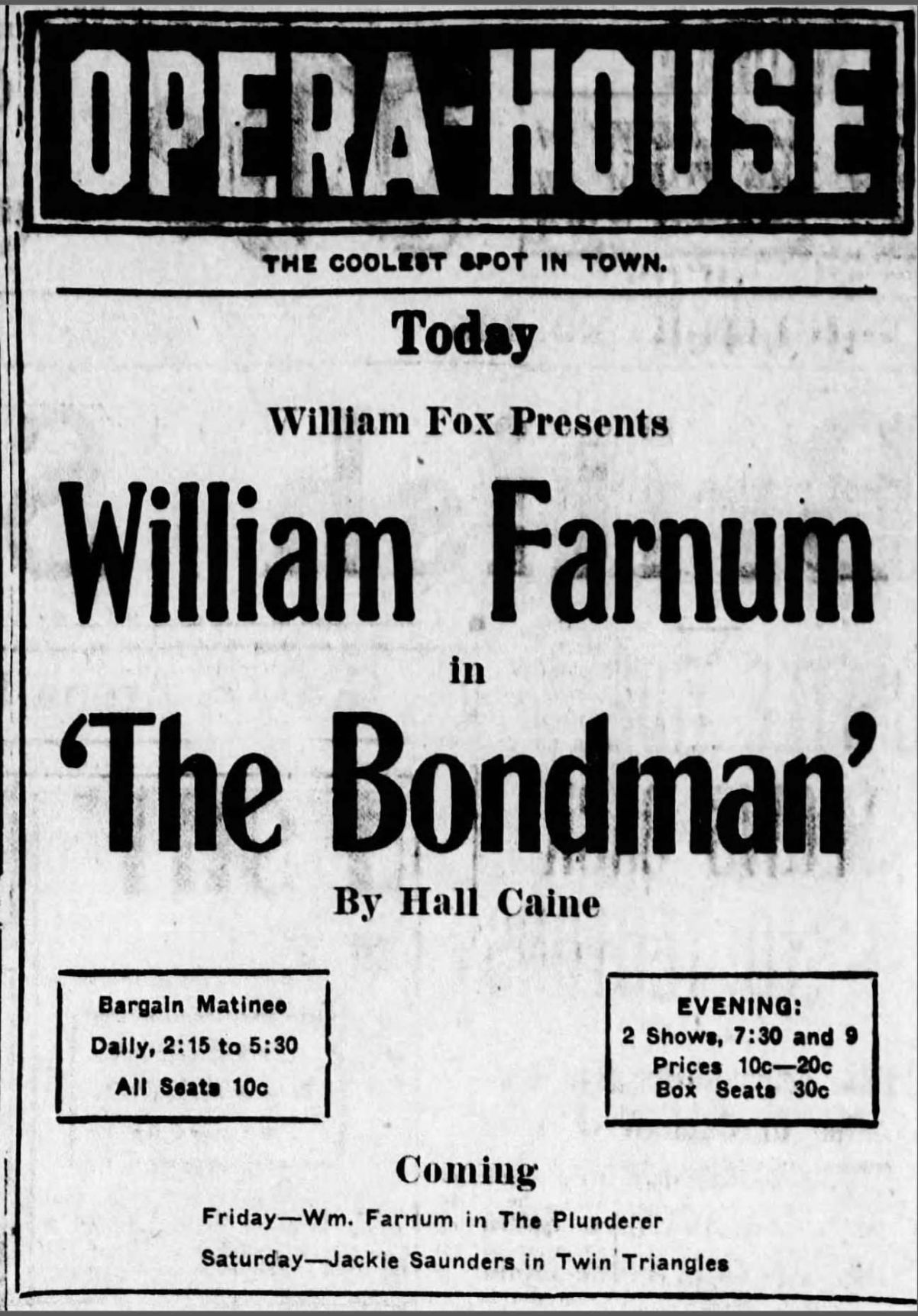

- Johanna Eubank Arizona Daily Star
- Updated
Some tidbits from the Arizona Daily Star June 7, 1916, beginning with an opinion:
STANDARDIZING CLOTHES
That the women of America shall standardize their street dress was proposed and discussed as a serious measure in the convention of the General Federation of Women's clubs. The arguments were all favorable.
Miss Helen I. Johnson of Chicago, chairman of the committee on dress, stated that after studying the matter for years, she had become convinces that a standardized street dress for women, corresponding to the sack suit of the men, would not only make the American woman more dignified in dress and deportment but would cut her dressmaking bills in two.
Mrs. Thomas Edison and Mrs. Robert J. Burdette also spoke for a conventional standard.
Usually when any such reform has come into discussion, the manufacturers of women's wear have been against it. This time, says Miss Johnson, she consulted many and all were in favor of the plan. The fact is that although the woman would spend far less for her street clothes, the manufacturer would not lose. At present by far the greatest expense connected with the making of clothing is the mad search for novelty— the greatest loss is from styles which do not "take." All this excess work, worry and loss would be eliminated. Makers of men's wear find no difficulty in showing a profit.
The fact that a standardized costume had been adopted would not bar out individuality. In fact, with the element of kaleidoscopic style taken away, a woman would have far more chance to exercise her own taste in color, fabric and adaptation to her own person than is now the case. And the manufacturer, like any craftsman who is worth his salt, would far rather use his skill in making garments of good texture and durable quality than in turning out the shoddy, hastily-made stuff which covers half the women on the street today.
Any demand which requires artificial stimulation is also artificial in its profits. A steady demand through the year for a staple line of suits would remove most of the difficulties which turn the manufacturer's hair gray, would stabilize the earnings of the garment workers, would make life easier for the women who buy and wear the clothes, and would fill our streets with women clothed with richness and dignity.
While readers are thinking of women's clothing, perhaps they might like this advertisement:

In all fairness to men, there is also an advertisement for union suits. Frankly, how can one imagine wearing this under a suit in the Tucson summer?

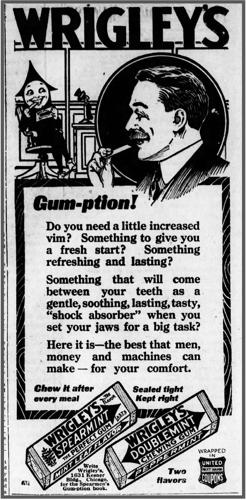
- Johanna Eubank Arizona Daily Star
- Updated
A few interesting tidbits that ran in the Arizona Daily Star June 6, 1916:
JEWELRY WORTH $400 AMONG THIEF'S LOOT
_____
Burglar Enters House Through Unlocked Door; Capture Is Expected
Jewelry valued at $400 was stolen from the residence of Mr. and Mrs. Sam Hughes III, 423 North Main street, yesterday afternoon between 4 and 5 o'clock, by a thief who entered the house by the unlocked door of a room occupied by J. R. Ring, an advertising solicitor for The Star.
The jewelry belonged to Mrs. Hughes. Among the articles taken were six rings, one of them being a diamond ring with seven settings; a pearl ring, a gold band ring, a full set of garnet jewelry, including bracelet, necklace and earrings, and numerous other pieces.
Nothing else belonging to Mr. and Mrs. Hughes was taken. The thief, however, looted Mr. Ring's room, stealing three suits of clothing, all that Mr. Ring had with the exception of what he was wearing. With a fine sense of humor, he left an overcoat belonging to Ring.
The fellow was seen as he was leaving the house and his capture is expected. It is believed he was a transient.
All those rings and Mr. Ring to boot. Next comes a cautionary tale that is still a valuable lesson:
KILLING OUR CHILDREN
In 1903 the American people killed 466 of its citizens, mostly children, on the Fourth of July.
In 1904 we killed 183 and injured 3,986, making a total of 4,169.
In 1909 we went up again, killing 215 and wounding 5,092—total, 5,307.
Last year, 1915, we made a better record. We killed only thirty loyal celebrators of the signing of the Declaration and wounded only 1,135, with a total of 1.165.
This is doing fairly well, considering our bloody past. But do we really have to put over a thousand people temporarily or permanently out of business just because we are glad we live in these free and independent United States?
Don't the boys who celebrate with picnics and parades have just about as good a time as those who play with fire and finish in the hospital or blow themselves to glory? Does freedom require a human sacrifice?
Why not be sensible once and for all, and keep fireworks out of the hands of the young? Civic or neighborhood evening festivities where the fireworks are in the hands of trained experts are a different matter. If we want fire, that's the way to handle it!
Why not relieve mothers of anxiety, boys and girls of danger, and the country of a reputation for senseless slaughter?
And why not, while we are about it, get togethers in groups and have a lots better time than we used to?
And finally, an advertisement from the same paper:

While the Red Cross didn't allow its members to carry weapons, a local organizer for nurses felt they should be able to ride and shoot.
From the Arizona Daily Star, June 30, 1916:
Nurses Who Can Shoot Is Miss Farrar’s Idea
Carrying Arms Bars Home Defense Auxiliary From the Red Cross
All young ladies who have volunteered to join the corps of nurses being organized by Miss Katherine Farrar, violiniste at the Tucson opera house roof garden, are requested to meet this morning at 10:30 o’clock at her home, 741 East First street.
Whether the newly organized nurses’ corps will affiliate with the local Red Cross is a problem. The latter organization does not allow its members to carry “arms” and Miss Farrar’s idea is to have young women who can both ride and shoot. She declares that rather than give up these two ideas she would rather not affiliate with the Red Cross.
More than twenty-five young women have volunteered already and Miss Farrar is quite enthusiastic over the prospects for an effective organization.
The Star began a fund to provide for soldiers from Tucson who were at the front.
The Star Starts Mess Fund for Tucson Guardsmen at Front
In order that local national guards organizations at the border, Companies K and E and the Tucson hospital corps, may not longer feel that they are not being treated as well by the “home folks” as are the other companies in the state, The Daily Star is announcing a plan by which a fund will be raised for the guardsmen for which to buy such small comforts as ice and fruit. The plan received the enthusiastic endorsement of Acting Mayor Bernard yesterday evening.
The Star will start the fund with a contribution of $5.00 and will acknowledge all contributions sent to it, in the columns of the paper, or any contributions for the purpose turned in the the chamber of commerce. In this way it is believed that a large fund can be raised.
Soldier lads at the front from Tucson say that they are given none of the favors that companies from other parts of the state enjoy. Yuma and Phoenix companies have sent melons and other dainties, while the tucson boys are forgotten. It is believed that this neglect is the result of oversight rather than anything else, and the movement started by The Star should remedy the whole matter.
Send your contribution into The Star or else leave it at the chamber of commerce, and it will be acknowledged in The Star. The fund will be turned over to the proper authorities for the use of the troops.
Bootlegging was a constant problem during Prohibition.
MANY HELD FOR BOOTLEGGING AFTER BIG RAID
Warrants Issued by Superior Court for 25, Most of Whom, Are in Custody; a Large Quantity of Booze Is Seized
Wholesale arrests of persons about Tucson hotels, restaurants and soft drink places, on charges of violating the prohibitory law, followed raids yesterday by county officers armed with search warrants which yielded returns of bottled goods, including both beer and whiskey. Warrants were sworn out for about twenty-five persons, most of whom were taken into custody.
The warrants were obtained in the superior court by County Attorney George Hilzinger, and the cases will not go through the justice court as usual. The warrants were placed in the hands of Sheriff Forbes by County Attorney Hilzinger in the morning and the force of deputies did fast work in serving them. A quantity of bottled goods obtained in the raids was placed in the custody of Justice Comstock. It is understood that the warrants were issued as the result of complaints made after investigation by private parties in co-operation with authorities.
Of course, part of the problem with bootlegging, was public drunkenness.
COMPLAINANT WOULD NOT MAKE AFFIDAVIT
So City Attorney Disregards Charge Against a Cop
Charges that Patrolman Stewart, who arrested him on a charge of drunkenness, has sold him the liquor on which to get drunk, were made yesterday to City Attorney Dunseath by William Walsh, a local plumber, who was arrested Wednesday evening on a charge of being drunk and down.
“Will you swear to that statement?” Mr. Dunseath asked him.
“No, I won’t,” Walsh replied.
“Then I won’t have anything more to do with it,” Dunseath replied. Later Walsh state that he was willing to make an affidavit to that effect. Mr. Dunseath state that he would report the charge of Walsh to the police committee.
Stewart laughed about the charges.
“It is quite likely that I would arrest him after selling him the booze to get drunk on, isn’t it?” he said. “Walsh was mad because I took him to the police station instead of home.”
The trial of Walsh will take place today before Recorder Cowan in police court.
The major Independence Day celebrations were cancelled in 1916, but many activities that weren't sponsored by the city would still go on.
From the Arizona Daily Star, June 29, 1916:
Fourth Celebration Has Been Cancelled
Unsettled Conditions Explanation Given by the Committee
There will be no Fourth of July celebration under the auspices of a joint committee from the Tucson Luncheon club, the chamber of commerce and the Tucson Rifle club, according to a decision arrived at yesterday.
Chairman McDermott stated that because of the unsettled condition of public affairs at the present that it had been thought best by the committee not to hold the celebration at this time. The committee feels that there have been great demands made on the public at this time, and it is thought that it would be unwise to attempt to carry through the extensive program planned.
Notwithstanding the fact that the joint committee has given up the celebration, it is probable that there will be a number of features on the Fourth for the entertainment of Tucson people. The Douglas-Tucson motorcycle road race will finish in the city between 10:30 and 11:30 o’clock, and there will be other attractions planned for the evening.
One event that would still take place was a swimming competition.
ENTRY LIST IS OPENED FOR JULY 4TH SWIM
All persons desiring to enter the swimming events at the Y. M. C. A. pool on the afternoon of July 4 at 4:15 o’clock, are requested to register their names between now and July 2. Early registration is asked by the officials in charge to aid in arranging the events.
The list is as follows.
Forty yard dash; 80 yard dash; 440 yard; under water for distance; on the back 20 yards; best all-around diving; four men relay, 40 yards to each man; fat men, 20 yards; boys under 100 pounds, 20 yards; boys under 125 pounds, 40 yards.
Unrelated to the holiday, one young lady would be forced to retain her own independence, although at age 14, perhaps there would not be any independence at all.
BRIDE TOO YOUNG.—A general lack of confidence in the wisdom of a child of 14 getting married caused Justice O. E. Comstock to refuse to perform the wedding ceremony for Ramon Alvarez, aged 20 years, and Josefina Martinez, aged 14, yesterday. Parents of both young man and girl were present, but Justice Comstock declined to perform the ceremony. The age of 14 is the lowest at which minors can be married with the consent of their guardians.
It's a sad thing when government entities don't cooperate with each other, much less communicate. Based on this article, that's nothing new. But these people managed to find a way to work together.
From the Arizona Daily Star, June 28, 1916:
PEACE REIGNS AFTER SPLIT THREATENED
Misunderstanding Between the Sheriff and Chairman Parker of Safety Committee ends With Deputizing the Guard
Misunderstanding between Sheriff Forbes and members of the Tucson Safety committee, originating over the investigation of a supposed case of cattle stealing Monday evening, and which threatened to handicap the work of the committee in work outside the city, was averted yesterday evening by a complete understanding. Officers of the safety committee and the Tucson Rifle club were sworn in as deputies, thus ending all chance for trouble. In the future the Safety committee and deputies from the sheriff’s office will co-operate with each other.
The misunderstanding arose over a report that 125 Mexicans had invaded the United States southeast of Tucson and had killed several beeves. In order to find out whether there had been an invasion, Chairman Parker dispatched several of his men to investigate, and on their return found out that there had not been.
On the other hand it was reported to Sheriff Forbes that the men had been sent by Chairman Parker to make arrests for cattle stealing. Yesterday afternoon Sheriff Forbes went to Chairman Parker and declared that in case any officers of the Safety committee attempted to exercise any functions of officers outside of the city that he would cause their arrest.
Chairman Parker then declared that he would withdraw all special men guarding roads and doing scouting duty immediately, and issued orders to that effect, stating that hereafter the safety committee would work only within the city limits. Later, however, a complete understanding was arrived at. Sheriff Forbes deputized all leading officers of the Rifle club so that they are now empowered to use members of the club to carry out their orders for arrests in case of necessity. On the other hand, officers of the Safety committee promised to co-operate with Sheriff Forbes in every way.
The fact that trouble between the two agencies had been averted in the present threatening situation caused much gratification yesterday evening among people who had heard of the threatened split, as it was felt that Chairman Parker and his aides were working faithfully for the public good and also that Sheriff Forbes had been very active in watching all threatening conditions.
Concerns that war might be at Tucson's doorstep were evident in the story that a local branch of the American Red Cross would be formed.
TUCSON BRANCH OF RED CROSS BEING FORMED
Forty-four Members Already Secured and Organization Will Be Perfected Tonight; National Officers Aid Move
The organization of a Tucson branch of the American Red Cross society will be completed this evening at a meeting of the executive committee at the home of Mrs. Nathan Kendall, 907 North Fifth avenue. The organization of the Tucson branch has been undertaken with the approval and assistance of Charles J. O’Conner, assistant director general at Washington, D. C., and John L. Clymer, of San Francisco, director of the Pacific division.
Miss Jane Rider, of Tucson, has worked faithfully during the past few days to get the organization started, and others prominent in the work of organization are Mrs. Nathan Kendall, Dr. H. W. Fenner and Dr. C. A. Thomas.
At the meeting this evening, a chairman, vice chairman, secretary and treasurer will be elected. The dues are $1.00 and may be sent by check to Miss Jane Rider. Her phone number is 316J.
The organization has been started in the interests of “preparedness” in case war actually comes. The Tucson branch will be affiliated with the national organization and the purpose is to guarantee that the work will be done efficiently. The name and emblem of the Red Cross are protected by federal law and cannot be used without the permission of the government.
Miss Rider stated yesterday evening that she was very much pleased with the work undertaken by Miss Katherine Farrar, violiniste of the Tucson Opera House Roof Garden, and would be glad to have the volunteer nurses become affiliated with the Red Cross.
A fire destroyed a home so quickly that the families lost all of their possessions.
From the Arizona Daily Star, June 27, 1916:
So. Fifth Avenue Home Destroyed By Fire
Flames Spread So Rapidly Occupants Lost Household Goods
Fire of unknown origin that gutted the double brick residence on South Fifth avenue opposite the Safford school yesterday afternoon at 2:20 o’clock, caused damage estimated at more than $2,000.
The north side of the house was occupied by Mr. and Mrs. Frank Dwyer, and the south side by Mr. and Mrs. E. J. Darnell and their sins, Marion and Ed. The house furnishings of both families were destroyed, and the aggregate loss of the household goods of both is estimated to $1000. The damage to the house is estimated at $1000, which was partly covered by insurance. the house is owned by E. P. Drew.
The fire started at the back porch and burned so rapidly that persons in the house were not aware that anything was wrong. When they were roused the flames had enveloped the roof and were starting on the front porch. The alarm was given and the department made a fast run but was unable to stop the flames.
The brick walls are undamaged and it is understood that the residence will be rebuilt as soon as possible. A motorcycle owned by Ed Darnell was destroyed by the fire. Marion and Ed Darnell and also Mr. Dwyer are employed by the Arizona Eastern railroad.
We would hardly call an attempted suicide a comic opera, but it does appear in the following article that the man who claimed he wanted to end it all didn't have his heart in the attempt.
Deputy Montgomery Hero in Comic Opera Attempt at Suicide
Man Tired of Life Leads Officer Chase Over Sentinel Peak
Deputy Sheriff Montgomery figures as the “hero” in a comic opera suicide attempt Saturday afternoon. A Mexican, whose name the deputy refused to make public, left a note saying that he intended to end his life because his wife would not live with him, and the note said that his body would be found on Sentinel Peak. The missive was turned over to the deputy, who made a hurried trip to the mountain west of the city.
A little scouting revealed the whereabouts of the unhappy benedict, equipped with a pistol with which to end his life. The deputy called upon to halt and to desist in his fell purpose of filling himself with lead. With ample time in which to carry out his purpose, the Mexican, instead of turning the weapon on himself, took to his heels and led the deputy a merry chase over the mountain side, up one arroyo and down another, scaling precipitate walls, jumping boulders. The Mexican seemed to dear Deputy Montgomery more than he did death, for while he held the pistol cautiously to prevent it from going off, he did not stop his wild chase until the fleet-footed deputy collared him from behind and took the pistol from him.
It is an offense against the laws of the state to attempt to commit suicide, but no charge has been placed against the Mexican, it being apparent that he had no well-developed intention of ending his life. His spectacular attempt may have the effect of causing his wife to believe that without him her life is a bauble, and if it ends in a reunited family Deputy Montgomery will, perhaps, be willing to call it square.
The Arizona Daily Star of Sunday, June 25, 1916, ran two separate stories about the "Human Fly," who scaled buildings in Tucson. We present both:
‘HUMAN FLY’ PROMISES STUNT SATURDAY NIGHT
“Satan” Billy Weber, the “Human Fly,” didn’t get to the top of the court house flagpole yesterday evening as he had announced.
“Because I painted it this afternoon,” Billy announced from the top of the second story window on the north side, which was as far as he elected himself. He made a speech from this point to the big crowd assembled, stating that he was rather tired from his work of the afternoon, painting the pole, and would give the exhibition of going clear to the top Saturday evening at 7 o’clock. He also announced that he would climb any building in the city to be selected by a committee of three, on Sunday evening at 9 o’clock.
Weber pleased the crowd just the same with his clever work in getting as far as he did and demonstrated that he has the goods when it comes to imitating the difficult feats of the acrobatic but unpopular fly. He worked slowly but carefully, and tested every hold before he progressed.
He had his working clothes on yesterday evening, but tonight will be dressed in tights and give a regular exhibition. The flagpole was painted white and makes a better showing.
And then there was this:
500 See ‘The Human Fly’ Climb Court House
“Satan Billy” Weber Will Repeat at 4 o’Clock This Afternoon
“Satan” Billy Weber, “The Human Fly,” climbed the Pima court house from the ground floor up to the base of the flagpole yesterday evening before a crowd of about 500 applauding spectators. He would have climbed the flagpole also, but he explained that it had just been painted by him Saturday and was not yet dry.
Weber’s hardest stunt was making the cornice at the roof, and it took him seem little time to negotiate this stunt, but he was rewarded by a big hand.
“That sounds good,” Weber yelled back, “but remember that it will be a little more substantial to drop something into my hat that my wife is holding.”
Weber hesitated a little at getting up the cupola, although it did not seem as tough a stunt as the cornice feat. When he did go he went so fast that hardly anybody in the crowd saw just how he did it. Never, however works very carefully and does not take any chances from rotten timbers or shaky concrete work, as he tests everything before starting. A false step or an insecure footing would mean death or a bad injury.
From the cupola Weber did a little advertising for The Star, and said some kind words for its hustle in furnishing the news.
He will repeat the courthouse stunt at 4 o’clock, and at 9 o’clock this evening will climb the Kress building, on Congress street, which he says is the hardest proposition in town.
Happy news for Tucsonans came when they were told beer and whiskey could be delivered by freight as long as it was for personal use.
From the Arizona Daily Star June 24, 1916:
ESPEE ACCEPTS PERSONAL USE CONSIGNMENTS
Road Announces Intention to Haul “Wet Goods” Into Arizona by Freight; Company May Follow Wells Fargo Rule
Liquors for personal use can now be obtained from El Paso and Los Angeles by freight, as yesterday local traffic officers of the Southern Pacific announced that they had received instructions that such shipments for points in Arizona would be accepted wherever originating.
This far the Wells Fargo Express company, which has been transporting shipments to Tucson, has only accepted consignments originating in Missouri. The detailed instructions for the delivery of personal use shipments have not arrived as yet, but are expected within a day or two. It is believed that the requirements will be similar to those already announced by the Santa Fe and the Wells Fargo, an affidavit stating that the consignment is for the personal use of the consignee and will not be used by him in violation of the state law.
The effect of the acceptance of shipments by the Southern Pacific will be to make the transportation of beer much cheaper. This far it has been impossible to transport it otherwise than by express from Missouri.
It is predicted now that the Wells Fargo company will announce within a few days that shipments for Arizona will be accepted from points other than Missouri.
Already advertisements are appearing on Los Angeles newspapers offering to ship Liquor, wine and beer to Arizona.
In other news, Mexicans did not perpetrate a raid near Oro Blanco as had been reported earlier.
ORO BLANCO RAID STORY IS DENIED
Denials From Three Sources Controvert Published Reports
Denials from three authoritative sources of a story in the local afternoon paper yesterday saying that Mexicans raided the vicinity of Oro Blanco, reached the sheriff’s office yesterday. The story was published in two editions. It is said that Mexicans raided ranches in the vicinity of Oro Blanco and Montana Late Wednesday night and early Thursday morning, driving off 150 head of horses and wounding two cowboys.
That no such raids occurred was the statement made to the sheriff by Jack McVay and William Earl, and another man from that part of the county. McCoy came in from his ranch below Oro Blanco, having left there Thursday afternoon. William Earl came in from Las Guijas and he denied that any ranches had been raided in that section. It was said in the story that a large ranch between Las Guijas and Arivaca “suffered most seriously.”
The sheriff’s office is in constant communication with all parts of the county and deprecated the publication of statements such as those contained in the afternoon paper concerning raids and clashes between American troops and Mexicans in they county, which, he said, are absolutely without foundation.
Sheriff Forbes received from the governor yesterday, with a request that he give it wide publicity, the following proclamation:
“Whereas, recent developments in Mexico, whereby the United States has come to assume a new and important relation toward all elements of the Mexican people, may reasonably be assumed to have given rise to some uncertainty as to the attitude that would be observed by the state government of Arizona, in the event of further complications, however serious, toward all foreign people of whatever class or faction, residing permanently or temporarily within this state;
“Now, therefore, I, George W. P. Hunt, governor of Arizona, by virtue if the authority bested in me by law, do give assurance of the intent and purpose of the state of Arizona to maintain toward every Mexican and other foreign resident not a fugitive from justice or otherwise directly answerable to the lawful authority of another state, or to the government of the United States, such an attitude of guardianship, protection and justice as ordinarily characterizes the state’s demeanor in time of peace toward its acknowledged individual residents; according them all usual and reasonable privileges and every safeguard of security compatible with the public peace and safety.”
The mysterious signals reported a day earlier were still a mystery. Perhaps there were people who knew the answer but felt the mystery was preferred.
From the Arizona Daily Star, June 23, 1916:
Mysterious Signals Baffle Investigators
No Explanation of the Lights Flashed From Sentinel Peak
Efforts to explain the mystery of the supposed signals sent from the top of Sentinel Peak Wednesday evening were unsuccessful yesterday, although investigations were made by the officers of the Safety committee and Sheriff Forbes and deputies.
The idea that someone was sending signals to another observer many miles away is considered rather improbable by most who worked on the case.
Another explanation offered by deputies from the sheriff’s office who investigated the case, was that it was the light from a lantern at the stone quarry which caused observers to believe that men were signaling. Men were working at the stone quarry Wednesday evening, and it is the theory that the lantern swinging in the wind was responsible for the supposed signals. In the dark the lights would appear much higher than they actually were.
Observers from the city who actually saw the lights stated that the looked just as if they came from an electric flashlight.
In other news, Tucsonans were worried about bandits crossing the border and threatening Tucson. As is still the case, there were border issues, but fears were heightened at the time.
ASK FUNSTON FOR TROOPS TO GUARD TUCSON
Acting Mayor A. C. Bernard and Party Leave for San Antonio Thursday to Inform Commander of This City’s Plight
In order to lay before General Fred Funston the unprotected state of Tucson, Acting Mayor A. C. Bernard left early Thursday afternoon for San Antonio by special train. He was accompanied by Fred Ronstadt, a merchant, and John Mets, a Tucson banker. Superintendent T. H. Williams accompanied them on the train, which was made up of a Pullman coach and engine.
The mission of Mayor Bernard and his two companions was not announced publicly, but it is hoped by local businessmen that it will be successful, as nothing has been done to protect the city outside of local efforts.
The decision to appeal directly to General Funston was made after a meeting of a few prominent business men. It was pointed out that Tucson was the most unprepared city along the border, and that it would be possible for a small detachment of mounted bandits to cross the border in the night, opposite Tucson, and ride directly into the city without any opposition but what could be offered by the local force.
As appeals to Washington by wire have failed thus far, it was decided to appeal directly to General Funston himself, who is much better acquainted with border conditions.
Last fall repeated appeals for aid resulted in the sending of two companies of cavalry to Tucson from Fort Huachuca during a period thought threatening.
Bankers and business men contributed the expenses for the trip.
While it is unlikely E.T. was attempting to phone home — or anyone else for that matter — flashing lights emanating from Sentinel Peak had a few observers on edge.
One must remember that the nation was at war at the time, and while the messier facts didn't cross the ocean, uneasiness did.
From the Arizona Daily Star, June 22, 1916:
Mysterious Signals From Sentinel Peak Cause Uneasiness
Officers Make Futile Effort to Decipher Flashes From Mountain Top
Mysterious signal lights from Sentinel peak, flashed for more than an hour yesterday evening up to about 11:45 o’clock, resulted in an investigation by officers of the Tucson Safety committee, and also by Sheriff Forbes and deputies.
The lights appeared to be from a large electric flashlight or searchlight, and were flashed in “long” and “short” signals. they were first noticed by J. Monahan, a watcher stationed at the water plant, who communicated with local officers. At the same time D. L. Krebs, undertaker at the Parker Undertaking company, noticed them.
Chairman Parker of the Safety committee, and Chief Parker were notified and Mr. Parker order a detail of members of the Home Guards, including Emmanuel Drachman and Oney Anderson, in a machine, to investigate.
They went near the mountain and also saw the lights at close range, but did not attempt to climb the peak.
About 11:45 the signals ceased. Up to that time they had continued at regular intervals of perhaps 15 minutes. Twelve “long” and one “short” was a signal which was repeated a number of times. The light was a powerful one and could be seen a long distance.
The theory was that it was someone practicing signaling who had not notified the members of the committee, or else someone signaling to an observer at another peak miles away toward Mexico.
The matter was investigated later by Sheriff Forbes. A thorough search will be made for the person signaling today and an explanation demanded.
Motorcycle guards stationed on all of the roads leading into the city made no report on the matter up to an early hour this morning.
A young man needed money to make a trip, and he stole it from his sister-in-law, planning to pay it back. Even so, it was still a crime, and he was caught.
From the Arizona Daily Star, June 21, 1916:
Boy Stole Money From Brother’s Wife to Visit Father, Dying in Mexico
Plan to Work and Repay Is Spoiled by Illness; Court Deals Mercifully
When the father of Juan O. Garcia, a young man about 26 years of age, lay dying in Mexico, the son had no means of reaching his bedside before the end came, so he stole $25 from his sister-in-law, Mrs. Concepcion Martinez, with the mental promise to himself that when he had bidden his father farewell he would return to the states, work hard and pay back the money he had stolen from his brother’s wife.
Juan went to Mexico, saw his father and returned to Tucson, but he had no sooner started to work to make money so that he could repay the secret debt than he fell ill, and in the meantime the sister-in-law discovered the theft, accusing Juan of it. Juan did not deny it, not even to the judge yesterday, but his sister-in-law had little faith in his fair promises, so she had him arrested on the charge of larceny.
Garcia was arraigned before Justice Comstock and he told the judge his story of his yearning to see his old father once more before he died, of his yielding to temptation to steal the money in order to gratify his desire, with the mental reservation that it was not stealing but only borrowing, with a clear intention to return it as soon as he was able.
After hearing the story, the justice imposed on Garcia a sentence of three months in jail. Juan was about to descend into the depths of despair when the court qualified its decision with:
“But I will suspend the sentence during good behavior and on condition that you return to your sister-in-law the money that you took from her.”
Juan promised.
The Morgue Lady can't help but wonder where the young man's brother was in all this and why he didn't help out. They may have had different fathers, since the sister-in-law's last name was different. Perhaps the brother was no longer among the living.
The naming of Gay Alley as a restricted district may have been premature. The city council may not have followed all the rules.
From the Arizona Daily Star, June 20, 1916:
No emergency Clause to Redlight Measure
Ordinance No Good, Says Hilzinger; Referendum Is Discussed
If the city council intended by hurrying the passage of the ordinance setting aside Gay Alley as a restricted district, to forestall proceedings to be instituted by County Attorney Hilzinger to have the district removed from its present location, or to legalize the district before proceedings could be instituted, they overlooked something, according to the county attorney, who pointed out yesterday that the ordinance passed by the council Saturday night failed to carry an emergency clause. Such a clause would have had the effect of putting the ordinance into effect at once. Without it, the ordinance will not become effective for thirty days.
If at first you don't succeed ...
In other news of the day, whooping cough was a scourge at the best of times. In one particular household, the parents of six children likely felt the best of times would never come again because they could not be shared with three of their children.
Editor's note: Mr. Allamariano's first name was spelled two different ways in this article. Not knowing which is correct, both are shown here.
Death Angel Guest at Humble Mexican Home
Three Children Die in One Week; Three Others Are Ill
There is no crepe on the door of the home of Lemon Allamariano, on the outskirts of this city. Lamon has no money with which to buy crepe, but there is not enough crepe in the world to symbolize the awful sorrow that pervades the humble home. A month ago children romped and played and laughed in the little home—six of them. Today three of them sleep in Holy Hope and the laughter of the other three is stilled. They lie on blankets on the earth floor, their little forms doubled, their little faces drawn as in a spasm—victims of a malignant form of whooping cough, which has carried away the other three children in the short space of ten days.
Saturday morning Allamariano headed a procession that went out Stone avenue to the cemetery and he carried on his lap a little casket which contained the body of a little girl. A week prior to that the first had died, a victim of the whooping cough. When he returned Saturday from the funeral of the second victim, to the home where his remaining children lay ill, as he thought, his wife met him at the door and informed him that the death angel had claimed another, a 13-year-old girl. Yesterday another little procession went out Stone avenue to Holy Hope.
The other three children are ill of the same disease, one of them seriously ill.
One hundred years later, such news still hurts.
The Tucson City Council met and made a few decisions including the location of the local red light district. The "restricted district" as it was called was to be located in "Gay Alley" (no, not that kind if "gay").
From the Arizona Daily Star, June 18, 1916:
CITY COUNCIL DECLARES GAY ALLEY RESTRICTED DISTRICT
WHAT THE COUNCIL DID YESTERDAY EVENING
- Located the restricted district in Gay Alley.
- Approved assessment roll of southside paving in spite of protests.
- Postponed proposed closing of Yuma Road on protest of Menlo Park company.
- Referred resolution for extending the city limits to street committee.
- Cut off free water from public schools, Y.M.C.A. and the two railroad parks.
- Added another patrolman, Owen Nugent, to offset absence of three officers.
The ordinance for the location of the restricted district in its present location in Gay Alley was passed by a unanimous vote of all six councilmen. Acting Mayor Bernard, elected at the beginning of the meeting to fill the place of Mayor Corbett during his absence, stated that its passage was necessary in view of the fact that legal proceedings had been started against the district.
Council Hohusen read figures showing that the vote on the question of maintaining the restricted district in Gay Alley two years ago had been as follows: First ward, Yes, 798; No, 316. Second ward, Yes, 164; No, 32. Total, Yes 962; No, 348, a majority of more than 600 in favor of the district.
“You have done a very wise thing,” Acting Mayor Bernard said after the resolution had been passed.
Protests from Mary Zabriskie, A. Olsen, Chas. Odell, Josephine Goodwin, against the southside assessment roll, and a general protest against property being assessed for paving, from Mrs. Eva Mansfeld, were read. The southside assessment roll was then passed by Resolution No. 450.
City Attorney Dunseath was about to read Resolution No. 451, closing the Yuma Road, when a protest was read by City Clerk Cowan. As the resolution had been drawn on the request of this company, it was stated, the whole matter was referred to the building and land committee with instructions to report at the next meeting.
The resolution for the extension of the city limits was read by City Attorney Dunseath. It directs that the Mayor petition the superior court to extend the city limits and take the other necessary steps to have the boundaries extended. The proposed extension includes a strip of land on the west extending to the foothills, the Lester addition on the north, the University and other property on the east, and a strip of land on the extreme south end of the city. The resolution was referred to the building and land committee with instructions to report back at the next meeting. Councilman Parker voted “No,” while the five others voted “Aye.”
The water question came up in the form of an announcement by Acting Mayor Bernard of a meeting at the private office of City Manager Clark Monday afternoon at 4 o’clock to consider the matter of the water department deficit.
After some discussion a motion was carried cutting off all free water, which includes allowances to the public schools, the Southern Pacific and El Paso and Southwestern depot parks, and the Y. M. C. A. Councilman Grossetta declared emphatically for metering the city as the only remedy for the water deficit question.
A quit claim deed for Lot 11, Block 136 to Irene Dunseath was ordered given. Permission for the erection of an iron shed at the rear of 144 Alameda street, was granted. The Standard Oil company was granted permission to make alterations in their plant. Officer Duffy of the police force was granted five days leave of absence. Owen Nugent was appointed on the police force because of the absence of three officers.
A communication was received from Superintendent F. B. King, of the El Paso and Southwestern railroad, proposing to accept the offer of free electricity for lighting the railroad park by making connections with the 110 volt system and installing a time clock.
The council adjourned to meet June 26.
In other news, not only was a man robbed of the money he had planned to use to purchase a car, but he was then left outside the sheriff's office. He was arrested for public drunkenness.
MAN ROBBED ON MEYER ST. OF FORD PRICE
Alleges He Was Drugged and Relieved of $200; Found at Door of the Sheriff’s Office; Romero, a Musician, Is Held
After having been drugged and robbed of more than $200, Elias Fernandez, a miner of Ray, Arizona, was taken by some person or persons yet unknown to officers, and laid on a bench just outside the sheriff’s office in the court house yesterday morning. There he was found by officers when the sheriff’s force came down to work.
Whether this was a fine bit of irony perpetrated by the robbers or whether some one in a charitable spirit picked up the robbers’ victim and took him to the court house for his further protection, is not at this time known, in fact it was not until when Fernandez was being in police court on the charge of drunkenness that it became known to Deputy Sheriff Ezekials that there had been another robbery staged on South Meyer street.
Having seen Fernandez at the court house before he was delivered to the police for trial on the charge of drunkenness and having subsequently heard reports of the robbery, Ezekials connected the two cases and after working all day on the case not only had under arrest the man charged with the robbery but also had witnesses, when four o’clock came.
The man under arrest charged with robbery is Cruz Romero, a musician. A complaint was issued by Justice Comstock yesterday charging him with grand larceny and he was remanded to jail.
Fernandez, whose calloused hands show that he has been a hard-working miner, says he came from Ray to purchase a Ford automobile which he and a partner planned to run as a jitney bus. He says that he was held up on South Meyer street and forced to drink from a bottle of liquor and that after several drinks he became oblivious to what was happening, which was his state when he was delivered by someone, friend or foe, to the sheriff’s office prior to seven o’clock in the morning.
He had over $200 when he arrived in Tucson, enough presumably to buy the Ford car. After paying a $20 fine in police court on the charge of drunkenness, he had $70 left, so it is figured that Fernandez was robbed of over $200.
The car in which Fernandez was seeing the sights and lights of the city driven by a youth, Luis Zabalo. He told officers yesterday that Fernandez’ purse was lying on the back seat of the car and that he saw Romero take $20 therefrom but that he forced him to return it against Romero’s protest. He had also said that earlier in the day he had seen in Fernandez’ purse two fifty-dollar bills.
The presence of Romero in the car was explained by Zabalo’s statement that as he was driving the car down South Meyer street Fernandez saw the musicians pass by and he invited them to take a ride. It is alleged that the robbery occurred during the ride that followed. Zabala denies having anything to do the placing the victim on a bench in the court house corridor.
Romero and his companions were still enjoying the spree which they started yesterday morning when he was found yesterday afternoon about 4 o’clock at a house in Barrio Libre. Deputy Ezekials had some trouble in getting Romero, as his companions protested and would have intervened has they been less drunk.
Officers do not take seriously Fernandez’ statement that he was held up and forced to drink from a bottle. It is believed that he obtained the booze from a bootlegger, who are said to ply their trade in the streets of the hinterland.
And after all this talk of bringing beer and whiskey in on the railroad, we thought this advertisement would be if interest:
Note: The Arizona Daily Star did not publish on Mondays in 1916; therefore there will be no news of 100 years ago for June 19, 1916, a Monday.
- Johanna Eubank Arizona Daily Star
When five children died within a few days in the Pantano area, public officials took notice and worked to find the cause and prevent the spread of the disease.
From the Arizona Daily Star, June 17, 1916:
PANTANO SWEPT BY EPIDEMIC OF NEW MALADY
County Authorities Act Quickly to Arrest Spread to Tucson; Mortality Rate High Among Children; Inquest Today
An epidemic of some disease which county authorities have not yet been able to identify, is raging at Pantano, having claimed five victims, all children, within a few days, according to information brought to the city yesterday. In order to stem, if possible, the further spread of the disease at Pantano and to prevent its communication to other parts of the county and the state, Dr. Schnabel and Sheriff Forbes, under orders from the county board of health, left yesterday afternoon at 4 o’clock for Pantano, with instructions to clean up the place.
The mortality rate of the disease is exceedingly high and it is apparently highly contagious. County authorities received word yesterday that another had been added to the death list, a child, making a total, it is said, of five deaths since the first appearance of the disease several days ago.
The epidemic spread from a camp of Southern Pacific railroad section employees and their families. The majority of them, it is said, came recently from Mexico and, it is believed, brought the disease over the border.
When news of the epidemic was brought to the city yesterday, Dr. Schnabel went to Pantano and reported to County Attorney Hilzinger upon his return. While he was unable to identify the disease from his casual observation yesterday, he said he was satisfied that it was caused by bad sanitation, the camp being in an extremely filthy condition.
Chairman Estill, of the county board of health, being out of the city, County Attorney Hilzinger called a meeting of the board, at which the epidemic was discussed. It was decided to have made a thorough clean-up of the camp and to take stringent methods of preventing the spread of the disease to other parts of the county. Accordingly, Dr. Schnabel and Sheriff Forbes were instructed to go to Pantano and institute a clean-up campaign.
An inquest will be held in the case of the child who died yesterday, in order to determine the nature of the disease and its causes.
Sheriff Forbes and Doctor Schnabel returned to the city last night. The sheriff said that the total of deaths, so far as they could ascertain, might be as high as eight. Doctor Schnabel now believes that the deaths have been caused by acute bronchitis caused by exposure while the children were recuperating from whooping cough. At Pantano the nights are very cool, and it is believed that lack of sufficient covering made the victims an early prey to bronchitis.
This may serve to make many of us grateful that we now have vaccines to prevent many dangerous diseases, especially those that can be fatal to our children.
- Johanna Eubank Arizona Daily Star
A decision was needed: Was a justice permitted to sentence a person for contempt of court in his courtroom or is he required to have the person arrested, arraigned and tried in another justice's court?
From the Arizona Daily Star, June 16, 1916:
New Legal Wrinkle in Singer Contempt Case
Can Justice Summarily Punish for Contempt, Is Asked
Whether a justice of the peace can summarily fine any person for contempt of court, is a legal question that has arisen over the sentence of $10 or ten days in the county jail imposed on Sam Singer Wednesday by Justice Comstock after Singer had given him a profane retort upon receiving a sentence of sixty days for beating his wife.
According to the views of some lawyers, a justice has the power to punish contempt of court when committed in his own court and it is claimed that the present offense would fall under the definition of contempt of court as contemptuous, insolent or disorderly conduct. According to this view, the justice could assess a fine or jail sentence for a misdemeanor without a regular trial.
On the other hand, it is claimed that the penal code does not provide any method of procedure by which an inferior court can punish contempt of court summarily, and that by classifying contempt as a misdemeanor, which, according to the general rule, may be punished by not more than six months in jail or $300, the regular method of filing a complaint and trying the case must be followed. According to this view, a complaint would have to be issued and the case tried before an other justice, who would decide the matter, or the person charged could call for a trial by jury.
County Attorney Hilzinger stated yesterday evening that he was investigating the legal phases of the question. Meantime Singer is serving his 60-day sentence for assaulting his wife.
Perhaps the justice should have sentenced the man to more than 60 days for beating his wife. That wouldn't solve the contempt question, but it seems a light sentence for such an egregious crime.
It does seem as if a sentence by the justice at the time the contempt is committed is more efficient and much less expensive that going through channels.
In other news, the possibility of Arizonans receiving beer and whiskey for personal use — that is, not for resale — was still an issue. No booze had arrived by rail, but it appeared railroad lawyers weren't quite sure the railroads should be shipping it.
Another Far-Reaching Personal Use Decision
Wells-Fargo enjoined From Rejecting Liquor Shipments for Arizona
The shipment of liquor and beer for personal use by transportation companies into the state of Arizona was forwarded another step yesterday by the announcement that Judge Van Valkenburg, of the United States district court of Missouri had issued an order compelling the Wells Fargo Express company to accept shipments of intoxicants to Arizona for personal use. This information was received in a telegram to The Star received yesterday afternoon.
This order is in addition to another order recently issued by the federal court compelling the Santa Fe railroad and connecting lines to carry intoxicants by freight, which was told in a Star news story Tuesday morning. The orders were secured by Schiller Brothers.
So far as is known no cars of intoxicants have actually gotten as far as El Paso, notwithstanding reports to the contrary, and it is certain that no cars under this ruling have crossed the state line.
Bills of lading for shipments to Tucson people have already been received, and it is hoped by people who have sent in orders that they will be able to get in the actual shipments within a few days.
The attitude of the railroad companies is not known, and it seems uncertain whether they will resist the order of the federal court. It was rumored yesterday that the Santa Fe railroad would oppose the order. It is being argued as to whether it will not be necessary for Schiller Brothers will not have to get an additional order from the local United States court before the railroads can accept and deliver the shipments.
- Johanna Eubank Arizona Daily Star
It's an age-old question. No newspaper can keep all of its readers happy all the time. One person's idea of news worth printing is another's idea of junk.
Complaints about politics are probably more common than most. This item ran on the editorial page of the Arizona Daily Star, June 15, 1916:
NEWS
“When these blamed conventions are over,” writes a weary reader who isn’t much interested in politics, “will there be some news in the papers again?”
Well, maybe. War stuff, for example. Things seem to be warming up in Europe again. And then some other weary reader who ins’t interested in the war will write in and want to know if there’ll be some news in the paper when peace comes. And it all goes back to the question that nobody has ever answered satisfactorily: “What is news?”
As a matter of fact, there seem to be about as many kinds of news as there are kinds of people. And since it would be a bit difficult to print a newspaper to order for every reader, an editor has to figure mostly on the average man, and give him what he wants. And we rather guess the average man is really interested in the political campaigns in this country and the military campaigns in Europe.
That being the case, why not criticize the average reader, rather then the editor? Or why not roast the politicians and war boards that made the news?
We don't really recommend criticizing out readers. If everyone had the same opinions as everyone else, it would be a boring world. We do like to hear readers' opinions.
However, in light of recent events in Florida, this writer would like to see differing opinions aired without violence.
- Johanna Eubank Arizona Daily Star
An alert night watchman saved the Steinfeld's store from pyromaniacal rats.
From the Arizona Daily Star, June 14, 1916:
RATS START FIRE IN STEINFELD STORE
Night Watchman Discovers Blaze and Douses It Before Firemen Arrive
Rats gnawing on matches are believed to be the cause of an incipient blaze discovered about 11:45 o’clock last night under the base of a display case behind a counter in the dry goods department of the Seinfeld store.
Night Watchman Carl Walk discovered smoke issuing from under the box-like base of the case, and thinking that the fire was in the basement, hurried down only to find there was no fire. He then came back to find flames bursting from the bottom of the case and on both sides.
He turned in an alarm and then quenched the blaze with water. When the firemen arrived, they broke open the base of the case with axes and found a charred rat’s nest among the rubbish. It is supposed that several matches were among the trash brought by the rats to build their nest and that by chewing the matches was the cause of the fire.
The damage was slight.
It would appear the rats fled like guilty children caught playing with matches.
In the same edition, a fraud case was decided quickly, although the charges could have been more severe.
CHAS. HOFELT FOUND GUILTY IN FRAUD CASE
Government Tried Douglas Man on Charge of Using Mails to Defraud, Instead of Luring Girls Into State of Arizona
After being out fifteen minutes, the jury in the case of Charles Hofelt, charged with misusing the mails by transmitting fraudulent newspaper advertisements, returned a verdict of guilty as charged in the indictment.
It had been intended to try Hofelt on a charge of luring girls to Douglas for improper purposes on promise of employment, but yesterday the government decided to try him on another indictment. On this charge, Hofelt was alleged to have inserted in Denver and Los Angeles newspapers advertisements of a book selling for 25 cents, entitled, “opportunities for Labor and Employment in Mexico.”
According to the evidence, Hofelt never mailed books for any of the 20 orders received, but did refund money after he was arrested.
He claimed that he was to get the books from a man named J. C. Carson. Inspector Stone, of the postal service, testified that in an interview with Hofelt he admitted that Carlson was a fictitious person. Hofelt denied this on the stand and maintained that Carson resided in El Paso.
Testimony to the effect that Hofelt had afterwards inserted an advertisement in the El Paso Herald for a housekeeper, signing Carlson’s name, was introduced, and numerous letters from applicants were exhibited to the jury, many of them being from widows.
Addresses to the jury were made by Attorney A. I. Winsett, representing Hofelt, and Attorneys Pattee and Flynn for the government.
The case against Mrs. Nellie Wiseman, charged with conspiracy to violate the immigration law by bringing in a girl for improper purposes, will probably be begun this morning in the federal court.
In other news, a shipment of booze by railroad was so eagerly anticipated that crowds awaited the train. When the train carried no liquor, the disappointment must have been palpable.
CARLOAD OF BOOZE FAILS TO APPEAR
Regular Circus Crows Watched for Argosy From Kansas City
News that a car of intoxicants for personal use, shipped from Kansas City by Schiller Brothers, in accordance with a court order compelling railroads to transport it, was to arrive in Tucson yesterday evening, caused much excitement among thirsty Tucson’s, officers sworn to enforce the law, and railroad officials who are supposed to shoo off shipments of the tabooed stuff in accordance with a decision of railroad attorneys at Los Angeles last week. However, the car did not arrive so far as was known yesterday evening.
County officials were more or less uncertain as to what should be done in case the car arrived. County Attorney Hilzinger tried to get an opinion from Wiley Jones, attorney general, but Mr. Jones was in Nogales and was not located in the afternoon.
Mr. Jones himself, who arrived in Tucson on the afternoon Burro, stated yesterday evening that he could not say what action he would take until he had seen the court order accompanying the shipment, if such had been made. He refused to commit himself further.
He stated, however, that according to the personal use decision, railroads had a right to carry intoxicants for personal use, although they of course ran certain risks. He stated that he had been very much misquoted on the matter and had never made any statements that railroads were prevented from carrying intoxicants for personal use by the decision. He stated that he had not been advised of any court order in regard to the shipment of liquor for personal use into the state.
Mr. Jones stated that he would be a candidate for attorney general at the coming primary. He stated that he had been at Nogales in the Baca Float tax case which was argued yesterday before the superior court.
We can offer no news as to the nature of the "afternoon Burro," but if we find out, we'll let the readers know.
- Johanna Eubank Arizona Daily Star
We should not be surprised to find that news of beer deliveries to Arizona would make headlines. The news is rather sketchy though. We hope Tucsonans were prepared for disappointment just in case the beer didn't arrive.
From the Arizona Daily Star, June 13, 1916:
COURT FORCES ROADS TO TAKE SHIPMENTS FOR PERSONAL USE
Will Tucson thirsty ones get their cool beer this summer?
A surge of hope thrilled through the breasts of numerous lovers of the amber bubble water when a telegram announcing that the federal court at Kansas City had issued an order compelling railroads entering Arizona to accept shipments of intoxicants for personal use arrived in Tucson. The information was contained in the following telegram from Schiller Brothers, who have recently been soliciting mail orders of intoxicants from Arizona and guaranteeing delivery:
“We secured federal court order compelling Santa Fe to ship by freight to Arizona. Your shipment forwarded yesterday. Will secure federal court order compelling Fargo express to transport goods beginning June 19. Notify your friends to send us their orders. Guarantee immediate shipment and deliver by freight. We are the only firm having this privilege.
“Schiller Brothers.”
It is hoped by Tucsonans who have been yearning for the sudsy stuff this hot weather that the information contained in the wire is gospel truth, but a lot more will be convinced when the shipments actually arrive and are safely delivered.
The news of the federal court order appears to have escaped the regular news gathering associations. The Bisbee Review, however had the story Sunday morning, as follows:
“KANSAS CITY, Mo., June 10.—The federal court today ordered the transportation companies to deliver beer and whiskey ordered from Schiller Brothers for personal use.
“This message was received last evening by the Review and if true, it clears up a great amount of advertising done by the Kansas City liquor firm and much other speculation indulged in during the past few weeks in every section of the state of Arizona.
“Judging from the brief message, received from Kansas City, the decision will affect all shipments of liquor for personal use into the state. The complaining company, some weeks ago, advertised for business in the state of Arizona and guaranteed delivery. They at once mandamused the transportation companies and, according to the telegram, the federal court granted the application.
“If the decision is as broad as it promises to be the transportation companies will have some definite court action to base their acceptance of liquor for delivery in the state. The Santa Fe officials, recently in Prescott, declared their line would not accept liquor until the federal court had decided the matter.
“Detailed information as to the effect of the decision is eagerly awaited throughout the state.”
The Star Sunday morning published an exclusive story to the effect that railroad attorneys in conference at Los Angeles had refused to take the risk of accepting shipments on their own initiative and would await a court order compelling them to do so. Apparently they were in ignorance of such an order as referred to in the story and telegram. None of the local railroad traffic officers in the city knew of the reported court order yesterday.
In other news of the day, it's hard to put a man on trial when he has met his maker. As the story suggests, we must assume he answered to a higher authority.
Tollner Departs From Court’s Jurisdiction
Douglas Man Under Indictment on Serious Charge Is Dead
The case against Gottfried Zollner, who was indicted by the federal grand jury on a charge of luring girls to Arizona on the promise of employment, will not be tried in the federal court today as had been scheduled, for Zollner died last week in Douglas, and his faults, whatever they may have been, will be passed on by a higher court.
Tollner was indicted together with Charles Hofelt on this charge, and the trial of Hofelt will be held today or tomorrow. The men lived at Douglas and are alleged to have brought girls from the middle states on the promise of employment. The case of Hofelt will be a hard fought one.
- Johanna Eubank Arizona Daily Star
That women were admitted as delegates to the Republican National Convention in 1916 must have been a big deal, especially considering the fact that very few women would be able to vote in the presidential election.
Closer to home, danger lurked in the shadows for a Chinese merchant. From the Arizona Daily Star, June 11, 1916:
MERCHANT IS ASSAULTED AND STORE ROBBED
Highwaymen Brutally Beat a Chinaman, fracturing Skull; May Have Been Escaped Convicts; thugs Are Known
The boldest daylight robbery that has occurred in Tucson since the epidemic of assaults upon Chinese aroused the Chinese Six Companies last year, occurred yesterday afternoon at 12:30 o'clock, when Lee Shan Man, a merchant at Eighteenth and Convent streets, was assaulted, and between $50 and $100 taken from a cigar box that served as the merchant's cash register.
Lee was hit over the head with an iron bar as he was reaching for a piece of pie for which the highwayman-customer had called. His skull was fractured and he is in a serious condition, according to Dr. C. A. Schrader, who was called to examine the man's wounds. There are four other scalp wounds produced by the iron bar.
County Attorney Hilzinger visited the wounded man shortly after the robbery was reported and he was still conscious at that time, though suffering greatly. From the victim, officers learned the story of the robbery. At about 12:30 o'clock a man whom the Chinaman describes as being tall and sunburned, looking like an American, entered the place and bought a bottle of soda water. He drank this, went out, and in a few moments returned. This time he called for a piece of pie and as the merchant was reaching for it to serve him, the man grabbed him by the throat, while another man, described as a short, stocky Mexican, assaulted Lee with an iron bar, beating him down to the floor.
The men then rifled the cash box, located, it is believed, on the tall man's first trip to the store, and fled. They were seen running from the store by persons residing close by, who hurried into the store to find the merchant lying in a pool of blood.
Officers have as a witness a Mexican boy who claims to know the robbers, and any suspects arrested will be presented to him for identification.
Officers believe that the men may have been two of the escaped federal convicts and this theory was strengthened when it was learned that two of the convicts, Reynolds and Smith, had been arrested in the northern part of the city.
In other news, ownership of a mule was in question. The mule had changed hands, as it were, a few times, so it is no wonder there was confusion.
INSPECTOR'S LETTER PROVES SENSATION
Advised Claimant of Mule to "Bar Out Other Brand"; Lopez Loses Suit
His right to possess one certain mule being questioned, in this case of James Westfall against Pedro Lopez, the defendant, Lopez, offered in evidence at the hearing of the case before Justice Comstock yesterday, a letter purporting to have been written by W. J. Bennett, livestock inspector at Benson. the letter proved a sensation and was taken possession of by Justice Comstock.
The letter, written on the stationery of a Benson hotel and dated December 27, 1915, was in reply, apparently to one that had been written Bennett by Lopez and said, in part:
"I would advise you to keep the mule. Bar out the other brand and say nothing about it to no one."
The writer of the letter advised Lopez that "they," the other claimants of the mule, could not obtain possession of the animal without replevin proceedings and expressed the belief that an attempt to obtain possession would not be made.
No evidence regarding the letter, whether or not there was an explanation that might controvert the literal sense of the words, was introduced, and in the absence of this the letter caused surprise, inasmuch as it is a serious offense to so change a brand.
After hearing the evidence, the court awarded the mule to the plaintiff, Westfall, and assessed the costs of the case against Lopez. The mule has a history that is more exciting that the ordinary, prosaic mule existence. It was taken up as a stray by the city poundmaster in 1912 and sold to the poundmaster. Prior to that the animal's life is veiled in mulelike obscurity. McCormick sold it to one McDaniels, McDaniels sold it to Albert Franco and Albert Franco sold it to James Westfall. From Westfall's premises the animal strayed to the premises of Pedro Lopez and when Westfall, learning of the mule's whereabouts, sent for it, Lopez, it is alleged, refused to surrender it. Thereupon, Westfall filed suit.
Since the filing of the suit, witnesses in the case have been called into court three times, traveling a distance of ninety miles to Tucson. The summons and subpoenas in the case now are mere tattered fragments. There was a touch of the pioneer ways of justice in this feature of the case. The deputy sheriff to whom the papers were sent by the justice, residing at Mammoth, instead of serving them and making a return, merely delivered them to Lopez. Lopez himself made the "return," inquiring of the court what they meant. As it turned out, they meant his dispossession of the mule.
The poor mule must have been confused as to its identity and home by this time. At least it was wanted by a number of people.
In the following advertisement, the Morgue Lady might have been more disposed to buy if the ad had contained a picture of a piano:
On a lighter note, it may be rare for the birthday party of a six-year-old to be news, but this one made the society page:
SIX-YEAR-OLD GIVES PARTY
Miss Pauline Margaret Hohusen, the winsome little daughter of Mr. and Mrs. J. P. Hohusen, celebrated her sixth birthday anniversary Thursday afternoon at her home, 316 South Sixth avenue, when she was showered with presents and congratulations by many playmates.
A particularly dainty color motif was evolved with quantities of pink sweet peas and feathery ferns, while the birthday tables were captivating with their exquisite decorations. Low crystal bowls centered each table, holding the fragrant blossoms. A large, pink birthday cake, radiant with six lighted tapers, held the interest of the children. Diminutive baskets, the handles tied with stunning bows of pink satin ribbons, and filled with bon bons, were the favors given to the little guests. It was an unusually pretty sight with the thirty-two small guests seated at the low tables, which had been placed in the garden.
During the afternoon all sorts of fascinating games were played by the merry children. Mrs. Hohusen was assisted in entertaining by Miss Elsie Siewart.
Those who shared Miss Pauline's birthday were: Pauline Seineke, Jessie Perry, Mary Langers, Audrey McClear, Helen Thorpe, Jane Thorpe, Genevieve Powers, Katherine Kindenfeld, Hortense Lindenfeld, Helen Schell, Wanda Hitchens, Sophie Pauli, Emily Pauli, Pauline Binkhorst, Margaret Stratton, Jane Butler, Alice Plumer, Edith Parker, Virginia Roberts, Gulie Caperton, Margaret Coberly, Ynez Ezekial, Dahlia Robles, Elsia Robles, Edna Arnold, Marguerite Yarbrough, Billy Schell, William Coberly, Harold McPherson, Mitchell, Hanovan, Knox Corbett, Billy Seineke.
The Morgue Lady can't help but wonder what will top this on the little girl's seventh birthday.
Note: This feature will not run tomorrow, June 12. The Arizona Daily Star did not publish on Mondays, including June 12, in 1916.
- Johanna Eubank Arizona Daily Star
We're betting this company changed it's name later on, but in 1916, the term "swastika" didn't carry the same emotion it does today. The symbol meant good fortune before it was co-opted by the Nazis.
From the Arizona Daily Star, June 10, 1916:
Swastika Copper Co. Sues Whitcomb For $100,000 Plus Interest
_____
Allege Violation of Agreement Under Which Claims Were to Be Worked
_____
Mrs. L. H. Whitcomb and Hiram Whitcomb are defendants in a suit filed in the superior court yesterday by the Swastika Copper and Silver Mining company, asking a total award of $100,000.
The basis of the suit is an agreement entered into by the terms of which the defendants were to go upon and do development work on a number of mining claims in the Pima mining district, in this county.
It is alleged that the defendants mined and shipped ore worth $50,000, contrary to the agreement in that "no ore was to be taken out or stoping done on any ore now exposed by workings of the vendor: but in all cases vendor has the right to take out and ship all ores developed by said new workings."
It is also alleged that the defendants failed to do work specified to be done in the agreement. An award to include the value of ore shipped, damages and expenses incurred by reason of the defendants' alleged failure to do work specified to be done, totaling $100,000, with interest at six per cent from April, 1915. is asked.
In that same edition of the Star, a full page was devoted to the ways the telephone can make life easier for Tucsonans.
- Johanna Eubank Arizona Daily Star
A few news items from the Arizona Daily Star June 9, 1916:
MOVIE KING GETS STOLEN AUTO BACK
_____
Recognizes Car on Tucson Street as One Taken Down in Torreon
_____
The sensational recovery of an automobile which had been stolen from him in Torreon two years ago was an adventure happening to Lino Saenz Polo, president of the Cuauhtemoc Film company, this week, which was a little bit stranger than any lurid happening ever filmed in a motion picture.
Mr. Polo not only had one auto stolen in Torreon, but he had five. He really never expected to see one of them again and had bidden them a find and sad farewell.
What was his surprise Tuesday afternoon to see one of his machines coming down Congress street, and driven by a man whom he had never seen before.
Mr. Polo, however, astounded for the moment at the sight of his lost motor car, soon recovered his presence of mind. He rushed into the office of Ben Hill, local attorney, and used the best English that he could command.
"Mi automobile," he gasped, "aqui, you grab it, grab it."
Mr. Hill proceeded to translate Mr. Polo's English-Spanish into legal proceedings. He said the film magnate wrote down a complete description of the car, even to the number, and then obtained a search warrant from Recorder Cowan and levied the car.
The holder, however, was one of the kind men for whom Diogenes is on the hunt with a lamp, and when he was convinced that the car had actually belonged to Mr. Polo, he gave it up without further legal proceedings. It seems that he had purchased it in the United States and knew nothing about the shady history connected with it.
"It beats anything story we ever filmed," Mr. Polo said yesterday. "Maybe it will make a good scenario."
100 years later, one would probably never find such a reference to Diogenes in an article. One might expect that there are few in a modern newsroom who know the story.
For those who don't know, Diogenes of Sinope, also known as Diogenes the Cynic, was known, among other things, for going about carrying a lamp claiming he was looking for an honest man (and not expecting to find one).
Indians were an issue in the early 20th century. However, it would seem some spoke of violence without any proof except heresay. One must remember that while stealing is wrong, it is a far cry from murder.
YAQUI INDIANS RAID SMALL TOWNS
_____
Ranchers in Sonora Are Kept In Perpetual State of Terror.
By A. P. Leased Wire
DOUGLAS, June 8—Reports that Yaqui Indians have been raiding ranches and small towns in the southern part of the Arizpe district of Sonora, were officially confirmed here today by Ives G. Lelevier, de facto Mexican consul. While the consul has received no list of those killed by the Indians, he said that official reports received in Agua Prieta state that the casualties have been numerous.
The Indians are making their headquarters in Sierra de Aconchi, a range of mountains near the Sonora River, and are raiding the surrounding country for food and clothing.
American arriving here today from Cumpas, Sonora, said that while depredations have been reported from the section described by the consul, it was stated that the Yaquis are accompanied by their families. This lends color to the belief that they are awaiting a favorable time to leave Mexico and follow hundreds of their tribe who have crossed the border recently into Arizona. After crossing the border they are transformed into peaceful workmen.
Mining men say that Yaqui Indians are steadier workers than the Mexicans and easier to handle. Hence all crossing the border are welcomed in the camps of southern Arizona.
- Johanna Eubank Arizona Daily Star
The news of the day on June 8, 1916, in the Arizona Daily Star:
City Briefs
EXPECT DECISION MONDAY.— County Attorney Hilzinger returned yesterday from Phoenix, where he represented the state in the case of the appeal of Joe L. Wiley, Thomas Johns and Ramon Salazar from the decision of the Pima superior court denying the men liberty on bail under the charge of murdering Mrs. Josephine Bates. Samuel Pattee represented the men at the supreme court hearing and Mr. Hilzinger was assisted by John H. Campbell of Tucson, and Attorney Baker of Phoenix. The attorneys expect a decision on the appeal not later than Monday.
_____
LICENSE TO WED.— A marriage license was issued yesterday by Clerk of the Superior Court Elrod to Juan Delgado and Maria Cosella.
_____
WAS WELL "TOASTED"— A Mexican was picked up by officers yesterday in an alley off South Meyer street. He appeared to have met the tiger and come off much the worse for the combat. He was still in a drunken stupor yesterday afternoon and could not supply a name. The only statement officers were able to obtain from him was that they, referring to his companions of the night before, "toasted him." One of the man's eyes was closed and his memory was blurred.
_____
TO PROSECUTE VAN LIDTH.— County Attorney Hilzinger yesterday filed an information against Charles G. Can Lidth, charging him with violating the state prohibition law by bringing liquor into the state for the purpose of selling it. It is understood that the basis of the complaint is an admission made in the federal court here recently, at the time that he entered a plea of guilty to the charge of bringing liquor into the state without the proper label that he brought the liquor into the state to sell it.
_____
ANDERSON ARRAIGNMENT TODAY.— Jack Anderson, Waler Pearce and R. O. Naylor, charged with violating the prohibition law by bringing liquor into the state, will be arraigned before Justice Comstock this afternoon. Pearce is at liberty under bond. A charge of bringing liquor into the state without having it properly labeled is pending against Anderson and Pearce before the federal grand jury.
_____
OVERJOYOUS FATHER.— Officer Sullivan of the police force yesterday morning arrested a drunken man who gave the name of Francisco Miranda. When taken into custody, Miranda was trying to get into the Blue Front store by the rear door, having mistaken it for the San Augustine hotel, nearby, where he was stopping. He came to the city from San Xavier to present his infant son for the christening ceremony and apparently had imbibed too much joy-water. He was fined $20 for being drunk.
_____
WILLIAMS ACQUITTED.— A verdict of acquittal was returned by the jury in the case of John Williams, Yuma negro, charged with selling liquor to Indians. The jury was sent out Tuesday afternoon and did not arrive at a verdict until Wednesday noon. The principal witnesses against Williams were two Yuma Indians, who testified that Williams had sold them liquor. W. J. Chappell, charged with introducing liquor into the state without the proper labels, entered a plea of guilty yesterday.
_____
CITED FOR SPEEDING— W. C. Abbot, 1035 North Fifth avenue, was cited to appear in police court today, on a charge of speeding, by Traffic Officer Arnold yesterday evening. He was charged with speeding on Congress street.
_____
CALWELL GIVES BOND— A colored lady friend of J. S. Calwell, who was arrested yesterday afternoon by Officer Mills on a charge of petit larceny, provided the necessary $25 to bail him out yesterday evening. Calwell was alleged to have taken several shirts from a store on South Meyer street, but protested his innocence of the charge.
These advertisements for operas in Tucson show that everything sells better when a cool breeze comes with it. One advertises the "coolest spot in town" while the other offers "a breeze with every ticket."
- Johanna Eubank Arizona Daily Star
Some tidbits from the Arizona Daily Star June 7, 1916, beginning with an opinion:
STANDARDIZING CLOTHES
That the women of America shall standardize their street dress was proposed and discussed as a serious measure in the convention of the General Federation of Women's clubs. The arguments were all favorable.
Miss Helen I. Johnson of Chicago, chairman of the committee on dress, stated that after studying the matter for years, she had become convinces that a standardized street dress for women, corresponding to the sack suit of the men, would not only make the American woman more dignified in dress and deportment but would cut her dressmaking bills in two.
Mrs. Thomas Edison and Mrs. Robert J. Burdette also spoke for a conventional standard.
Usually when any such reform has come into discussion, the manufacturers of women's wear have been against it. This time, says Miss Johnson, she consulted many and all were in favor of the plan. The fact is that although the woman would spend far less for her street clothes, the manufacturer would not lose. At present by far the greatest expense connected with the making of clothing is the mad search for novelty— the greatest loss is from styles which do not "take." All this excess work, worry and loss would be eliminated. Makers of men's wear find no difficulty in showing a profit.
The fact that a standardized costume had been adopted would not bar out individuality. In fact, with the element of kaleidoscopic style taken away, a woman would have far more chance to exercise her own taste in color, fabric and adaptation to her own person than is now the case. And the manufacturer, like any craftsman who is worth his salt, would far rather use his skill in making garments of good texture and durable quality than in turning out the shoddy, hastily-made stuff which covers half the women on the street today.
Any demand which requires artificial stimulation is also artificial in its profits. A steady demand through the year for a staple line of suits would remove most of the difficulties which turn the manufacturer's hair gray, would stabilize the earnings of the garment workers, would make life easier for the women who buy and wear the clothes, and would fill our streets with women clothed with richness and dignity.
While readers are thinking of women's clothing, perhaps they might like this advertisement:
In all fairness to men, there is also an advertisement for union suits. Frankly, how can one imagine wearing this under a suit in the Tucson summer?
- Johanna Eubank Arizona Daily Star
A few interesting tidbits that ran in the Arizona Daily Star June 6, 1916:
JEWELRY WORTH $400 AMONG THIEF'S LOOT
_____
Burglar Enters House Through Unlocked Door; Capture Is Expected
Jewelry valued at $400 was stolen from the residence of Mr. and Mrs. Sam Hughes III, 423 North Main street, yesterday afternoon between 4 and 5 o'clock, by a thief who entered the house by the unlocked door of a room occupied by J. R. Ring, an advertising solicitor for The Star.
The jewelry belonged to Mrs. Hughes. Among the articles taken were six rings, one of them being a diamond ring with seven settings; a pearl ring, a gold band ring, a full set of garnet jewelry, including bracelet, necklace and earrings, and numerous other pieces.
Nothing else belonging to Mr. and Mrs. Hughes was taken. The thief, however, looted Mr. Ring's room, stealing three suits of clothing, all that Mr. Ring had with the exception of what he was wearing. With a fine sense of humor, he left an overcoat belonging to Ring.
The fellow was seen as he was leaving the house and his capture is expected. It is believed he was a transient.
All those rings and Mr. Ring to boot. Next comes a cautionary tale that is still a valuable lesson:
KILLING OUR CHILDREN
In 1903 the American people killed 466 of its citizens, mostly children, on the Fourth of July.
In 1904 we killed 183 and injured 3,986, making a total of 4,169.
In 1909 we went up again, killing 215 and wounding 5,092—total, 5,307.
Last year, 1915, we made a better record. We killed only thirty loyal celebrators of the signing of the Declaration and wounded only 1,135, with a total of 1.165.
This is doing fairly well, considering our bloody past. But do we really have to put over a thousand people temporarily or permanently out of business just because we are glad we live in these free and independent United States?
Don't the boys who celebrate with picnics and parades have just about as good a time as those who play with fire and finish in the hospital or blow themselves to glory? Does freedom require a human sacrifice?
Why not be sensible once and for all, and keep fireworks out of the hands of the young? Civic or neighborhood evening festivities where the fireworks are in the hands of trained experts are a different matter. If we want fire, that's the way to handle it!
Why not relieve mothers of anxiety, boys and girls of danger, and the country of a reputation for senseless slaughter?
And why not, while we are about it, get togethers in groups and have a lots better time than we used to?
And finally, an advertisement from the same paper:
Tags
More information


View this profile on Instagram#ThisIsTucson 🌵 (@this_is_tucson) • Instagram photos and videos
Most viewed stories
-
Cheer on the Wildcats in the Final Four at these local restaurants and bars 🐻⬇️
-
Over 70 fun events happening in Tucson in April 🎡🐰
-
New Eats! 20 new restaurants that opened up in Tucson this winter 🍽️
-
Viral fruit ice cream and strawberry Oreos: the $25 challenge at Sandyi Oriental Market
-
Over 30 fun events happening in Tucson March 27-29!
-
Bloomfest celebrates palo verde blooms and Tucson culture
-
Vintage band tees take center stage at Tucson’s new shop Almandel
-
OaxaRico opened their first brick-and-mortar, serving up delicious mole and gorditas
-
44 things to do in Tucson this weekend, April 10-12
-
Maker Monday: Carly Quinn Designs brings Sonoran Desert to life in ceramic tiles