



Within a day or two, maybe even by the time you read this, the Toronto Blue Jays will make a decision on whether to play a few games in an empty ballpark this summer in Buffalo. The discussion was enough by itself to cause me to get into the car and take an afternoon drive to the leafy quiet of Holy Cross Cemetery, in nearby Lackawanna.

Jimmy Collins: A baseball immortal whose heart was in Buffalo.
I wanted to stand above the grave of Jimmy Collins, a baseball Hall of Famer and a Buffalo guy who understood just about every element of the game.
Certainly, we all know the larger worries that loom over Toronto's choice. Due to the border realities of this pandemic, it is logistically impossible for the Blue Jays to play their home games on their own field during a shortened 2020 season. Team officials are down to the final days, even hours, of deciding where to play. Our Mike Harrington has reported on how they might try sharing Pittsburgh's PNC Park or possibly the ballparks of some other MLB teams.
Yet there is a chance of at least some games at Sahlen Field, home of the Buffalo Bisons, Toronto's Triple-A affiliate and a place of unusual baseball significance whose opening in 1988 touched off a wave of throwback downtown ballparks around the nation.
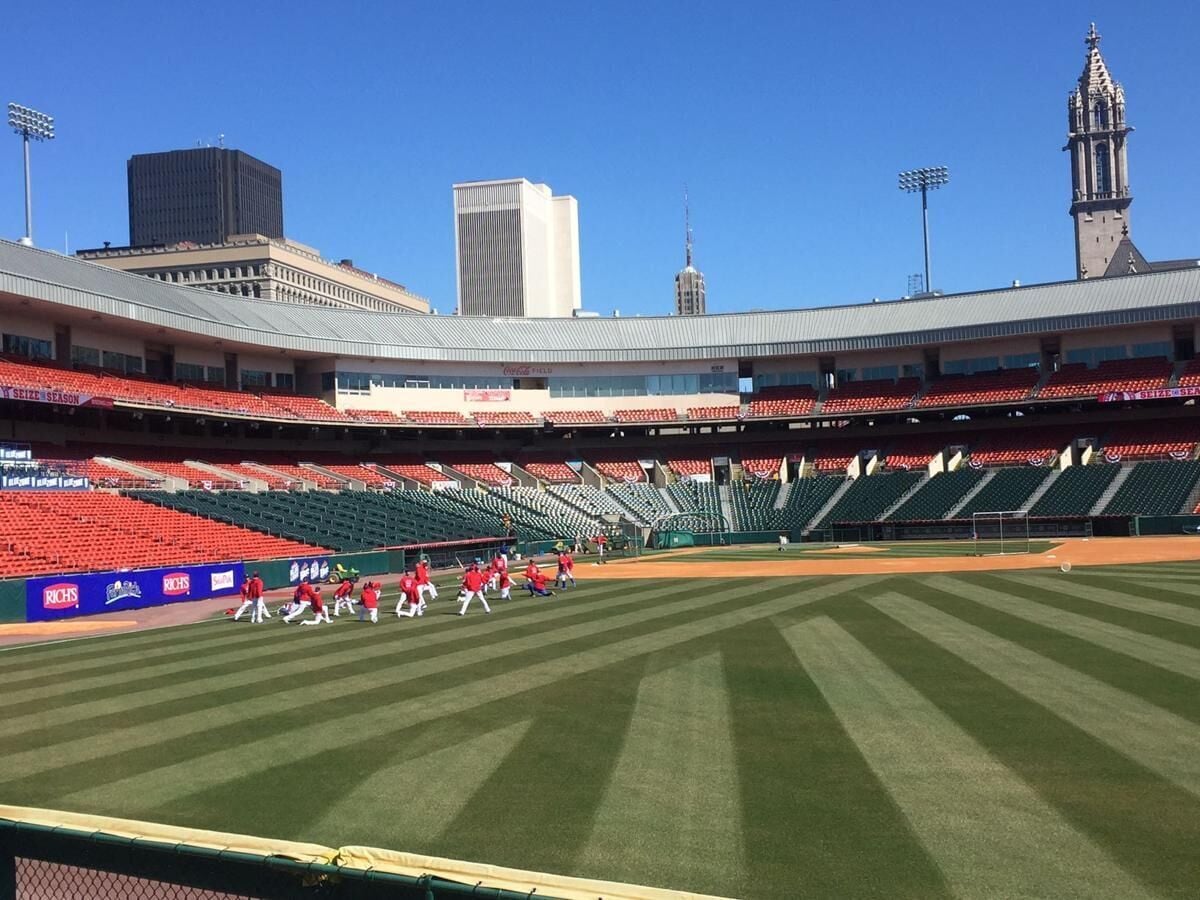
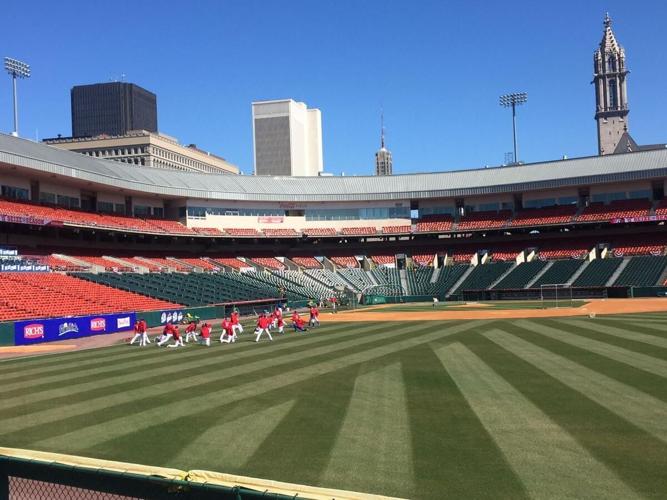
The Bisons warm up prior to a 2019 game in Sahlen Field. The team will start this season in Trenton, N.J.
In any other year, that would lead to unbridled civic excitement. But nothing is simple at a time of such risk. Harrington reports that some of the players weren't thrilled about a season in Buffalo, and we can see – amid concern about Covid-19 – why they might worry about spending much of the summer in a smaller, more confined locker room than what they’re used to in the major leagues.
Such questions are of no small significance: Dr. Stephen Thomas, chief of infectious diseases at SUNY Upstate University Hospital, tells me he believes baseball could work in a place where Covid-19 numbers are relatively low, like upstate New York – but only without spectators, and with strict adherence and constant vigilance about the kind of masking, testing and distancing that would protect the players.
Amid all of it, Harrington writes of how the Jays are considering a hybrid schedule at different locales that might include a stop at Sahlen Field. For many of us who love the game, the civic arc involved with that possibility – the idea of the Major Leagues returning, even briefly, to Buffalo – draws power from another decision long ago, which set the tone for what happened here for more than a century.
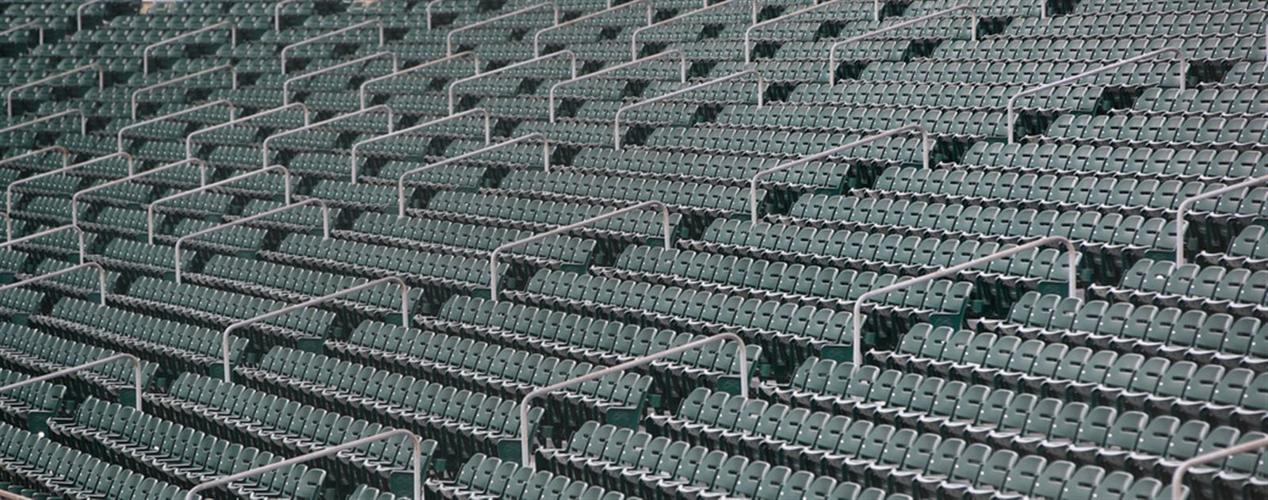
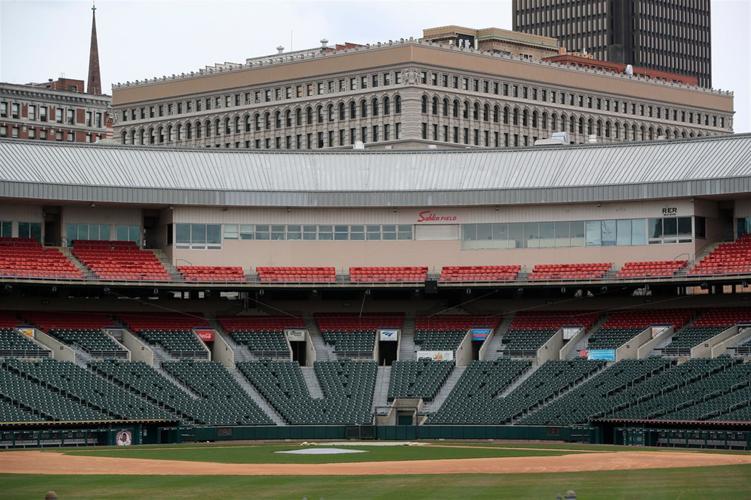
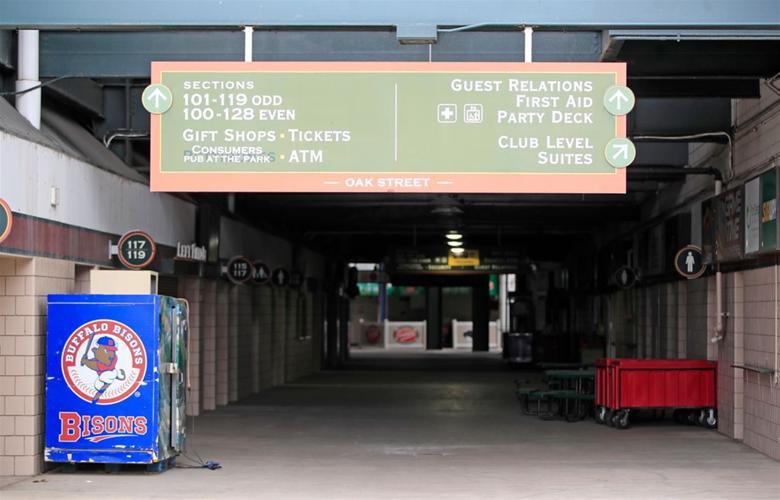
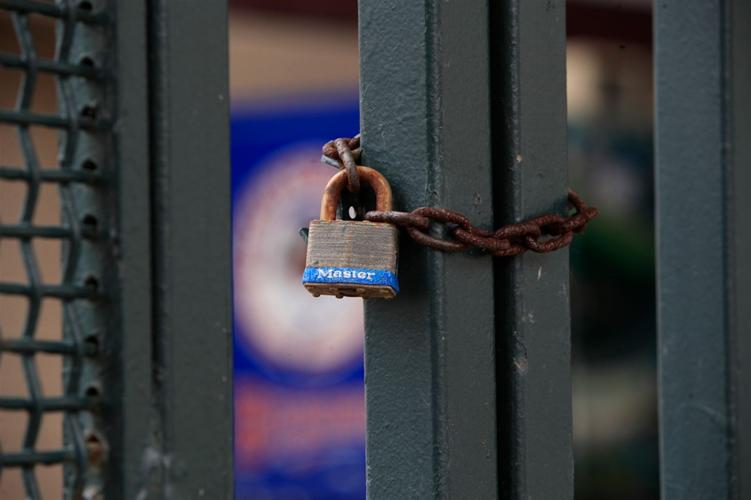
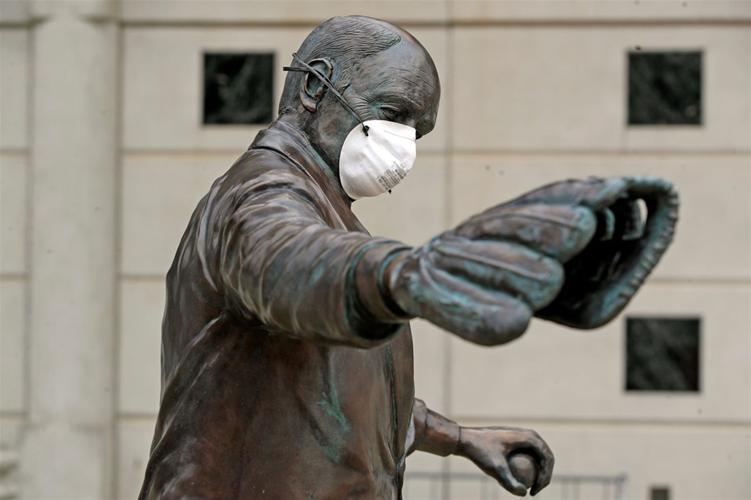
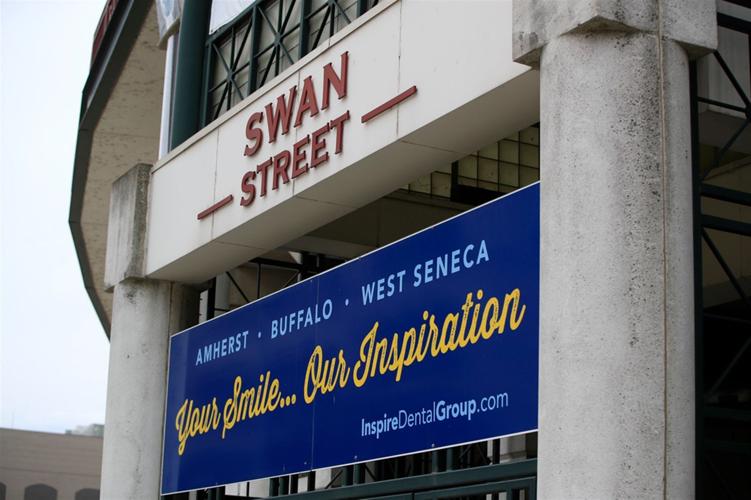
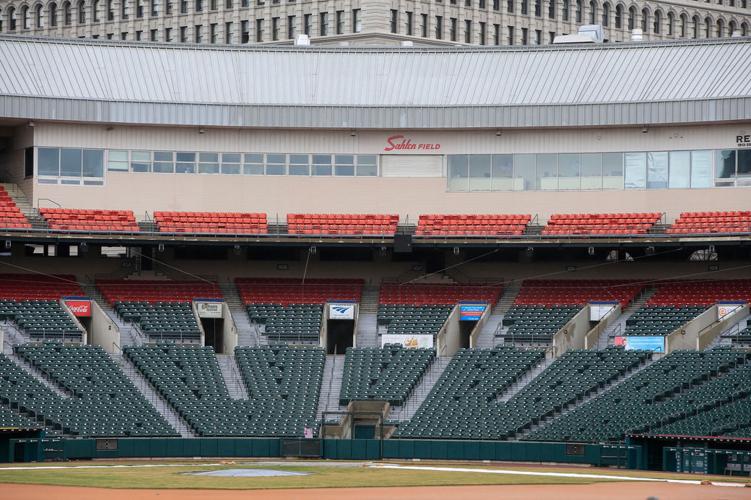
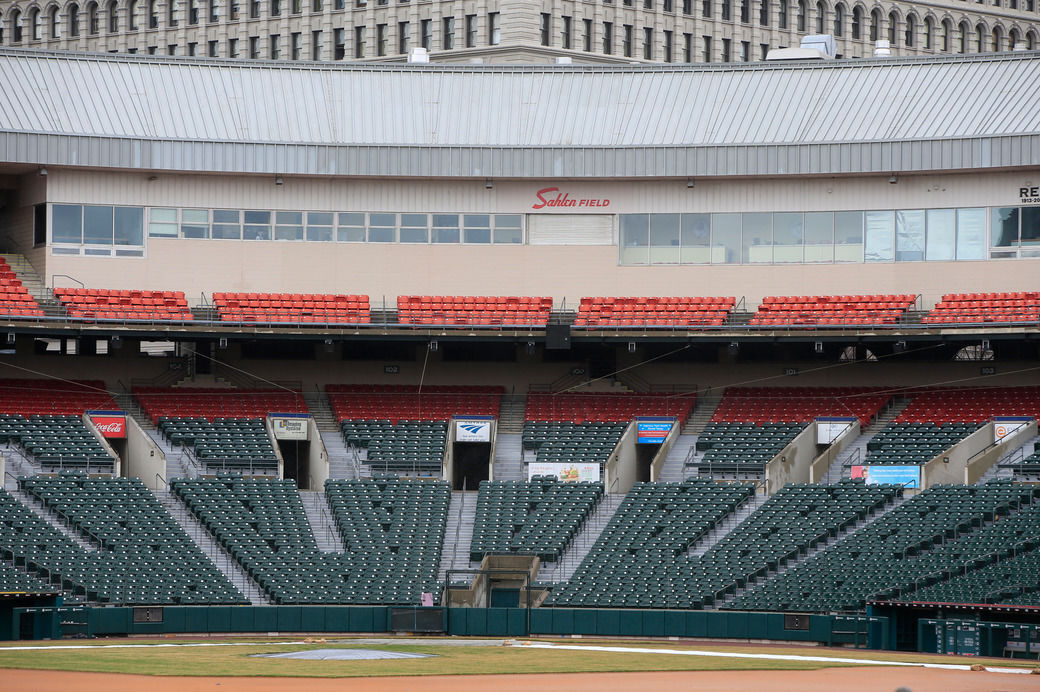
Sahlen Field sits empty as the Bisons postpone Opening Day
Sahlen Field was quiet on Friday, April 17, 2020, as the Buffalo Bisons' home opener was postponed due to Covid-19.
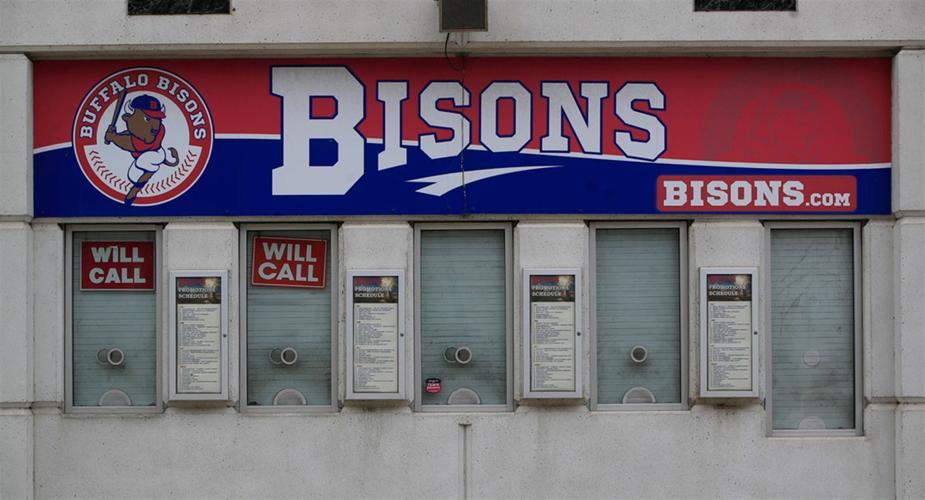
Closed ticket windows at Sahlen Field.
The story goes like this, and leads us back to Collins. Buffalo, an industrial boom town in the late 1800s, had a big league team in the National League until 1885, and a franchise for one year in the doomed big league Players League of 1890. After that, it was back to the minors, though by 1900 Buffalo was the nation’s eighth largest city by population – big enough to merit a franchise in an almost-final version of the American League, whose president, Ban Johnson, was ready to take the step into a full major league.
James Franklin, who controlled the franchise, made a deposit and said Johnson promised him that Buffalo was in for sure. Locally, there was excitement about the idea of big-league competition arriving in the same year in which the world looked toward Buffalo and its 1901 Pan-American Exposition.
But baseball can be a hardhearted business.
And for what Johnson saw as business reasons, that list of AL cities for 1901 was changed to cut out Buffalo.
Making the ache all the more exquisite is that every city in the original AL, all these years later, has a major league franchise today.
Johnson, for his part, wanted a team in Boston. As baseball historians often relate, he sent the legendary Connie Mack on a successful mission to make sure that city had an adequate site for a ballpark, with this result: A franchise potentially bound for Buffalo ended up as the team known now as the Boston Red Sox.
That's simple baseball fact. Charlie Bevis, a baseball historian and author from Boston, said Johnson believed he needed Boston on board to be competitive, but he kept Buffalo in play until almost the last minute to make sure he had a fallback. Less than two weeks before the league's organizational meeting in January 1901, Johnson was still talking about a 10-team league that would include Buffalo and Indianapolis.
He changed his mind. Buffalo saw it as a stab in the back, returning the city to what one Buffalo Evening News sportswriter called "the Nowhere League" and leaving Bevis to ask a question that lingered for years among baseball fans in Western New York.
“Buffalo certainly had the population and economic might,” he said. “It just jumps out at me: Why did they get left out?”
Collins personifies an especially aching element. As Bevis explained in "Jimmy Collins: A Baseball Biography," Collins – a tough and shrewd businessman involved in the early stages of the Players Protective Association – jumped to Boston's new American League team before that 1901 season to serve as its player-manager. Since he still loved Western New York – he came back in the offseason, and settled here until his death in 1943 – it is hardly a lapse of logic to believe he would have embraced the chance to manage Buffalo if this city, not Boston, had received that original AL franchise.
Instead, his deep baseball connections helped turn Boston into an early American League power. The club not only captured the league title in 1903, but earned a chance to play in the first World Series.
Boston defeated Pittsburgh, so consider this: The original World Series champion was an AL team that once seemed destined for Buffalo, managed by a Buffalo guy who was greeted by a celebratory crowd and given a banquet here upon his return, a guy who loved this city so much he is buried here.
It was an early and emblematic near-miss. Buffalo never regained a club in an established major league, except for a brief presence in the upstart Federal League. In the last 60 years, Buffalo would be in the unsuccessful running a few times for an expansion franchise – intertwined with various tumultuous stadium plans – but never again positioned quite as well as in 1901.
All of it leads into this strangest of arcs: If and only if it is safe to do it, bringing even a few games here involving an American League club in this strangest of summers would complete a 119-year-old vigil that began when the league’s founder broke this city’s heart, a vigil that might finally end only in the midst of a pandemic.
History, of course, does not merit stupidity. None of us want to see anyone endangered over a game, and if the difference in space between major and minor league ballparks simply makes too much of a difference, better to have no baseball at all than players put at risk.
But if Sahlen Field is determined to be safe, a homestand by the Blue Jays could be a gentle statement, one small gesture of communion at a difficult time. Major League Baseball has historically forgotten too often what it ought to take to heart, turning its back on the generational bonds at the heart of its appeal. All these years after Johnson skipped over Buffalo, with the chance of an American League team finally closing the circle, I took a ride to see a guy who would have known just what to do.
Jimmy Collins wasn't talking. He left this one to us.

