

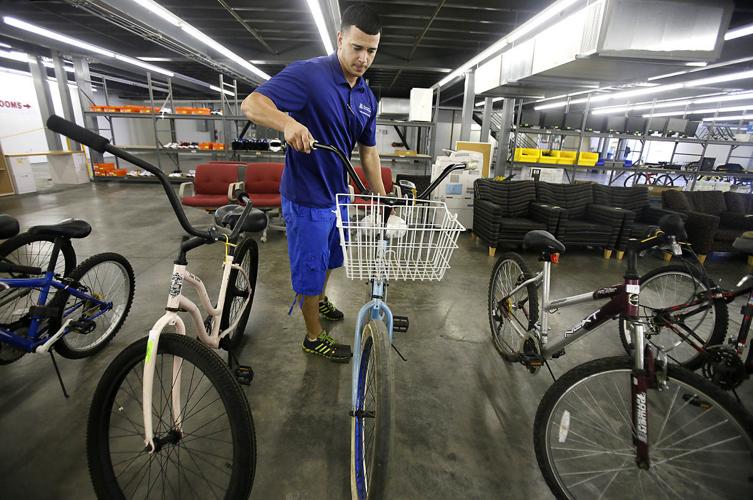

Interested in a pair of size 18 athletic shoes from the University of Arizona? How about a bicycle or a power drill or even a gymnastics mat?
Every day, two trucks back into the UA’s warehouse on East 34th Street and drop off surplus items from academic departments, the leftovers from lost-and-found boxes, and items seized by the UA police and Tucson Department of Transportation.
Until recently, those items were packaged together on pallets and sold at auction in the warehouse. But on Aug. 17 the UA cordoned off a section of the warehouse and launched a store to sell individual items directly to the public.
The UA still sells surplus items “as is” at monthly auctions at the warehouse — the next auction is scheduled for Sept. 22 — but the “cream of the crop” ends up in the store, said Jerry Shinn, materials manager at the warehouse.
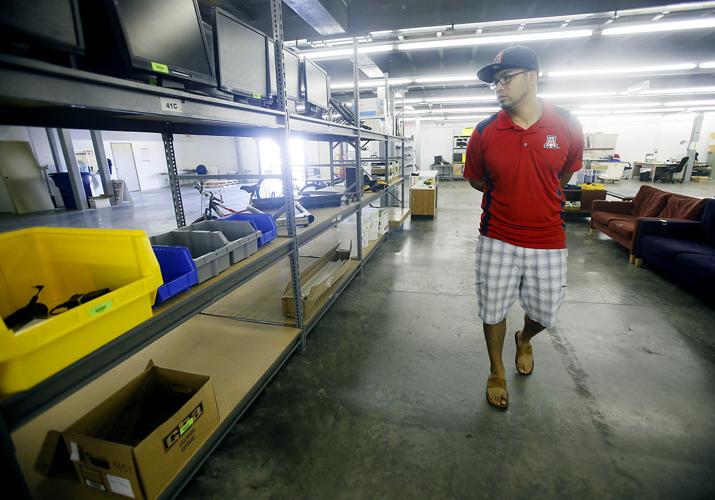
On Wednesday morning, Alex Arroyo, a 22-year-old auction connoisseur who works at an industrial toolmaking company, browsed through the sofas, plush chairs, mini-refrigerators, office desks and power drills on display at the store.
“I heard about the store and figured it’s a good cause, giving back to the school,” Arroyo said.
The store also drew the gaze of John Baker, a state employee who stopped by to look at the vehicles up for auction.
“Those little fridges look pretty good,” he said, adding he plans to regularly stop by the store on his way to work to check out new items as they come in.
The store opened with a bang, selling 210 items for more than $5,000 on the first day. The next day the store brought in about $1,300. Since then about a dozen people come by each day and spend about $500.
The popularity of the store came as a surprise, Shinn said, and store workers are hustling to log in new items as fast as they can.
State law requires the UA to try to sell all surplus items to the public, he said.
When new items come in, the store’s staff logs which university department sent over the items. If the item sells, some of the proceeds go back to the department’s budget, he said.
In some cases, the items “circulate through departments,” with one department buying surplus items from another department.
“It’s a little bit of everything,” Shinn said.
The idea to open the store came up when the university was looking for a way to increase revenue from surplus items and saw the success of a similar endeavor at Colorado State University, said Oscar Jaramillo, the UA’s house auctioneer.
So far, the top sellers are bicycles left by students and office equipment, such as desks, chairs and shelves that are popular with local entrepreneurs trying to get businesses off the ground and teachers looking for low-cost replacement furniture, Jaramillo said.

