


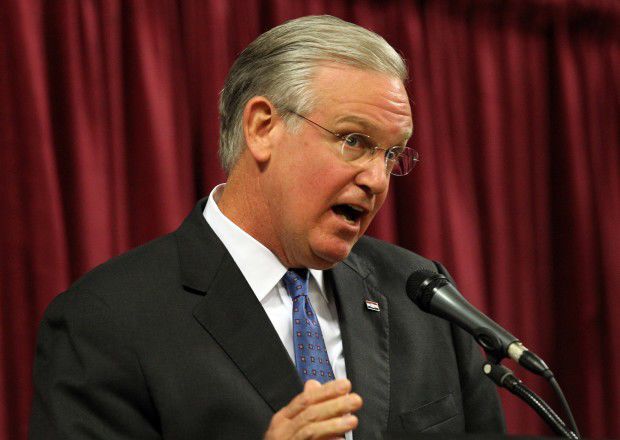
Depending on how big Boeing Co.'s potential 777X facility in north St. Louis County winds up being, the incentives Gov. Jay Nixon is proposing to bring it here could cost the state as much as $1.7 billion over the next 22 years.
But the project would generate up to $2.9 billion in tax revenue over the same period.
That's according to a cost-benefit analysis released Tuesday by the Nixon administration, which is urging lawmakers to pass $150 million a year in new tax credits to help land the much-sought-after Boeing assembly plant.
Republican leaders in the House and Senate have said they want more details on any incentive package before they vote to create it. So Nixon's office obliged, drawing up projections of what the credits would cost the state's bottom line, and what the jobs would generate.
Much depends on how big Boeing's operation winds up being. A components plant with 2,000 jobs would cost an estimated $435.4 million in incentives through 2040 while creating $705.1 million in new tax dollars. A full assembly plant with 8,000 jobs would cost $1.74 billion in incentives and generate $2.9 billion in tax revenue.
The biggest costs would come in the first six years, while the plant gets up and running. Then the richest incentive program would phase out, boosting the state's return.
Nixon is seeking to expand four programs — Missouri Works, Missouri Works Training, the Build Missouri Program and the state version of tax increment financing — by a combined $150 million per year. Most of the incentives, state officials point out, are tied directly to the creation of new jobs — based off of breaks on state withholding taxes — and won't be paid out if no jobs are created.
Local incentives, including tax increment financing and property tax exemptions, from St. Louis County or whatever municipality in which the plant would be built are also likely to be part of the region's proposal.
Even at $1.7 billion, the package would be dwarfed by Washington State's offer of $8.7 billion over 15 years. But Missouri officials point out that state-to-state comparisons are hard thanks to different tax structures and business costs in different states.
A Senate committee is due to hold a hearing on the package later Tuesday.

