


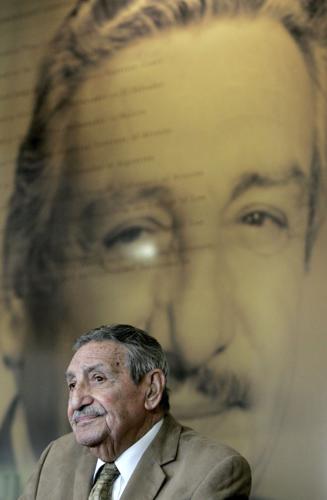
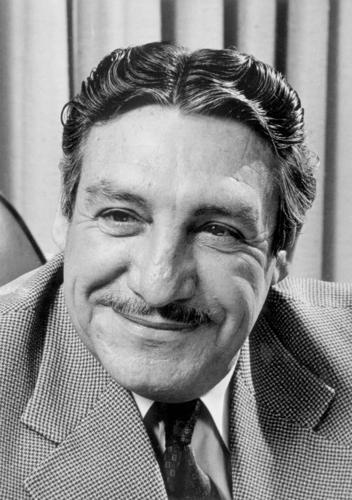


Former Gov. Raúl H. Castro, the first and only Mexican-American governor of Arizona, was already an establishment figure when the Chicano movement was at its peak in Arizona in the 1970s.
The young activists in the movement may have yearned for more forceful representation of their issues, but they recognize now, if they didn’t then, that Castro had not been handed his professional and political success.
“He was alone,” said U.S. Rep. Raúl Grijalva. “He had to fight through a lot — discrimination that was far more overt — and he did, and he won. The rest of us stand on his shoulders.”
Castro was a governor; a U.S ambassador to El Salvador, Bolivia and Argentina; Pima County attorney; Pima County Superior Court judge; lawyer; teacher; and sometime prize-fighter.
He died in his sleep Friday in San Diego, where he had been in hospice care, according to a statement from his family. He was 98.
The family statement said Castro was “proud that he was the first Hispanic elected to serve as Arizona governor and his service overseas as a U.S. Ambassador. He was proud of his Mexican heritage and his American citizenship. He believed the United States of America is the greatest country in the world.”
Arizona Gov. Doug Ducey said Castro “lived a full life of exemplary service to Arizona and its people.”
“He was an honorable public servant, a history-maker, a beloved family man and a strong friend and fighter for Arizona,” Ducey said in a statement.
Charles Ares, former dean of the University of Arizona College of Law, worked with Castro as a deputy county attorney and their portraits hang side by side at the law school.
He said Castro was “very sensitive” to any expression of discrimination against Hispanics because “he had seen a hell of a lot of it himself.”
“I admired Raúl greatly because he scratched and crawled his way up against great odds. He had a good mind and he had ambition and he was a fighter,” Ares said.
Castro was born in the Sonoran mining town of Cananea and moved as a child to Pirtleville, Arizona, near the border town of Douglas, where his father worked for Phelps-Dodge.
He was the second-youngest in a family with 12 children — 11 boys and one girl. His father was a union leader forced out of Mexico for organizing a strike at the mine in Cananea.
His father died when Castro was 12, and his mother became a midwife to feed the family. She delivered babies for the Mexican families around Douglas in exchange for flower, corn, beans and other staples.
Castro saw education as a necessity. He graduated from Arizona State Teachers College in Flagstaff, now Northern Arizona University, in 1939, the year he also became a U.S. citizen. He was captain of the track team and undefeated boxing champ of the Border Conference.
After graduation, he couldn’t find a teaching job. The schools, even in the border town of Douglas, would not hire a Mexican-American teacher, he told the Arizona Daily Star’s Bonnie Henry in 2009. He took to the rails, working in the fields and boxing for money at carnivals across the United States.
He returned home and worked as a foreign service clerk for the U.S. State Department in Agua Prieta, Sonora, across the line from Douglas.
In 1946, he enrolled at the UA law school, supporting himself with a post as an adjunct teacher of Spanish.
He was inspired to succeed by the words of a law school dean who told him “Mexican-Americans just did not graduate.”
He graduated and passed the bar in 1949, taking the test on a typewriter that had lost a key. Later, at the unveiling of his portrait at the law school, he told students that he had to include a footnote explaining why there were no “L’s” in his answers.
Castro went to work for the Pima County attorney while also maintaining a private law practice. In 1954, he ran for county attorney and won. Four years later, he ran for a Superior Court judgeship and won. He was the first Mexican-American to hold either post.
Grijalva said he first met Castro while he was a judge. “He came to my class at Sunnyside High School and talked about how he had it tough and, more importantly, that this country was about possibility and that if you worked hard and did the things you were supposed to do, great things could happen for you.”
John Huerta was a young juvenile probation officer when Castro was the juvenile court judge.
He said Castro was demanding but reasonable.
In court one day, a kid was mouthing off to the judge. After a bit, Castro had had enough, looked right at the mouthy kid and the one-time boxer said he would “clean his plow.”
“He couldn’t stand kids who were disrespectful,” said Huerta.
Huerta, who was active in Democratic Party politics and served as the director of the UA Hispanic Alumni Association, said the former governor was “personable and very reasonable.”
Castro’s life story was full of achievements and disappointments, yet Castro “rolled with the punches,” Huerta said.
“He was a very inspirational guy,” he said.
In 1964, Castro was appointed U.S. ambassador to El Salvador by President Lyndon Johnson and later was named to the same post in Bolivia.
He returned to the practice of international law in Tucson in 1969, and resumed his political career.
Nominated by the Democratic Party for governor in 1970, he lost a close race to incumbent Republican Gov. Jack Williams.
In 1974, he ran again and this time won by a close margin.
Castro resigned as governor in 1977 when President Jimmy Carter appointed him ambassador to Argentina, a post he held until 1980.
“We’ve lost a great man, said state Rep. Macario Saldate, D-Tucson, who said any “lack of appreciation” for Castro was a generational and historical artifact. Castro came from the “Mexican-American period” and not the “Chicano era,” he said.
Castro did not have the advantages of that later era, he said. “What were his contemporaries doing? He did an admirable job in terms of that era.”
Grijalva said Castro never hid his humble roots and was, in fact, quite proud of his story.
“Castro’s immigrant story is one of the most powerful examples of the American Dream, and that the time and effort of dedicated people will bring us ever-closer to equality and justice,” he said in a statement.
“In memory of Raúl Hector Castro, an inspiration for all Mexican-American immigrants, I call on our country to pass immigration reform and to allow President Obama’s immigration orders go into full effect. This will let the young people who carry on Castro’s legacy come out of the shadows to break their own barriers and to chase their own dreams.”
Grijalva said in a phone interview that he also hopes his congressional colleagues will now move quickly on a resolution to name the U.S. border crossing at Douglas for Castro — and to fund needed upgrades there.
U.S. Sen. John McCain hailed Castro at a luncheon Friday hosted by the Tucson Hispanic Chamber of Commerce.
“This state and this country are filled with those success stories of people who have been given that opportunity and rose to the highest levels of government and business,” McCain said.
“He was a great man. He was a great role model to so many people in this room, as the first Hispanic governor of our state.”

