

May 15 is el día de San Ysidro Labrador – the Day of Saint Isidore the Husbandman in the Catholic calendar. In Southern Arizona, that feast is no longer very important. However, in the farming country of Sonora, it and its saint are the focus of a good deal of activity.
First, the Who. Isidore (1070-1130) was a pious farm hand in Spain whose boss complained that he spent more time praying than actually working in the fields. One day Isidore was seen praying as usual, while an angel walked behind the oxen and ploughed the field for him.
The good saint also had the habit of feeding the birds with his employer’s wheat, after which the sacks of grain would be miraculously replenished. No wonder he became the patron saint of farmers and farm workers!
In Sonora, with his day coming between the spring dry spell and the beginning of the summer rains, he is normally petitioned to provide water.
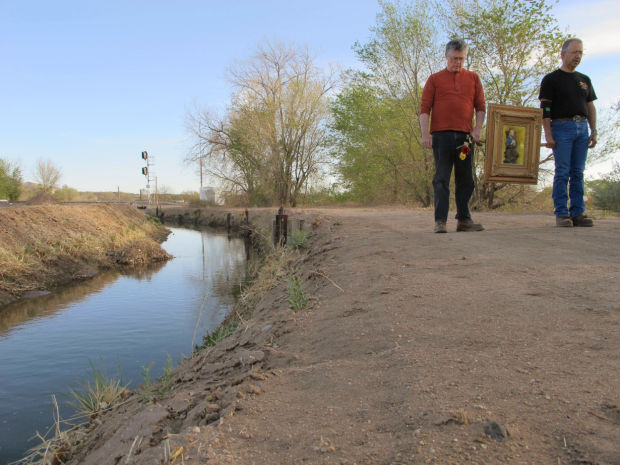
Farmers pray before his image and ask for enough of that precious substance to grow their crops. Should the drought continue, his image will be paraded through the milpas (fields) and scolded for not having come through. And if things get really serious, the image might be buried upside down in the milpa and not taken out till it rains. Sonorans can get serious with their saints.
I have seen one San Ysidro painting in Magdalena that has had all these things happen to it. It has been paraded, scolded, and buried. And on at least one occasion, when the saint came through a little too enthusiastically, it has had to be searched for and fished out of the arroyo where the flood waters carried it. Fortunately it was on tin, and survived.
Some families and communities still make a special soup for el día de San Ysidro – pozole de trigo or pozole de San Ysidro. It’s a rich stew on a beef base (naturally!), and includes wheat, slices of corn-on-the-cob, garlic, onions, wild and domestic greens, potatoes, sweet potatoes, squash, carrots, cabbage, tomatoes, and green chiles. It is a true fiesta food, not to be found in restaurants but made in a huge caldron and served to the multitudes.
It’s a wonderful celebration of traditional farm and garden crops at the time of year when they are ready here in the Southwest. Most importantly, it tastes great!

