

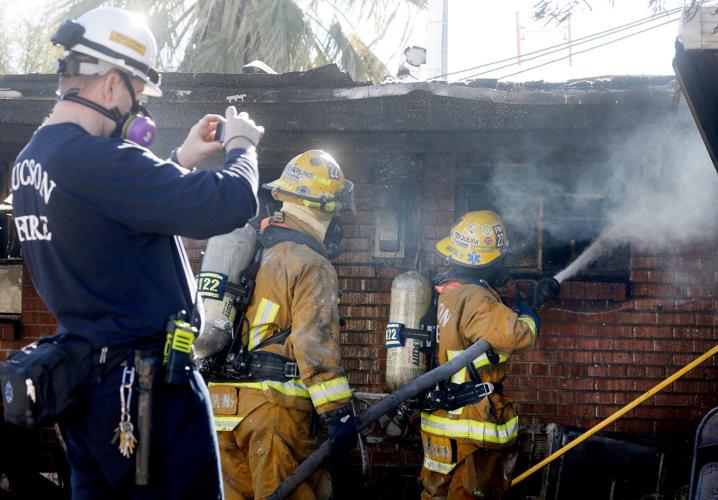
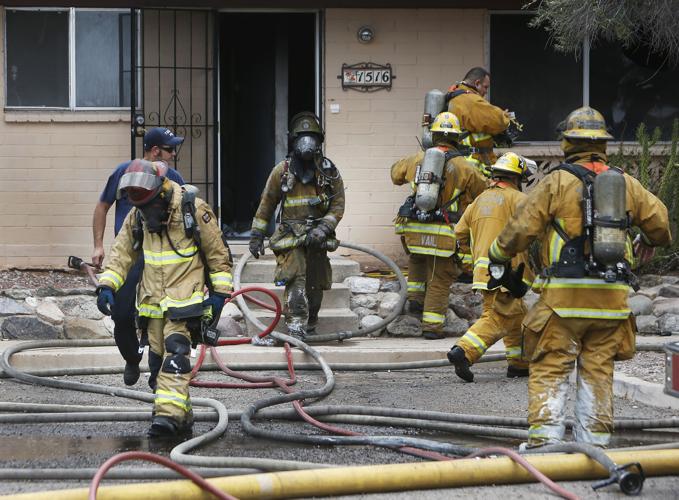
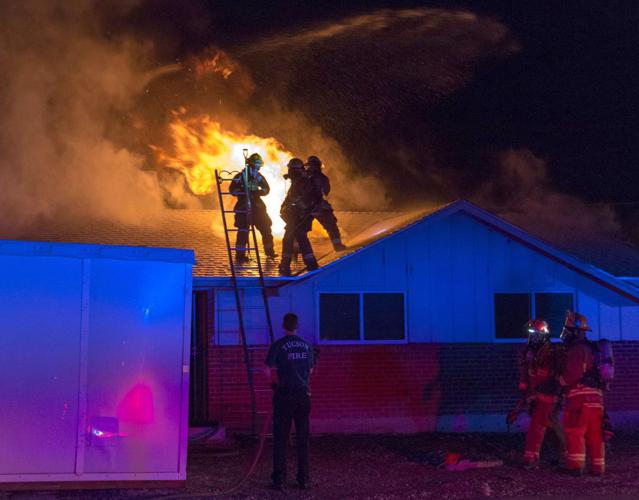
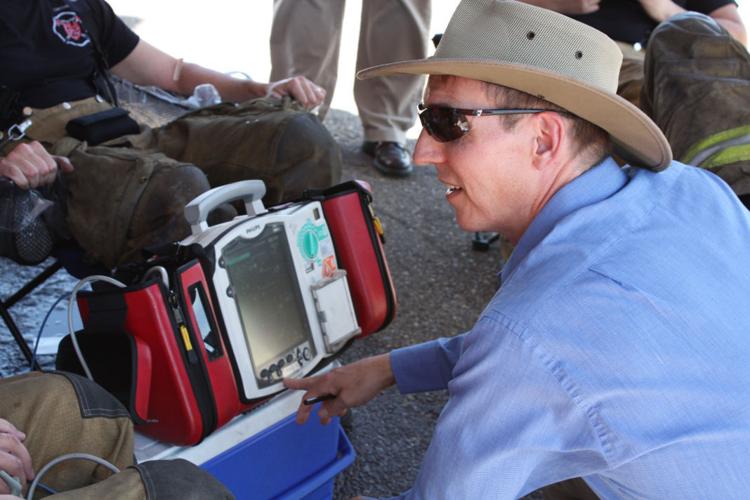



A $1.5 million study to reduce cancer among firefighters, a leading cause of death, is being conducted by the University of Arizona in conjunction with the Tucson Fire Department.
The three-year study, funded by the Federal Emergency Management Agency, will follow up to 600 TFD firefighters. Researchers will study their exposure to carcinogens through the skin, and contamination via inhalation of smoke, diesel exhaust and other chemical gases, vapors and particulates, said Dr. Jeff Burgess, the investigation’s lead researcher.
Burgess is associate dean of research at the UA Zuckerman College of Public Health. His work focuses on improving occupational health and safety, with special attention on firefighters, other public safety personnel and miners.
“We want to ensure that not only do we go home, but we go home with the quality of life that we’ve earned,” said Capt. John Gulotta of the Tucson Fire Department, in explaining the importance of the study in a news release.
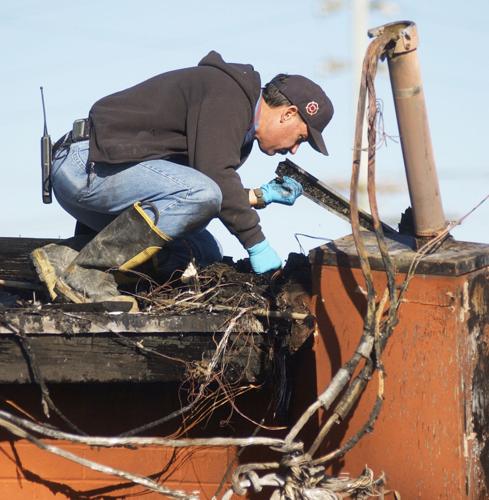
On March 14, 2014, Tucson fire investigator Tom Quesnel died after a battle with leukemia, which he developed in the line of duty. Quesnel spent 20 years investigating nearly 3,000 fires throughout the Southwest.
“This collaboration with the University of Arizona will use modern technologies to aid us in finding solutions that will assist in protecting our firefighters against modern-day fires,” Gulotta said.
“Something we have to remember is we aren’t just firefighters, we are mothers, fathers, brothers, sisters and friends. This partnership will help ensure the health and safety of the future of the fire service.”
Burgess said the “study is unique because we are looking at the full range of responses that firefighters make, and we are looking at the contaminants in their urine. We also are looking at the effects these exposures are having on their bodies.”
Shane Snyder, professor of chemical and environmental engineering at the UA College of Engineering, will analyze firefighters’ blood and urine samples for chemical contaminants.
“Our team will apply state-of-the-art technologies to better determine those substances that firefighters encounter,” Snyder said in the release.
The team also will evaluate “responses of human cells exposed to the same chemicals in the laboratory. To the best of our knowledge, this is the first time these techniques have been applied to evaluate firefighter exposures,” Snyder said.
Burgess said the barriers to reducing cancer in firefighters include insufficient knowledge of which materials pose the greatest cancer risk and how to best protect the firefighters.
Modern synthetic materials — including plastics, foam in mattresses and materials used in carpets — when burning emit carcinogens, and expose firefighters to a much greater hazard than burning wood, said Burgess.
In the study, researchers will compare the baseline measurements of firefighters to measurements taken after they battle a fire. They will look at their blood and urine, take swabs from inside firefighters’ cheeks and measure chemicals absorbed in their bodies. The findings will help the firefighters come up with new protection methods, Burgess said.
About 100 new recruits also will be tested, and the findings will be compared to measurements taken of them one year later.
The investigation also will compare cells in their bodies, and how the cells were affected by carcinogens. Products of combustions and some known carcinogens will be released from the body through urine within a few days after a fire, but carcinogens may change cells in the body permanently after exposure, Burgess said.
Firefighters and researchers will work together to collect data from fire scenes, said Burgess, explaining that researchers will teach Fire Department personnel how to use special equipment and how to measure and collect data during fires.
In addition to more than a dozen UA researchers, staffers and students, Dr. Wayne Peate of Well-
America, an occupational health provider, also will collect the baseline measurements from firefighters for the study.
Data collected can lead to possibly changing department protocol, including a look at showers, effective ways for personnel to clean off their skin at a fire scene and how frequently gear should be cleaned, said Burgess.
The latest federal study by the National Institute for Occupational Safety and Health found an increase in the number of cancers in U.S. firefighters, Burgess said, including:
- A 30 to 40 percent increase in gastrointestinal and kidney cancers.
- A 10 percent increase in lung cancers.
- A doubling of the risk of mesothelioma, a cancer caused by asbestos exposure.
“Other studies have found increases in other cancers, such as leukemia and prostate cancer,” Burgess said.
“There is so much we need to know more about these cellular changes that are occurring as a result of these exposures in firefighters. That information will help us figure out additional ways in reducing cancer risks.”
The investigations look at cancers in veteran firefighters on the job and after retirement. The latency period, which is the time of exposure to carcinogens to the time cancers develop, can be between five to more than 30 years, Burgess said.
The UA study will look at exposures early on and is aimed at making changes immediately in order to make jobs safer and help prevent cancer, rather than measure its occurrence later on, said Burgess.
“Firefighters put their lives on the line for us every day, and they need someone to make sure the job is as safe as possible for them. Our firefighters shouldn’t be dying from cancer,” he said.

