


PHOENIX — Seven years after Arizonans voted to end payday lending, some of the same players are back, seeking new state permission to offer another form of high-interest loans.
On paper, the new “flex loans” are within existing state laws that cap interest at an annual percentage rate of 36 percent.
But would-be lenders want to impose what they call “customary fees” for everything from maintaining the account information, validating customer information, processing transactions and providing periodic billing statements.
Those fees are now capped at $150, an amount approved just last year after lawmakers agreed to the industry’s fee increase.
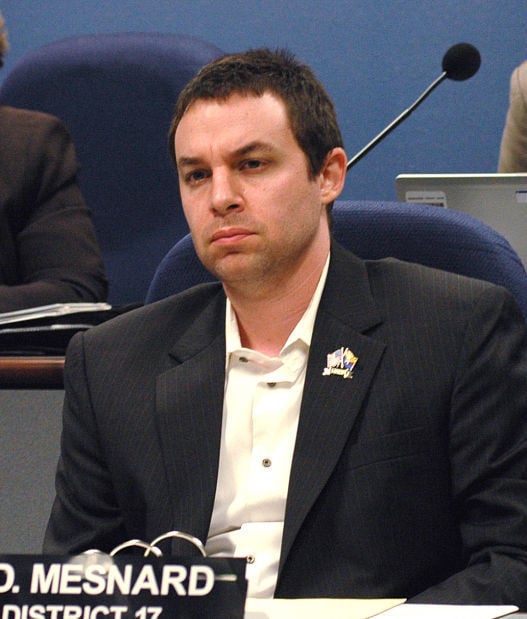
But under HB 2611, sponsored by Rep. J.D. Mesnard, R-Chandler, those fees could amount to one-half of a percentage point of the outstanding balance. On a maximum-allowed loan of $3,000, that could be up to $15 a day in fees, in addition to 36 percent interest.
In an analysis of the legislation, Jean Ann Fox of the Consumer Federation of America said adding in all the costs results in an annual percentage rate in the triple digits — numbers she said the proposed legislation does not require lenders to disclose to borrowers.
And a Southwest Center for Economic Integrity amortization schedule on a $500 loan with payments of $25 a month, shows it would take three years and cost $1,900 to pay off.
The measure is set for debate Wednesday in the House Commerce Committee.
Industry lobbyist Jason Rose did not dispute the cost figures. But he said these loans fill a crucial void for people who lack credit and have no other place to borrow money, in an unsecured loan, in cases of emergency.
The legislation comes 15 years after lawmakers approved the first exception to that 36 percent interest cap for what were known more formally as “deferred presentment” loans, but more commonly known as “payday loans.”
Fees for the typically two-week renewable loans amounted to 450 percent annual interest.
Voters repealed authorization for the loans in 2008, resulting in the industry shutting down in 2010.
Rep. Debbie McCune Davis, D-Phoenix, a key player in killing payday loans, said this measure goes against the will of the voters.
Rose, however, said this is not the payday lending voters said they want in Arizona, though he acknowledged it is similar, to the extent it fills the same need.
“Since banks won’t make unsecured loans to people with credit that suffered during the last downturn, is it possible there is a gap right now?” Rose asked.
The only alternatives, he said, are online lenders who appear to be exempt from state usury laws and illegal loan sharks.
Rose defended the high fees, saying the loans are not only high risk, given customers’ bad or nonexistent credit history, but also the fact that, unlike a title loan, there is no car to repossess if the borrower cannot keep up the payments.
Fox acknowledged the flex loans are different from what voters rejected. But she called them “the new payday loans,” saying they present the same traps for consumers.
In some ways, she said, these loans actually are worse than the payday loans, which had to be renewed every two weeks, because flex loans are an open line of credit.
“The debt continues indefinitely as long as minimum payments are met,” she said.
And Fox said the fixed fee for small loans, which capped out at $75, was doubled to $150. Fox said the effect of these changes on consumers and availability of credit need to be studied before lawmakers make this radical a change.
The measure was originally assigned to the House Committee on Banking and Financial Services. But proponents had it yanked from that panel at the last minute and reassigned to the presumably friendlier House Commerce Committee.

