

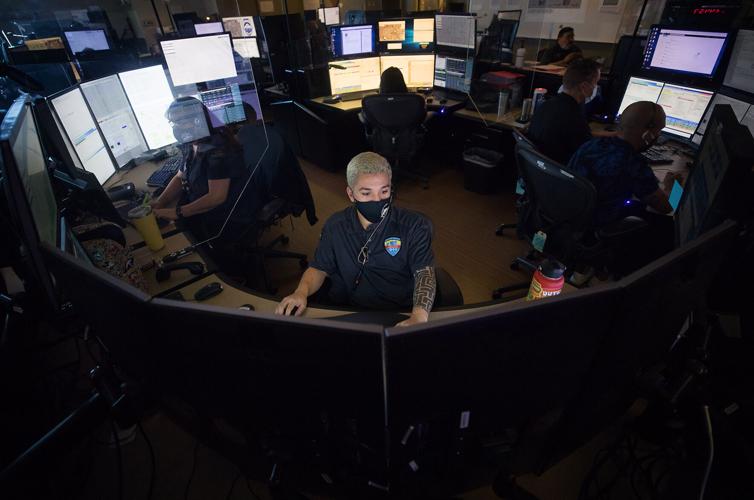

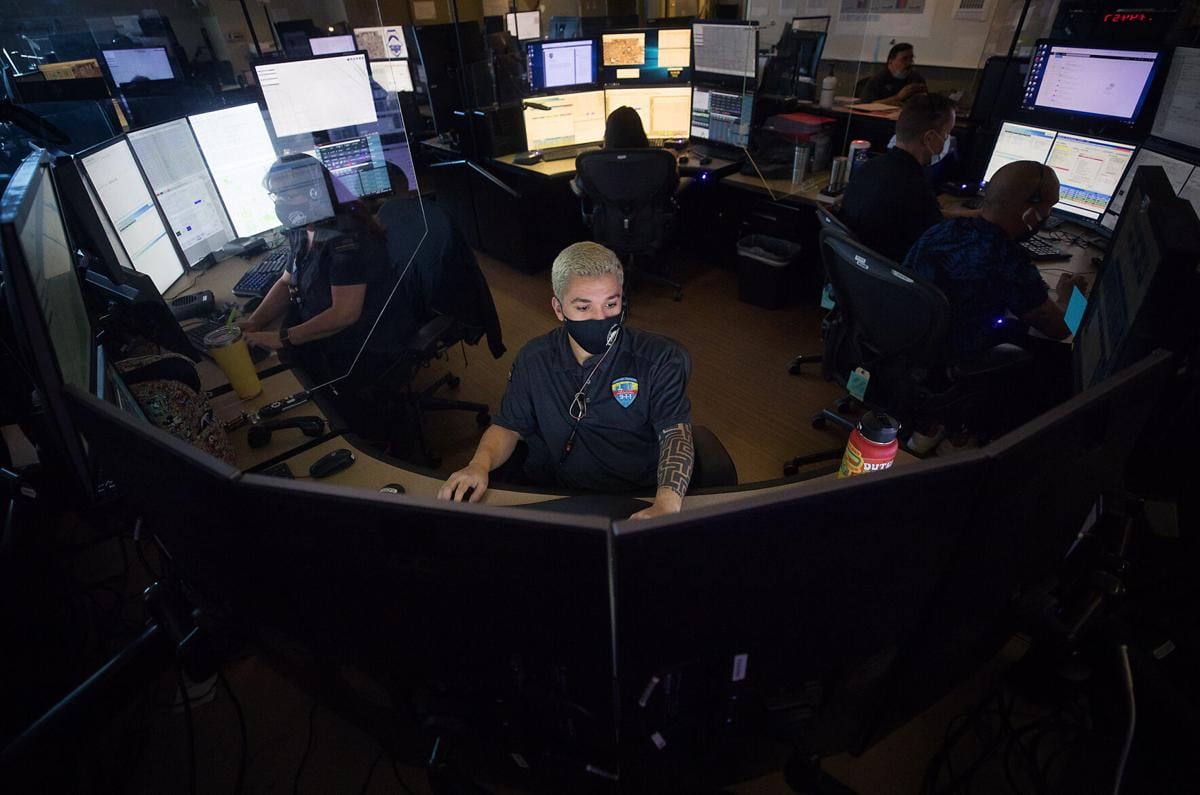
Tucson Police Chief Chris Magnus says a highly unusual but dangerous kidnapping of two crisis-response social workers shows changes are needed in the way crisis and 911 calls are handled.
Having a program in place that allows information to be shared between law enforcement and mental health professionals could have resulted in a quicker response by police when the situation went awry, or prevented the situation altogether, he said.
Magnus is calling on city officials to staff the communications center with mental health professionals who can help triage calls to both 911 and the community-wide crisis line, saying better sharing of information will also ensure people are getting the right kind of help.
On June 23, a woman from Yuma called the Southern Arizona crisis line, asking for a mental health welfare check on her 50-year-old son. He had been involved in a car crash earlier in the day and left the hospital against medical advice.
The crisis line is managed by Arizona Complete Health, and provides 24/7 assistance for people experiencing an emergency that does not involve criminal activity. Crisis services available through the phone number include screenings and evaluations, counseling, medication stabilization, observation and follow-up and on-site help from the Crisis Mobile Team of trained mental health professionals.
A Tucson Police Department investigative report describes the incident:
When two women on the Crisis Mobile Team arrived at the house, they could see the subject of the check standing in the doorway, wearing a “turban type head wrap and ... holding a red bible in his right hand.” After asking what they were doing there, he showed them a gun in his left hand and told the women, “We’re gonna go in the car.”
The man directed the women to their car and sat in the passenger seat with the gun pointed waist-level at the driver. He asked for their money and phones, and when they explained they don’t carry cash, he ordered them to drive to an ATM and withdraw $200, before switching places with the woman in the backseat.
When they arrived at a gas station, the man told one of the women to fill up the car with gas and ordered the other inside to get snacks. While inside, the woman called her life partner and said she’d been kidnapped. She also alerted the female clerk that she and another woman were being kidnapped and asked the clerk to call police without making a scene.
After the three left the gas station, the man eventually ordered the driver to make a U-turn and pull into a residential driveway. He returned their phones and they both got out of the car. The man slid into the driver’s seat and drove away. The women ran down the driveway and called 911 and their supervisor.
One of the women told police a short time later that she “felt terrified” throughout the incident and was physically shaking the entire time.
“She genuinely didn’t know if they were going to live or die,” the officer noted in his report.
When police found the suspect, he asked if the women were dead and “if he was being charged with murder,” the report said.

Solutions journalism is rigorous reporting on responses to social problems. It intends to rebalance the news and focus not just on problems, but on potential solutions to those problems.
Jerrold Whitfield was ultimately charged with two counts of armed robbery, two counts of kidnapping, two counts of aggravated assault with a deadly weapon and auto theft. He’s now waiting on a mental health exam to evaluate whether he’s competent to stand trial, Pima County Superior Court records show.
‘’A mistake we’ve made for too long’’
Magnus said that both police and crisis mobile team workers are walking into a “universe of unknowns” when responding to calls, unless they can share information.
While it’s rare that it rises to the level of the incident in June, having mental health triage at the 911 level would reduce the risk even more, he said.
For instance, in the kidnapping case, the crisis-line call takers only had access to the man’s behavioral health history, but not his history with law enforcement, which 911 dispatchers would have. If the call takers and dispatchers had been housed together, they could have shared that information before the mobile crisis team went out to the scene. Also, police would have known where the team was and would have done check-ins with them.
City officials say they’re “willing to explore” the creation and funding of jobs for crisis-line call takers housed in the communications center, but for now, they’re waiting on their contracted behavioral health provider. At the start of the pandemic, the provider pulled its call takers from the center. It hasn’t provided the city with a timeline for their return.
The idea of co-locating mental health professionals and 911 call takers and dispatchers is part of a larger model called co-response, which involves law enforcement and clinicians working together to respond to calls involving people experiencing a behavioral health crisis. Co-responder models provide officers with alternatives to making arrests, and additional options, when responding to calls that don’t involve criminal activity.
Tucson police are already employing this model in various ways within the department, including the mental health support and substance-use resource teams. But Magnus says expanding the department’s ability to co-respond, including co-locating mental health workers in the communications department, will save money and is necessary to prevent situations like June’s kidnapping.
Arizona Complete Health, the state’s contracted regional behavioral health authority that oversees the crisis line and crisis mobile teams, said privacy rules prevent its officials from commenting on “specific incidents involving providers or other personal matters.”
“The safety and well-being of our provider partners, as well as the individuals we serve, is of paramount importance,” spokeswoman Monica Coury said in an email.
Arizona Complete Health said it provides GPS tracking for all crisis mobile team workers. Additional safety measures include “triage for dangerous incidents including weapons searches, escalation protocols to ensure law enforcement is quickly dispatched when needed, and joint dispatching efforts of first responders and crisis teams.”
It’s unclear if these measures were in place during the June incident.
“We are constantly working to expand and improve our safety protocols, and will now be providing additional safety trainings created in partnership with the Pima County Sheriff’s Department, extended access to additional crisis staff, and real-time escalation support via text,” Coury said.
As the regional behavioral health authority for the state, Arizona Complete Health received more than $1 billion in federal, state and other funding for behavioral health services in 2019 and 2020. That money is distributed to the hundreds of contracted behavioral health providers across the state.
During a July presentation for local law enforcement officers, Arizona Complete Health’s first responder liaison, Maria Stengel, said Pima County is the highest user of its services over any other county. Arizona Complete Health also covers Cochise, Graham, Greenlee, La Paz, Pinal, Santa Cruz and Yuma counties.
In March, 5,000 Pima County calls came into the crisis line. The same month, the mobile dispatch team was dispatched roughly 4,000 times, Stengel said, adding that within Pima County, the Tucson Police Department is the highest user of Arizona Complete Health’s crisis services.
In the spring of 2019, Arizona Complete Health was co-locating crisis professionals in the 911 center to assist with calls, but they were pulled in March of 2020 due to the pandemic, Stengel said. She did not say if there were plans for them to return.
Magnus told the Star he sees a large problem with Arizona Complete Health.
“Relying on Arizona Complete Health to provide mental health triage personnel is a mistake we’ve made for too long,” Magnus said Thursday in an interview. “These should be city employees. ACH is a for-profit entity with a history of under-resourcing this need and being less than transparent in sharing data.”
Magnus said that while Arizona Complete Health will provide information about how quickly it answers transfer calls from 911, it will not provide data about how long a call will sit on hold after the initial pick-up.
As a result of extended holds, often lasting longer than 10 minutes, the city communications department has enacted a policy to drop the transfer and dispatch a police response if the hold time for the crisis line exceeds 5 minutes.
In her email to the Star, Coury said Arizona Complete Health’s dedicated 911 transfer line has maintained an answer speed of under 20 seconds for the last six months, and the crisis line has maintained an overall average answer speed of under 5.9 seconds for the last year. Arizona Complete Health did not include data on hold times.
Arizona Complete Health did not respond to Magnus’ comments.
“Any meaningful co-response model for people in crisis necessitates there be mental health workers permanently embedded in the public safety communications center,” Magnus said. “This means trained professionals, working alongside our dispatchers to triage mental-health-related calls 24 hours a day, seven days a week.”
He said an expanded co-response program will also reduce liability to the city, by having a trained mental health or medical professional on the scene.
“And a bachelor-level mental health professional is less expensive than a cop,” said Tucson Assistant Police Chief Kevin Hall, in terms of cost to the department in training, special assignments, overtime and more.
“Without question, there are some 911 calls that can be handled over the phone by a trained mental health worker,” Magnus said. “If the right information is shared in advance, mobile crisis team personnel can handle many other calls without police officers. That said, there are calls where violence, weapons or danger absolutely require a police co-response.”
Magnus has been encouraging city officials to implement such a model, but says it’s been slow-going.
In the meantime, they’ve been looking into successful models around the country, including programs in Charlotte, North Carolina; Wichita, Kansas; Madison, Wisconsin; Houston; Los Angeles, with a program that’s been around since the 1990s; and closer to home, Mesa.
‘’The help they need’’
In October 2019, the Mesa Police Department implemented its 911 diversion pilot program, in which calls involving suicidal subjects were diverted to the crisis line to be handled by non-law-enforcement employees trained in behavioral health issues.
“We cut our suicide calls by one-third in 2020, just by having a diversion program,” said Amanda Stamps, lead police officer for Mesa PD’s Mental Health Support Team, and coordinator of its Crisis Intervention Team Program. that program includes police officers paired with civilian employees trained in behavioral health fields, spread throughout the department in various roles.
In 2020, calls involving suicidal individuals to Mesa’s 911 center were down to 2,570 from 3,387 in 2019. The criteria for calls that could be transferred to the crisis line was soon expanded, resulting in an overall decrease in mental-health-related calls from 2019 to 2020.
The immediate results led to fast expansion. In June 2021, Mesa PD brought on Solari Crisis and Human Services and launched its co-location program.
“Twenty hours a week, we have crisis specialists co-located in the 911 dispatch center, and this happens in Phoenix and it happens in Mesa,” said Matthew Moody, Solari’s director of contact center operations. “We do training for the call takers at 911 on what services the crisis line can do, and we coach them (on what kind of calls we can take).”
Solari’s call takers also handle live events. In early September, they assisted police who were at the door of a man who threatened suicide and spoke on the phone with the man, leading into a safe resolution of the situation.
“Mesa was the first in the county, as far as I know, to actually change their policies for suicidal callers and it says to transfer them over to the crisis line,” Moody said. The 911 dispatchers “know that we tailor our services to respond faster” for police, “and we know how to get the information out of them to make sure (crisis response or mobile teams) are going into a safe environment, and vice versa.”
Stamps and Moody said situations like the kidnapping in Tucson in June are an anomaly, especially given the high volume of calls responded to in various co-response jurisdictions by social workers and other crisis professionals.
“That is the constant argument with us trying to divert work to social workers, is that there’s this huge danger factor, when in fact statistically speaking it doesn’t exist,” Stamps said. “In 20 years, we haven’t had an incident like that, and now (our non-law enforcement teams) are going out between 1,500 and 2,000 times a month.”
Also, Stamps said, “It’s two different situations when a uniformed cop shows up versus a social worker with a smile and a clipboard.”
Calls diverted to the crisis line have been increasing steadily since the program began in October 2019. That first month, 89 calls were diverted, and in August, 162 calls were diverted. Of the calls transferred to the crisis line, 70% are resolved on the phone, Moody said.
Financially, Mesa PD is now saving money by not having to respond to calls for suicidal subjects, according to Stamps.
But more important than the financial savings is the direct impact to the person seeking help, Moody said. “In these situations, we’re getting people to the best place to get the help they need.”

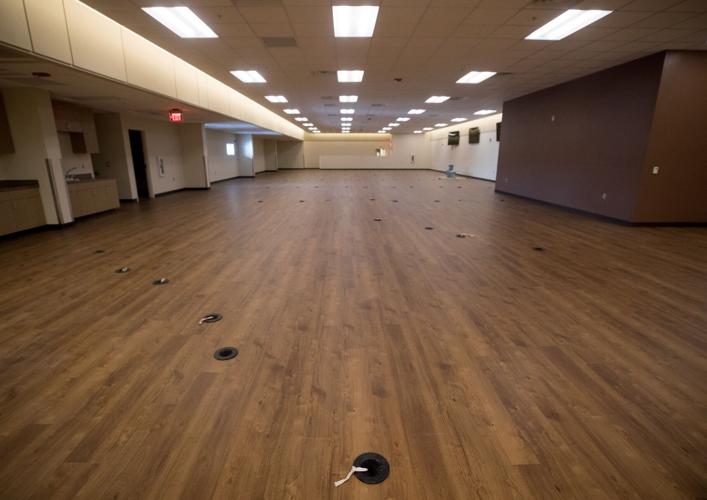
The new space for City of Tucson Public Safety Communications is large enough to include both call takers and crisis line operators.
‘’Have to get at the roots of social issues’’
Tucson Mayor Regina Romero said she’s excited about the possibility of co-response or more as part of the city’s Community Safety Pilot Program, an upcoming project that aims to connect Tucsonans with the right services for a variety of health and wellness needs, including housing, substance use, mental health treatment and more.
In July 2020, the Tucson City Council voted unanimously to adopt the program. The city’s 2021 budget included funding for the program, which will allow the city to hire for positions including eight social workers.
“In terms of co-location, we’re looking to bring it back,” Romero said. “We’ve had one-on-one conversations with dispatchers and call takers and they loved being able to have crisis response counselors in the room with them.”
The city is waiting on Arizona Complete Health to give its crisis professionals the “thumbs up” to return to the city’s communications center, said Romero.Deputy City Manager Liana Perez said the city is willing to consider funding its own crisis professionals.
Romero said part of the purpose of the Community Safety Pilot Program is to remove some of the responsibilities that have been placed on police over the past several decades.
Thanks to federal funding through the American Rescue Plan, the city will have the financial backing to support community-based programs that treat violence as a public health problem; mental and behavioral health services; housing and other support measures that address problems in our community, she said.
“We recognize that there are social contributors to many of the issues that we face through public safety,” Romero said. “We have to get at the roots of social issues in our community.”
Local law enforcement led a procession honoring a Drug Enforcement Administration agent killed in a shooting on an Amtrak train in downtown Tucson.
The shooting started around 8 a.m. on Oct. 4, killing the DEA agent and injuring another, as well as injuring a Tucson police officer. One suspect has died and one is in custody, officials say.
The motorcade, seen traveling west near East Pennington Street and South Sixth Ave., rode from the train station to the Pima County Office of the Medical Examiner near Banner UMC South. Video by Rebecca Sasnett/Arizona Daily Star.

