

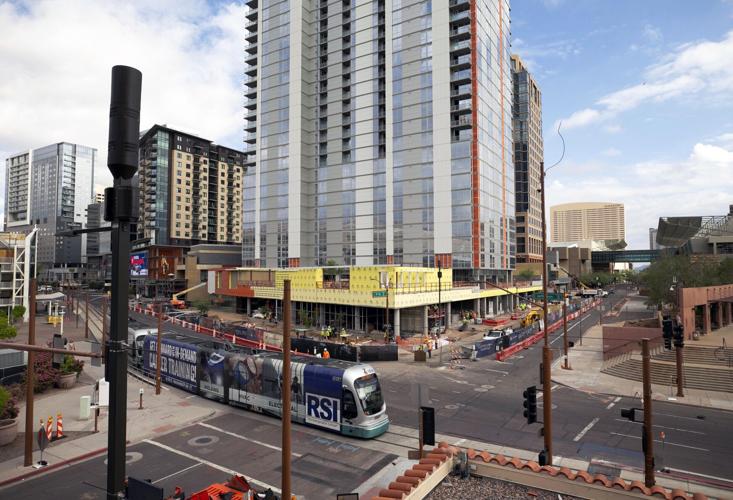

Phoenix was the fastest-growing big city in the United States between 2010 and 2020 as it added 163,000 more residents, according to data released Thursday by the U.S. Census Bureau.
Two of its suburbs — Buckeye and Goodyear in the West Valley — were among the 10 fastest-growing of all U.S. cities during the decade. Growth across the Phoenix metro area drove up Maricopa County’s population by 15.8%.
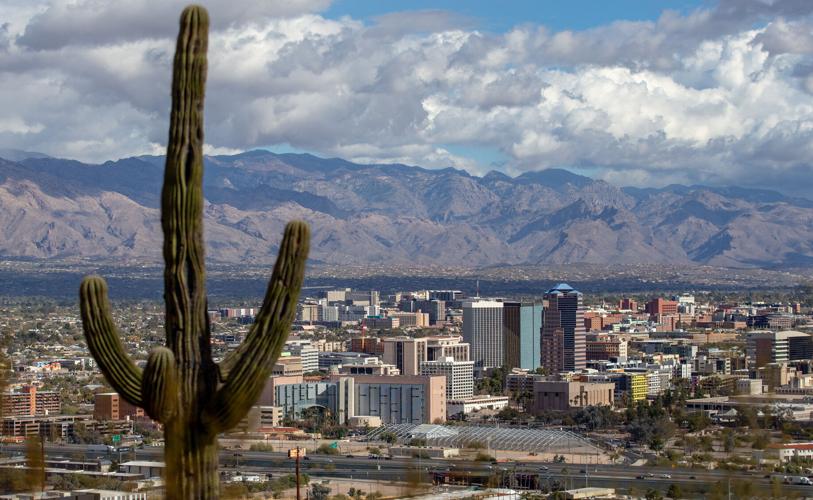
Pima County, which includes the Tucson metro area, grew by 6.4% from 980,263 to 1.04 million people.
Within the city limits, Tucson's population went up by 4%, from 520,116 to 542,629.
The populations in a couple of Tucson suburbs ballooned rapidly. Marana grew by 48% from 34,961 to 51,908 people. Sahuarita’s 35% growth took it from 25,259 to 34,134 people.
Oro Valley, meanwhile, grew by 15% from 41,011 to 47,070 people.
The newly released Census data will allow the Independent Redistricting Commission to divide the state into nine new congressional districts and 30 legislative districts.
The release of the redistricting data culled from the 2020 census is coming more than four months later than expected due to delays caused by the pandemic.
The numbers states use for redrawing congressional and legislative districts show where white, Asian, Black and Hispanic communities grew over the past decade. It also shows which areas have gotten older or younger and the number of people living in dorms, prisons and nursing homes. The data covers geographies as small as neighborhoods and as large as states.
Ethnic identity numbers shift
The share of Arizona’s population that identifies as white was 53.4%, down from nearly 58% a decade earlier.
The Hispanic population grew to 30.7%, while the Black population made up 4.4%, Native Americans or Alaska Natives 3.7% and Asians 3.5% — all up slightly. The share of those identifying as more than one race more than doubled to 3.7%.
In Pima County, people who identified as white-only still make up the majority of the population, but their share of the population has shrunk from 74% to 60%.
Meanwhile, Hispanics or Latinos have increased their share of the population in Pima County from 35% to 36%.
The Hispanic or Latino population in Pima County grew by 10% to a total of 372,788. This was a slower pace than the 23% increase of the Hispanic or Latino population across the nation.
The number of people in Pima County who identified as white-only decreased by 13% from 728,751 to 633,382. This was a larger decrease than the 8.6% decrease this group saw across the nation.
These changes seen in race and ethnicity data at the national level are not surprising as they correspond with other expert findings, the Census Bureau wrote in a statement on Thursday.
The Bureau noted, however, that “comparisons between the 2020 Census and 2010 Census race data should be made with caution, taking into account the improvements we have made to the Hispanic origin and race questions and the ways we code what people tell us.”
5 rural counties have shrunk
While urban areas in the state grew, five rural counties shrank: Apache, Cochise, Gila, La Paz and Navajo — in line with national trends showing growth in cities, especially the suburbs, and contraction in rural areas.
The number of people in Cochise County, which includes Douglas and Sierra Vista, fell by 4.5%. That county lost 5,899 people over the last decade, leaving it with a total population of 125,447.
Greenlee County, on the New Mexico border, remains Arizona’s smallest county but grew by 13.3% — the second-fastest growing county — increasing to nearly 9,600 residents.
Pinal County, which has exploded with affordable housing on the outskirts of metro Phoenix, grew 13.2%, while Yavapai added just under 12% to its population.
Santa Cruz County, which includes Nogales, only grew by .5% or 249 people to a total population of 47,669.
Phoenix No. 5, passing Philly
Phoenix grew 11.2%, the only one of the 10 largest U.S. cities to post double-digit population growth.
Phoenix overtook Philadelphia as the nation’s fifth-largest city in the once-a-decade count of every person living in the country. That’s hardly surprising in a city that has held the No. 5 spot since 2015 in the Census Bureau’s annual population estimates, which is based on surveys of a representative sample of residents.
Arizona’s capital city isn’t likely to climb higher on the population charts anytime soon. No. 4 Houston was the second-fastest growing big city and has 700,000 more people than Phoenix.
Buckeye grew faster than any other city in the nation, with population growing nearly 80% in the last decade to reach more than 91,000.
An earlier set of data, released in April, provided state population counts and showed the U.S. had 331 million residents last year, a 7.4% increase from 2010. Arizona’s total population in 2020 was 7,151,502, up 12% and 759,485 people from a decade earlier.

