



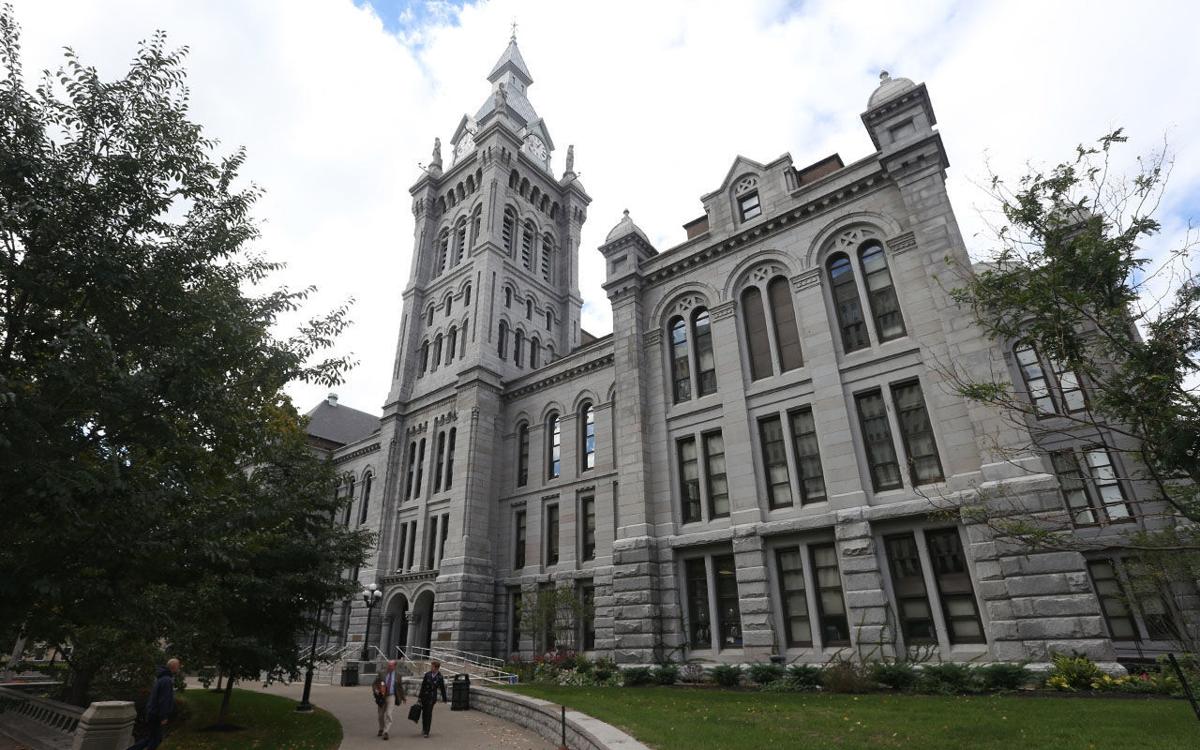
To prepare for the Erie County Legislature's first committee discussion Thursday about how the county will spend $123.7 million in federal and state money – an amount that eclipses any government windfall in generations – the county administration sent half a dozen department leaders to answer questions.
Most of them didn't need to be there.
The Legislature asked zero questions of the health, parks and public works commissioners, even though those department heads have the responsibility for spending roughly $40 million on countywide projects and millions more in restored jobs.
And the only questions both sides asked of the personnel administrators was how and whether certain Erie County employee groups could be allocated more enhancement pay for certain essential personnel than the $6 million already earmarked by County Executive Mark Poloncarz under his RENEW spend plan.
The allocations for infrastructure projects and most parks improvements weren't the main concern of legislators.

"I had some people ask me, when they heard I was doing this plan, they're like, 'Oh, you're going to put this money toward a football stadium?' And the answer was, 'Hell no, that would be a waste of this money,' " Poloncarz said.
Instead, much of the meeting was an attack by the Republican-supported minority caucus about how the county administration came up with this spending plan without reaching out to any non-Democratic legislators, but instead added millions in funding to support pet projects in Democratic districts and add 147 jobs back to the county payroll.
"We're investing millions of dollars into parks and roads in the City of Buffalo, when the City of Buffalo is getting $330 million of their own American Rescue Plan," said Minority Leader Joseph Lorigo, C-West Seneca. "Why are we doing these things? These things deserve a conversation."
The plan includes money for major cultural assets and infrastructure projects, but also includes money for individual community centers, churches and sports equipment for organizations in Democratic districts.
Lorigo accused the administration of playing "small ball" and not investing in projects that support small businesses or ones that are transformational to the community.
"Taking a once-in-a-lifetime opportunity and wasting it on a government recovery plan wrapped up in patronage projects in certain districts seems short-sighted and disrespectful to so many taxpayers across the county," he said.
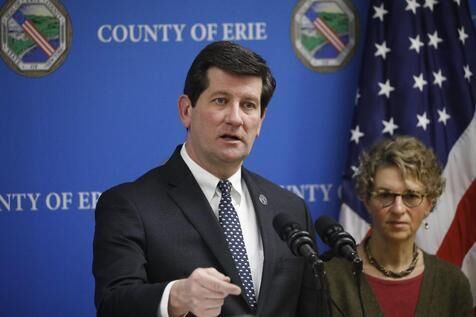
The largest influx in government funding Erie County has ever seen would transform the county, from its parks to county buildings to the sewer system, under Erie County Executive Mark C. Poloncarz's plan for spending federal pandemic aid.
Other Republican legislators argued that the spending plan represented investments of 1% or less in their districts, even though those districts account for a larger percentage of the county population.
"I see the 10% of the population in my district getting approximately one-half of 1% spent within this district," said Legislator Christopher Greene, whose 6th district represents Clarence, Newstead and part of Amherst. "That is not fair. That is not equity. That is embarrassing."
Poloncarz has previously stated that he talked with the Democrats because they have the majority of votes he needs to get his plan approved before the Legislature breaks in August. Both he and Legislature Democrats also pointed out that millions of dollars would go toward roads and park projects that are outside of Buffalo in the districts of conservative legislators.
Legislator Howard Johnson, D-Buffalo, said Democratic legislators don't object to spending on county parks and roads, even through they are primarily suburban and rural assets and public works projects represented by Republican legislators. Asking that more county money be funneled to the city is a matter of equity, he said.
Deputy Budget Director Benjamin Swanekamp and other county administrators also argued that investments in parks and sewers should be considered transformational projects. Individual Democratic legislators also defended some of their district funding allocations by stating that the services those groups provide have a broad reach.

"We just went through 15 months of hell," Poloncarz said, "and this is a lot of what went on, and the things we're still dealing with. And coming out of it, what we need to do as a community going forward."
Legislature Chairwoman April Baskin, D-Buffalo, said that if Republican-supported legislators want more money allocated to specific projects in their districts, they should reach out to Poloncarz, which is what Baskin said she did. She also said that communities – particularly in Buffalo – that have historically been overlooked and underfunded deserve a greater share of stimulus money to help make up for longstanding disparities.
"This is a once-in-a-lifetime opportunity for us to right a lot of wrongs and a lot of injustices and a lot of inequities across Erie County," she said.
She called Lorigo's assertion that Democrats padded the spending plan with millions in pork spending to benefit their own districts "offensive" and pointed out that, while the city is getting more federal stimulus money than the county, the needs of the city – the population center of the county – are also far greater.
Baskin agreed that the Legislature should have more meetings to look at how this money is being spent, and offer amendments and adjustments, but she cautioned that the Legislature should still move quickly to vote on the package.
"I want us to do the right thing," she said. "I want us to work together. I don't want us to look at what my district got versus what another legislator's district got. I want us to govern responsibly, and I want to encourage us to meet outside of Thursdays to get this done."
Minority caucus members protested that it is the Democrats who set the political tone with this spending plan.
"My phone never rings when there's funds available," said Legislator Frank Todaro, R-Lancaster. "You'd think you represent 87,000 people, roughly, that someone would say, 'let's check in with the legislator and see what the needs are in his district.' That's all I'm asking."
Lorigo pointed out that the first he heard of the county's $123.7 million RENEW Plan was when Poloncarz sent out a tweet about it the morning of his planned news conference, which all the Democratic legislators knew about and attended. That's not leadership, he said.
"It's not that we haven't presented our priorities as a caucus to the county executive or this body," he said, referring to proposals to assist small businesses and nonprofits that have been languishing in committee. "We have done so many times."
In regard to the question of the equity divide between the city and the rest of Erie County, he said the federal government already has accounted for that, which is why Buffalo is getting far more American Rescue Plan money than Erie County is.
Swanekamp said that the federal government has delivered several rounds of loans/grants to directly assist small businesses and noted that other community institutions were getting their own federal stimulus grants directly from the federal government.
Legislator John Mills, R-Orchard Park, drew on his past tenure as chairman of the Legislature and urged his colleagues to look at the good of all of Erie County, both in the city, where the population center is, and in outlying communities that bring much of the revenue into the county.
"Let's get real about this about this and start looking at dollars being put in the right spots throughout Erie County," he said.

