


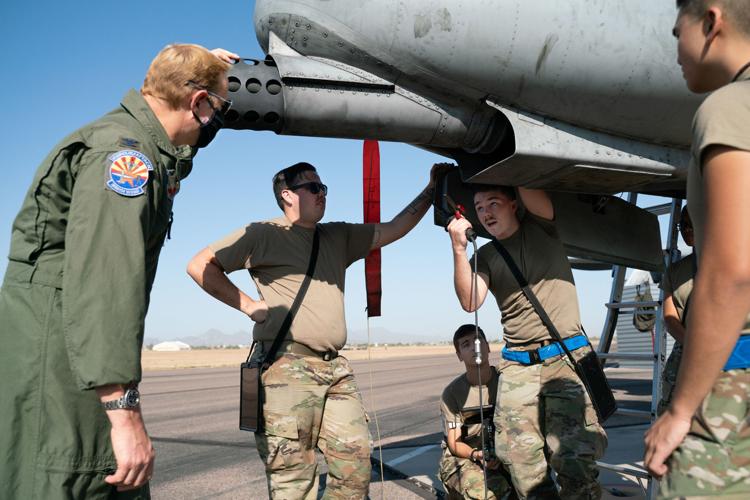
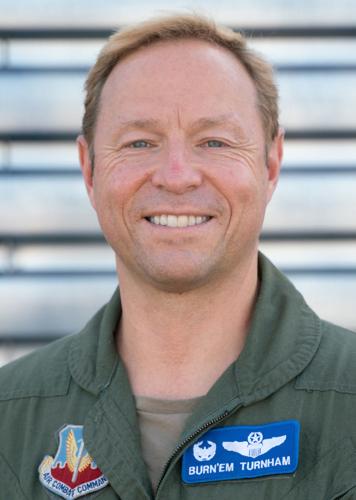


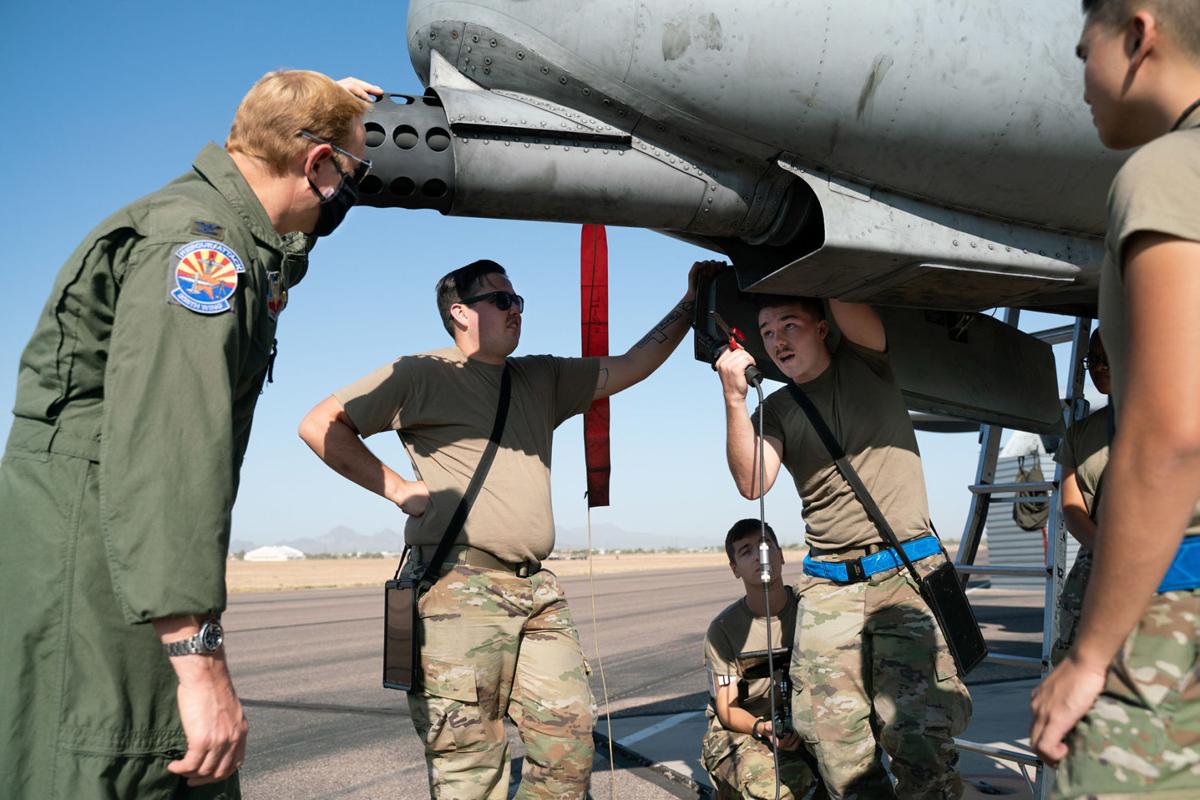
Taking command of a major U.S. Air Force base with 11,000 personnel in the middle of a global pandemic sounds tricky.

The latest updates related to COVID-19 in Tucson and Southern Arizona.
But Col. Joseph Turnham, who was installed in June as commander of Davis-Monthan Air Force Base, says the base is still operating at the high level that earned it the service’s top honors twice since 2012.
“Everything we’ve done as a country for the last six to nine months has been influenced by COVID, and we’re no different — we’re a microcosm of the country,” Turnham said in his first local media interview since assuming command of D-M and its host 355th Wing.
“We have had cases, we continue to have cases, we’ve had people quarantined, and we continue to do that,” he said.
Despite the upheaval, Turnham said, D-M has been able to fulfill its many missions, which includes the three A-10 Thunderbolt II ground-attack jet squadrons and the 563rd Rescue Group under the 355th Wing.
The base, which won the Commander in Chief’s Installation Excellence Award in 2012 and 2018, also hosts separate units like the 55th Electronic Combat Group, the 12th Air Force and the 309th Aerospace Maintenance and Regeneration Group, as well as supporting Border Patrol aviation and Air National Guard drone, homeland security and training missions.
“We are pretty much operating back at full steam right now. It comes in waves as a unit may get some folks who are sick and have to adjust but on the whole, we’ve met every tasking that we’ve had to do,” said Turnham, noting that D-M passed a major, base-wide inspection by the Air Combat Command in September.
D-M publicly reported its first COVID-19 case — a civilian worker at the 309th AMARG — in late March.
The Pentagon has instructed base commanders to share data on COVID-19 cases on military bases with local public-health agencies but does not report the number of cases on each base or by unit.
Turnham said base officials have learned much since the pandemic broke out in the spring.
Like other air bases, D-M is taking steps recommended by CDC to stem the spread of COVID-19, including limiting in-person meetings, increased sanitation, mask-wearing and social distancing.
“The public health measures that everybody’s touting are exactly what we’re pushing here, and that’s what we think has been effective at helping us go manage this so we can continue our readiness,” Turnham said.
“We have not stopped sending people out the door on deployments. We have airmen deployed all around the globe right now, and we’ll continue to do that,” he said, crediting unit leaders and airmen for showing the flexibility and resilience to keep operations going.
Watch now: Peek inside this Barrio Viejo home near downtown Tucson
No stranger to Tucson
Like several D-M commanders before him, Turnham — whose pilot call sign is “Burn’em” — had trained and served at the Tucson base before assuming command a few months ago.
Turnham, 47, trained on the A-10 at D-M in 2002 and, after a series of posts as a pilot and instructor that took him to bases in Alaska, Germany, South Korea, and Colorado, he returned to D-M in 2015 to command the 357th Fighter Squadron, which trains A-10 pilots.
In 2017, Turnham spent five months as deputy commander of the 355th Operations Group at D-M before attending a yearlong fellowship at the Weatherhead Center for International Affairs at Harvard University.
After serving as director of joint training and exercises for the 9th Air Force at Shaw Air Force Base in South Carolina from mid-2018 to mid-2019, Turnham was named vice wing commander of the 438th Air Expeditionary Wing in Kabul, Afghanistan. Before his recent appointment at D-M, he was commander of NATO’s effort to train, advise and assist the Afghan air forces.
A decorated, command-rated pilot, Turnham has logged 1,149 combat flight hours mainly in the A-10 and was promoted to colonel in 2018.
A self-described “military brat” who was born in Michigan and moved around before his family settled in North Carolina during his high school years, Turnham said he was excited to return to the Old Pueblo.
“It’s really great because coming back to Tucson feels like coming back home, as much in the military as you can, as you know we move around a lot,” he said. “When you have a place where you’ve been before and you know what the community is like, that’s a wonderful feeling for the nomadic existence we tend to have in uniform.”
Turnham, who is unmarried, said he’s looking forward to taking in some of the local sights and food as the pandemic recedes, after seeing the revitalization of downtown taking shape during periodic visits to D-M in recent years.
The last time I came through, I saw that revitalization downtown. … Unfortunately there’s a not a lot going on downtown now with the pandemic, but I look forward eventually to being able to go down there and enjoy the great restaurants, the culture, the arts scene that’s down there.”
Turnham said he puts a high value on the support of the Tucson community which he said is a “Goldilocks fit” for the base’s airmen — not so big as they feel lost but big enough to offer an array of things to do off-duty.
“It’s a phenomenal relationship we have with our local community here, all the way from the civic leaders, the elected officials, the nonprofits and just the population in general,” he said. “It is a warm and welcoming relationship we have, and of course we’re going to try and strengthen that, because we are part of the fabric of Tucson.”
Future of D-M
Davis-Monthan faces major changes to its mission mix over the next decade, as the Air Force plans to retire the A-10 fleet by 2030.
D-M has been passed over so far as a base for the F-35 Lightning II fighter, a multi-service, multi-mission plane that is expected to be the workhorse of the nation’s air arsenal for years to come.
Most recently, D-M was among four bases considered as reasonable alternatives to host the first Air Force Reserve F-35 squadron, but an environmental study showed that the much higher noise level of the F-35 would make some residential areas near D-M, as well as two of the other bases, potentially incompatible for residential use.
The Air Force Reserve has picked Joint Air Base-Fort Worth in Texas as its preferred location, with a final decision expected by year’s end.
Turnham said he can’t speculate on the potential arrival of F-35 units at D-M but said he sees a great future for the base.
“I really do think regardless of whatever missions are on this base, and there are a bunch, it’s not going anywhere,” he said.
Turnham said he sees D-M’s missions expanding in the future.
“I see folks lined up who want to come to D-M because of all the great things here. It’s just a function of we need to make sure they have the facilities that they need to be successful in their mission, and that takes time on the construction budget,” he said.
D-M hopes to push a least one major budget item through in the near future — roughly $13 million for improvements of the base’s Wilmot South gate on South Wilmot Road to alleviate frequent traffic backups at D-M’s gates off East Golf Links Road at South Craycroft and South Swan roads.
Pima County is spending about $1.8 million to improve South Wilmot Road from East Valencia Road to the D-M gate, which is open part-time now ahead of plans to enlarge the facility and add a special lane for inspecting commercial vehicles.
“We definitely want to get that, from a force protection standpoint, with not just the wing here but all the mission partners we have on base, but also for the community,” he said, citing the frequent traffic backups at the gates along Golf Links.
70+ years of the boneyard at Davis-Monthan Air Force Base
D-M Air Force Base Boneyard history
Updated
Boeing B-29 bombers of the 19th Bomb Wing arrive at Davis-Monthan AFB, Tucson, during a ceremony marking their retirement from service in 1954 and subsequent storage at the Boneyard. Tucson Citizen file
Boneyard at Davis-Monthan Air Force Base
Updated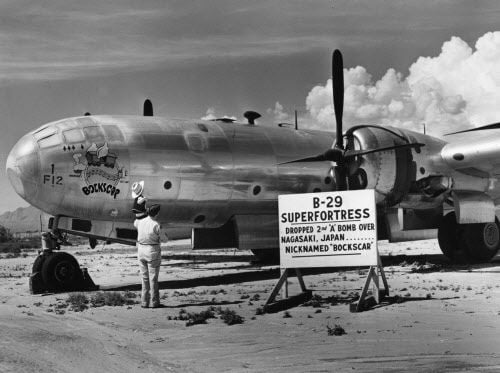
"Bockscar," the Boeing B-29 bomber that dropped the atomic bomb on Nagasaki, Japan, in 1945, shown in storage at Davis-Monthan AFB, Tucson, in 1955. It was transferred to the National Museum of the U.S. Air Force in 1961.
The Boneyard at D-M AFB
Updated
Propellers from doomed B-36 bombers in front of the giant planes at the Davis-Monthan storage yard in 1958. The planes were being scrapped. Each yielded 43,000 pounds of aluminum.
The Boneyard at D-M AFB
Updated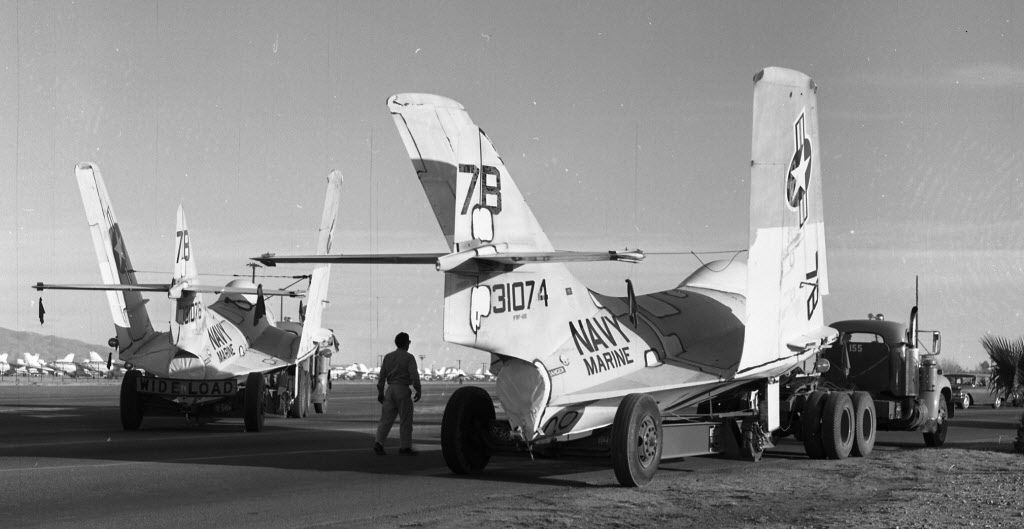
The first two Navy aircraft to be transferred to the Boneyard at D-M from Litchfield Park near Phoenix for storage arrive Jan. 13, 1965. The planes, F9F Cougars, were the first of several hundred that were brought to Tucson as the Litchfield Navy storage facility was phased out. The 2704th Aircraft Storage and Disposition Group became the storage center for obsolete Navy, Marine and Coast Guard aircraft as well as Air Force planes. Photo by Art Grasberger / Tucson Citizen / Jan. 13, 1965
AMARG
Updated
Crew stand in front of a Convair B-58 Hustler supersonic bomber slated to be removed from active service at Davis-Monthan Air Force Base in 1969.
The Boneyard at D-M AFB
Updated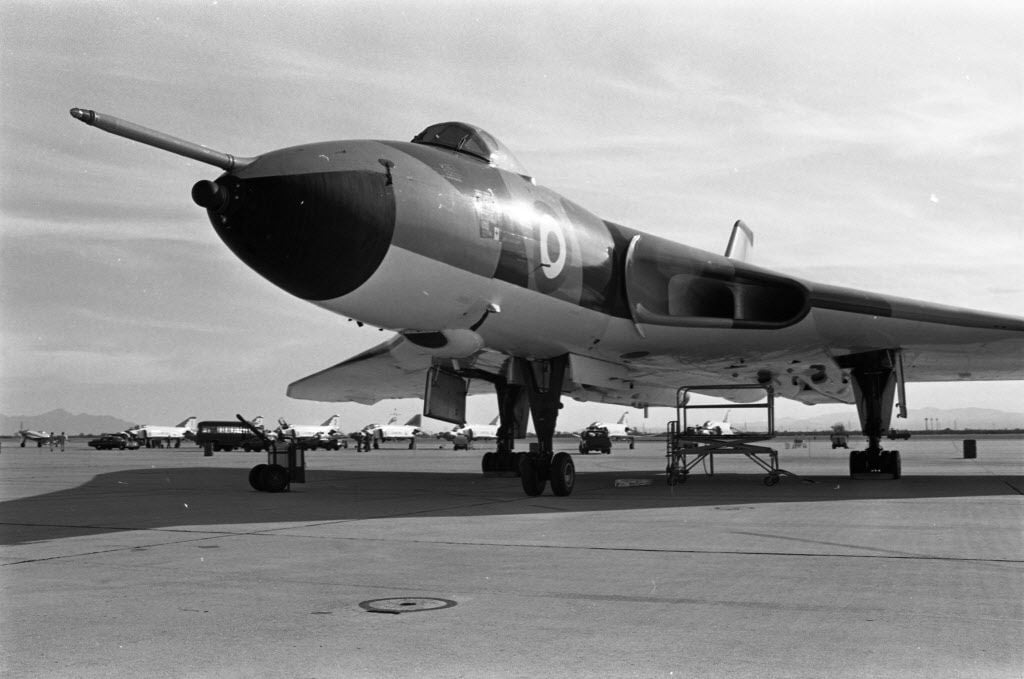
A Royal Air Force Vulcan bomber waiting to be mothballed at Davis-Monthan AFB in 1970.
The Boneyard at D-M AFB
Updated
The first Boeing 707, a prototype airplane designated the 367-80, was restored for flight by Boeing workers at Davis-Monthan Air Force Base after being "mothballed" in Tucson for 18 years. The plane as being flown to Moses Lake near Seattle before it found a home with the Smithsonian annex at Dulles International Airport. Photo by Bruce McClelland / Arizona Daily Star / 1990
Boneyard at Davis-Monthan Air Force Base
Updated
Neg~58820; Davis-Monthan Boneyard---Rows of B-52’s sit on the hard desert soil in Tucson, Arizona. The dry air and hard soil are the two main reasons the “Boneyard” is located here. The dryness preserves the airframes and the hard soil prevents the heavy planes from sinking into the ground. Arizona Daily Star file photo from 1991. Copyright 1996 The Arizona Daily Star Organization:Davis Monthan Air Force Base/Aircraft; Identity:Boneyard; PLS:Aircraft; AMARC
Davis-Monthan AFB history
Updated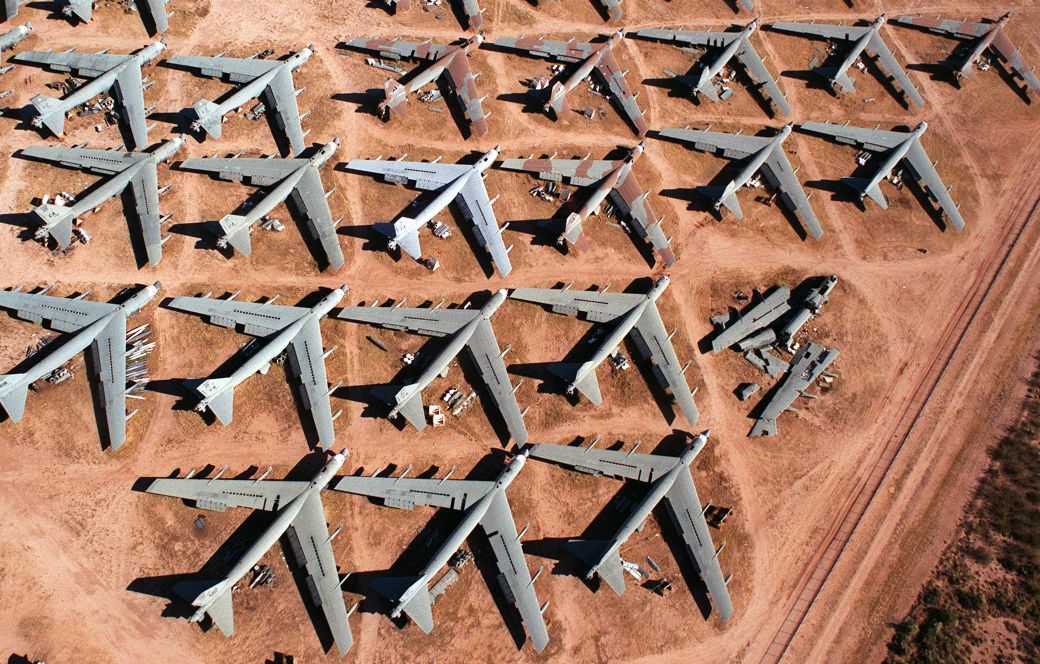
B-52 bombers in the "boneyard" or Aerospace Maintenance & Regeneration Group at Davis-Monthan AFB in 1998. The B-52 at the right has been dismantled. David Sanders / Arizona Daily Star
Boneyard at Davis-Monthan Air Force Base
Updated
A USAF EC-135 (Boeing 707), Looking Glass, sits on the runway at Davis-Monthan Air Force Base on Friday, Jan. 16, 1998, after it's last flight before being retired to the boneyard. (AP Photo/John Miller)
Boneyard at Davis-Monthan Air Force Base
Updated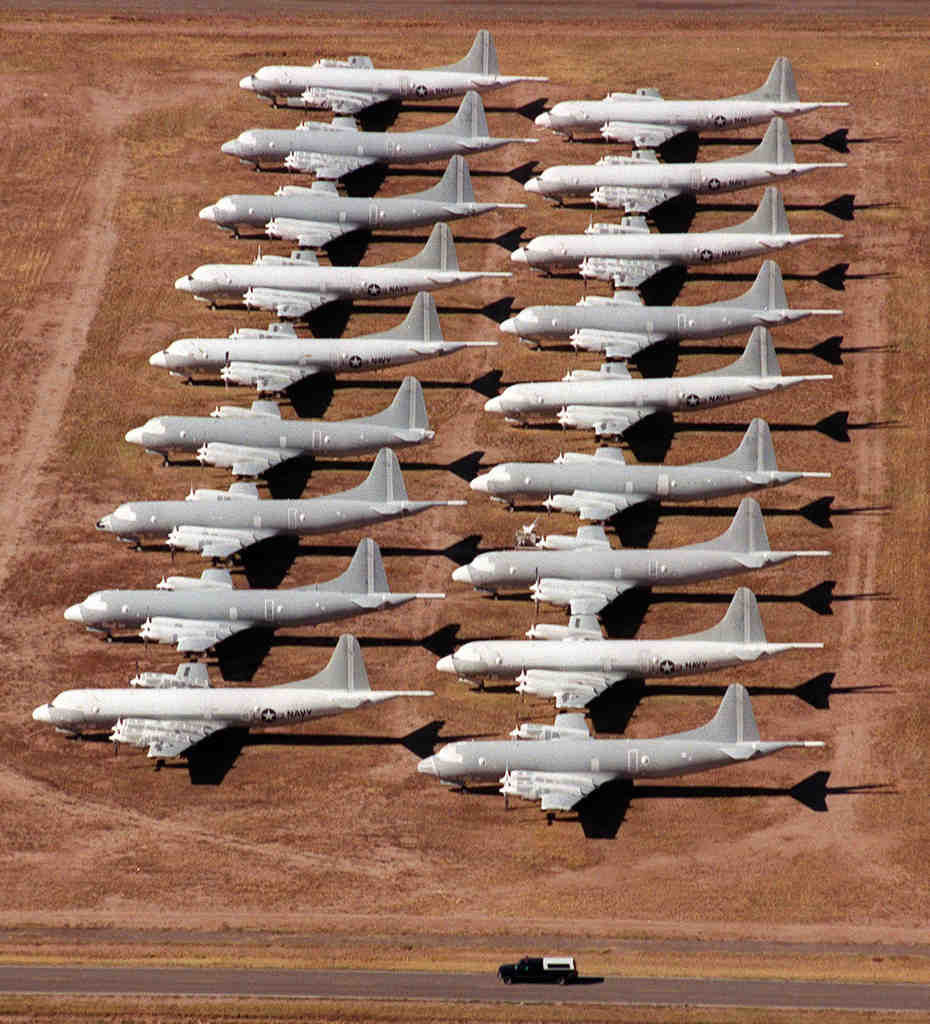
Parked US Navy Hurricane planes sit idle in DMAFB's "boneyard" where hundreds of military planes are stored. Photo by David Sanders / The Arizona Daily Star / Nov. 23, 1998
Boneyard at Davis-Monthan Air Force Base
Updated
A-7's sit at the Aerospace Maintenance and Regeneration Center. The A-7 is an attack aircraft that was used in Vietnam. Xavier Gallegos / Tucson Citizen / 1999
Boneyard at Davis-Monthan Air Force Base
Updated
This Navy LC-130F cargo plane was renamed Phoenix by the crew that last flew it after it was recovered then repaired at the AMARC section of the Davis-Monthan Air Force Base on April 24, 2002. It crashed in 1971 and was buried in the snows of the Antarctic for 17 years. Photo by A.E. Araiza/Arizona Daily Star/2002
Boneyard at Davis-Monthan Air Force Base
Updated
For the first time since1960, Don Angier of Tucson returns to the cockpit of this Navy LC-130F cargo plane on April 24, 2002, which he piloted along with others in his squadron from 1959-1960. The Davis-Monthan AMARC/boneyard repaired the plane after it crashed on December 4,1971,during a JATO take-off to return to McMurdo Sound. At an altitude of about 50 feet, two JATO bottles separated from the left-hand side of the fuselage and struck the inboard engine and propeller and was buried in the snows of the Antarctic for 17 years. Photo by A.E. Araiza.
Boneyard at Davis-Monthan Air Force Base
Updated
This Navy LC-130F cargo plane was recovered and repaired at the Davis-Monthan AMARC/boneyard after it crashed in 1971 and was buried in the snows of the Antarctic for 17 years on Wednesday, April 24, 2002. It was put back into service at the Point Mugu Naval Weapons Test Center. The plane was used in Operation Deep Freeze, a joint U.S. military operation that supported the National Science Foundation's activities in Antarctica. Photo by A.E. Araiza/Arizona Daily Star/2002
Boneyard at Davis-Monthan Air Force Base
Updated
Don Angier of Tucson looks one last time towards the flight deck of a Navy LC-130F cargo plane on April 24, 2002, which he piloted along with others in his squadron from 1959-1960. The Davis-Monthan AMARC/boneyard repaired the plane after it crashed in 1971 and was buried in the snows of the Antarctic for 17 years. Photo by A.E. Araiza/Arizona Daily Star
Boneyard at Davis-Monthan Air Force Base
Updated
A shot of the bone-yard area at DM where the A-10 Warthogs were stored on June 6, 2003. Photo by Benjie Sanders/ Arizona Daily Star
Boneyard at Davis-Monthan Air Force Base
Updated
Terry Stafford, an aircraft mechanic who works for Lockheed and Martin, is working on a A-10 in the AMARC area of the airbase in a program called Hog Up, which does maintenance on these planes to try to keep them going. Photo by Benjie Sanders / Arizona Daily Star June 6, 2003
Boneyard at Davis-Monthan Air Force Base
Updated
Petronilo Alvarado, an AMARC aircraft mechanic, is working on a A-10 in the AMARC area of the airbase in a program called Hog Up, which does maintenance on these planes to try to keep them going. Photo by Benjie Sanders / Arizona Daily Star/ June 6, 2003
Boneyard at Davis-Monthan Air Force Base
Updated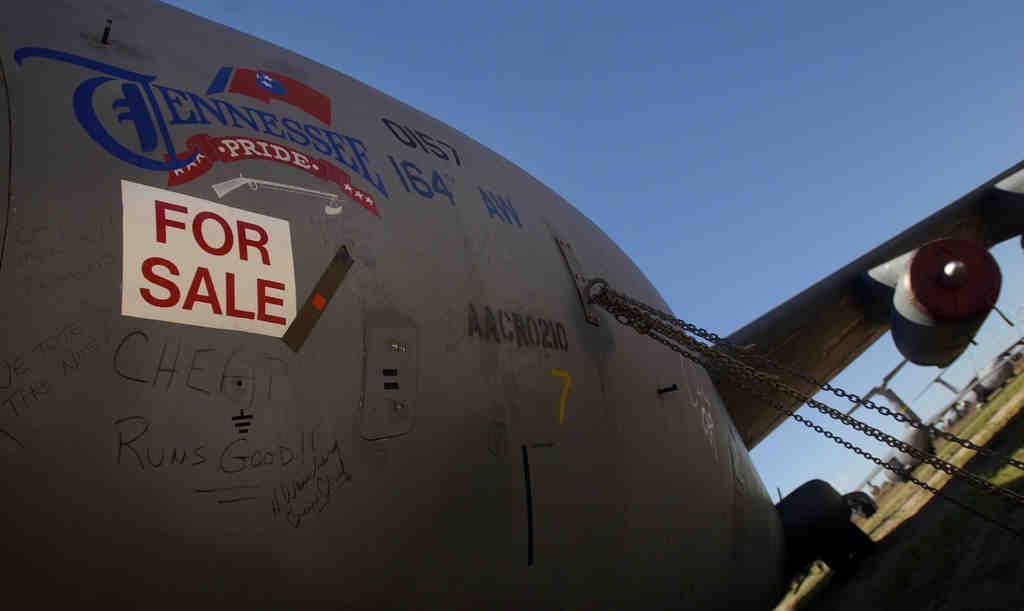
A Tennessee Air Guard C-141B is a good buy according to those that flew her last flight to AMARC. The preservation team checks on each of the aircraft every 120 days in the level 1000 storage area, the highest maintained area, where planes can be ready in a matter of days if need be. Photo by David Sanders/Arizona Daily Star / Nov. 2, 2004
Boneyard at Davis-Monthan Air Force Base
Updated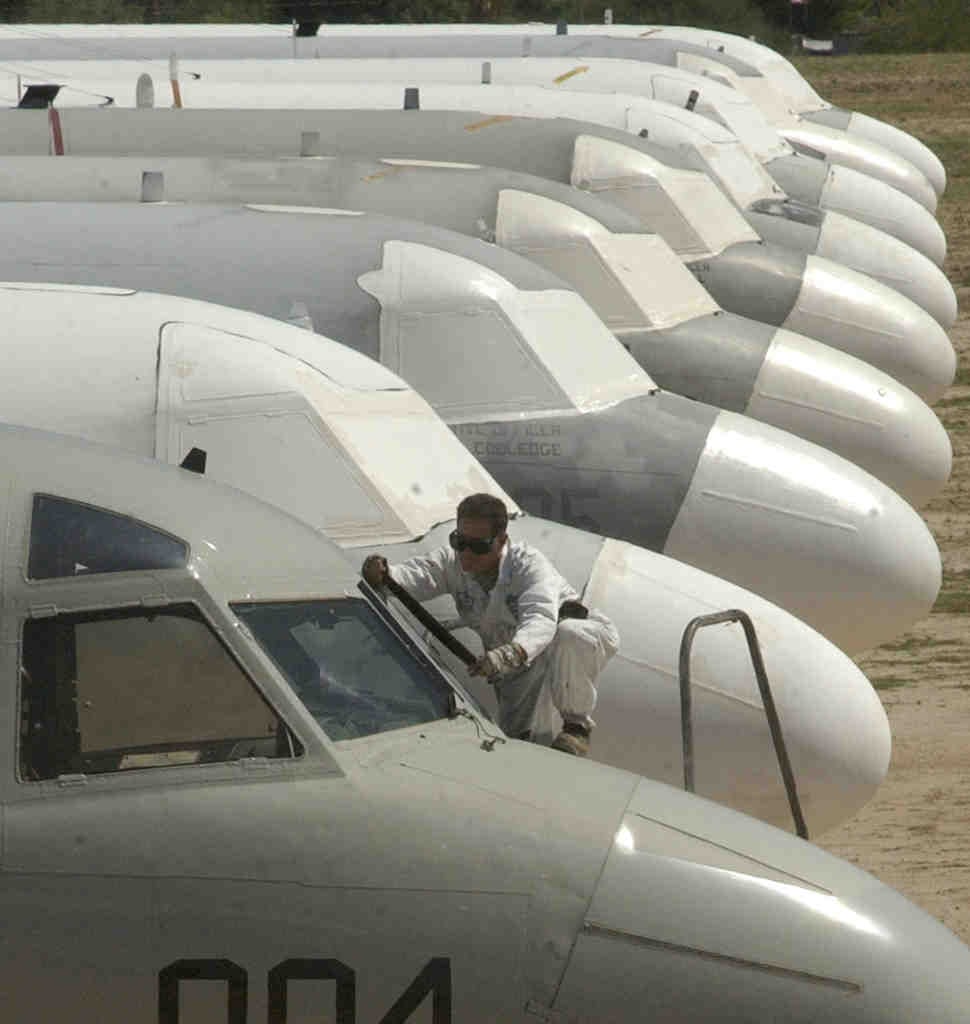
Sal West uses black plastic tape to seal the cockpit windows of a Navy P-3 at (AMARC), before they get sprayed with spraylat. Sal says of AMARC's ability to ready these planes for flight, "Although some of these look like they are sitting here dead, in a couple of days they are ready to roll." Photo by David Sanders / Arizona Daily Star / 2004
Boneyard at Davis-Monthan Air Force Base
Updated
Navy P-3 (A and C models) sit in storage at AMARC, also known as the "boneyard." Tucson's low rainfall, low humidity, and alkaline soil make it an ideal storage area for over 4,400 aircraft from the Air Force, Army, Navy, Marine Corps, and Coast Guard. Photo by David Sanders/Arizona Daily Star / Nov. 2, 2004
Boneyard at Davis-Monthan Air Force Base
Updated
05/20/2004. S7; EAST SIDE TODAY; F-16 Fighting Falcons (above and top) are among the more than 4,300 aircraft at AMARC. A row of F-16 Fighting Falcons sit Thursday afternoon at the Airspace Maintenance and Regeneration Center (AMARC). The 2,600-acre facility, adjacent to the David-Monthan Air Force Base, currently is home to more than 4,300 aircraft. The acquisiton cost of those aircraft is about $31 billion, which is the cost of the aircraft when they were built. 05/20/2004. S7; EAST SIDE TODAY; A group of F-16 Fighting Falcons sit Thursday afternoon at the Airspace Maintenance and Regeneration Center (AMARC). The 2,600-acre facility, adjacent to the David-Monthan Air Force Base, currently is home to more than 4,300 aircraft. The acquisiton cost of those aircraft is about $31 billion, which is the cost of the aircraft when they were built. 05/20/2004. S9; EAST SIDE TODAY; Aircraft mechanic Mark Gonterman works on the wings from an A-10 Thunderbolt II at AMARC's reclamation shelter. Aircraft mechanic Mark Gonterman (CQed) works on the wings from an A-10 Thunderbolt II (also known as the Warthog) Thursday afternoon while at the reclamation shelter at the Airspace Maintenance and Regeneration Center (AMARC). The 2,600-acre facility, adjacent to the David-Monthan Air Force Base, currently is home to more than 4,300 aircraft. The acquisiton cost of those aircraft is about $31 billion, which is the cost of the aircraft when they were built.
Boneyard at Davis-Monthan Air Force Base
Updated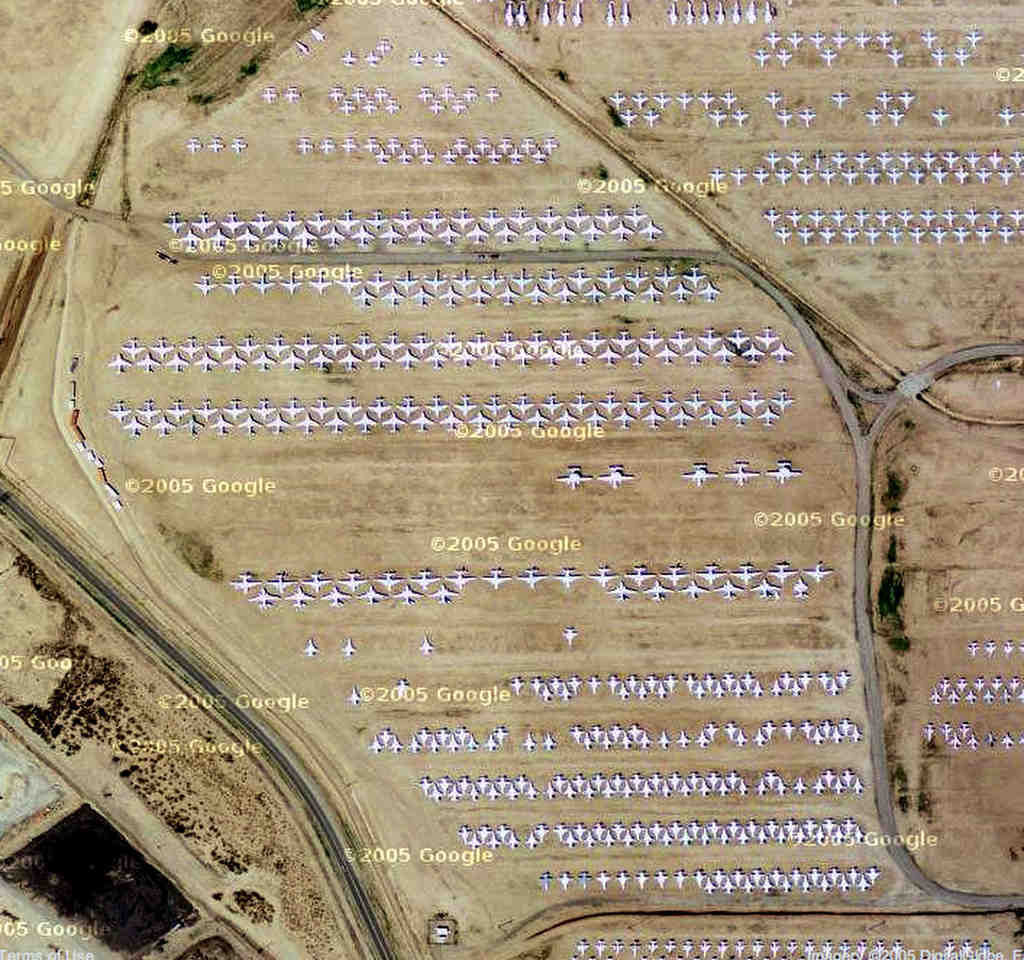
Retired airplanes at AMARC. This image was taken April 25, 2005, from Google's satellite image feature at maps.google.com. Image courtesy of Google Maps.
Boneyard at Davis-Monthan Air Force Base
Updated
Titan missiles at AMARC await the shredder. Titan Missile Museum archives. Photo by Chuck Penson, courtesy of Arizona Aerospace Foundation 2006.
Boneyard at Davis-Monthan Air Force Base
Updated
Photographer Pam Reed photographs retired pilot and former POW Bob Barnett (BOB BARNETT) at the Aerospace Maintenance and Regeneration Center (AMARC, aka the Boneyard), next to a T-33 trainer jet, one of the many kinds of planes Barnett flew during his service. Photo by Chris Richards, Arizona Daily Star/March 14/ 2007
Boneyard at Davis-Monthan Air Force Base
Updated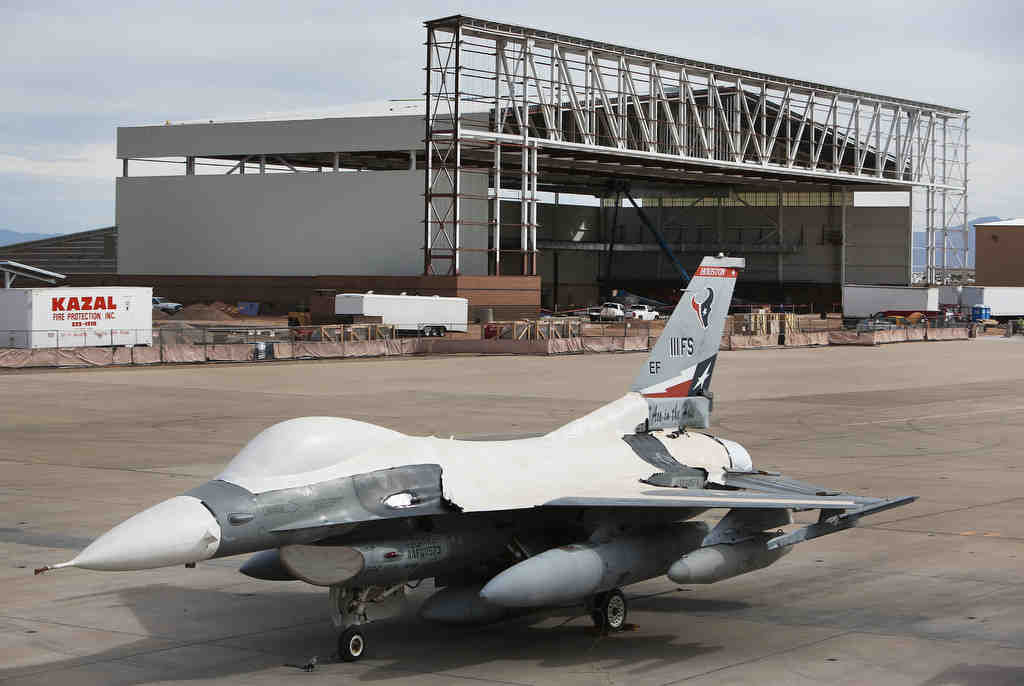
Contractors continue work on the Aircraft Maintenance and Regeneration Group's newest aircraft maintenance hangar on Monday, Oct. 28, 2013, on Davis-Monthan Air Force Base in Tucson, Ariz. The hangar, expected to be completed by February of next year, will be wide enough to house two C-130 aircraft, and tall enough to accommodate the airframe of a KC-135. Photo by Mike Christy / Arizona Daily Star
Boneyard at Davis-Monthan Air Force Base
Updated
A KC-135 aircraft sits outside the Aircraft Maintenance and Regeneration Group's aircraft maintenance hangar on Oct. 28, 2013, as the hanger is being built at Davis-Monthan Air Force Base. The hangar is wide enough to house two C-130 aircraft, and tall enough to accommodate the airframe of a KC-135. Photo by Mike Christy / Arizona Daily Star
Boneyard at Davis-Monthan Air Force Base
Updated
Steve Dennett, left, and Fred Vega with the 577th CRMS or Commodities and Reclamation Squadron have a crane lift the tail section of the last B-52G Stratofortress under the New START Treaty is disassembled at the 309th Aerospace Maintenance and Regeneration Group at Davis-Monthan Air Force Base. A surgical cut to the fuselage of aircraft 58-0224 separated the tail section from the rest of the plane which satisfies the requirements of the treaty for the elimination of heavy bombers. The demolition is the last of 39 B-52G's destroyed in order to be in compliance with the New START Treaty. Confirmation of its destruction will be checked by satellite. During the aircraft's lifetime it flew numerous missions over North Vietnam in December 1972 in support of Operation Linebacker II. Specifically, the bomber flew missions that targeted the Hanoi and later the Yen Vien (YEN VIEN) railroad yards. After many years of service the ship was retired to the 309th AMARG, otherwise known as the boneyard at DM in February 1990. The photo was taken on Thursday, December 19, 2013 in Tucson, Ariz. Photo by A.E. Araiza/ Arizona Daily Star
Boneyard at Davis-Monthan Air Force Base
Updated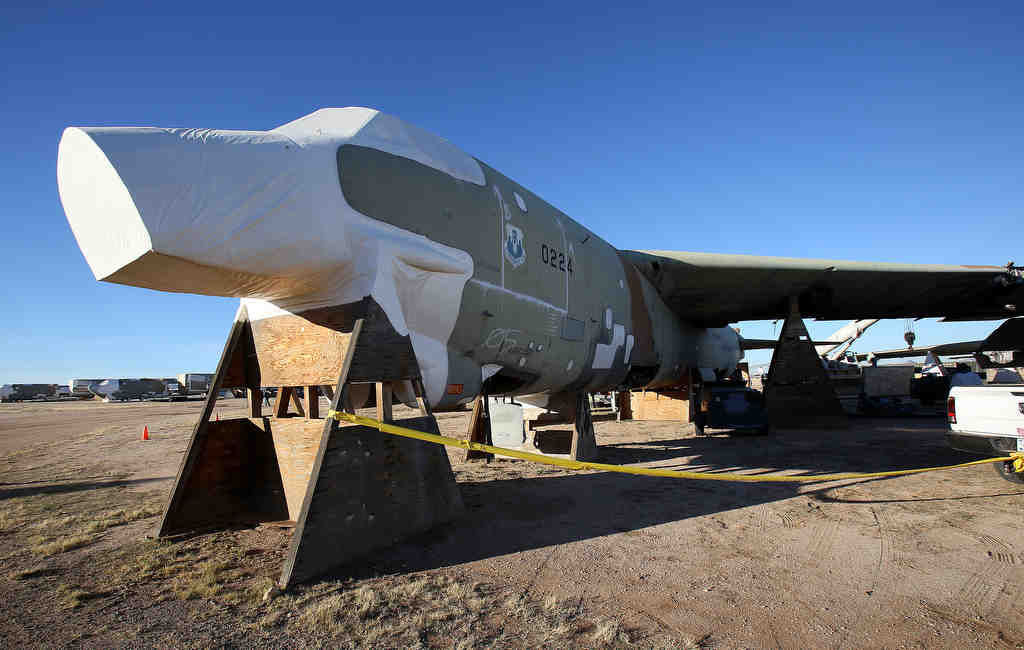
This is the last B-52G Stratofortress, number 58-0224, under the New START Treaty that was disassembled at the 309th Aerospace Maintenance and Regeneration Group at Davis-Monthan Air Force Base. A surgical cut to the fuselage of aircraft 58-0224 separated the tail section from the rest of the plane which satisfies the requirements of the treaty for the elimination of heavy bombers. The demolition is the last of 39 B-52G's destroyed in order to be in compliance with the New START Treaty. During the aircraft's lifetime it flew numerous missions over North Vietnam in December 1972 in support of Operation Linebacker II. Specifically, the bomber flew missions that targeted the Hanoi and later the Yen Vien railroad yards. After many years of service the ship was retired to the 309th AMARG, otherwise known as the boneyard at DM in February 1990. Photo by A.E. Araiza/ Arizona Daily Star / Dec. 19, 2013
Boneyard at Davis-Monthan Air Force Base
Updated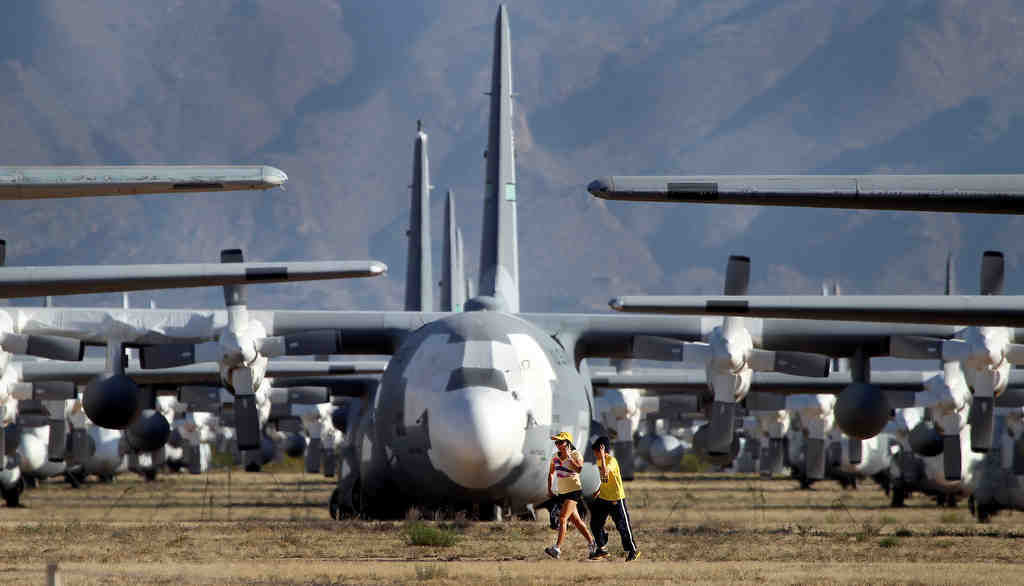
Two runners hustle across a field for the start of the first Desert Boneyard 5K Fun Run/Walk on April 27, 2013, at the 309th Aerospace Maintenance and Regeneration Group's aircraft storage facility on Davis-Monthan Air Force Base. The 309th AMARG provides depot-level maintenance, aircraft regeneration, storage and preservation, aircraft parts reclamation and disposal in support of the U.S. Department of Defense, allied war-fighters and other government agencies. Photo by Mike Christy / Arizona Daily Star
Boneyard at Davis-Monthan Air Force Base
Updated
A converted F-16 is being evaluated by John Lathrop after it flew the day before at Davis-Monthan Air Force Base. The QF-16 program, taking place at the Air Force's 309th Aerospace Maintenance and Regeneration Group, is tasked with taking part in converting the F-16 into a full-scale aerial target or drone. AMARG maintains and refits military aircraft and is also a storage facility. Photo by A.E. Araiza/ Arizona Daily Star/ April 3, 2014
Boneyard at Davis-Monthan Air Force Base
Updated
A-10 Warthogs are lined up at the Air Force's 309th Aerospace Maintenance and Regeneration Group, or AMARG, which maintains and refits military aircraft and is also a storage facility. The region's low humidity, hard soil and low rainfall, which reduces rust and corrosion, makes the location ideal. Photo by A.E. Araiza/ Arizona Daily Star / April 3, 2014
Boneyard at Davis-Monthan Air Force Base
Updated
Rodney Vakoc, left, and Rick Lee, with the 577th CRMS or Commodities and Reclamation Squadron pull on the tail section separating it from the last B-52G Stratofortress under the New START Treaty as it was disassembled at the 309th Aerospace Maintenance and Regeneration Group at Davis-Monthan Air Force Base. Photo by A.E. Araiza / Arizona Daily Star / Dec. 19, 2013
Boneyard at Davis-Monthan Air Force Base
Updated
Retired B-52 pilot, Gen. Earl O'Loughlin, left, trades stories with AMARG commander Col. Robert S. Lepper after the last B-52G Stratofortress under the New START Treaty is disassembled at the 309th Aerospace Maintenance and Regeneration Group at Davis-Monthan Air Force Base. O'Loughlin, among many assignments during his career with the air force, served as a B-52 aircraft commander and instructor pilot with the 379th Bombardment Wing at Wurtsmith Air Force Base, Mich. A surgical cut to the fuselage of aircraft 58-0224 separated the tail section from the rest of the plane which satisfies the requirements of the treaty for the elimination of heavy bombers. The demolition is the last of 39 B-52G's destroyed in order to be in compliance with the New START Treaty. Photo by A.E. Araiza/ Arizona Daily Star/ Dec. 19, 2013
Boneyard at Davis-Monthan Air Force Base
Updated
16 boneyard dsp11--There are many aspects in addition to the preservation team at the Aerospace Maintenance and Regeneration Center (AMARC), like Joe Kelly (cq-Joe Kelly) who has worked for 22 years at the sheet metal shop and is currently preparing an F-4 backseat canopy for use, using a micro mesh sandpaper to rough out a nick. The 2,600 acre plot on the DMAFB is home to over 4,400 military aircraft. Photo by David Sanders/Arizona Daily Star. Mandatory credit: no mags, no sales. #119057.
Boneyard at Davis-Monthan Air Force Base
Updated
An AMARG aircraft electrician works in the cockpit of an F-16 being retrofitted as a target drone at the The 309th Aerospace Maintenance and Regeneration Group (309 AMARG) hanger at Davis-Monthan Air Force Base. Photo by Ron Medvescek / Arizona Daily Star.
Boneyard at Davis-Monthan Air Force Base
Updated
Electricians Demetrius Moore, lower right, and William McNew install a new oxygen unit in an A-10 at the 309th Aerospace Maintenance and Regeneration Group (309 AMARG) at Davis-Monthan Air Force Base. Photo by Ron Medvescek / Arizona Daily Star.
Boneyard at Davis-Monthan Air Force Base
Updated
Tony Hernandez, an employee of Affordable Engineering Service tapes off unneeded connectors on an F-16 at the 309th Aerospace Maintenance and Regeneration Group (309 AMARG) at Davis-Monthan Air Force Base. Photo by Ron Medvescek / Arizona Daily Star.
Boneyard at Davis-Monthan Air Force Base
Updated
An A-10 sits in a stall at the 309th Aerospace Maintenance and Regeneration Group (309 AMARG) at Davis-Monthan Air Force Base . It is part of the SLEP (Service Life Extension Program) extending service life of the planes to 2028. Photo by Ron Medvescek / Arizona Daily Star.
Boneyard at Davis-Monthan Air Force Base
Updated
B-52 bombers at AMARC. At right and left are intact bombers. In the center are bombers that have been dismantled. This image is taken from Google's new satellite image feature at maps.google.com. Image courtesy of Google Maps.
Boneyard at Davis-Monthan Air Force Base
Updated
An Alenia C-27J Spartan aircraft in the cover of shade at the 309th Aerospace Maintenance and Regeneration Group (309 AMARG) at Davis-Monthan Air Force Base. Photo by Ron Medvescek / Arizona Daily Star.
Boneyard at Davis-Monthan Air Force Base
Updated
A Radar array sits inside the nosecone of an F-16 being retrofitted as a target drone at the 309th Aerospace Maintenance and Regeneration Group (309 AMARG) at Davis-Monthan Air Force Base. Photo by Ron Medvescek / Arizona Daily Star.
Boneyard at Davis-Monthan Air Force Base
Updated
An A-10 flies over the 309th Aerospace Maintenance and Regeneration Group (309 AMARG) storage facility above a retired A-10 at Davis-Monthan Air Force Base. Photo by Ron Medvescek / Arizona Daily Star/ April 25, 2015
Boneyard at Davis-Monthan Air Force Base
Updated
AMARG's Aircraft work leader Steve Herman, left, and Matt Vandervort of Affordable Engineering Service work together to change a nose shock strut on the landing gear of an F-16 being renovated at the 309th Aerospace Maintenance and Regeneration Group (309 AMARG) at Davis-Monthan Air Force Base. Photo by Ron Medvescek / Arizona Daily Star / April 25, 2015
Boneyard at Davis-Monthan Air Force Base
Updated
Electricians Demetrius Moore, lower left, and William McNew exchange parts during installation of a new oxygen unit in an A-10 at the 309th Aerospace Maintenance and Regeneration Group (309 AMARG) at Davis-Monthan. Photo by Ron Medvescek / Arizona Daily Star / 2015
Boneyard at Davis-Monthan Air Force Base
Updated
Workers beneath an F-16, retrofitting it as a target drone at the 309th Aerospace Maintenance and Regeneration Group (309 AMARG) at Davis-Monthan Air Force Base. Photo by Ron Medvescek / Arizona Daily Star/ April 25, 2015
Boneyard at Davis-Monthan Air Force Base
Updated
F-16s are being retrofitted as target drones at the 309th Aerospace Maintenance and Regeneration Group (309 AMARG) hanger at Davis-Monthan Air Force Base. Photo by Ron Medvescek / Arizona Daily Star / April 25, 2015
Boneyard at Davis-Monthan Air Force Base
Updated
An A-10 sits in storage with The Catalina Mountains in the background at the 309th Aerospace Maintenance and Regeneration Group (309 AMARG) storage facility at Davis-Monthan Air Force Base. Photo by Ron Medvescek / Arizona Daily Star / March 20, 2015
Boneyard at Davis-Monthan Air Force Base
Updated
Noses of retired A-10s at the 309th Aerospace Maintenance and Regeneration Group (309 AMARG) at Davis-Monthan Air Force Base. Photo by Ron Medvescek / Arizona Daily Star / 2015.

