



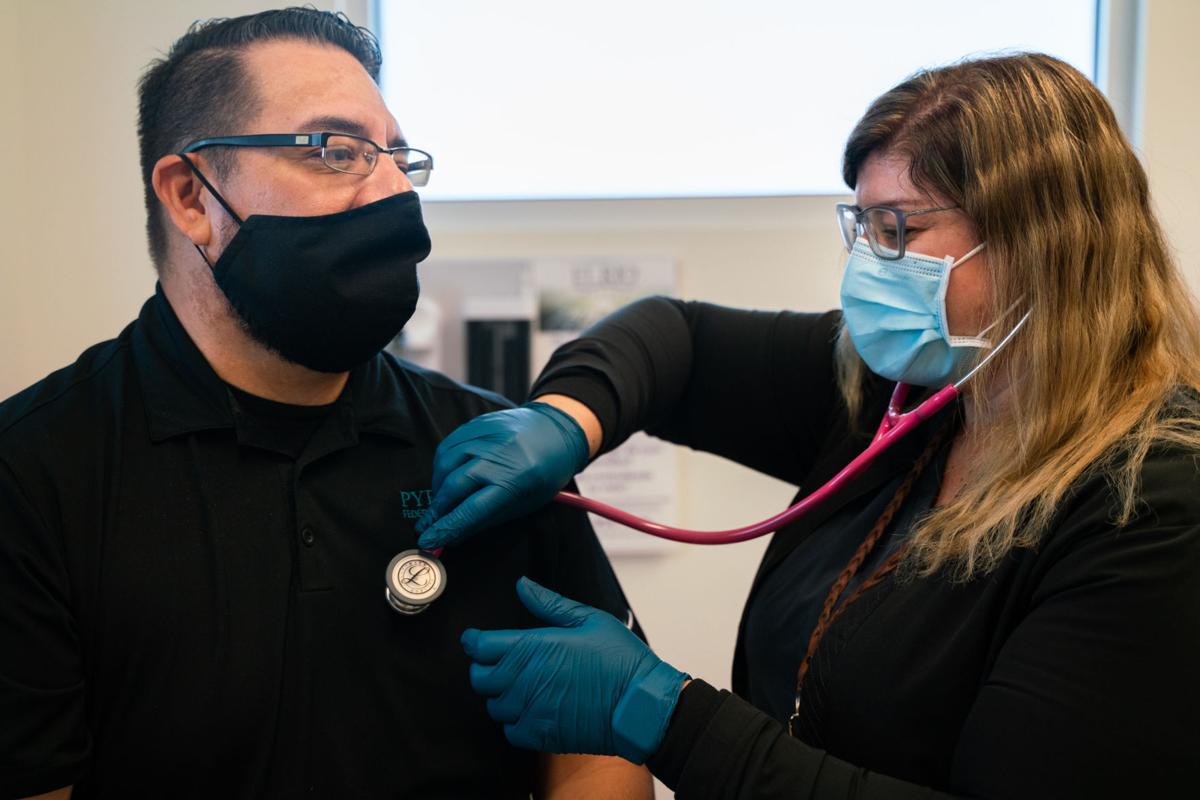
El Rio Health is celebrating 50 years of care here by giving Tucson a gift: A new medical center in one of the city’s most poorly served areas.
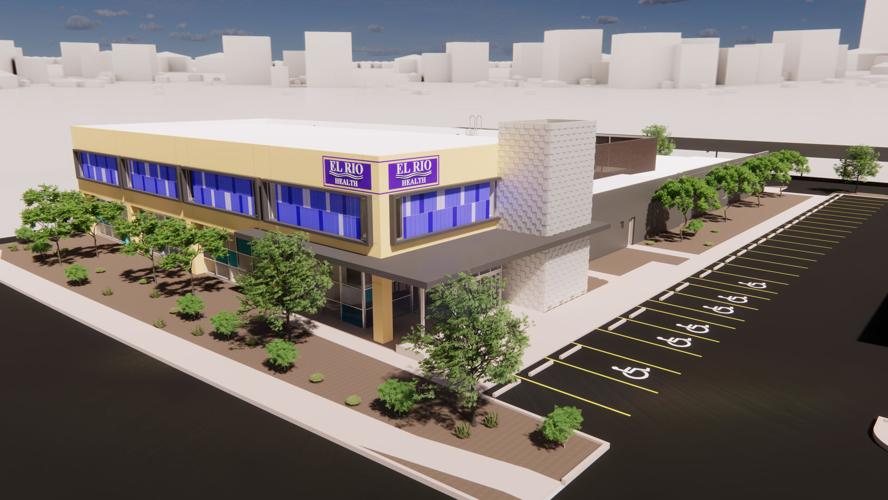
Construction will begin soon at the yet-to-be-named clinic at 3655 E. Grant Road, the site of an old Wells Fargo Bank that will be transformed into a 30,600-square-foot medical and behavioral health center including a laboratory, radiology services, a pharmacy and dental care.
El Rio Health, the largest local provider of medical and dental services for uninsured people and Medicaid recipients, already has 11 campuses in Tucson. It serves more than 110,000 people each year, with an annual budget over $124 million. El Rio purchased the new site in April for $1.8 million and expects it will take up to $13 million more to complete it.
El Rio began looking at the central part of Tucson near East Grant Road and North Alvernon Way about three years ago, said Nancy Johnson, the organization’s chief executive officer.
The Pima County Health Needs Assessment identified the area as one of great need, she said, with 87% of people living at or below 200% of the federal poverty level, 48% having poor mental health, 82% reporting isolation brought on by language barriers, and 85% reporting being in poor or fair physical health.
It was, they determined, the perfect place for their next clinic.

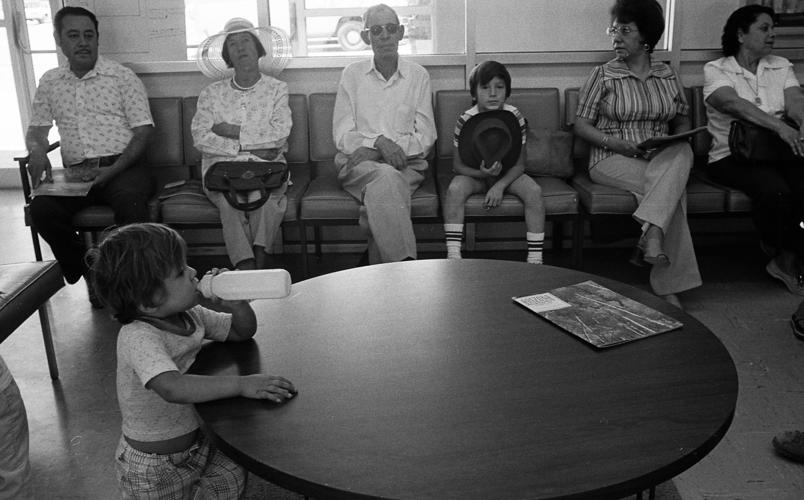
Patients the waiting room of the original El Rio Neighborhood Health Center in 1977, serving the barrio west of the freeway.
“A wonderful organization”
El Rio Health started here June 29, 1970, as El Rio Santa Cruz Neighborhood Health Center.
Since then, the clinics have served thousands of residents each year, including four generations of Virginia Rodriguez’s family.
She remembers the day she walked into the El Rio clinic on West Congress Street with her infant grandson and his mother.
The boy, just days old, was crying a lot and not eating well.
“The doctor hadn’t even checked him yet when he turned to us and said, ‘This little boy needs to see a surgeon,’ ” she said, explaining her grandson had a heart defect and a murmur, which the doctor recognized immediately.
Things were uncertain for a while, Rodriguez said, but fast forward 24 years and that grandson is now a healthy young man.
El Rio is where she took her aging father, a Pascua Yaqui elder, for his care. Anthony “Tony” Yrigolla died in June, 10 years after the death of his wife, Dolores Yrigolla.
And the downtown clinic is where she would walk, from Barrio Hollywood with two youngsters in tow, for their immunizations and well checks.
“It’s a very wonderful organization,” she said. “We’ve had good doctors and good care from them for so many years.”
One of her sons, Conrad Rodriguez, still attends El Rio clinics. He remembers going with his mom to the one on West Congress Street.
“That walk, although not miles and miles, was still somewhat far,” he said. “If someone was under the weather, it was a bit of a trek.”
That changed, much to Virginia Rodriguez’s relief, when El Rio began offering rides to patients who sometimes needed help with transportation.
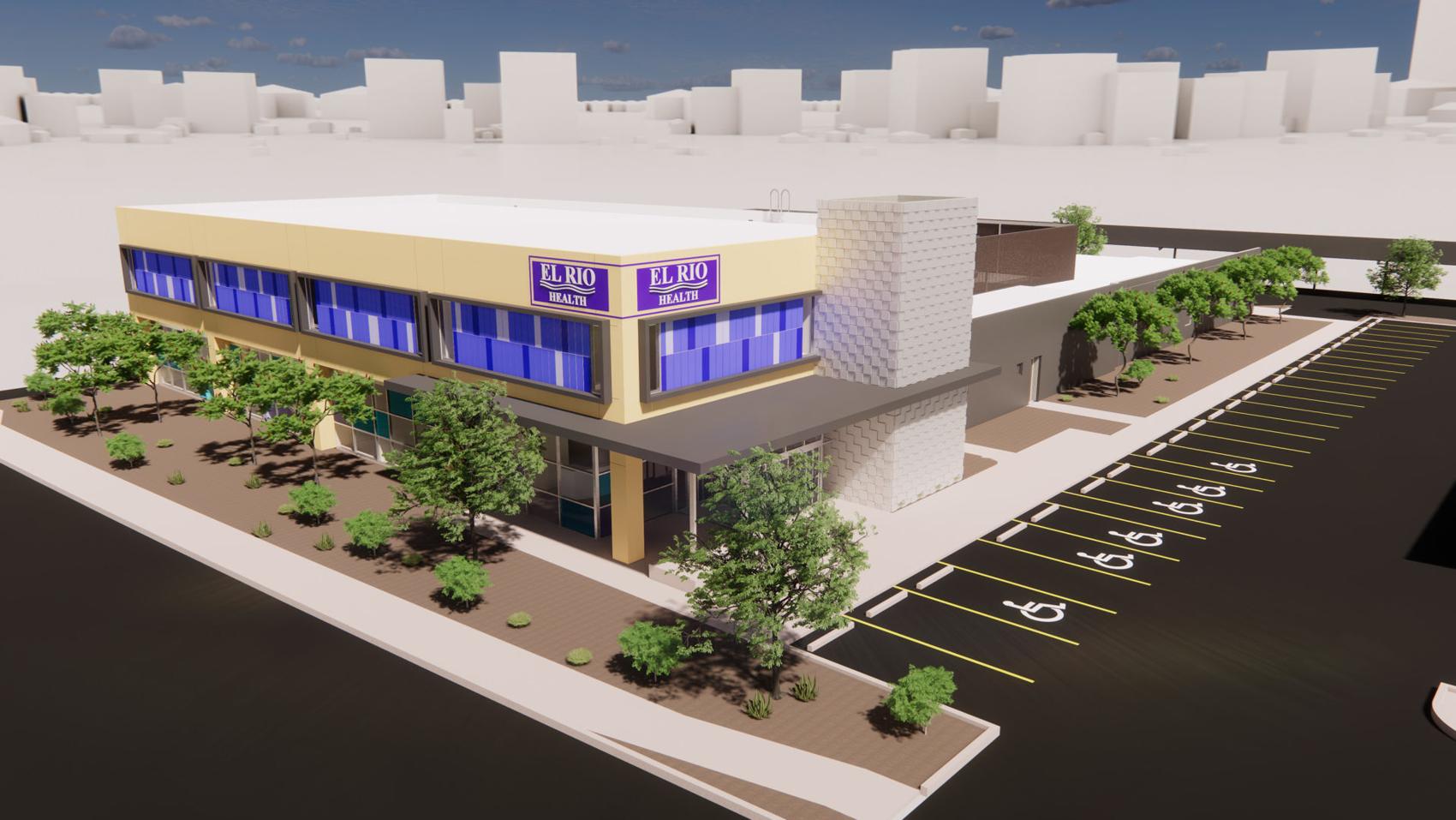
Architectural rendering of El Rio Health Center Grant Road Clinic, 3655 E. Grant Road. It’s a 30,600-square-foot medical and behavioral health center including a laboratory, radiology services, a pharmacy and dental care.
“Honor-bound”
To reach more people who were not getting help during the pandemic, El Rio and the city of Tucson recently started providing free COVID-19 testing at the El Pueblo Senior Center, 101 W. Irvington Road, several times a week.
In a similar fashion to what happened with HIV and AIDS, community health providers are the ones to “help navigate people through the confusion,” said Dr. Doug Spegman, El Rio’s chief clinical officer and incident commander for the COVID-19 pandemic.
“There’s a community need there, and we are honor-bound to try to impact areas where we see there are disparities,” Spegman said of El Rio’s purpose, “where we see there are people who are disenfranchised, where we see that there are voices in our community that are not being heard.”
The coronavirus has pushed a staggeringly high number of Americans off the cliff edge of financial security, forcing them to turn to food banks to feed themselves and their families.
The pandemic is creating other epidemics right behind it, he said, with people not getting the health care they need because they are afraid to go to a clinic. As a result, preventative medicine and regular checkups are not happening as they should, he said.
It’s something Dr. Rajiv Modak, a pediatrician and medical director for two El Rio sites, agrees is one of their biggest challenges right now.
“We understand you are concerned about COVID, but you need to take care of your other health needs as well,” he said.
Pediatric care has taken a big hit, he said. Parents don’t need to bring their children in for typical visits, like for sports physicals, and so kids are not being seen regularly, or getting their shots on time.
To help, El Rio Health is currently providing over a thousand telehealth visits weekly for both medical care and behavioral health visits, which have more than tripled during the pandemic.
Modak, who is El Rio’s second-in-command for the COVID-19 pandemic, said El Rio has also set up drive-thru clinics for flu shots, a platform they will likely use if a vaccine is approved for the virus.
He said for now, he is urging everyone to get the flu vaccine to keep hospital beds empty and medical staff at hospitals free to treat COVID-19 patients.
“Get the flu vaccination,” he said. “It’s so important to protect against an illness that also brings about hospitalizations and death.”

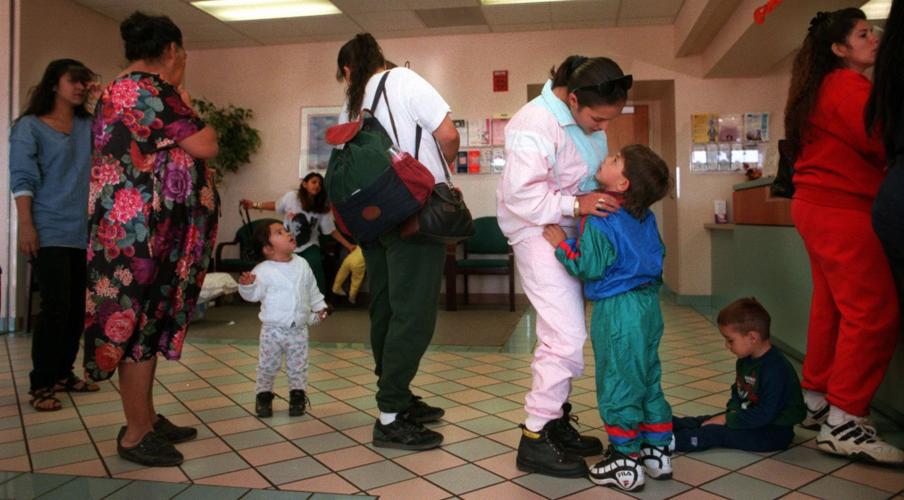
A busy lobby at the El Rio Clinic Pediatric Center in 1996.
Reaching underserved communities
Before the passage of the Affordable Care Act, Johnson said about 30% of El Rio’s patients were uninsured. Since it passed, she said, the number of uninsured patients has dropped to 14%, according to the latest figures.
And what happens at El Rio if the U.S. Supreme Court overturns the Affordable Care Act in the near future?
Johnson said they will continue to find ways to provide care for their patients and will “collaborate with community providers to piece needed care together.”
“We care for more than 70,000 adults, and many of them do have chronic diseases that need regular assessment and care in order to optimize health and quality of life as well as save unnecessary expenses across the health-care delivery system,” she said. “The worry is that patients would delay or stop their needed care for pre-existing conditions.”
The idea of community health as it now exists started in 1964 as part of Lyndon Johnson’s “unconditional war on poverty.”
The movement, though unofficial, started what exists today: Nearly 1,400 community health centers around the country, with El Rio the 20th-largest.
In Arizona, there are 23 federally qualified health centers running 176 sites statewide in every county except La Paz, said Tara McCollum Plese, chief external affairs officer for the Arizona Alliance for Community Health Centers.
During the current health pandemic, the centers play a vital role in reaching people in underserved communities and carrying out tests. So far, statewide, nearly 80,000 tests have been administered, and over 10,000 of those positive. Of the patients who tested positive, Plese said, 75% were ethnic minorities.
In Tucson, El Rio Health workers have been providing care for people on the streets with outreach teams as well as in hotels the city of Tucson opened up for people who are homeless and sick, or homeless and at high risk of getting sick, during the pandemic.
El Rio has tested over 22,000 people for the virus that causes COVID-19, about 10% of all the tests carried out here so far, and over 13% were positive.
“Fundamentally, it is not just about the trees but the forest,” said Spegman, El Rio’s chief clinical officer. “It’s about what the wellness of the community looks like and, for the people who are marginalized, how can we make sure their voices are heard?”

