


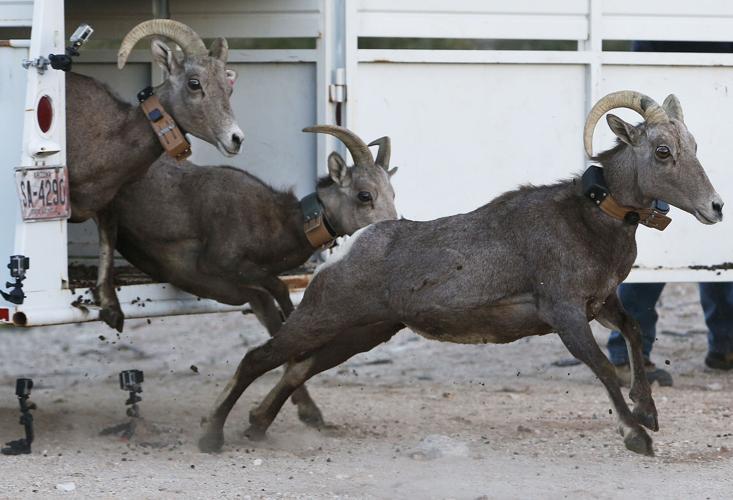

Test results indicate that a bighorn ewe found dead in the Catalina Mountains north of Tucson on Dec. 9 succumbed to pneumonia, state wildlife officials have said.
Another bighorn was found dead Dec. 14 after its GPS collar sent out a mortality alert several days earlier. That ewe, brought here in 2014, was killed by a mountain lion, according to an update provided by the Arizona Game And Fish Department.
The lion was being tracked by dogs, but the effort was called off after the agency learned the tracker was using a drone to monitor his dogs. Drones have not been approved by Game and Fish for use in wildlife management projects, the department said.
The earlier death marks the fourth confirmed bighorn death from pneumonia since July in the Catalinas, where efforts are underway to rebuild a herd that disappeared from the range in the 1990s.
Two additional ewes “are suspected to have died from pneumonia” but the cause couldn’t be confirmed, said Anne Justice-Allen, wildlife health program supervisor for the Game and Fish Department.
Pneumonia organisms were cultured from the lung of one of those sheep “and the lung looked infected on necropsy (autopsy) but not on the microscopic exam,” Justice-Allen said. She said the other ewe died under circumstances that were consistent with other pneumonia mortalities, “but pneumonia organisms were not detected in the tissues, probably because she died approximately three days before her carcass was found.”
Bighorns from healthy herds elsewhere in the state were released in the Catalinas in November of 2013, 2014 and 2015. Some have died as a result of predation by mountain lions and others of disease — leaving 58 GPS-collared bighorns known to be alive in the range.
No treatment
The incidence of pneumonia is cause for concern because vaccines and antibiotics apparently are of no help in protecting bighorns from the disease.
“There is no course of treatment,” said Locana de Souza, a Game and Fish Department spokeswoman in Tucson.
“Pneumonia is a naturally occurring course of disease in bighorn populations,” de Souza said. “All of the mortalities from pneumonia have been animals from the Tonto National Forest,” which were brought to the Catalinas in 2014.
Bighorns released this year in the range were collected from mountains in the Yuma area.
“It appears that animals from the Yuma area have had some previous exposure to pneumonia and (therefore) some resistance to it,” de Souza said. So far, she said, the disease isn’t having an extreme impact on the bighorns in the Catalinas.
“It’s not having a massive die-off effect,” she said. “And there’s no indication that that will happen. It’s just been kind of trickling here and there.”

