



PHOENIX — Arizona State University is getting $6 million from the state to finish developing what is being billed as a virtually instant test for COVID-19.
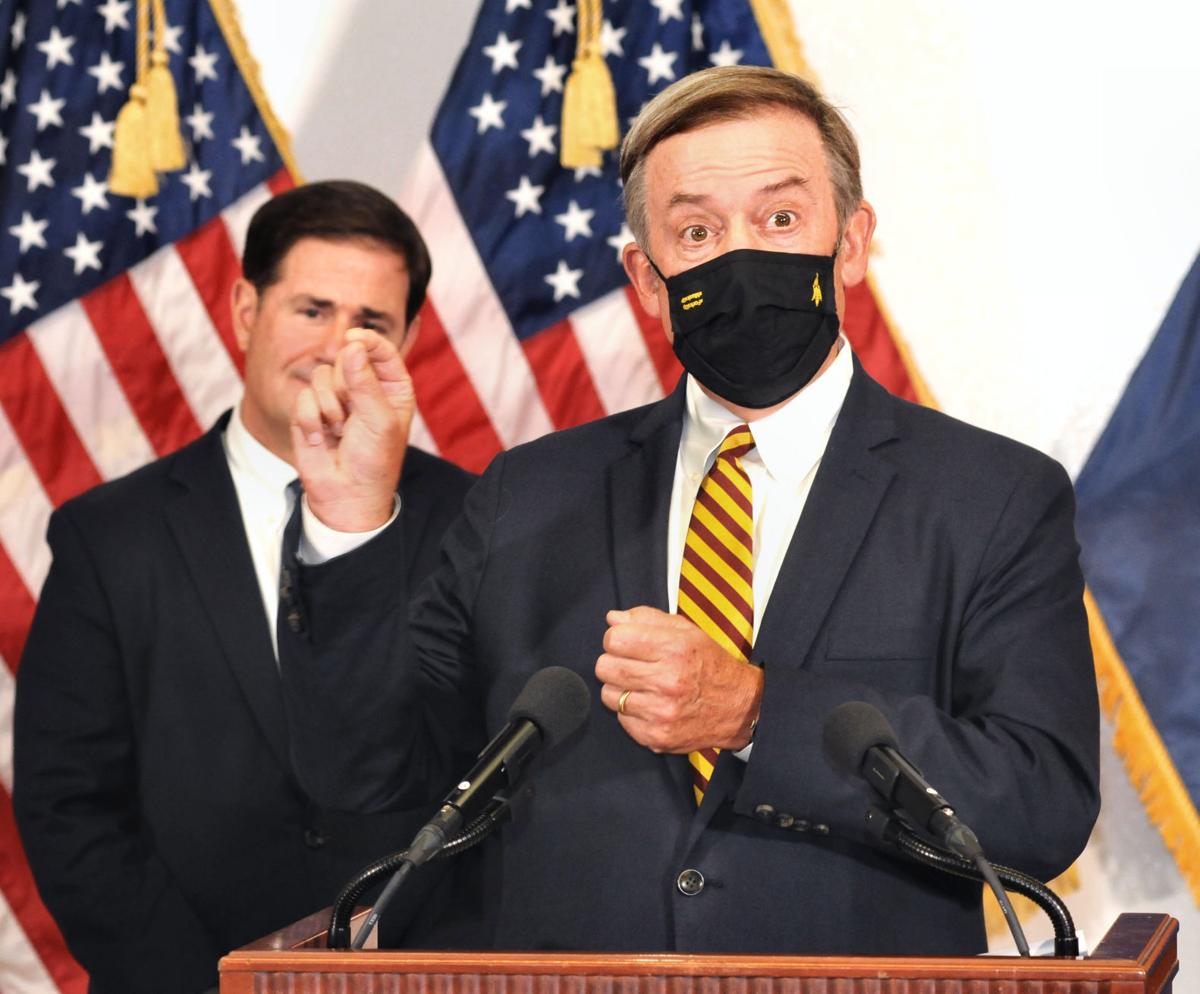
ASU President Michael Crow described the device as the next generation of saliva testing.
The advantages go beyond not having someone poke a cotton swab up your nose, he said Thursday.
“You’ll spit in to one of the most advanced technological devices that you could possibly imagine,” Crow said.
It will be outfitted with microchips and tiny laboratory devices that will heat the sample and do the chemical analysis “in a thing not much bigger than an electrical thermometer.”
“That thing communicates with your cell phone,” Crow said. “You get the green light, you go to school, you go to work, you go to the game.”
The test, with what has been billed as a 15-minute response time, is describing as a “point of need” device.
“We believe that we can have a prototype ready in six months,” Crow said.
There was no estimate of what the device might cost.
One particular place where it could prove useful is at nursing homes and other congregate care facilities.
State health department rules say family members can have indoor visits there if they present the results of a COVID-19 test done within the past 48 hours. That requires not just coordinating the process of going to a laboratory but hoping the results come back in time.
A total of $5.2 million is coming from the federal dollars controlled by the governor’s office and another $860,000 from the state health department.
You're flying. You're hungry. Too bad
Alaska Airlines
Updated
Flights of less than 350 miles:
All cabins: BYOD&F - bring your own drink and food. Nothing is served.
Flights of more than 350 miles:
Main cabin: Soft drinks, juice, coffee, tea and bottled water
First class: All of the above plus beer, wine and snack boxes.
American Airlines
Updated
Flights of less than 900 miles:
Main cabin: Beverages (water, canned drinks) by request only; no alcohol or snacks.
First class: You may ask for an alcoholic drink, but not before departure.
Flights of 900 to 2,200 miles or less than 4 1/2 hours:
Main cabin: Bottled water, pretzels or Biscoff cookies at boarding; no alcohol or food for purchase.
First, business: No drinks before departure; alcohol on request. Biscoff or pretzels; maybe a fruit and cheese plate
Flights of 4 1/2 hours or longer or more than 2,200 miles; long-haul flights:
Main cabin: Water, canned drinks or juice, plus pretzels or Biscoff. No snacks for sale; forget alcohol (except on international flights)
Business, first class: You can get drinks but not before departure. Besides the same offerings you get in the main cabin, you may get a fruit and cheese plate and a meal.
Unintended coronavirus effect: Nuts that once were served to elite flyers are no longer in demand, The Wall Street Journal reported. GreatNuts.com is selling its excess for $12.95 for a 1.25 pound bag.
Delta
Updated
Flights 350 to 900 miles:
Main cabin: Bottled water. Choice of Cheez-Its or Biscoff.
First: Snack selection and free beer and wine on flights of more than 500 miles.
Flights of more than 900 miles:
Main cabin: Same as above
First class: Snacks and a "flight fuel" box, plus beer and wine
Southwest
Updated
Southwest is not known for its food service. During this period of coronavirus, it's serving snacks and bottled water on flights of more than 250 miles. Only one cabin.
United
Updated
Flights of less than an hour:
"Sealed" beverages on all flights; you must request it if the flight is less than an hour.
Flights before 9:45 a.m.
Coffee and tea on domestic and international flights.
Flights longer than two hours, 20 minutes
Main cabin: Snack bag (Stroopwaffel, bag of pretzels) and bottled water
Premium cabins: Snack box (chips, dips, etc.) with bottled water; free alcoholic beverages.
Unintended coronavirus effect: United has donated more than half a million pounds of food from its lounges, clubs and catering kitchens to food banks and charities, a spokesman said.
Singapore Airlines
Updated
If it seems odd to include Singapore in this mix, it is. But it's worth noting that although Singapore is not doing a lot of flying, it is doing a lot with fresh food.
More than a year ago, Singapore Airlines announced that its "aeroponic farm" was producing greens for consumption on its long-haul flights. Aeroponics, unlike the better-known hydroponics, has no growing medium; the crops are grown in vertical racks in a former steel mill about five miles from its catering kitchens serving Newark, N.J.
AeroFarms keeps an eye on light, temperature and nutrients and can produce a crop in less than two weeks. The crops require 95% less water and no pesticides, said Marc Oshima, co-founder and chief marketing officer at AeroFarms.
Although it is not currently providing its crops for Singapore, it is still providing produce to stores. The company was able to "pivot quickly," Oshima said. It continues to work on developing its product for Singapore but also is offering its products in supermarkets, including Whole Foods.
The company also is providing its fresh foods to organizations serving "food deserts" in New Jersey.
ASU says it's developing virtually instant test for COVID-19
UpdatedPHOENIX — Arizona State University is getting $6 million from the state to finish developing what is being billed as a virtually instant test for COVID-19.
ASU President Michael Crow described the device as the next generation of saliva testing.
The advantages go beyond not having someone poke a cotton swab up your nose, he said Thursday.
“You’ll spit in to one of the most advanced technological devices that you could possibly imagine,” Crow said.
It will be outfitted with microchips and tiny laboratory devices that will heat the sample and do the chemical analysis “in a thing not much bigger than an electrical thermometer.”
“That thing communicates with your cell phone,” Crow said. “You get the green light, you go to school, you go to work, you go to the game.”
The test, with what has been billed as a 15-minute response time, is describing as a “point of need” device.
“We believe that we can have a prototype ready in six months,” Crow said.
There was no estimate of what the device might cost.
One particular place where it could prove useful is at nursing homes and other congregate care facilities.
State health department rules say family members can have indoor visits there if they present the results of a COVID-19 test done within the past 48 hours. That requires not just coordinating the process of going to a laboratory but hoping the results come back in time.
A total of $5.2 million is coming from the federal dollars controlled by the governor’s office and another $860,000 from the state health department.
You're flying. You're hungry. Too bad
Alaska Airlines
Updated
Flights of less than 350 miles:
All cabins: BYOD&F - bring your own drink and food. Nothing is served.
Flights of more than 350 miles:
Main cabin: Soft drinks, juice, coffee, tea and bottled water
First class: All of the above plus beer, wine and snack boxes.
American Airlines
Updated
Flights of less than 900 miles:
Main cabin: Beverages (water, canned drinks) by request only; no alcohol or snacks.
First class: You may ask for an alcoholic drink, but not before departure.
Flights of 900 to 2,200 miles or less than 4 1/2 hours:
Main cabin: Bottled water, pretzels or Biscoff cookies at boarding; no alcohol or food for purchase.
First, business: No drinks before departure; alcohol on request. Biscoff or pretzels; maybe a fruit and cheese plate
Flights of 4 1/2 hours or longer or more than 2,200 miles; long-haul flights:
Main cabin: Water, canned drinks or juice, plus pretzels or Biscoff. No snacks for sale; forget alcohol (except on international flights)
Business, first class: You can get drinks but not before departure. Besides the same offerings you get in the main cabin, you may get a fruit and cheese plate and a meal.
Unintended coronavirus effect: Nuts that once were served to elite flyers are no longer in demand, The Wall Street Journal reported. GreatNuts.com is selling its excess for $12.95 for a 1.25 pound bag.
Delta
Updated
Flights 350 to 900 miles:
Main cabin: Bottled water. Choice of Cheez-Its or Biscoff.
First: Snack selection and free beer and wine on flights of more than 500 miles.
Flights of more than 900 miles:
Main cabin: Same as above
First class: Snacks and a "flight fuel" box, plus beer and wine
Southwest
Updated
Southwest is not known for its food service. During this period of coronavirus, it's serving snacks and bottled water on flights of more than 250 miles. Only one cabin.
United
Updated
Flights of less than an hour:
"Sealed" beverages on all flights; you must request it if the flight is less than an hour.
Flights before 9:45 a.m.
Coffee and tea on domestic and international flights.
Flights longer than two hours, 20 minutes
Main cabin: Snack bag (Stroopwaffel, bag of pretzels) and bottled water
Premium cabins: Snack box (chips, dips, etc.) with bottled water; free alcoholic beverages.
Unintended coronavirus effect: United has donated more than half a million pounds of food from its lounges, clubs and catering kitchens to food banks and charities, a spokesman said.
Singapore Airlines
Updated
If it seems odd to include Singapore in this mix, it is. But it's worth noting that although Singapore is not doing a lot of flying, it is doing a lot with fresh food.
More than a year ago, Singapore Airlines announced that its "aeroponic farm" was producing greens for consumption on its long-haul flights. Aeroponics, unlike the better-known hydroponics, has no growing medium; the crops are grown in vertical racks in a former steel mill about five miles from its catering kitchens serving Newark, N.J.
AeroFarms keeps an eye on light, temperature and nutrients and can produce a crop in less than two weeks. The crops require 95% less water and no pesticides, said Marc Oshima, co-founder and chief marketing officer at AeroFarms.
Although it is not currently providing its crops for Singapore, it is still providing produce to stores. The company was able to "pivot quickly," Oshima said. It continues to work on developing its product for Singapore but also is offering its products in supermarkets, including Whole Foods.
The company also is providing its fresh foods to organizations serving "food deserts" in New Jersey.
ASU says it's developing virtually instant test for COVID-19
UpdatedPHOENIX — Arizona State University is getting $6 million from the state to finish developing what is being billed as a virtually instant test for COVID-19.
ASU President Michael Crow described the device as the next generation of saliva testing.
The advantages go beyond not having someone poke a cotton swab up your nose, he said Thursday.
“You’ll spit in to one of the most advanced technological devices that you could possibly imagine,” Crow said.
It will be outfitted with microchips and tiny laboratory devices that will heat the sample and do the chemical analysis “in a thing not much bigger than an electrical thermometer.”
“That thing communicates with your cell phone,” Crow said. “You get the green light, you go to school, you go to work, you go to the game.”
The test, with what has been billed as a 15-minute response time, is describing as a “point of need” device.
“We believe that we can have a prototype ready in six months,” Crow said.
There was no estimate of what the device might cost.
One particular place where it could prove useful is at nursing homes and other congregate care facilities.
State health department rules say family members can have indoor visits there if they present the results of a COVID-19 test done within the past 48 hours. That requires not just coordinating the process of going to a laboratory but hoping the results come back in time.
A total of $5.2 million is coming from the federal dollars controlled by the governor’s office and another $860,000 from the state health department.
You're flying. You're hungry. Too bad
Alaska Airlines
Updated
Flights of less than 350 miles:
All cabins: BYOD&F - bring your own drink and food. Nothing is served.
Flights of more than 350 miles:
Main cabin: Soft drinks, juice, coffee, tea and bottled water
First class: All of the above plus beer, wine and snack boxes.
American Airlines
Updated
Flights of less than 900 miles:
Main cabin: Beverages (water, canned drinks) by request only; no alcohol or snacks.
First class: You may ask for an alcoholic drink, but not before departure.
Flights of 900 to 2,200 miles or less than 4 1/2 hours:
Main cabin: Bottled water, pretzels or Biscoff cookies at boarding; no alcohol or food for purchase.
First, business: No drinks before departure; alcohol on request. Biscoff or pretzels; maybe a fruit and cheese plate
Flights of 4 1/2 hours or longer or more than 2,200 miles; long-haul flights:
Main cabin: Water, canned drinks or juice, plus pretzels or Biscoff. No snacks for sale; forget alcohol (except on international flights)
Business, first class: You can get drinks but not before departure. Besides the same offerings you get in the main cabin, you may get a fruit and cheese plate and a meal.
Unintended coronavirus effect: Nuts that once were served to elite flyers are no longer in demand, The Wall Street Journal reported. GreatNuts.com is selling its excess for $12.95 for a 1.25 pound bag.
Delta
Updated
Flights 350 to 900 miles:
Main cabin: Bottled water. Choice of Cheez-Its or Biscoff.
First: Snack selection and free beer and wine on flights of more than 500 miles.
Flights of more than 900 miles:
Main cabin: Same as above
First class: Snacks and a "flight fuel" box, plus beer and wine
Southwest
Updated
Southwest is not known for its food service. During this period of coronavirus, it's serving snacks and bottled water on flights of more than 250 miles. Only one cabin.
United
Updated
Flights of less than an hour:
"Sealed" beverages on all flights; you must request it if the flight is less than an hour.
Flights before 9:45 a.m.
Coffee and tea on domestic and international flights.
Flights longer than two hours, 20 minutes
Main cabin: Snack bag (Stroopwaffel, bag of pretzels) and bottled water
Premium cabins: Snack box (chips, dips, etc.) with bottled water; free alcoholic beverages.
Unintended coronavirus effect: United has donated more than half a million pounds of food from its lounges, clubs and catering kitchens to food banks and charities, a spokesman said.
Singapore Airlines
Updated
If it seems odd to include Singapore in this mix, it is. But it's worth noting that although Singapore is not doing a lot of flying, it is doing a lot with fresh food.
More than a year ago, Singapore Airlines announced that its "aeroponic farm" was producing greens for consumption on its long-haul flights. Aeroponics, unlike the better-known hydroponics, has no growing medium; the crops are grown in vertical racks in a former steel mill about five miles from its catering kitchens serving Newark, N.J.
AeroFarms keeps an eye on light, temperature and nutrients and can produce a crop in less than two weeks. The crops require 95% less water and no pesticides, said Marc Oshima, co-founder and chief marketing officer at AeroFarms.
Although it is not currently providing its crops for Singapore, it is still providing produce to stores. The company was able to "pivot quickly," Oshima said. It continues to work on developing its product for Singapore but also is offering its products in supermarkets, including Whole Foods.
The company also is providing its fresh foods to organizations serving "food deserts" in New Jersey.
ASU says it's developing virtually instant test for COVID-19
UpdatedPHOENIX — Arizona State University is getting $6 million from the state to finish developing what is being billed as a virtually instant test for COVID-19.
ASU President Michael Crow described the device as the next generation of saliva testing.
The advantages go beyond not having someone poke a cotton swab up your nose, he said Thursday.
“You’ll spit in to one of the most advanced technological devices that you could possibly imagine,” Crow said.
It will be outfitted with microchips and tiny laboratory devices that will heat the sample and do the chemical analysis “in a thing not much bigger than an electrical thermometer.”
“That thing communicates with your cell phone,” Crow said. “You get the green light, you go to school, you go to work, you go to the game.”
The test, with what has been billed as a 15-minute response time, is describing as a “point of need” device.
“We believe that we can have a prototype ready in six months,” Crow said.
There was no estimate of what the device might cost.
One particular place where it could prove useful is at nursing homes and other congregate care facilities.
State health department rules say family members can have indoor visits there if they present the results of a COVID-19 test done within the past 48 hours. That requires not just coordinating the process of going to a laboratory but hoping the results come back in time.
A total of $5.2 million is coming from the federal dollars controlled by the governor’s office and another $860,000 from the state health department.
You're flying. You're hungry. Too bad
Alaska Airlines
Updated
Flights of less than 350 miles:
All cabins: BYOD&F - bring your own drink and food. Nothing is served.
Flights of more than 350 miles:
Main cabin: Soft drinks, juice, coffee, tea and bottled water
First class: All of the above plus beer, wine and snack boxes.
American Airlines
Updated
Flights of less than 900 miles:
Main cabin: Beverages (water, canned drinks) by request only; no alcohol or snacks.
First class: You may ask for an alcoholic drink, but not before departure.
Flights of 900 to 2,200 miles or less than 4 1/2 hours:
Main cabin: Bottled water, pretzels or Biscoff cookies at boarding; no alcohol or food for purchase.
First, business: No drinks before departure; alcohol on request. Biscoff or pretzels; maybe a fruit and cheese plate
Flights of 4 1/2 hours or longer or more than 2,200 miles; long-haul flights:
Main cabin: Water, canned drinks or juice, plus pretzels or Biscoff. No snacks for sale; forget alcohol (except on international flights)
Business, first class: You can get drinks but not before departure. Besides the same offerings you get in the main cabin, you may get a fruit and cheese plate and a meal.
Unintended coronavirus effect: Nuts that once were served to elite flyers are no longer in demand, The Wall Street Journal reported. GreatNuts.com is selling its excess for $12.95 for a 1.25 pound bag.
Delta
Updated
Flights 350 to 900 miles:
Main cabin: Bottled water. Choice of Cheez-Its or Biscoff.
First: Snack selection and free beer and wine on flights of more than 500 miles.
Flights of more than 900 miles:
Main cabin: Same as above
First class: Snacks and a "flight fuel" box, plus beer and wine
Southwest
Updated
Southwest is not known for its food service. During this period of coronavirus, it's serving snacks and bottled water on flights of more than 250 miles. Only one cabin.
United
Updated
Flights of less than an hour:
"Sealed" beverages on all flights; you must request it if the flight is less than an hour.
Flights before 9:45 a.m.
Coffee and tea on domestic and international flights.
Flights longer than two hours, 20 minutes
Main cabin: Snack bag (Stroopwaffel, bag of pretzels) and bottled water
Premium cabins: Snack box (chips, dips, etc.) with bottled water; free alcoholic beverages.
Unintended coronavirus effect: United has donated more than half a million pounds of food from its lounges, clubs and catering kitchens to food banks and charities, a spokesman said.
Singapore Airlines
Updated
If it seems odd to include Singapore in this mix, it is. But it's worth noting that although Singapore is not doing a lot of flying, it is doing a lot with fresh food.
More than a year ago, Singapore Airlines announced that its "aeroponic farm" was producing greens for consumption on its long-haul flights. Aeroponics, unlike the better-known hydroponics, has no growing medium; the crops are grown in vertical racks in a former steel mill about five miles from its catering kitchens serving Newark, N.J.
AeroFarms keeps an eye on light, temperature and nutrients and can produce a crop in less than two weeks. The crops require 95% less water and no pesticides, said Marc Oshima, co-founder and chief marketing officer at AeroFarms.
Although it is not currently providing its crops for Singapore, it is still providing produce to stores. The company was able to "pivot quickly," Oshima said. It continues to work on developing its product for Singapore but also is offering its products in supermarkets, including Whole Foods.
The company also is providing its fresh foods to organizations serving "food deserts" in New Jersey.
ASU says it's developing virtually instant test for COVID-19
UpdatedPHOENIX — Arizona State University is getting $6 million from the state to finish developing what is being billed as a virtually instant test for COVID-19.
ASU President Michael Crow described the device as the next generation of saliva testing.
The advantages go beyond not having someone poke a cotton swab up your nose, he said Thursday.
“You’ll spit in to one of the most advanced technological devices that you could possibly imagine,” Crow said.
It will be outfitted with microchips and tiny laboratory devices that will heat the sample and do the chemical analysis “in a thing not much bigger than an electrical thermometer.”
“That thing communicates with your cell phone,” Crow said. “You get the green light, you go to school, you go to work, you go to the game.”
The test, with what has been billed as a 15-minute response time, is describing as a “point of need” device.
“We believe that we can have a prototype ready in six months,” Crow said.
There was no estimate of what the device might cost.
One particular place where it could prove useful is at nursing homes and other congregate care facilities.
State health department rules say family members can have indoor visits there if they present the results of a COVID-19 test done within the past 48 hours. That requires not just coordinating the process of going to a laboratory but hoping the results come back in time.
A total of $5.2 million is coming from the federal dollars controlled by the governor’s office and another $860,000 from the state health department.
You're flying. You're hungry. Too bad
Alaska Airlines
Updated
Flights of less than 350 miles:
All cabins: BYOD&F - bring your own drink and food. Nothing is served.
Flights of more than 350 miles:
Main cabin: Soft drinks, juice, coffee, tea and bottled water
First class: All of the above plus beer, wine and snack boxes.
American Airlines
Updated
Flights of less than 900 miles:
Main cabin: Beverages (water, canned drinks) by request only; no alcohol or snacks.
First class: You may ask for an alcoholic drink, but not before departure.
Flights of 900 to 2,200 miles or less than 4 1/2 hours:
Main cabin: Bottled water, pretzels or Biscoff cookies at boarding; no alcohol or food for purchase.
First, business: No drinks before departure; alcohol on request. Biscoff or pretzels; maybe a fruit and cheese plate
Flights of 4 1/2 hours or longer or more than 2,200 miles; long-haul flights:
Main cabin: Water, canned drinks or juice, plus pretzels or Biscoff. No snacks for sale; forget alcohol (except on international flights)
Business, first class: You can get drinks but not before departure. Besides the same offerings you get in the main cabin, you may get a fruit and cheese plate and a meal.
Unintended coronavirus effect: Nuts that once were served to elite flyers are no longer in demand, The Wall Street Journal reported. GreatNuts.com is selling its excess for $12.95 for a 1.25 pound bag.
Delta
Updated
Flights 350 to 900 miles:
Main cabin: Bottled water. Choice of Cheez-Its or Biscoff.
First: Snack selection and free beer and wine on flights of more than 500 miles.
Flights of more than 900 miles:
Main cabin: Same as above
First class: Snacks and a "flight fuel" box, plus beer and wine
Southwest
Updated
Southwest is not known for its food service. During this period of coronavirus, it's serving snacks and bottled water on flights of more than 250 miles. Only one cabin.
United
Updated
Flights of less than an hour:
"Sealed" beverages on all flights; you must request it if the flight is less than an hour.
Flights before 9:45 a.m.
Coffee and tea on domestic and international flights.
Flights longer than two hours, 20 minutes
Main cabin: Snack bag (Stroopwaffel, bag of pretzels) and bottled water
Premium cabins: Snack box (chips, dips, etc.) with bottled water; free alcoholic beverages.
Unintended coronavirus effect: United has donated more than half a million pounds of food from its lounges, clubs and catering kitchens to food banks and charities, a spokesman said.
Singapore Airlines
Updated
If it seems odd to include Singapore in this mix, it is. But it's worth noting that although Singapore is not doing a lot of flying, it is doing a lot with fresh food.
More than a year ago, Singapore Airlines announced that its "aeroponic farm" was producing greens for consumption on its long-haul flights. Aeroponics, unlike the better-known hydroponics, has no growing medium; the crops are grown in vertical racks in a former steel mill about five miles from its catering kitchens serving Newark, N.J.
AeroFarms keeps an eye on light, temperature and nutrients and can produce a crop in less than two weeks. The crops require 95% less water and no pesticides, said Marc Oshima, co-founder and chief marketing officer at AeroFarms.
Although it is not currently providing its crops for Singapore, it is still providing produce to stores. The company was able to "pivot quickly," Oshima said. It continues to work on developing its product for Singapore but also is offering its products in supermarkets, including Whole Foods.
The company also is providing its fresh foods to organizations serving "food deserts" in New Jersey.
ASU says it's developing virtually instant test for COVID-19
UpdatedPHOENIX — Arizona State University is getting $6 million from the state to finish developing what is being billed as a virtually instant test for COVID-19.
ASU President Michael Crow described the device as the next generation of saliva testing.
The advantages go beyond not having someone poke a cotton swab up your nose, he said Thursday.
“You’ll spit in to one of the most advanced technological devices that you could possibly imagine,” Crow said.
It will be outfitted with microchips and tiny laboratory devices that will heat the sample and do the chemical analysis “in a thing not much bigger than an electrical thermometer.”
“That thing communicates with your cell phone,” Crow said. “You get the green light, you go to school, you go to work, you go to the game.”
The test, with what has been billed as a 15-minute response time, is describing as a “point of need” device.
“We believe that we can have a prototype ready in six months,” Crow said.
There was no estimate of what the device might cost.
One particular place where it could prove useful is at nursing homes and other congregate care facilities.
State health department rules say family members can have indoor visits there if they present the results of a COVID-19 test done within the past 48 hours. That requires not just coordinating the process of going to a laboratory but hoping the results come back in time.
A total of $5.2 million is coming from the federal dollars controlled by the governor’s office and another $860,000 from the state health department.

