


PHOENIX — Plans by Gov. Doug Ducey to allow statewide sports wagering, betting on fantasy leagues, keno and more tribal gambling could be undermined by a Southern Arizona lawmaker.
Rep. Mark Finchem, R-Oro Valley, contends the governor lacks the authority to negotiate new gaming compacts with the tribes. Instead, he said that formulating gaming police is “a quintessential legislative function.”
Finchem is doing more than just expressing his personal opinion.
He is asking Attorney General Mark Brnovich to review his arguments and issue a formal legal opinion declaring the issue of expanded tribal gaming beyond Ducey’s reach.
Strictly speaking, a finding by Brnovich against the governor’s powers would not halt legislative proposals to create new kinds of off-reservation gaming. Everyone, including Ducey, concedes he needs approval of state lawmakers to declare wagering on professional and college sports to be legal in Arizona.
But the existing gaming compacts give the tribes veto power over any expanded off-reservation gambling. It is only because the deal Ducey has negotiated gives them some additional gambling opportunities that they are willing to approve an enlargement of what happens beyond tribal borders.
If the governor cannot deliver on what he has promised the tribes because of a legal impediment — like a ruling that it is beyond his power — there cannot be new off-reservation gaming.
Finchem would not discuss his request, saying he wants to wait to see what Brnovich decides.
But Ducey aide Gretchen Conger said the governor believes the original 20-year gaming compacts, ratified by voters in 2002, specifically authorize him to negotiate amended compacts.
Original gaming compacts are expiring
The 2002 initiative pushed by the tribes and then-Gov. Jane Hull gave them the exclusive right to operate certain kinds of casino games for the next 20 years in exchange for sharing some of the profits with the state.
The state was allowed to continue any kind of gambling that was already legal, like the lottery and parimutuel racing. But the compacts have a “poison pill,” saying if the state starts any new form of gaming, then the tribes are not bound by limits on machines and no longer have to share revenue with the state.
Track owners put their own alternative on the 2002 ballot that would have authorized slot machines at reservation casinos and off-reservation tracks. But voters rejected that alternative.
With the compacts expiring, Ducey and his staff have been in closed-door talks now for more than a year in what he called his bid to “modernize” them. That resulted in the deal announced earlier this month, in which the tribes get new games like craps and roulette and more casinos in exchange for agreeing not to object to new kinds of off-reservation gaming like sports betting, wagering on fantasy leagues and keno.
Previous lawsuit cited
The governor says only the changes in off-reservation gambling need legislative approval.
Finchem doesn’t see it that way, even to the point of arguing that Hull never had the authority to negotiate the first gaming compacts.
In fact, as Hull was negotiating the compacts in 2001, a federal judge in Phoenix ruled that the state law authorizing her to make a deal was unconstitutional, as it involved the Legislature illegally ceding its power to the governor.
That ruling was overturned by an appellate court, which said it was improper, not based on the law but because the tracks that filed the lawsuit never named the tribes as defendants in the case. Tribes could not be sued because of their own sovereign immunity.
Finchem: governor has “only limited power”
Finchem, in his arguments to Brnovich, contends the original trial court ruling is correct. He said the law authorizing the original negotiations is “an indefinite and unqualified grant of power.”
Even assuming the original law is legal, Finchem said it does not follow that Ducey gets to decide, on his own, to let tribes do additional types of gaming and at more locations, regardless of whether they are agreeing not to challenge expanded off-reservation gaming.
“Formulating gaming policy is a quintessential legislative function; it is not embedded in the governor’s constitutionally conferred executive powers,” he told Brnovich.
Finchem acknowledged there is another statute that deals with the terms of the current “standard form” gaming compacts available to tribes. But that, he argued, still doesn’t give Ducey the power to make a new deal with the tribes.
“The governor is afforded only limited authority to negotiate on discrete and largely ancillary contract terms,” Finchem said. “Nothing in the statute empowers the governor to single-handedly forge the terms of a new compact that materially diverges from or expanded upon the terms specifically prescribed in (law).”
An aide to Brnovich said Finchem’s request is being reviewed. He could not say when an opinion will be issued.
“Historic horse racing” bets proposed
There’s another potential complication to Ducey’s gaming plan, tied to another Southern Arizona lawmaker.
Sen. David Gowan, R-Sierra Vista, is trying to get the Legislature to legalize what’s called “historic horse racing.”
It would allow people using machines to wager on races that were run in the past, but would provide bettors only with a number and no information on the name of the horse or the date of the race. They would be given some data on that horse’s historical record and handicap.
Then, if they want, the bettors could watch an animated reenactment of the race on which they wagered.
In essence, this is a new method of generating additional revenues at horse tracks and the off-track betting facilities that they run, tracks that were largely left out of the new gaming compacts.
Lorna Romero, spokeswoman for a coalition of track operators and horse owners, insists that Gowan’s Senate Bill 1794 has nothing to do with either tribal gaming or expanded off-reservation gambling.
She argues that it’s just another form of parimutuel wagering — which existed before 2002 and is allowed under the original compacts — and does not require the tribes to agree to it.
But Brnovich in a 2018 ruling said allowing wagering on historic horse races would violate the gaming compacts with tribes because that kind of wagering was not allowed when the first compacts were signed in 2002. And while the new deals Ducey has negotiated with tribes expand on what can happen off reservation, like sports wagering, they do not include betting on historic races.
That raises the question of whether proponents, like Gowan, would seek to block expanded statewide gaming until they get what they want.
Gowan said it is appropriate to bring up the issue now, as lawmakers consider new types of off-reservation gaming options that could bring in new tax dollars.
Even if Gowan gets his measure through the Legislature, it still would have to be signed by the governor. And Conger, the Ducey aide, hinted that’s not likely to happen.
“The voters decided in 2002 that they didn’t want off-reservation casino-style gambling,” she said.
“Historic racing machines fall into the category of casino-style gambling,” Conger said. “This issue has been decided.”
Photos of what life was like in Tucson in the early 1950s
Old Tucson
Updated
From the Dec. 8, 1952, Tucson Citizen: In case you think the "good old days" are gone forever you had better visit Old Tucson this evening and tomorrow when the rip-roarin' wild West will live again with street shootings, hangings, Indian attacks and bank robberies. And if that isn't enough to liven things up there will be Can Can dancers like those pictured above. The annual "Old Tucson Daze" celebration is sponsored by the Tucson Junior Chamber of Commerce.
Barrio Viejo
Updated
Barrio Viejo in Tucson, Ariz., at the intersection of Sabino Avenue and McCormick Street in 1953.
St. Mary's Rodeo Parade
Updated
The St. Mary's wagon in the 1953 Tucson Rodeo Parade
Kolb Road namesake
Updated
Richard Earl Kolb, for which Kolb Road is named, eating lunch in 1953 in a Pima County office. He worked for the Pima County Assessor's Office for 34 years.
Consumers building in downtown Tucson
Updated
The Consumers building in downtown Tucson, 1953.
Tucson Recreation Department
Updated
Downtown Tucson Recreation Department building in 1953.
Tucson Boys Chorus
Updated
The Tucson Boys Chorus heading for a performance on June 17, 1952, at the Kiwanis International Convention in Seattle, Washington, attended by 15,000 delegates.
Downtown buildings
Updated
Stein's Clothing, Leed's Shoes and Southern Arizona Bank and Trust in 1953.
Tucson City Annex building
Updated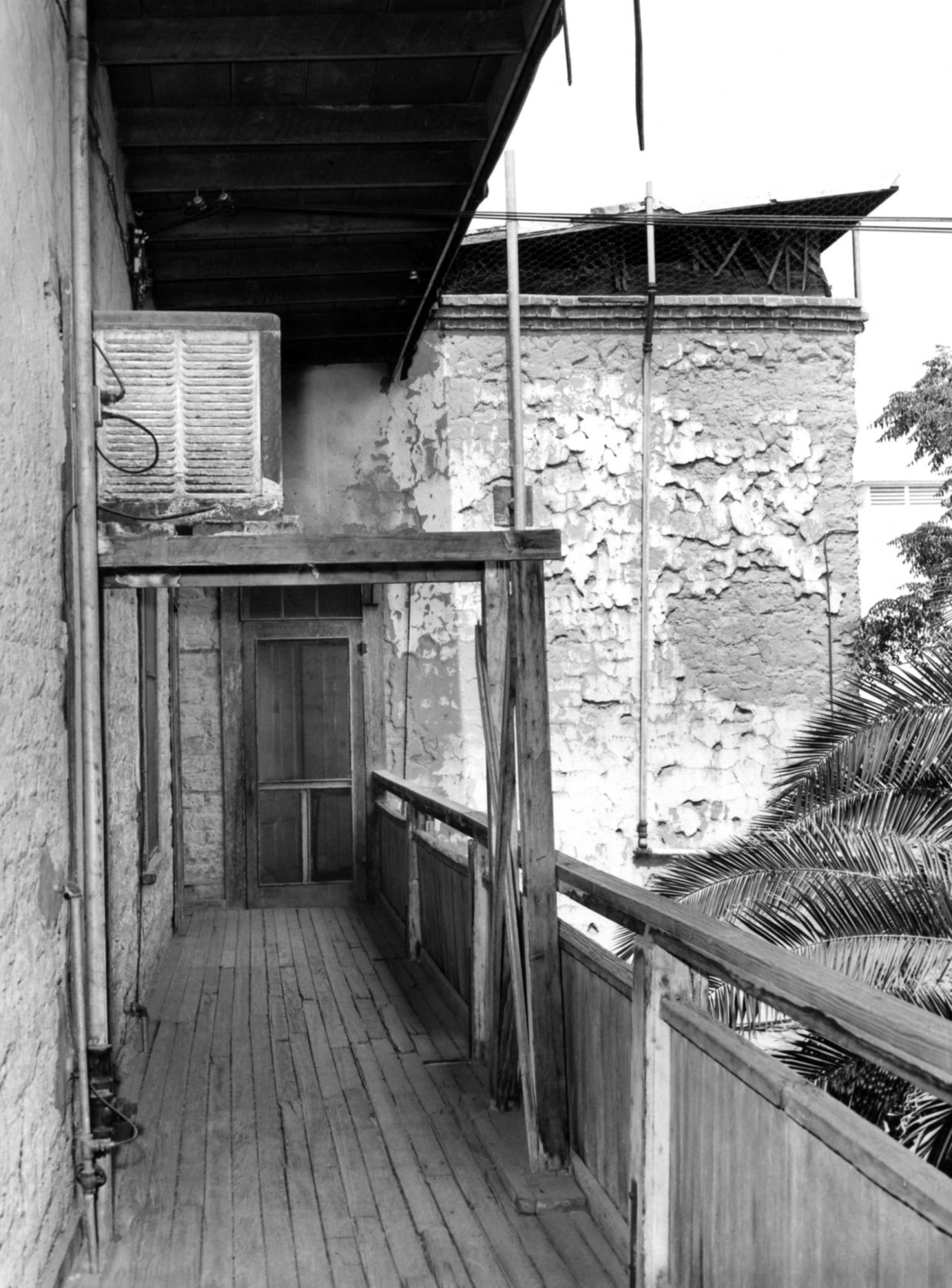
Downtown Tucson City Annex building, just south of City Hall taken July 8, 1953.
Rudy Castro
Updated
Rudy Castro of Tucson High School baseball in 1952.
Bisbee Fourth of July Parade
Updated
Soldiers march along in the parade held in Bisbee, Arizona on the 4th of July 1952
Mt. Lemmon prison camp
Updated
A Citizen photo of the dam and pump house for the Tucson Federal Prison Camp.
City Hall Annex building
Updated
From the Tucson Citizen in 1953: The Pennington Street entrance of the block-deep city hall annex building scheduled for demolition as soon as its occupants can be moved to new quarters. The two-story adobe building was under condemnation when the city acquired it several years ago. The city council Monday ordered the building torn down in line with new policy of keeping a close eye on substandard buildings.
76 gas station
Updated
A 76 gas station in downtown Tucson
Park Avenue railroad crossing
Updated
The Park Avenue railroad crossing in 1952.
Tucson bus service
Updated
A Tucson Rapid Transit bus in 1953
Davis-Monthan Air Force Base
Updated
Davis-Monthan Air Force Base on Jan. 17, 1953, the day a new 11,500-feet runway was dedicated to handle the jet age. Propeller-driven Boeing B-50 bombers site on the flightline. The base received new SAC B-47 bombers for the 303rd Bombardment Group that March.
Ted DeGrazia
Updated
In 1952, Ted DeGrazia built the Mission in the Sun as the first building constructed on the property in memory of Padre Eusebio Kino, a Jesuit priest, and dedicated the mission to Our Lady of Guadalupe. Following his own building plans, DeGrazia and his friends carefully handcrafted the adobe constructed building. In 2006, the Mission in the Sun was registered as a National Historic landmark.
State Theater, downtown
Updated
The State Theater at 51 E. Congress St. in 1953. It was also known as the Tucson Opera House. It was closed in Sept. 22, 1953.
Tucson from A Mountain
Updated
The City of Tucson as seen from A Mountain at dawn on Jan. 1, 1953.
Rillito Raceway
Updated
The Rillito Raceway in 1953.
Rillito Raceway
Updated
The Rillito Raceway in 1953.
Virginia Mittendorf
Updated
Virginia Mittendorf was the first Tucson woman to appear on a television screen in Tucson in 1953.
Cleveland Indians
Updated
Cleveland Indians play at Hi-Corbett Field in March, 1952
Indians vs New York Giants
Updated
Cleveland Indians vs the N.Y Giants at Hi-Corbett Field, March 8, 1953
Marana Air Base
Updated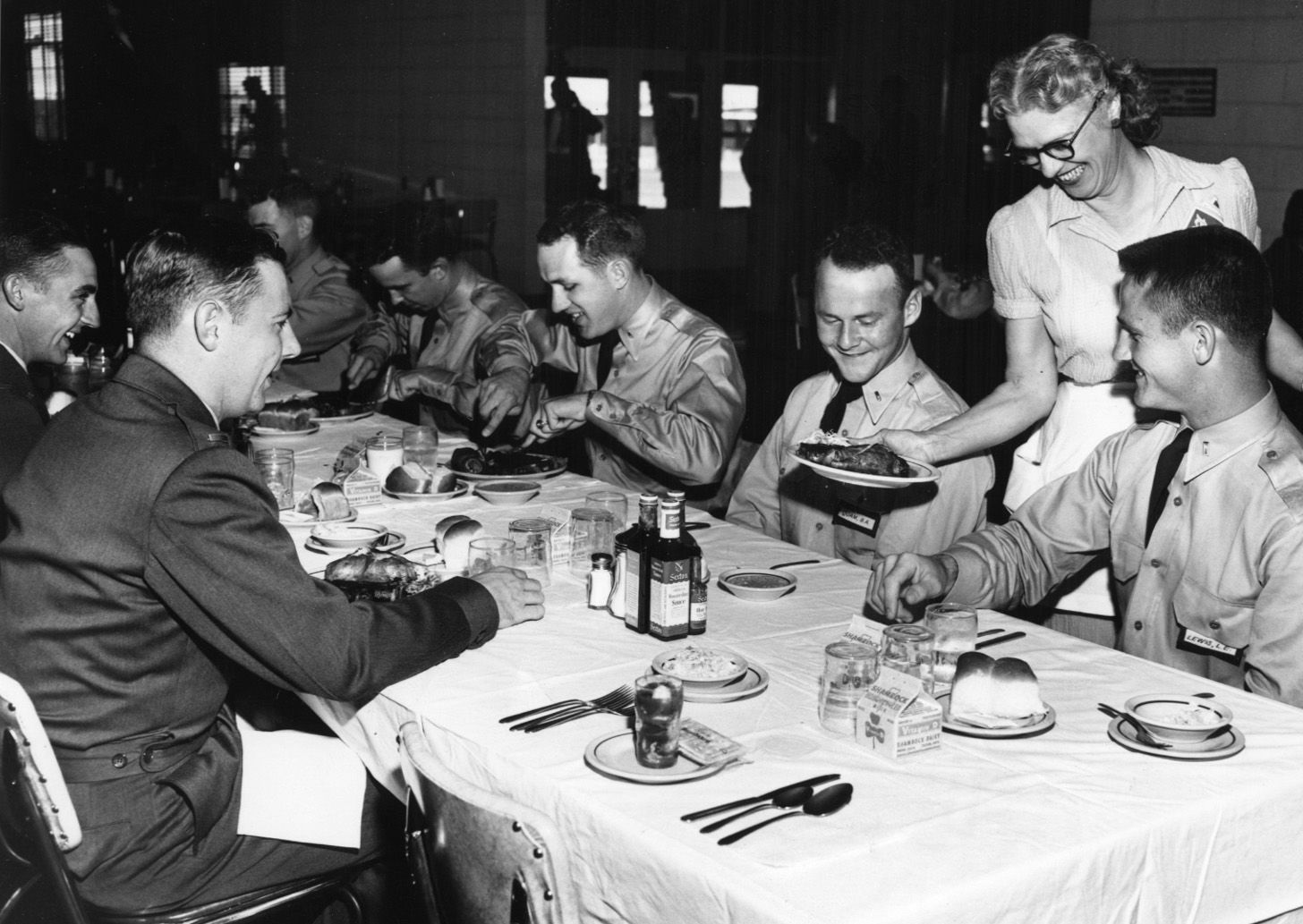
Dinner is served (looks like steak!) in the mess hall at Marana Air Base in 1953.
Marana Air Base
Updated
Piper L-21 trainers at Marana Air Base in 1953.
Marana Air Base
Updated
Turkish airmen training at Marana Air Base in 1953 are "fascinated by the strange beauties of the desert," according the Tucson Citizen.
Old Tucson Studios gunfighters take a break
Updated
Old Tucson Studios' gunfighting stuntmen take a break between shows in November of 1953.
Arizona-Sonora Desert Museum
Updated
Arizona-Sonora Desert Museum in 1953.
The birth of San Manuel
Updated
From a 1953 edition of the Tucson Citizen: Barber Tommy Blank may have some time on his hands right now, but wait until future San Manuelites commence moving into all those new houses come next week.
The article was about the creation of the town of San Manuel.
Tucson Inn
Updated
The Tucson Inn under construction in November, 1952. Tucson had 150 hotels at that time. "The motor-hotel business in Tucson is one of the resort town's thriving activities," according to the Tucson Citizen.
Tucson Inn
Updated
Opening of the Tucson Inn in January, 1953. Tie optional.
Tucson Inn
Updated
Opening of the Tucson Inn in January, 1953. A little chilly to be poolside.
Tommy "Thunder" Bolt
Updated
Tommy "Thunder" Bolt during the 1953 Tucson Open at Randolph, which he won that year. Bolt was a WWII vet who joined the tour later in life, but won 15 Tour titles.
Ft. Lowell Road
Updated
The remains of the Fort Lowell Park hospital were partially covered from above on June 17, 1953, but the walls were exposed allowing people to scratch their names on the adobe walls.

