


April is Autism Awareness Month.
What does that mean? It means the prevalence of autism is estimated at one in 64 births in Arizona, and nationwide more than 3 million people are living with autism spectrum disorder at an annual cost of $60 billion.
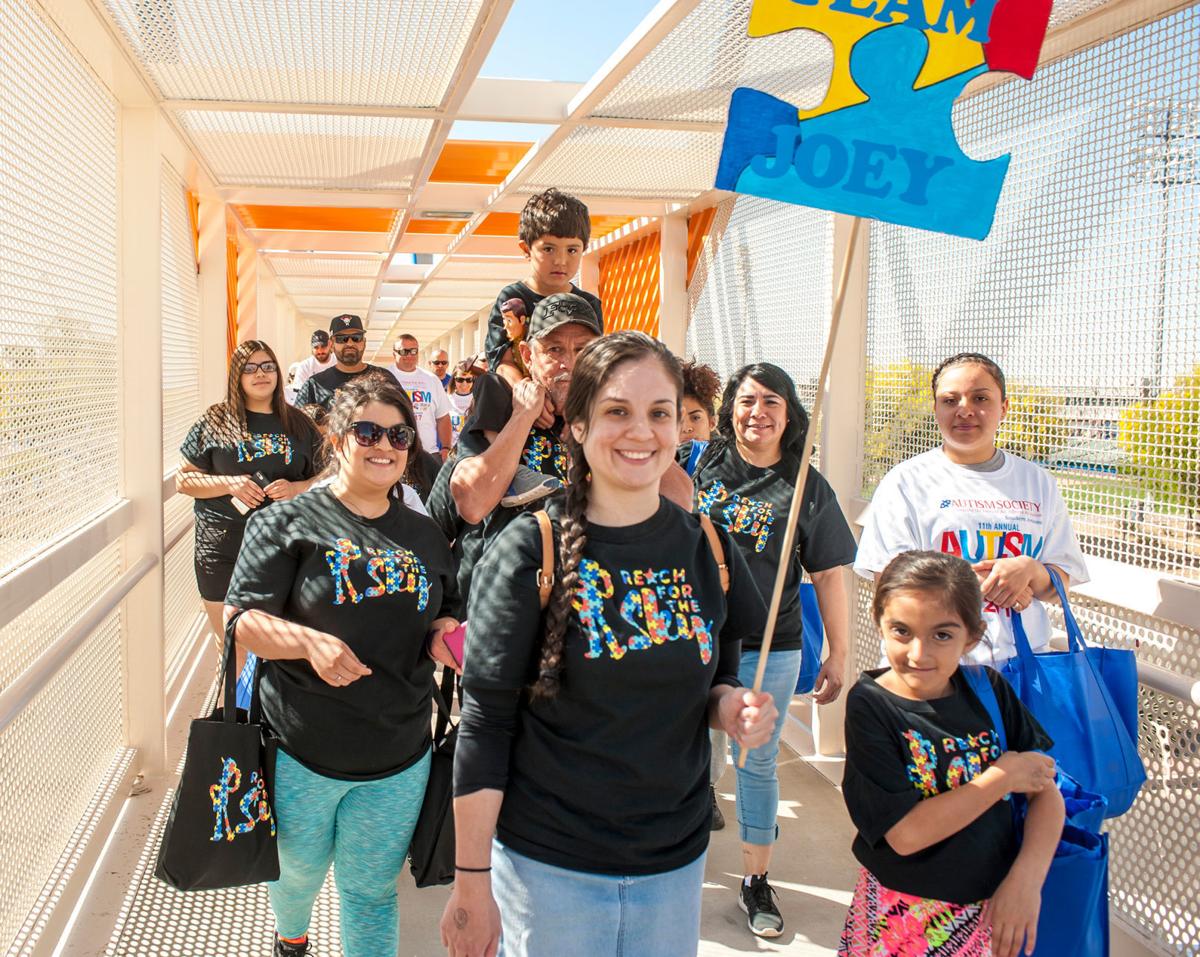
It means the 12th Annual Autism Walk & Resource Fair to benefit the Autism Society of Southern Arizona will provide a public forum for education and support on April 28 at Kino Sports Complex.
For Karla Jones and others in Southern Arizona who have a child or family member living with autism, it means even more: It means hope.
“The Autism Society of Southern Arizona has so much information and so many contacts and so many people who can share their stories and you can identify with them,” said Karla. “I know that I am not alone and it is OK for me to feel all these emotions: Sad, happy, discouraged and frustrated.
“I am not the only one who feels that way. Hearing from people who went through the same things makes you feel like it is OK to be frustrated and there is help and hope. It makes you want to keep going and not give up and helps you want to try everything,” she said.
She and her husband, Brad, have a 4-year-old son, Alec, who was diagnosed with autism spectrum disorder in May 2017.
Karla said that although Alec had been born premature and had some slight speech delays, he seemed to hit normal developmental milestones until age 2.
“Then in May 2016, he changed from day to night. He started having meltdowns and his behavior changed completely and he stopped eating out of the blue. ... I thought he was sick,” she said.
Alec’s behavior became more aggressive and his pediatrician suggested that he be screened for behavioral disorders. Alec began early intervention at home with speech therapy and applied behavior analysis and was referred to a developmental pediatrician for evaluation. It took more than seven months to receive the diagnosis for autism spectrum disorder, a complex developmental disorder that typically appears during the first three years of life and affects a person’s ability to communicate and interact with others.
Symptoms are wide-ranging and can present in a variety of combinations and behaviors, from mild to severe.
“Alec had become really aggressive — screaming, kicking, throwing things — and it was really hard to take him in public because the awareness its not out there.
“People can be really cruel. Sometimes they think that a kid is just misbehaving. We, as humans, tend to judge instead of thinking that maybe something is going on with this kid’s health or family. ... People can be really intolerant, not just with kids on the spectrum, but in general. Our tolerance has become really low for everything: Everyone is on edge,” Karla said.
Upon Alec’s diagnosis, the Autism Society of Southern Arizona became an invaluable resource, she said.
“They have been so much help and told us so many places to reach out to; the information we have received from them has been unbelievable,” she said.
Brie Seward, autism society associate director, said a survey at last year’s Autism Walk resulted in an increased emphasis on information and referrals.
The nonprofit has a newly-created family advisory council comprised of parents of children with autism with a mission to create guides for parents and connect families to local and state resources.
It has also established an information and referral committee comprised of psychologists, behavior analysts, nurses, speech therapists, experts in special education and other professionals.
In addition, the autism society is working with UA Leadership Education in Neurodevelopmental and Related Disabilities to produce a video series that informs families about what to expect after an autism diagnosis.
“We have had families come in who say they are ready to move away from Tucson because they are frustrated and they don’t know what to do next, and we have helped them change that route,” Seward said.
“There is no manual for this and it is our job to equip families with direction and support leading to the services that are available out there.”
In addition to information and referrals, the society offers educational resources such as a website , a lending library and numerous workshops and classes.
Nearly all services and programs — including a speaker series for parents, professionals and students — are free of charge and open to the public.
The nonprofit also offers programs tailored to children of all ages on the autism spectrum and their families: Sonoran Dolphin Swim Club; Sensory Friendly Films; Purrs for Autism, a partnership with Hermitage Cat Shelter that provides pet therapy; and science, technology, engineering and art camps through a University of Arizona partnership. Other offerings include teen meet-ups and a peer-led social club for adults on the spectrum.
Karla said the instruction, therapies and support are making a huge difference to Alec and their family.
“There are still days that are really hard, but he is improving in functional language and we are blessed that day-to-day, he is making improvements.
“Other people who don’t have kids on the spectrum don’t understand that the little things that Alec does make us so happy: The fact that he just started jumping and he can almost feed himself and is working on dressing himself — these little accomplishments mean the world to us,” she said.
Overall, Karla is filled with hope for Alec’s future and for all children and families living with autism.

