



PHOENIX — The state attorney general has launched an inquiry into whether a major tech firm is violating the rights of Arizona residents by tracking their movements and activities through their cellphones — even after the users think they’ve told the company to stop.
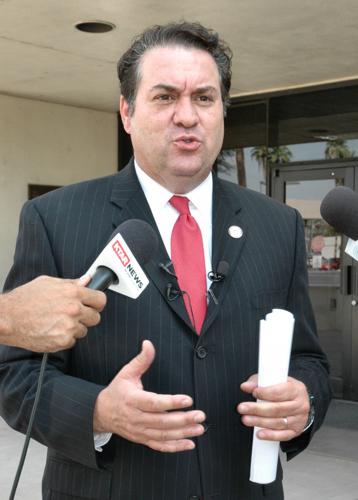
In what appears to be the first such move in the country, Attorney General Mark Brnovich’s office has awarded a contract to a Washington, D.C., law firm to investigate.
The probe will be into how this company stores consumer location data through smartphone operating systems “even when consumers turn off ‘location services’ and take other steps to stop such tracking,” the contract says.
The name of the firm to be investigated is redacted — blacked out by state officials — in the copy of the contract obtained by Capitol Media Services. Under state law, the names of companies under investigation by the Attorney General’s Office cannot be released.
But the contract was signed just a week after The Associated Press reported that Google was tracking users’ locations even after people turned off the “location history” option on their cell phones and tablets with the Google-created Android operating system.
Brnovich declined to confirm the target is Google.
“I can’t say anything other than you don’t need a weatherman to know which way the wind blows,” he said, quoting a line from a Bob Dylan song.
A Google spokesman would not comment on the inquiry, saying only that the information the company gathers “helps us provide useful services when people interact with our products, like locally relevant search results.”
He also said there are ways for users to delete location history and web activity.
But Brnovich said that process is opaque to users who think that turning off their location history — an option on a top-level Google menu — will do the trick.
“I should not be a tech expert in order to figure out how not to have a third party know everything about my private life, including my emails, my conversations with my wife, my kids, what they’re up to, how many hours I spend watching sports or checking scores on my phone, how long I spend at the mall on Sundays,” he said in an interview. “It really is Big Brother-esque.”
An aide to Brnovich, Ryan Anderson, said it’s even more basic than that. He said users who think they’re opting out of having their information shared by clicking off “location sharing” are being lied to.
“It’s a fake button,” he said. “It doesn’t actually do anything.”
Providing an actual way to stop tracking — but one that’s not readily apparent — doesn’t mean a company is not deceiving consumers, Anderson said.
“Then why even put ‘location services’ up in the first place?” he asked. “It gives consumers the perception that they’re actually doing something to protect their privacy when, in fact, they’re not.”
Brnovich said the default setting should be “off” for locating sharing.
“You should have to opt in as opposed to opting out,” he said.
What gives Brnovich some power over the international company is the state’s extensive Consumer Fraud Act.
That’s the same law he used to get refunds for Arizonans who purchased what they thought were clean-burning diesel-powered vehicles from Volkswagen. Brnovich got a court to rule that the allegations of misleading Arizonans were enough to give him jurisdiction over that multinational firm.
In the current case, he said, the company in question is making untrue representations to Arizona consumers that once they turn off “location services” that the practice stops.
The invasion of consumer privacy, he said, involves more than just where someone is and has been.
“If they’re accessing the contacts of your phone without your permission, that means they are doing things that you either ultimately didn’t want done but they did anyway, or alternatively, they’re collecting information on you without telling you that they’re doing it,” Brnovich said.
“They’re essentially creating a profile on you,” he said. “They literally can know what you want to buy before you even know.”
It ultimately comes down to who has the right to anyone’s personal data, Brnovich said.
“Quite frankly, I do think as a human being I have a property right in my information, my data, things about me, who I deal with, where I go,” he said. But he said it goes beyond that.
“The dignity of being a human being is not having everyone know, through some third party, every single thing about what we do,” Brnovich said.
“I’ve heard a lot of people say, ‘Who cares?’” he continued. “But if you don’t care, then why do people have passwords?”
Brnovich acknowledged that others gather information about Arizona consumers without their consent and sell it to third parties, particularly credit bureaus. But he said this is far different.
“They’re collecting vast amounts of data, including location services, where you’re at, how long you’re at the store and everything else, which is much more invasive than, let’s say, someone running your credit report,” he said.
Brnovich noted that consumers have a right to request a copy of their credit report to find out exactly what is being reported on them and ask the company to remove erroneous information. That is not an option, he said, with the kind of tracking being done here.
While Congress and federal authorities have raised questions about tracking, there is no evidence that any have pursued investigations or litigation to stop the practice.

