



The state’s plan to issue 26 “social equity” marijuana dispensary licenses early next year could be delayed after a lawsuit aimed at preventing established cannabis companies from acquiring the licenses was filed.
The complaint, filed last week in Maricopa County Superior Court, claims the requirements laid out in Proposition 207, which legalized adult-use marijuana in-state, are being violated by the state health department’s current rules governing who can qualify for the state-issued licenses, which will be financially valuable to the holders.
If the suit proceeds, it could delay the scheduled timetable of deadlines rapidly approaching for potential social equity license applicants.
If successful, the suit would have the Arizona Department of Health Services, the agency in charge of regulating the state’s medical and recreational marijuana industries, scrap its rules and establish a new set governing the social equity program.
“The lawsuit demands compliance with the intent of Proposition 207,” a press release put out by the plaintiff’s said. “As it stands now, the regulations proposed by the state do not prohibit venture capital firms and large, mostly white-owned, multistate marijuana companies from snatching up all social equity licenses from the 26 successful applicants — effectively defeating the purpose of the voter-approved social equity program.”
Passed as part of Proposition 207, the “social equity ownership” program sets aside 26 licenses for “people from communities disproportionately impacted by the enforcement of previous marijuana laws.”
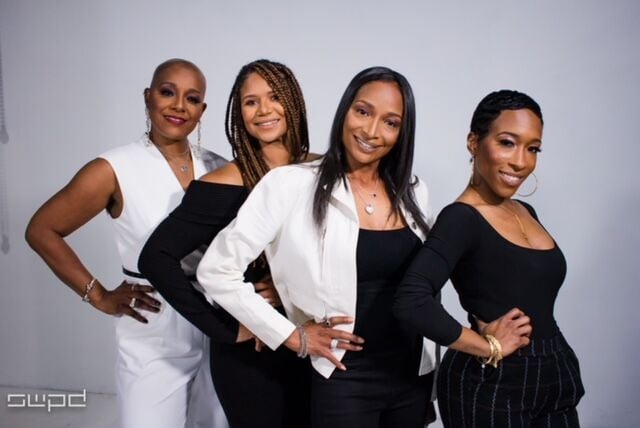
The lawsuit was filed by the Greater Phoenix Urban League and Acre 41, a collection of black female entrepreneurs focused on expanding access to Arizona’s burgeoning marijuana industry.
Along with the state health department and its current director, the suit also names Gov. Doug Ducey and the state of Arizona as defendants.
Celestia Rodriguez, one of the lawsuit’s plaintiffs and a member of Acre 41, said she was concerned about many issues raised by the current rules, but most profoundly about the issue of actual equity being achieved through the program.
“If they (the social equity licenses) need to be transferred, they need to be transferred to another social equity applicant, never into an investor or a multistate operator’s hands,” she said.
Under the language of state health department’s rules, potential applicants are required to own at least 51% of an operation. However, the rules allow the applicant to sell to another dispensary or established entity immediately after acquiring the license.
Rodriguez and the Greater Phoneix Urban league see a problem in that.
“Most concerning to the Greater Phoenix Urban League, the regulations fail to ensure the 26 social equity dispensaries will be operated in a way that benefits communities most harmed by the ‘War on Drugs,’ ” the plaintiff’s release said.
Currently, applications are set to be accepted from Dec. 1-14, with a lottery determining the 26 license winners slotted sometime for early next year.
AZDHS current rules stipulate applicants to the social equity ownership program meet three of the four requirements to qualify:
An income less than four times the federal poverty level for three of the past five years. For 2021, the federal poverty guidelines for a family of four are $26,500, or $106,000 for an individual from the family to qualify.
A previous marijuana-related conviction that’s been expunged, or a state or federal marijuana conviction. Documents of either the expungement or conviction are required.
Having a spouse, parent, child, sibling or guardian who was convicted of a marijuana crime, or has had it expunged.
Resided at least three of the past five years in a “community that has been disproportionately affected by the enforcement of Arizona’s previous marijuana laws.” These are defined by AZDHS as the 87 ZIP codes with high rates of incarceration for marijuana crimes and social services. Eight of those ZIP codes are in the Tucson area.
Rodriguez said that, besides the issue of license transferability, there are other issues inherent to the current AZDHS rules. For one, the guideline governing ZIP codes isn’t inclusive enough. It should include where potential applicants grew up.
“You might’ve went to high school or lived in a neighborhood and then moved out the neighborhood within the last three to four years,” she said. “It doesn’t mean you weren’t affected by living in a disproportionately impacted area, because you were. That’s when you really would’ve been affected, in your childhood, not when you were an adult.”
If the lawsuit is successful, Rodriguez hopes it spurs a more inclusive and truly socially equitable round of rule making from AZDHS, in partnership with the communities it’s required to help serve by Proposition 207. That way, those applicants who end up with one of the 26 social equity ownership licenses have a shot at succeeding on their without having to turn to already established operators.

