



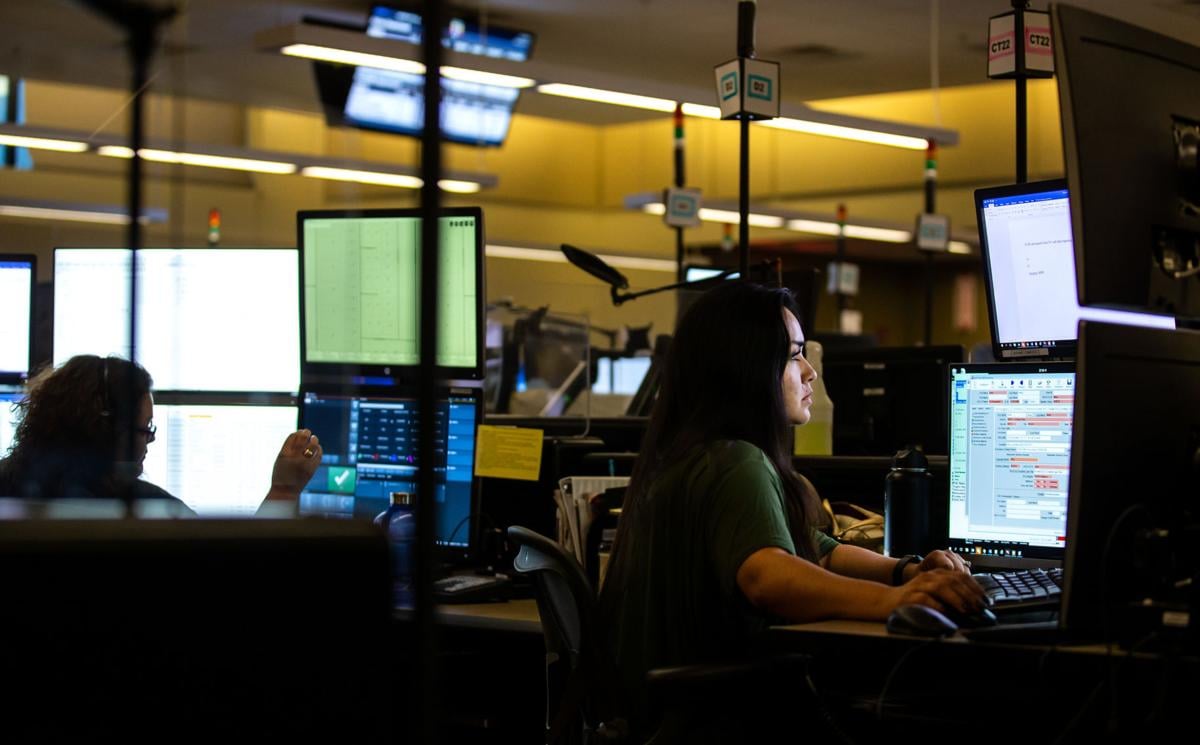
Tucson’s troubled 911 system is in “critical but stable” condition after the sudden resignation of its top boss after a year on the job, the new interim leader said.
Jamie O’Leary, director of the city’s Public Safety Communications Department that operates 911, recently quit the $175,000-a-year post 14 months after she was hired.
“After much deliberation, I have decided to tender my resignation,” O’Leary’s Jan. 12 letter to the city manager said. “Compelling personal family needs require me to return to Oklahoma,” she wrote.
The city offered O’Leary $15,000 for moving expenses to relocate to Tucson from Oklahoma City, where she previously served as that city’s 911 director.
The timing of the departure coincides with an upcoming 90-day review of how much progress has been made in fixing numerous problems at the city’s 911 center including high turnover, low morale, overcrowding and inadequate training and supervision.
The shortcomings were identified last fall in a $40,000 consultant’s study in which 911 employees described O’Leary’s leadership style as “dominance, anger (and) sarcasm.”
City Manager Michael Ortega, who hired O’Leary, would not comment on whether the pending progress report was a factor in her exit. “I do not comment on personnel matters,” he said.
For now, the 911 system, which handles about 4,000 calls a day, is being led by the Tucson Police Department’s second-in-command, Deputy Chief Chad Kasmar.
You can't make this stuff up: a 5-year-old had an emergency craving for Mickey D's so he called the cops. Hear the dispatch conversation on today's 5 To Know! Plus, a commuter's ridiculous hat, Beyonce's album 'Lemonade' gets on more streaming platforms, and Happy National English Muffin Day!
“If I was a doctor, I would say we’re critical but stable,” Kasmar said in an interview.
A high-functioning 911 system is supposed to be able to answer emergency calls within 10 seconds 90% of the time, but local operators are only able to reach that goal 75 to 80% of the time, Kasmar said.
“Right now we’re asking for patience during peak call periods when it might take a little longer than we want,” for a 911 operator to answer, he said.
Kasmar said progress is underway but much work remains to fix problems that have festered since 2017, when the city consolidated police and fire dispatchers into one location without creating additional workspace for the resulting larger workforce. According to the consultant’s report, employees reported having two very distinct cultures under one roof and “an inherent rivalry between those serving the Tucson Police Department and the Tucson Fire Department.”
Lane Mandle, a city spokeswoman, said the construction project has been a complicated by the need to create false floors over intricate wiring and technical installations. The pandemic also created a work slowdown that affected the timing, she said.
Like many communities nationwide, Tucson suffers from a chronic 911 staffing shortage that has only grown worse during the pandemic, Kasmar said. The local system is authorized for 165 personnel, but only about 110 are available for duty in any 24-hour period, he said.
A number of workers have quit over lack of child care during the pandemic or due to concerns their cramped workplace “makes it almost impossible to be socially distant,” he said. The department also had a coronavirus outbreak among employees last summer.
The larger quarters are expected to be ready in September. Kasmar said a package of other changes is being considered, including upgrades to training and recruitment practices and pay raises for personnel who now make $15.32 an hour for high-stress work.
Photos: University EMS squad
University EMS
Updated
First responder Brittney Ruiz, left, Chief Zach Saxman and EMT Haily Blunt head to Yavapai Hall to see to a student with stomach pain.
University EMS
Updated
Members of University EMS this year acquired a Chevy Suburban to serve as an emergency vehicle for quicker response. They currently do not run with lights and sirens but are equipped to do so when they get authorization from UAPD.
University EMS
Updated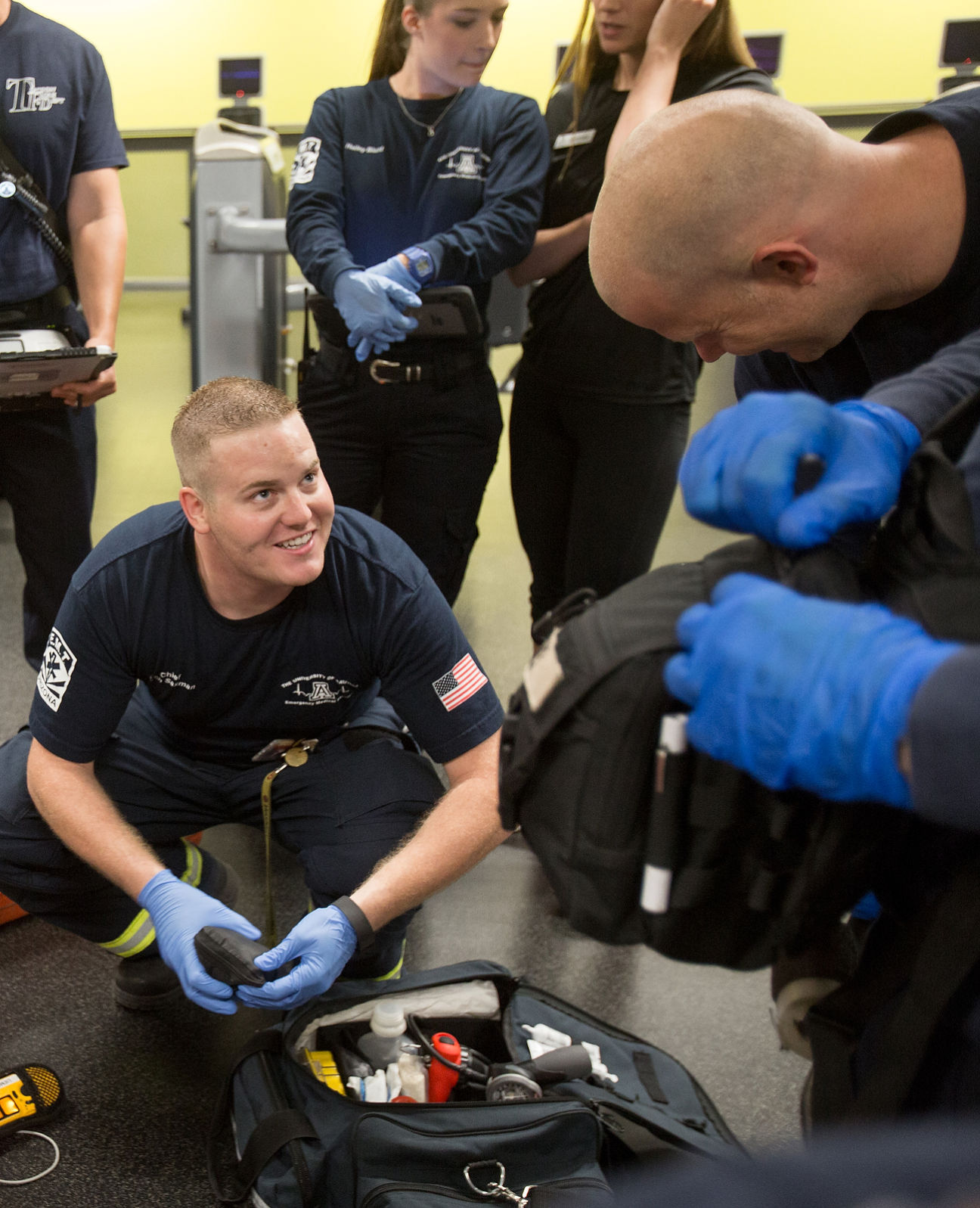
University EMS captain Zach Saxman talks with a Tucson Fire paramedic and unpacks a glucose meter. EMT Haily Blunt, background left, is in training as a captain so Saxman performs the duties as care provider.
University EMS
Updated
Members of University EMS squad leave the site of an intoxicated student call on a sorority lawn. They treated the student who is now being transported to the hospital by Southwest ambulance.
University EMS
Updated
Members of University EMS squad move on another call from their squad room in the basement of Kaibab Hall.
University EMS
Updated
First responder Brittney Ruiz, right, surveys the scene at University of Arizona Campus Recreation Center as emergency crews from UA EMS and Tucson Fire arrive simultaneously. Brittney Lawrence, 19, sophomore from Tempe has fainted during a workout.
University EMS
Updated
The team has responds to a patient they saw for a head wound at the UA recreation center from an earlier call. He was treated and released but his wound has reopened. Coronado Hall.
University EMS
Updated
First responder Brittney Ruiz, left, and EMT Haily Blunt, right, go over an incident report between calls.
University EMS
Updated
EMS squad responds to a call for a person down at the UA Recreation Center.
University EMS
Updated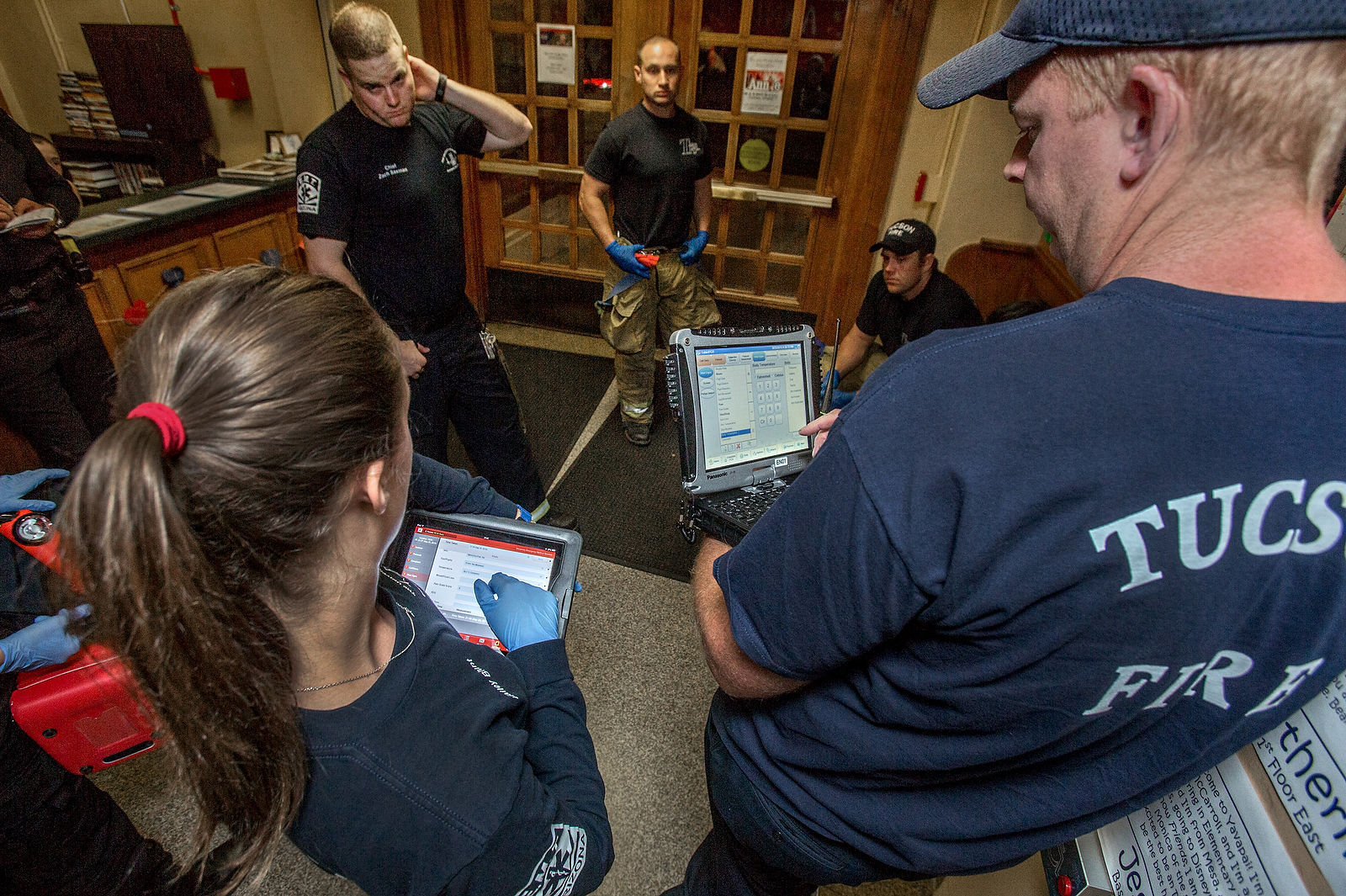
EMT Haily Blunt Haily shares patient information and vitals signs with a Tucson Fire Department rescue squad who will transport the patient to University Hospital.
University EMS
Updated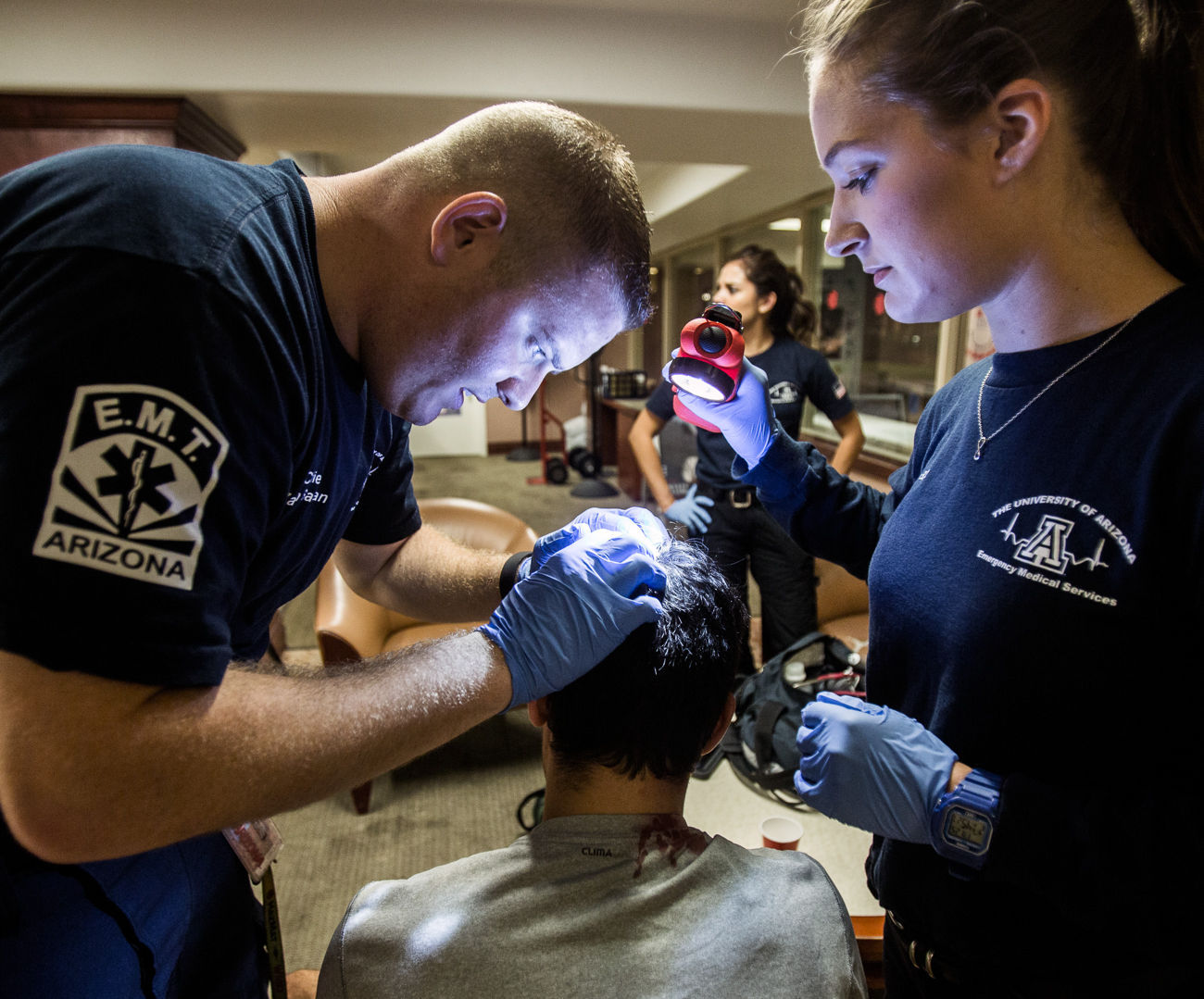
UEMS team members check a patient they’d earlier seen for a head wound, which had later reopened.

