


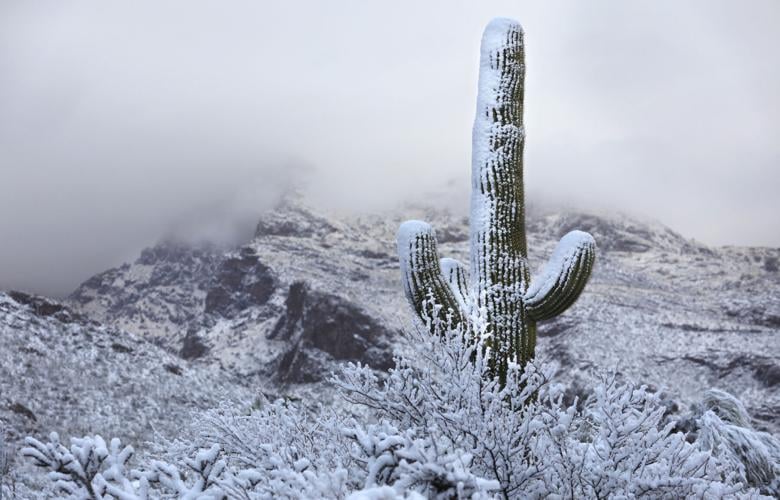
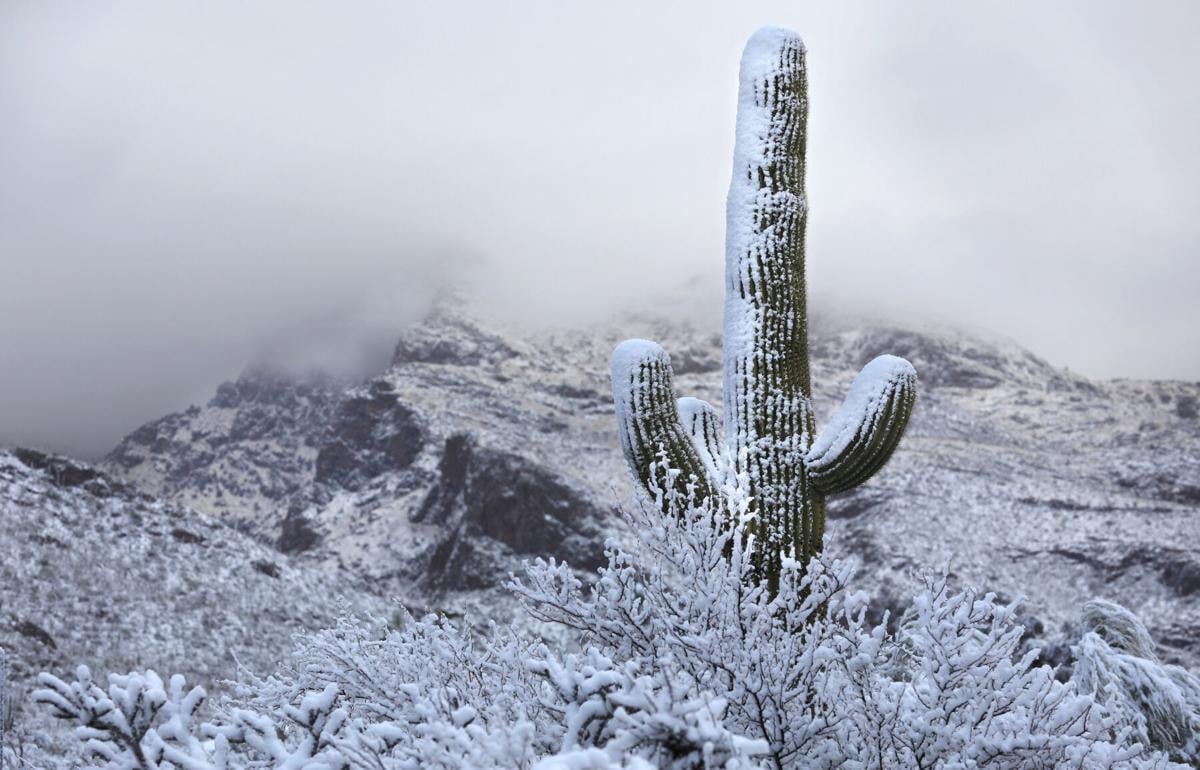
Portland, Oregon received nearly a foot of snow in a single day in what proved to be its second-snowiest day in history. Mountainous areas of California experienced nearly unprecedented snowfall accumulations — more than 40 feet since the start of the season. Even Tucson and Phoenix suburbs woke up on Thursday to a dusting of snow that covered cactuses and lush golf courses.
In Tucson, the international airport received one inch of snowfall, making it the seventh highest March snow, the National Weather Service said. March 12, 1922 holds the record for the month’s highest snow, with a total of six inches.
Areas on the east side and north west side of Tucson received around two to three inches of snow, the NWS said. Vail received seven inches of snow from Wednesday’s night storm, Oracle received 6 inches of snow and places like Saddlebrooke and Benson received 4.5 inches.
On Mount Lemmon, Summerhaven received 12 inches of snow during the storm. In a Facebook post, Mt. Lemmon Ski Valley said they should be open Friday.
The mountains usually seen in the distance between the houses are mere shadows. Video taken the morning of March 2, 2023.
This is the second time it has snowed in Tucson this year, the first being in February. It is also the 10th time measurable snow has happened in March in Tucson history.
So far this season, Tucson has received 1.5 inches of snow. That’s more than Washington D.C. and Philadelphia have received, the NWS said.
Schools in the area mostly were unaffected by Thursday’s weather, though a snow day was called in Sierra Vista.
After two near-freezing mornings, Tucson’s weekend is expected to be mostly sunny with high temperatures Saturday and Sunday hovering around 70 degrees.

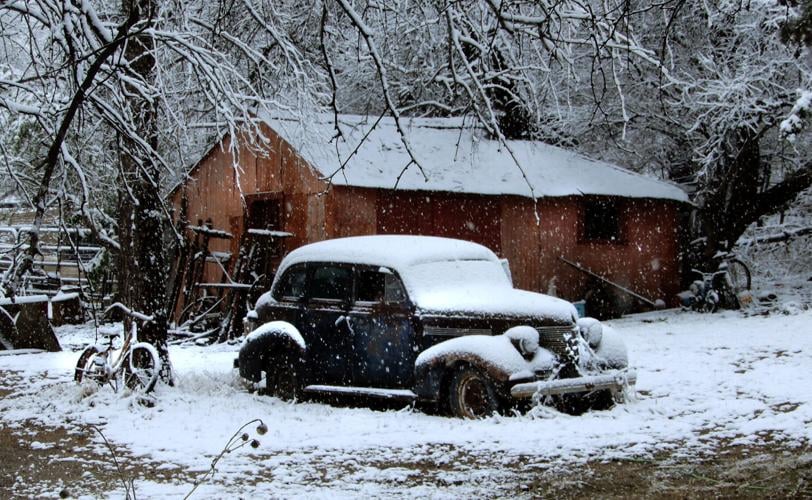
Looking like a scene from a 1940s movie, this snow covered sedan on South River road in Santa Cruz County after an overnight snow storm that deposited some 2 to 6 inches over much of the county.
That’s good timing for the 14th annual Tucson Festival of Books.
The massive literary event draws some 300 presenters and about 125,000 people to the Old Pueblo.
The festival schedule can be found at tucne.ws/tfobsked.
What is going on with all the snow?
“This rain and snow bucked the trend and it’s highly unexpected,” said Ryan Maue, a meteorologist and former NOAA chief scientist. “It’s like once-in-a-generation.”
Meteorologists say the explanation for the robust winter season is not so simple.
The current La Niña pattern does have an influence on global weather, but Maue said that is only one factor.
Bianca Feldkircher, a meteorologist for the National Weather Service, said a persistent blocking pattern over the Pacific Ocean plus cold air migrating south from the Arctic have created the conditions for widespread snowfall along the West Coast.
“Not only were you getting significant snowfall in areas that already see snow, you were also seeing snowfall on lower elevations in Southern California, which is super rare,” said Feldkircher.

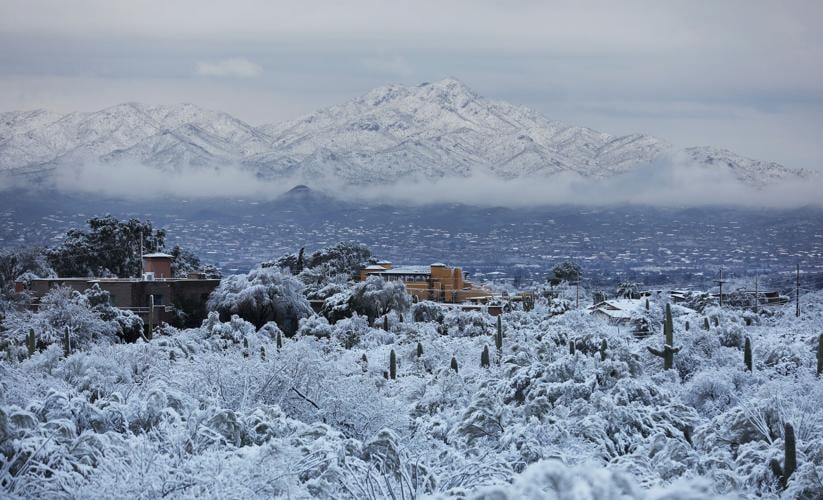
Tucson Mountains blanketed in snow as seen from the foothills of the Santa Catalina Mountains on Thursday.
For example, the forecast on March 1 warned of snowfall for parts of Phoenix, which Feldkircher said is “super unusual” for this time of year. And last week, Portland saw abnormally high snowfall rates and recorded nearly 11 inches — the second snowiest day in the city’s history.
With respect to human-induced climate change, meteorologists say it’s challenging to nail down what part it is playing in the West Coast’s peculiar winter season.
But increasingly extreme weather is expected as global temperatures rise. “Heat produces moisture, moisture produces storms, and heat and moisture bind to produce even more severe storms,” Feldkircher said.
Forecasting technology keeps getting better. So much better, it may even soon be able to forecast extreme events with higher accuracy. “In the near future, I do not think climate will cause issues with our weather forecasting capabilities,” Maue said.
Although many regions struggled with the challenging winter conditions, some are welcoming the much-needed moisture.
The recent precipitation is a blessing for ameliorating the drought that has persisted in the Southwest.
California tends to go from rags to riches, bounty to poverty when it comes to rain, Maue said. “That’s why from a policy point of view, you need to be able to have water regulations, reservoirs, and water supplies that can last during multi-year droughts.”
Photos and videos of snow around Tucson

A skier heads down one of the gentler slopes at Ski Valley, taking advantage of a winter storm earlier in the week that left new snow on Mt. Lemmon, Tucson, Ariz., March 3, 2023.

A snowboarder makes a jump on the slopes of Ski Valley, among the hundreds taking advantage of the mid-week storm that dumped several inches of snow in the valley and feet on Mt. Lemmon in the Santa Catalina Mountains, Tucson, Ariz., March 3, 2023.

A pair of sightseers grab photos from the Windy Point Vista with some more stubborn patches of snow left from a storm earlier in the week in the Santa Catalina Mountains, Tucson, Ariz., March 3, 2023.

A car heads down the Mount Lemmon Highway past some of the last surviving patches of snow in the Santa Catalina Mountains, Tucson, Ariz., March 3, 2023.

Snow still clings to the upper reaches of the Santa Catalinas and Mt. Lemmon, Tucson, Ariz., March 3, 2023.

Looking like a scene from a 1940s movie, this snow covered sedan on South RIver road in Santa Cruz County was created by an overnight snow storm that deposited some 2 to 6 inches over much of Arizona's smallest county Wednesday night and Thursday morning.
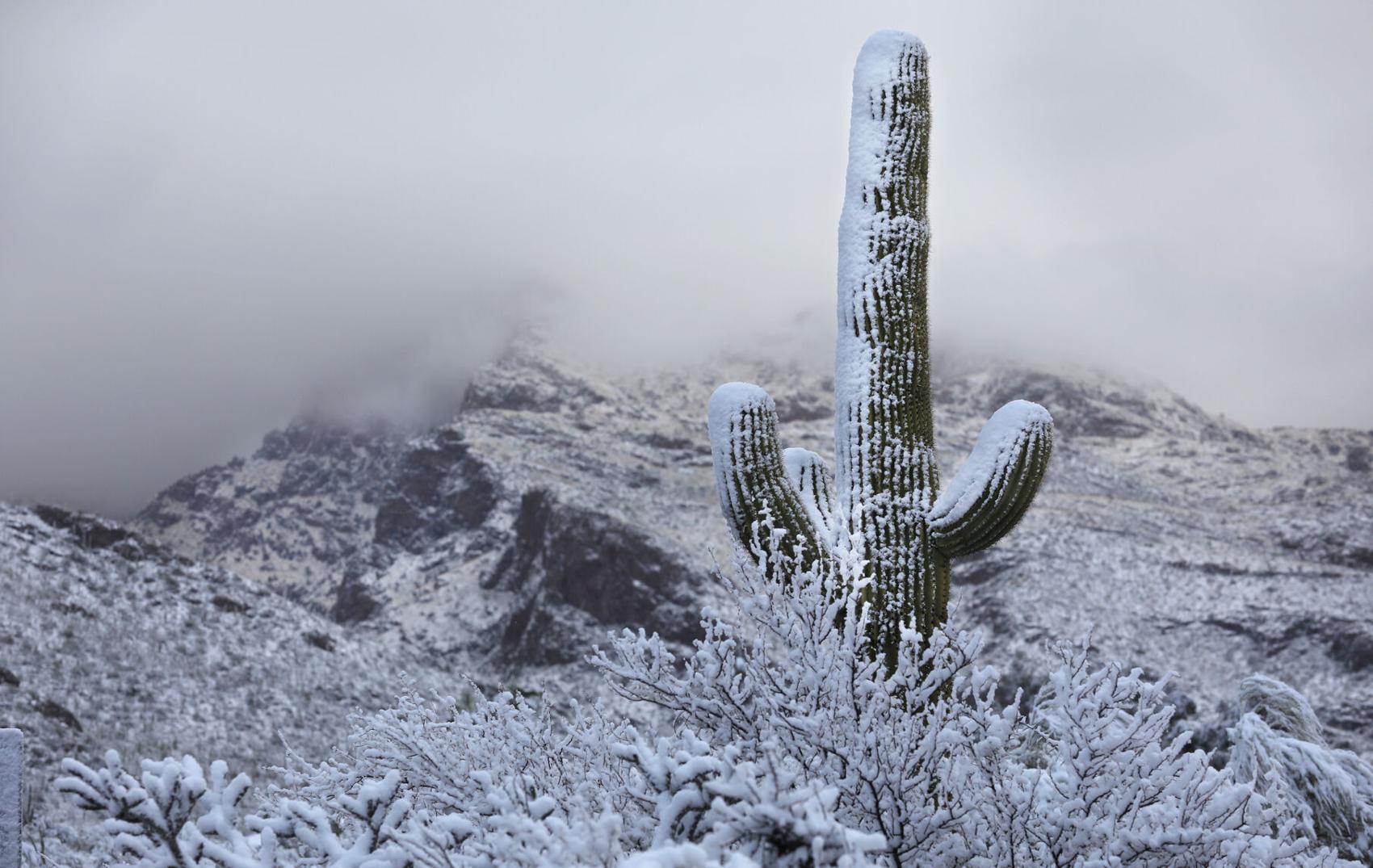
Snow in the foothills of the Santa Catalina Mountains on March 2, 2023

Snow in the desert and Pusch Peak in the distance on March 2, 2023
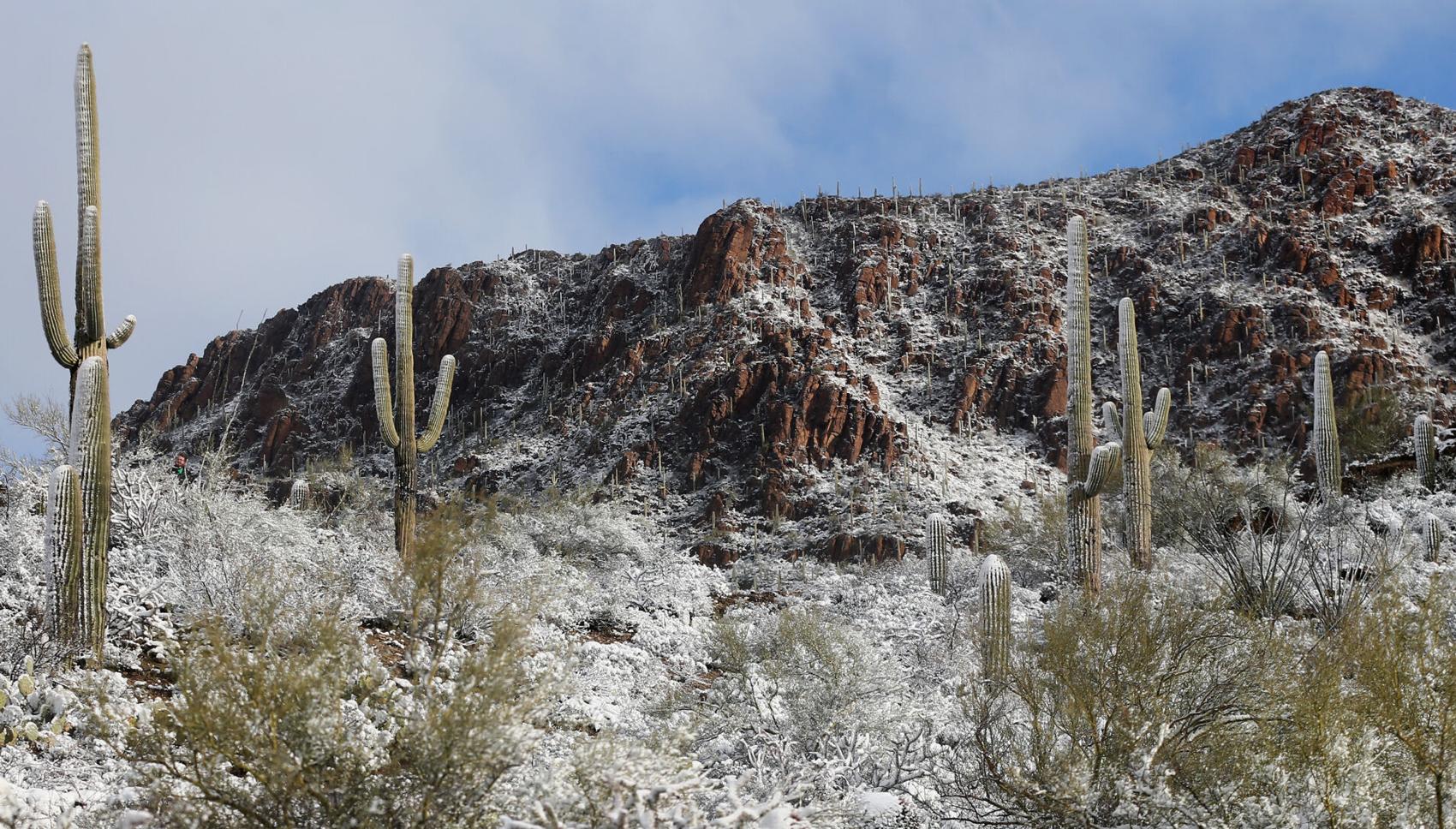
A dusting of snow fell upon the desert at Tucson Mountain Park off of Gates Pass Road on March 2, 2023.

A photographer takes advantage of the dusting of snow that fell upon the desert at Tucson Mountain Park off of Gates Pass Road on March 2, 2023.

A couple of pedestrians stroll on Wentworth Road between Tanque Verde Road and Speedway Avenue in front of the remnants of a winter storm that dumped several inches of snow in the Santa Catalina Mountains and around Tucson, Ariz., March 2, 2023. Wentworth is closed at the Tanque Verde Wash due to the runoff from the storm.

Snow melts off a saguaro along Redington Road in the lower reaches of the pass following a winter storm that dumped several inches of snow around Tucson, Ariz., March 2, 2023.

Tucson Mountains covered in snow as seen from the foothills of the Santa Catalina Mountains on March 2, 2023

A jogger heads east on the north bank of Rillito River Park near Swan Road with snow melt flowing in the channel, the result of a winter storm that dumped several inches of snow around Tucson, Ariz., March 2, 2023.

While it's not the "official motto" of the US Postal Service, it seems to be true that "neither rain, nor hail, nor sleet nor snow shall stay these couriers from their appointed rounds." At least as far as Laura Bryant is concerned it's true. She was on her Rural Mail Carrier route on Hwy 182 Thursday morning. She reported some four to six inches of snow when she began her day in Patagonia.

This horse in Rio Rico wandered out of it's stable this morning to a dissappointing meal table. Santa Cruz County received a layer of snow ranging from two to four inches of new snow on Thursday.

A dusting of snow fell upon the desert at Tucson Mountain Park off of Gates Pass Road on March 2.

A dusting of snow fell upon the desert at Tucson Mountain Park off of Gates Pass Road on March 2, 2023.

A dusting of snow fell upon the desert at Tucson Mountain Park off of Gates Pass Road on March 2, 2023.

A dusting of snow fell upon the desert at Tucson Mountain Park off of Gates Pass Road on March 2, 2023.

Lexie Wiley makes a snow angel on March 2, 2023
School children at Manzanita Elementary School north of Tucson dash into fresh snow on the playground on March 2, 2023. Courtesy of Tiffany Wiley

Tucson Mountains covered in snow as seen from the foothills of the Santa Catalina Mountains on March 2, 2023

Snow in the foothills of the Santa Catalina Mountains on March 2, 2023
The mountains usually seen in the distance between the houses are mere shadows. Video taken the morning of March 2, 2023.
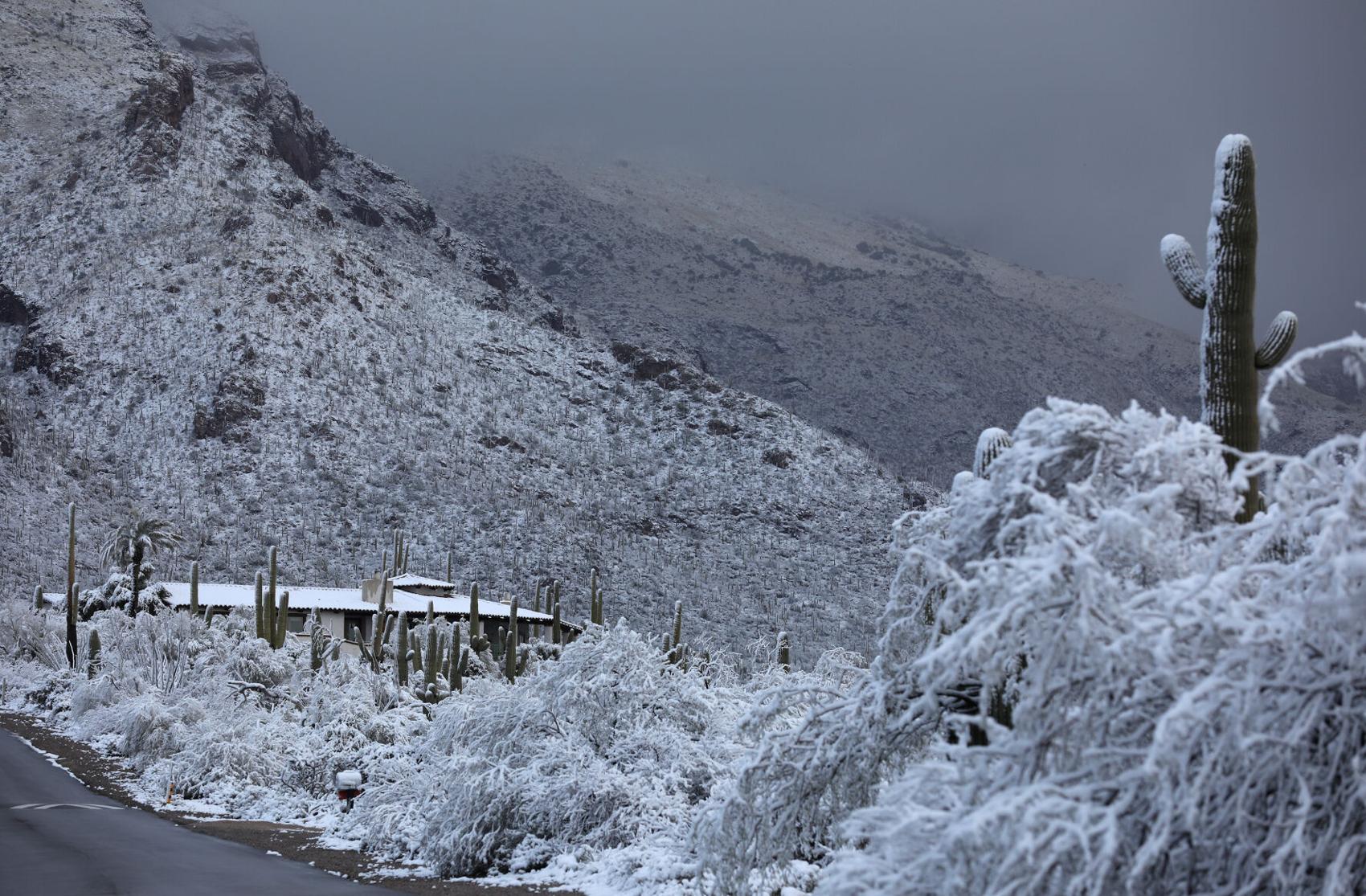
Snow in the foothills of the Santa Catalina Mountains on March 2, 2023

A small peak in Avra Valley dotted with snow lit up by the morning sun as seen from the Santa Catalina Mountain foothills on March 2, 2023
This neighborhood on Tucson’s far southeast side, near Houghton and Sahuarita roads, got plenty of snowfall overnight on March 2, 2023. While it may not look or feel like Tucson, the snow-covered barrel cactus and prickly pear are proof that we’re still in the Old Pueblo.

Snow in the foothills of the Santa Catalina Mountains on March 2, 2023

Snow in the foothills of the Santa Catalina Mountains on March 2, 2023
Tucson received snowfall through the night. Here is a glimpse at the views from midtown Tucson. Video by Pascal Albright and Jesse Tellez / Arizona Daily Star

Snow in the foothills of the Santa Catalina Mountains on March 2, 2023

Snow in the foothills of the Santa Catalina Mountains on March 2, 2023

Backyard pool and snow near Oracle and Magee on March 2, 2023
The Corona de Tucson area in Vail, southeast of Tucson, woke up to a healthy amount of snow on Thursday morning, March 2, 2023. The snow came in after an evening of heavy winds and rain on Wednesday.

Clouds clear from snow-covered Pusch Peak in the Santa Catalina Mountains on March 2, 2023

A snow-tipped cereus cactus near Oracle and Magee on March 2, 2023
Watch today's weather in Tucson from midnight to this morning. According to the National Weather Service, residential parts of Tucson and surrounding areas have reported one to seven inches of snow since Wednesday night. Video courtesy of the University of Arizona Department of Hydrology and Atmospheric Sciences.

The Santa Cruz Riverbed at the bridge crossing of HWY 82 between Nogales and Patagonia Thursday morning.

Looking like a scene from a 1940s movie, this snow covered sedan on South RIver road in Santa Cruz County was created by an overnight snow storm that deposited some 2 to 6 inches of snow on Wednesday night and Thursday morning.

The search for breakfast this morning proved to be a little disappointing for this cow and the rest of her herd. They were wandering the Santa Cruz Riverbed but it was slim pickings for them.

Two snow covered cargo planes sit on the ramp at Nogales International Airport grounded by the weather. Roads were easily traveled for the most part, but unpaved areas of the county were covered with a two to four inch layer of snow that began late Wednesday night and continued through the morning as late as 11:00 am.

A dusting of snow fell upon the desert at Tucson Mountain Park off of Gates Pass Road on March 2, 2023.
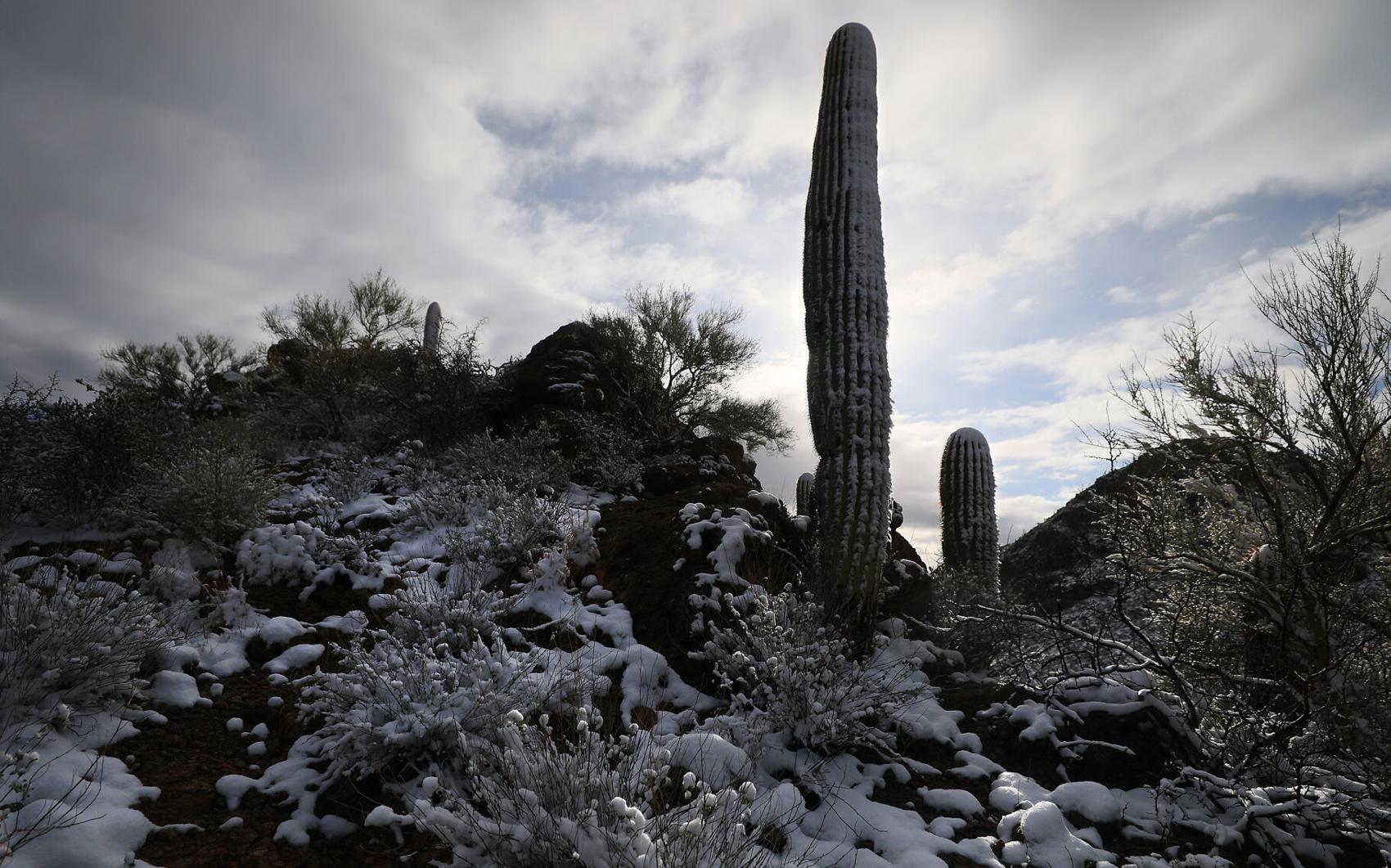
A dusting of snow fell upon the desert at Tucson Mountain Park off of Gates Pass Road on March 2, 2023.

A dusting of snow fell upon the desert at Tucson Mountain Park off of Gates Pass Road on March 2, 2023.

A dusting of snow fell upon the desert at Tucson Mountain Park off of Gates Pass Road on March 2, 2023.

A dusting of snow fell upon the desert at Tucson Mountain Park off of Gates Pass Road on March 2, 2023.

