




David Van Auker wasted little time.
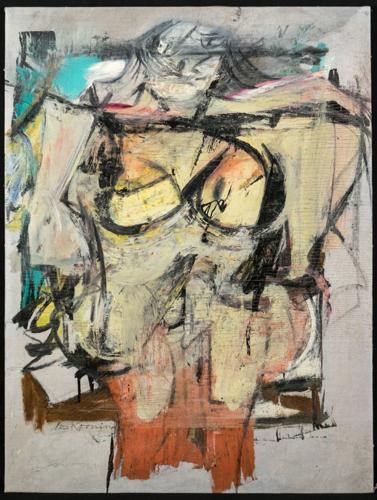
Earlier this month, the Silver City, New Mexico, furniture and antiques dealer realized the painting that was among the items he had just purchased from an estate was Willem de Kooning’s “Woman-Ochre.” It had been stolen more than 31 years ago from the University of Arizona Museum of Art.
Van Auker and the other players involved in bringing back the painting, said to be worth as much as $160 million, gathered Monday, Aug. 14, to talk about the piece’s return.
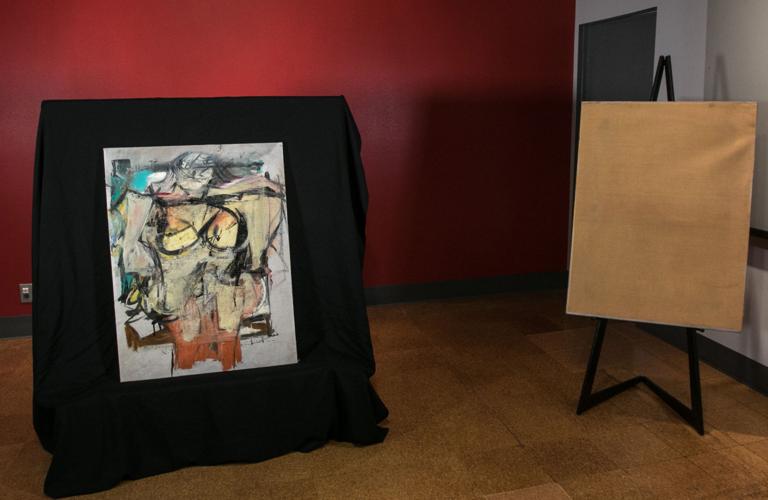
As the story of its recovery was revealed in an upstairs gallery at the UA Museum of Art, the painting sat in a guarded downstairs room. After the conference, the press was allowed to view it, one person at a time. The abstract expressionist piece practically glowed under the museum light, and de Kooning’s aggressive strokes and the swaths of blues and reds did not look worse for the wear to the untrained eye.
The painting’s journey since it was sliced out of its frame almost 32 years ago:
- Sometime after the 1985 theft, it found its way to the Cliff, New Mexico, home of Jerry and Rita Alter, the Silver City Daily Press reported. There it hung behind a bedroom door. Jerry Alter, a symphony musician and teacher in New York City before he retired to New Mexico, died in 2012; Rita, a retired speech pathologist, died in the last year. An FBI investigation into how the painting came to be at the Alters’ modest three-bedroom home on 20 acres continues.
- Van Auker noticed the painting behind that door as he was considering what to purchase at the Alter home. He thought it was “cool,” he said at Monday’s news conference. He put the painting on top of the pile he gathered and headed back to his store.
- Van Auker propped “Woman-Ochre” up at the store, where a customer came in and looked closely at it. He reached out to touch it when Van Auker’s partner said, “Don’t touch the painting; you’ll put your finger through it.” “I think that’s a de Kooning,” the customer said. Another customer came in and said the same thing. And a third.
- Van Auker did some research and came across a story about the theft. “There on the computer screen was a picture of the painting,” he said.
He was starting to get nervous about having it at the store.
“At this point, we put it in the bathroom,” Van Auker said.
- He knew it was a pricey piece of art sitting in his bathroom, but he never considered holding on to it.
“We returned something that was stolen,” he said. “That’s what everyone should do; that’s the way I was raised.”
He quickly decided to call the UA Museum of Art: “I have a painting that was stolen from the university 30-some years ago,” he said in that Aug. 3 call. “Please hold,” the receptionist said.
- UA museum staff rushed to Silver City the next day. By this time, the painting was out of his shop and put in the home of a friend for safe-keeping. The friend was having a party when visited by Meg Hagyard, the interim head of the UA museum; curator Olivia Miller; and Nancy Odegaard, head of restoration at the Arizona State Museum. They were led to the painting.
Odegaard kneeled in front of it and starting examining it. It took about two hours before she was satisfied that it was authentic. The last step was matching the cut marks in the original frame to those on the canvas’ edges. The thieves had used a razor blade to roughly cut the canvas from its frame.
- The de Kooning was kept overnight in a vault at the Silver City police station. By Aug. 7, it had been crated up, driven back to Tucson and settled safely in the environmentally controlled, well-protected museum.
The painting needs some restoration, says Odegaard. In addition to the ripped edges that may be able to be reattached, it was stapled to a board inside a frame, and there is a crease mark where it had been rolled. “There’s a slight brittleness” to the work, said Odegaard. But she added, there were “no paint flakes.”
The painting will not go back on the wall until further authentication and restoration is done, said Hagyard.
At the time of the theft, a third party had offered a $10,000 reward. UA Police Chief Brian Seastone, who had been an investigator when the piece was stolen, said at the news conference that he does not know if the cash will still be awarded.
The painting was insured, and the UA Museum of Art received a $400,000 check after it was stolen. That money was put in an endowment fund, and the interest from it was used to upgrade security at the museum.
The amount was returned to the insurer last week, said Chris Sigurdson, the UA’s vice president of communication.
Stolen artwork worth as much as $160 million recovered for University of Arizona
Willem de Kooning "Woman-Ochre" Returned to UA Museum of Art
Updated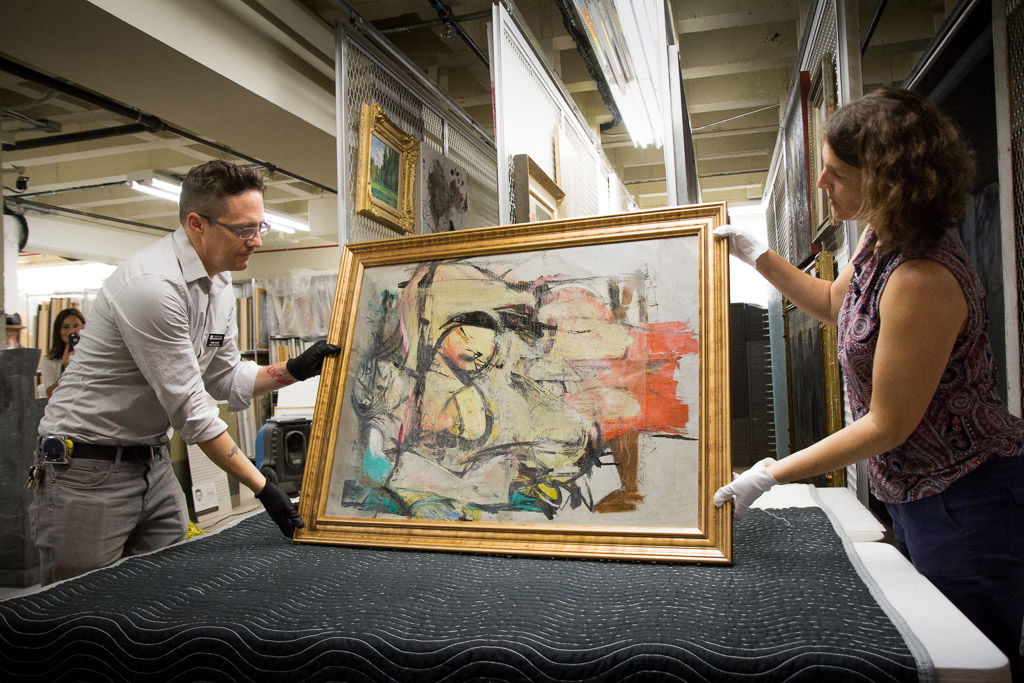
The recovered painting by Willem de Kooning is readied for examination by UA Museum of Art staff Nathan Saxton (r), Exhibitions Specialist, and Kristen Schmidt, Registrar, on Aug. 8, 2017.
Stolen painting
Updated
David Van Auker, a furniture and antiques dealer in Silver City, New Mexico, can’t hold back his excitement when telling the story of discovering a missing Willem de Kooning painting. Olivia Miller, UA Museum of Art curator, looks on.
Stolen painting
Updated
Willem de Kooning’s “Woman-Ochre” was found in New Mexico after being stolen in 1985 from the University of Arizona Museum of Art.
Stolen painting
Updated
Willem de Kooning’s “Woman-Ochre,” on display for a news conference on Monday, has been returned to the University of Arizona Museum of Art.
Painting recovered
Updated
This undated image provided by University of Arizona Museum of Art shows an oil canvas by artist Willem De Kooning, titled: "Woman-Ochre," 1954-55, a Gift of Edward Joseph Gallagher, Jr." The artwork was stolen 30 years ago from the University of Arizona Museum of Art in Tucson, Ariz.
Suspects in art theft
Updated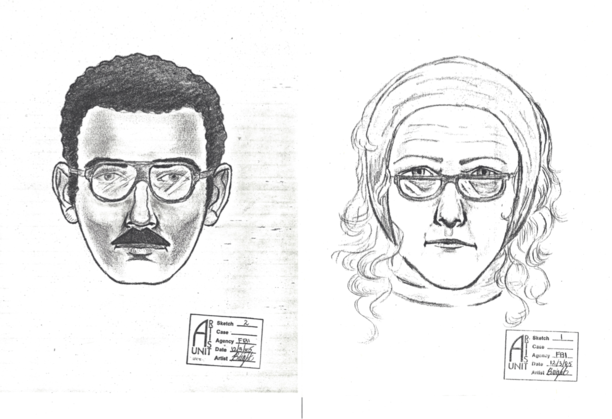
A Dec. 6, 1985 sketch of the suspects in the theft of a Willem de Kooning painting from the University of Arizona Museum of Art. They were described as a woman in her mid-50s with shoulder-length reddish-blond hair, wearing tan bell-bottom slacks, a scarf on her head and a red coat, and a man with olive-colored skin, wearing a blue coat. Both had thick-framed glasses.
Missing de Kooning painting
Updated
Today, the empty frame still holds narrow edges of the missing de Kooning painting at the University of Arizona Museum of Art in Tucson.

