


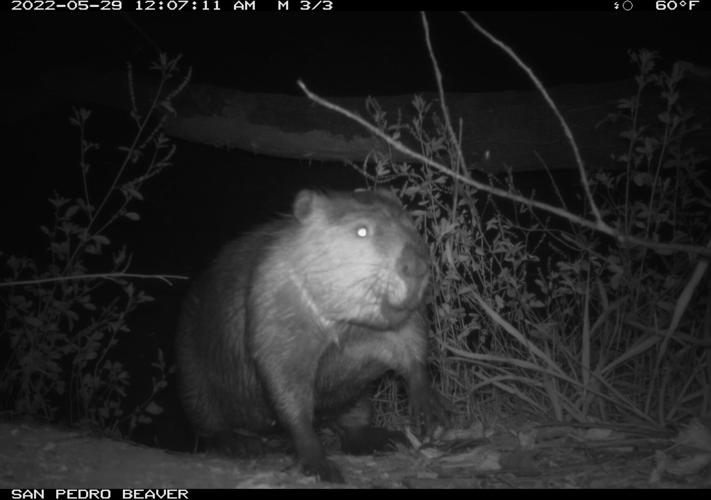
It’s hard to believe that the North American beaver was once so ubiquitous in Southern Arizona that fur trappers in the 1800s used to refer to the San Pedro as Beaver River.
Those same trappers are the reason the animals went extinct in the area over a century ago.
But beavers have made a comeback in recent decades, albeit a modest one, according to the latest count by the nonprofit Watershed Management Group.
The environmental organization estimates up to 43 beavers in eight families now live along a roughly 70-mile stretch of the upper San Pedro River in the U.S. and Mexico.
The U.S. population is smaller at between 13 and 17 beavers, while 24-26 beavers are thought to live upstream in Mexico.
Watershed Management Group executive director Lisa Shipek said the overall total is similar to what they found during their previous survey in 2021, but the numbers are down slightly on the U.S. side of the border.

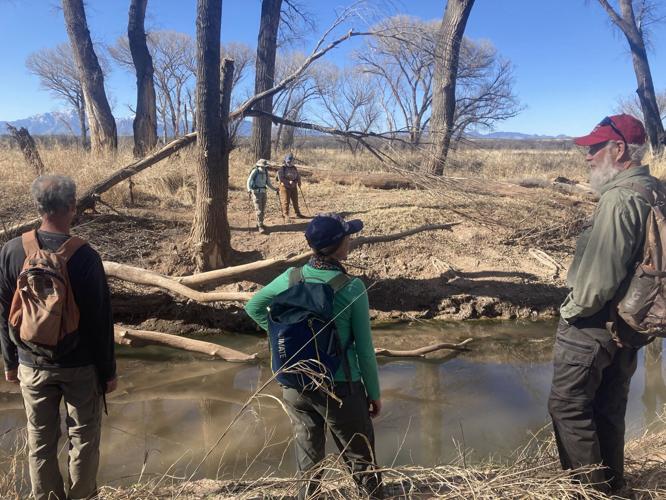
Survey participants stand on opposite sides of San Pedro River, where they looked for signs of beaver activity on Feb. 4.
They don’t know what is causing the decline, Shipek said, but it demonstrates how vital data collection and surveys are to understand how the beavers are doing.
The group shared the results of its second annual binational beaver survey on Thursday during its Beavers & Brews fundraising event.
The survey results from the U.S. side are final, but the Mexico results are preliminary, pending a review with the group’s partners in Mexico, which include Profauna and Comisión Nacional de Áreas Naturales Protegidas.
Disappearing act
There may have been as many as 200 million beavers in North America before large-scale European colonization. Current estimates place their population at around 15 million today, according to California Fish & Wildlife.
Beavers can be beneficial to natural ecosystems because the dams they build slow the flow of rivers and creeks, curbing erosion and allowing water to spread out and hydrate larger areas.
The furry engineers can also help fight climate change by expanding wetlands that store carbon and creating marshy areas that are less prone to wildfires.
But that same behavior can cause nuisances — and even damage to infrastructure — by flooding agricultural fields and roads, drawing the ire of ranchers, farmers and other landowners.
State and federal wildlife officials began reintroducing beavers to Southeastern Arizona in 1999 when 16 animals were released into the sprawling San Pedro Riparian National Conservation Area, about 80 miles southeast of Tucson.
The river's beaver population is hanging on almost 25 years after being reintroduced by wildlife officials.
The 47-mile-long river preserve is home to 350 species of birds and 82 mammals, including the largest rodent in North America.
The restored beaver population peaked at about 100 in 2010. Then the animals all but disappeared for reasons still unknown.
Shipeck suspects some of the beavers might have traveled up the San Pedro and across the border in search of habitat. This is why conducting the survey binationally is so essential, she said.
Bisbee resident and river advocate Mike Foster suggested a number of possible causes for the beaver’s decline north of the border. He said a growing number of mountain lions have been caught on trail cameras set up along the river by Cochise College.
Drought and trapping in the area, which is legal, could also be cutting into the beaver population.
Then there is habitat loss due to wayward livestock in the conservation area. Foster said cattle tend to eat the same understory vegetation that beavers rely on for food.
During this year’s survey, volunteers took note of hoof prints, cow pies and other signs of livestock activity and collected data about the beavers.
The Bureau of Land Management allows domestic livestock grazing on four allotments within the conservation area, but only two of the allotments allow grazing down to the river itself.
Even so, advocates have complained for years about river banks trampled and stripped bare by stray cattle and water fouled with E. coli from cow droppings.
Cyndi Tuell is the Arizona and New Mexico director for the environmental group Western Watersheds Project. She also volunteered during the beaver survey. She said ranchers are not allowed to let their cattle trespass in the conservation area, but the BLM doesn’t do much to enforce those rules.
Woodworkers
Wayward cattle are also an issue on Cienega Creek near Sonoita, where cows often break through fences to get to the water.
In 2022, the BLM completed an environmental assessment on a plan to reestablish beavers on the creek or add simulated beaver dams to improve habitat in Las Cienegas National Conservation Area.
Watershed Management Group supports the idea and plans to partner with the BLM on a fenceline survey there later this year to figure out what needs to be done to keep cows out of the riparian area.
The group is also sharing the results of its beaver survey with the BLM, which grants the organization a research permit to conduct the count.
The most recent survey was conducted early this year and involved over 75 Watershed Management Group employees, interns and volunteers on the U.S. side alone.
They looked for beavers along approximately 40 miles of river habitat within the conservation area from St. David to the U.S.-Mexico border. Another 30 miles of the San Pedro River were surveyed in Mexico by the group’s partners there.
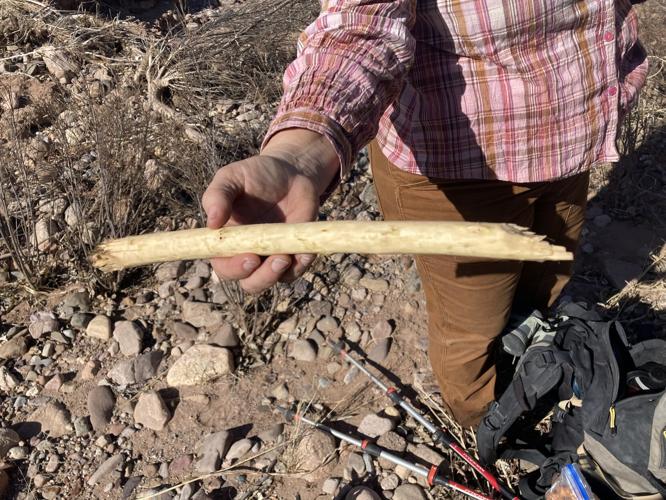
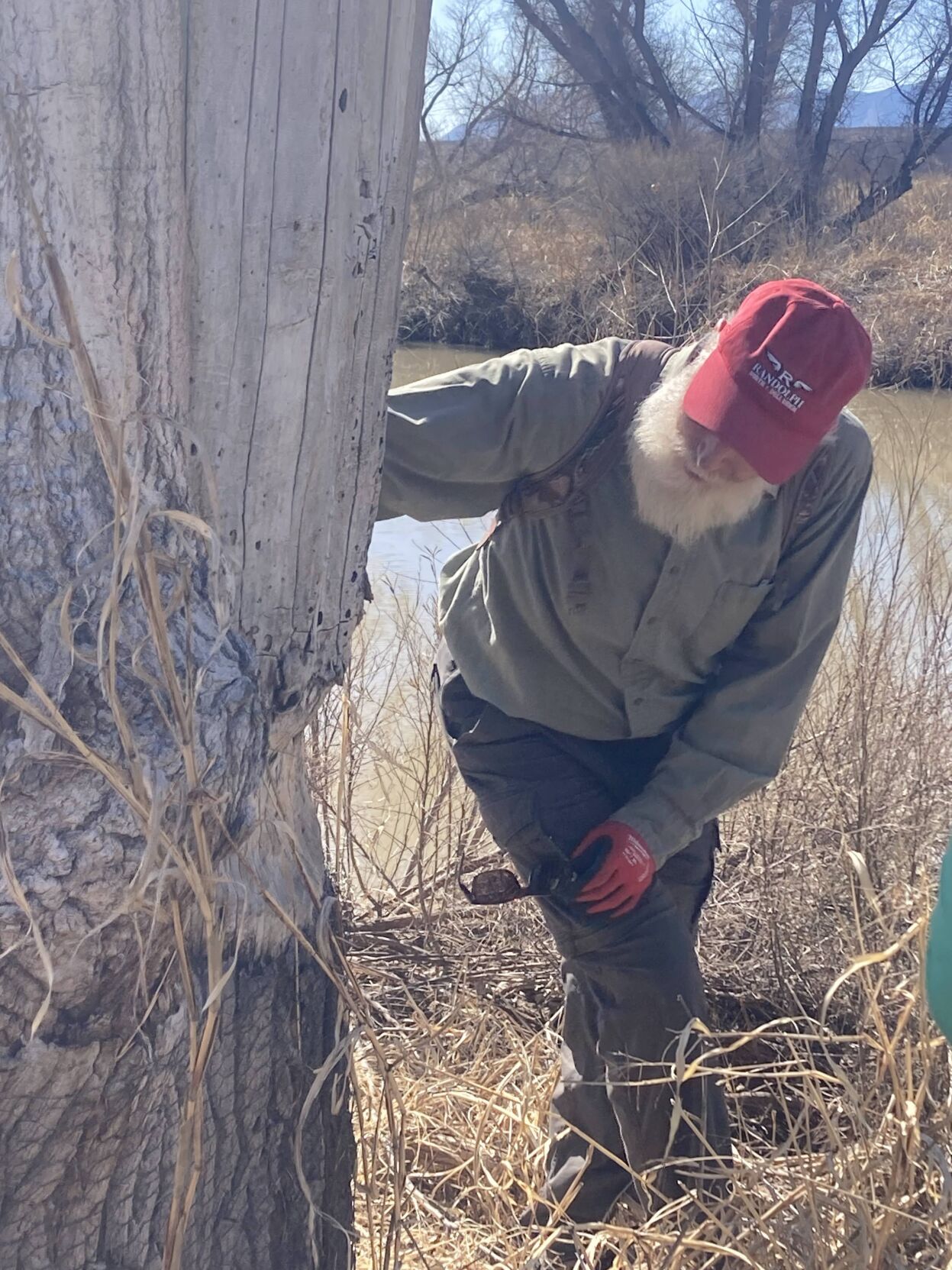
Participants rarely, if ever, saw the mostly nocturnal animals themselves, so they looked for evidence of beaver activity, including dams, lodges, food caches, slides, scat and chewed wood.

Survey volunteer Cyndi Tuell holds a piece of wood that has been chewed on both ends by a beaver on the San Pedro River on Feb. 4.
Some of the fresh “chews,” as they’re known, were collected and sent to Cochise College environmental science professor Steve Merkley, who examined them for clues about the beaver’s biology and behavior.
Shipek said walking the river is a nice reprieve from sitting in front of her computer. “This work is fun because it captures people’s imagination,” she said. “If there are beavers, that means there’s water, so people want to know more.”
Watershed Management Group is now building a web platform to share the survey data with the public. Their goal is to have the website available in late spring or early summer.
Shipeck and her fellow “beaver believers” plan to continue the survey annually. She also wants to expand the number of survey sites and get more community scientists involved, all while continuing to advocate for releasing more buck-toothed builders in riparian areas across Southern Arizona.
Maybe one day, there might even be some beavers in Sabino Canyon, Shipek said.

